|
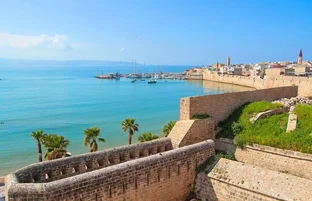
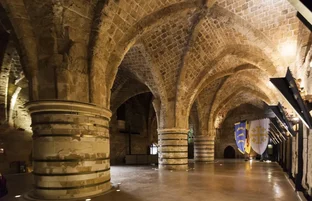
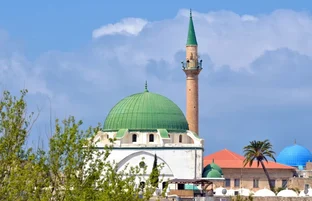
Introduction to Akko23km (14 miles) N of Haifa; 56km (35 miles) W of Tiberias Akko, with its romantic minarets, massive city seawalls, and palm trees framed against the sky, has had a long, eventful history. It was first mentioned in the chronicles of Pharaoh Thutmose III, about 3,500 years ago, but is perhaps 2,000 years older. It was a leading Phoenician port, and although it was allotted to the tribe of Asher, the tribe was never able to conquer it. The town is mentioned as part of David's kingdom, and was given by Solomon to Hiram, king of Tyre, in return for his help in building The Temple. Alexander the Great conquered Acre in 332 B.C., and later, in 280 B.C., it was captured by the Ptolemies, and renamed Ptolemais. Under this name it is mentioned in the New Testament as a stopping place of Saint Paul. Julius Caesar stayed here in 48 B.C. From the time of Acre's allocation to the tribe of Asher, a Jewish minority lived here in relative peace with the other local inhabitants, but during the Bar Kochba revolt many Jews were killed by the Romans. Even so, remnants of the Jewish population continued to live here. When the Arabs conquered Ptolemais in A.D. 636, the town reverted to the name of Akka (the Arabic version of the name "Akko"); but when the Crusaders took the town in 1104, they renamed it Saint Jean d'Acre. The town became the regional seat of Crusader government, and it expanded to include an entire underground city, which you still can visit today. Except for one 4-year period, the Crusaders held Acre until the 13th century, when they were defeated by the Mamlukes, who sacked the town. The fall of Acre ensured the doom of Crusader dominion in the Holy Land. It was not until 1749, when Bedouin sheik Daher el-Omar conquered the town, that Akko experienced a resurgence, but his plans for a serious rebuilding program came to a sudden end when he was murdered in 1775 by the notoriously cruel Ahmed al Jezzar Pasha. Under the impetus of Al-Jezzar Pasha, the town's most important rebuilding took place, including the Jezzar Pasha Mosque, the Khan El-Umdan, the Turkish bathhouse now housing the Municipal Museum, the massive stone walls, and the aqueduct to the north. These structures still stand today. Akko's decline as a major port was sealed by the advent of the steamship and modern naval technology, with shipping activities gradually transferred to the larger port at Haifa across the bay. On May 4, 1947, Akko was the scene of the largest prison break in history when 251 prisoners escaped from Akko Fortress with the help of Jewish underground fighters.
Maps Note: This information was accurate when it was published, but can change without notice. Please be sure to confirm all rates and details directly with the companies in question before planning your trip. Related Features Partner Deals:
|
|
|||||||||||||||||||||||||||||||||||||||||||||||||||||||||||||||||||||||||||||||||||||||||||||||||||||||||||||||||||||||||||||||||||||||||||||||||||||||||||||||||||||||||||||||||||||||||||||||||||||||||||||||||