Frommers.com Frommers.com
Most Recent Bangkok Forum Posts
Most Recommended Articles
Most Commented Articles
  Print This Article Print Get Frommer's RSS Feed RSS

Attractions

A stroll down any of Bangkok's thousands of sprawling and labyrinthine alleyways can bring untold adventures for visitors who are keen to unearth the real Thailand. First-time visitors are often amazed by central Bangkok's glittering modernity, and at the same time, delighted by the treasures found amid the grunginess of ramshackle back streets; it's very easy to stumble across hidden markets, museums, or spectacular temples. This guide presents the main highlights of the city's sights plus a final section detailing a few worthy side trips from Bangkok. Each section will give you an idea of the scope of things to do.

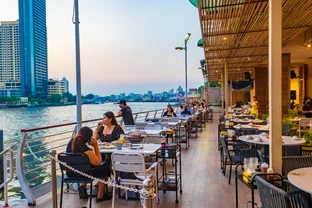
Bangkok is famous for being just as vibrant after dark as in the day. Many of its largest boulevards are swathed in fairy lights, and a bevy of swish, rooftop bars all offer fantastic night views. Admittedly, things aren't as crazy as 10 years ago when the party scene ran nonstop until dawn, and alcohol flowed, day or night. Under laws imposed under ex-Prime Minister Thaksin, all bars and clubs must now close at 1am. That said, Bangkok has many markets, bars, and clubs open until at least midnight, plus the big department stores and malls don't close until around 9pm -- which should sate even the hardiest shopaholic.

Avoiding the Touts

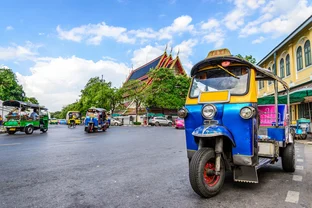
Tourists are harangued going in and out of the major sites around the Grand Palace, and sadly this area is now famous for its scam artists. Avoid unnecessary frustration by not engaging with these characters just as you would at home. Visitors are frequently told that sites are "closed" by "helpful" types who then suggest alternate destinations. This is the start of the famous "Bangkok shopping tour scam." If you are approached by a stranger, whether it's someone purporting to be a "guide," or a tuk-tuk driver in this area, just say "no thanks," and walk away. If you end up riding a tuk-tuk near these main sites, make sure you've agreed to a price with the driver and insist on "NO shopping." If you have any problems, don't hesitate to use the word poleet (police in Thai) or call the Tourist Police on tel. 1155.

Bangkok's Waterways

The key to Bangkok's rise lies in the Chao Phraya River, which courses stealthily through its center, feeding a complex network of canals and locks that, until relatively recently, were the focus of city life. Lying just a few miles from the Gulf of Thailand, the river was a major conduit for trade, and the main reason behind its rapid growth. Today, nothing much has changed: great black barges filled with teak, coal, or sand are towed up and down the river by small yellow tugs; at any time of the day you might spot grey Royal Naval vessels, police on Port Authority jet skis, stout wooden sampans, even blue barges stacked with Pepsi-Cola bottles, all plying these waters.

In the 18th century, Thailand's first monarch, Rama I, moved the capital eastward from Thonburi (a suburb of today's Bangkok) across the river to the district that became known as Rattanakosin Island, so-called due to the man-made canals that surrounded this entire area. Like medieval moats, these canals (klongs) acted as a defensive barrier. Other canals were soon added, channeling the waters of the Chao Phraya into peripheral communities, feeding fish ponds or rice paddies, and nurturing the city's many tropical fruit orchards. These waterways fast became the aquatic boulevards and avenues of this low-lying, swampy city. Apart from structures built for royalty, ordinary Bangkok residents lived on water, in bamboo raft homes, or on boats. As foreign diplomats, missionaries, and writers traveled to Bangkok, they drew parallels with the Italian city of Venice and renamed it the "Venice of the East." Not until the early 1800s were nonroyal houses built on dry land.

Due to the health hazards posed by these open klongs, and the gradual need for more stable land in the advent of vehicular transport, many of the canals were paved over in the last century. By the late 1970s, most of the city's paddy fields had disappeared. In fact, much of today's Bangkok has been reclaimed from former marshland. Fears are growing as global warming raises sea levels and the effects of seasonal flooding on the city are becoming more drastic.

For a glimpse of traditional Thai life, schedule a few hours to explore the waterways. You'll see people using the river to bathe, wash their clothes, and even brush their teeth at water's edge (not recommended). Floating kitchens occupy small motorized canoes from which the pilot-cum-chef serves rice and noodles to the occupants on other boats. Men, wrapped in nothing more than a loincloth, tiptoe across floating carpets of logs en route to the lumber mills; ramshackle huts on stilts adorned with 100-year-old fretwork, tumble down into klongs, while at low tide, the ribcages of sunken boats appear out of the oozing mud.

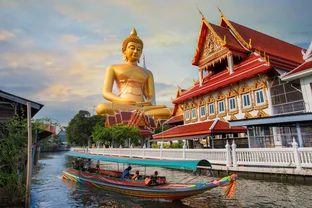
Opportunities abound for exploring Bangkok's small klong networks and river arteries. The most frequently seen boat on the river is the long-tail, a needle-shaped craft driven by a raucous outboard engine and covered in a striped awning. These act as river taxis for both tourists and locals. Private long-tails congregate at Maharaj, Chang, and Si Phya public piers and at River City (tel. 02235-3108). If you are confident of your haggling skills, you can try to charter a long-tail yourself for about 1,000B (US$29/£15) an hour -- be sure to agree on the charge before you get in the boat. Note: Beware of independent boat operators who offer to take you to souvenir or gem shops.

Otherwise, if you head to the riverside exit of Saphan Taksin BTS, there's also an official kiosk down on the riverfront, with tour information, including tickets for the hop-on, hop-off Chao Phraya Express (tel. 02623-6001). This runs every half-hour, daily from 9:30am to 3:30pm, and is a more comfortable option than the (more cramped) long-tails or tatty wooden express boats that act as the city's river taxis.

You can also go on a formal tour of the klongs. The following operators can arrange itineraries, with 3-hour tours costing about 1,300B (US$37/£20) per person, including an English-speaking guide: World Travel (tel. 02233-5900), Sea Tours (tel. 02216-5783, with a counter at the Shangri-la Hotel), and Diethelm Travel (tel. 02660-7000; www.diethelmtravel.com). Any hotel concierge can also make arrangements.

However you tour the klongs, take the time to explore Klong Bangkok Noi and Klong Bangkok Yai. Also stop at the Royal Barge Museum, a wonderful riverside hangar crammed with long, narrow vessels covered in gilt carvings, brought out only to commemorate rare events such as a milestone in the monarch's reign, or the visit of a dignitary.

Many visitors are disappointed by the hugely commercial (some may say overrated) floating market at Damnoen Saduak, about 80km (48 miles) southwest of Bangkok in Ratchaburi Province. A better and more authentic experience is to head upstream to picturesque Koh Kret.


Back to Top


List All Attractions

Note: This information was accurate when it was published, but can change without notice. Please be sure to confirm all rates and details directly with the companies in question before planning your trip.


  Print This Article Print Get Frommer's RSS Feed RSS
Destination Guide
Destination Guide Destination Guide Destination Guide
Destination Guide Destination Guide Frommer's Thailand, 8th Edition Destination Guide Frommer's Thailand, 8th Edition

Author: Charlotte Shalgosky
Pub Date: April 21, 2008
Price: $22.99

Add to Cart
Destination Guide Destination Guide Destination Guide Related Titles:
Comrades and Strangers: Behind the Closed Doors of North Korea
Destination Guide
Frommer's Bangkok Day by Day, 1st Edition
Destination Guide
Frommer's Beijing Day by Day, Official U.S.O.C. Edition, 1st Edition
Destination Guide
Destination Guide Destination Guide
Destination Guide Destination Guide Destination Guide
Destination Guide
Destinations
Destinations