|
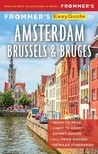
Planning a TripBrussels -- the headquarters of the European Union -- both symbolizes Europe's vision of unity and is a bastion of officialdom, a breeding ground for the regulations that govern and often exasperate the rest of the Continent. The Bruxellois have mixed feelings about their city's transformation into a power center. At first, the waves of Eurocrats brought a new cosmopolitan air to a somewhat provincial city (though once the seat of emperors), but as old neighborhoods were leveled to make way for office towers, people wondered whether Brussels (pop. 1,050,000) was losing its soul. After all, this city doesn't only mean politics and business. It inspired surrealism and Art Nouveau, worships comic strips, prides itself on handmade lace and chocolates, and serves each one of its craft beers in a unique glass. Fortunately, not all of Brussels's individuality has been lost in this transition, and though the urban landscape has suffered from wanton development, the city's spirit survives in traditional cafes, bars, bistros, and restaurants. Whether elegantly Art Nouveau or eccentrically festooned with posters, curios, and knickknacks, such centuries-old establishments provide a convivial ambience that is peculiarly Belgian. Visitor Information The city tourist organization, Brussels International Tourism & Congress (tel. 02/513-89-40; fax 02/513-83-20; www.brusselsinternational.be), has several offices around the city. Good information is available from these offices, including a comprehensive visitors' booklet, Brussels Guide & Map, and they can make last-minute reservations for city hotels. For both administration and walk-in service, head to rue Royale 2, 1000 Bruxelles (tram: 92 or 94), at place Royal (daily 10am-6pm). The most centrally located office is in the Hôtel de Ville, Grand-Place (Métro: Gare Centrale), on the ground floor of the Town Hall (Apr-Oct daily 9am-6pm; Nov-Dec Mon-Sat 9am-6pm, Sun 10am-2pm; Jan-Mar Mon-Sat 9am-6pm). There are tourist information desks in the Arrivals hall at Brussels Airport (daily 8am-9pm) and in the main hall at Gare du Midi rail station (May-Oct Sat-Thurs 8am-8pm, Fri 8am-9pm; Nov-Apr Mon-Thurs 8am-5pm, Fri 8am-8pm, Sat 9am-6pm, Sun and holidays 9am-2pm). The office at rue Wiertz 43 (Bus: 22 or 54) is for visitors to the European Parliament (Mon 1-5pm, Tues-Thurs 9am-5pm, Fri 9am-noon). All offices are closed on January 1 and December 25. For English-speaking visitors, the most useful publication is the weekly magazine The Bulletin, published on Thursdays and filled with local news, articles, shopping, and information on cultural events. Passport to Brussels -- One of the best discounts is the Brussels Card, available from the Brussels International tourist office on the Grand-Place, and from hotels, museums, and offices of the STIB city transit authority. Valid for 1, 2, or 3 days, for 18€ ($29), 26€ ($42), and 30€ ($48), respectively, it allows free use of public transportation; free and discounted admission to around 30 of the city's museums and attractions; and discounts at some restaurants and other venues, and on some guided tours. City Layout Brussels is divided into 19 communes (districts) -- "Brussels" being both the name of the central commune and of the city as a whole (which comprises Belgium's Brussels Capital Region). The center city, once ringed by fortified ramparts, is now encircled by broad boulevards known collectively as the Petite Ceinture. Most of the city's premier sightseeing sights are in this zone. Around 14% of the zone's total area of 160 sq. km (63 sq. miles) is occupied by parks, woods, and forest, making this one of Europe's greenest urban centers. Brussels sits smack-dab on Europe's often edgy interface between its Latin south and Germanic north. You'll hear both French and Dutch (along with a Babel of other tongues) spoken in its streets. The city is bilingual: Bruxelles in French and Brussel in Dutch, and street names and places are in both languages. Grand-Place is Grote Markt in Dutch; Gare Centrale is Centraal station; Théâtre Royal de la Monnaie is Koninklijke Munttheater. Note: For convenience and to save space, I use only the French names in this guide. Street Maps -- Go to Brussels International Tourism and pick up its Brussels Guide & Map, which has a fairly detailed street map of the inner city marked with principal tourist attractions. If you need a comprehensive street map, purchase the Géocart Bruxelles et Périphérie at most news vendors and bookstores.
Note: This information was accurate when it was published, but can change without notice. Please be sure to confirm all rates and details directly with the companies in question before planning your trip. Related Features Partner Deals:
|
|
|||||||||||||||||||||||||||||||||||||||||||||||||||||||||||||||||||||||||||||||||||||||||||||||||||||||||||||