| Home > Destinations > North America > USA > Utah > Bryce Canyon National Park > In Depth |
|
|
||||||
![]() |
||||||
FREE Newsletters! |
Win a FREE Trip! |
|||||
|
|
||||||
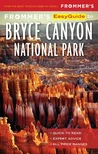
In DepthOne of America's most scenic destinations, Bryce Canyon National Park is a magical land, a place of inspiration and spectacular beauty where thousands of intricately shaped rock formations stir the imagination as they stand silent watch in their colorful cathedrals. Bryce Canyon is also one of the West's most accessible national parks. Several trails lead down into the canyon -- technically what geologists call an amphitheater -- making it relatively easy to get to know this beautiful jewel up close. In addition, there's an easy Rim Trail, part of which is wheelchair accessible, which makes many of the park's best views available to virtually everyone. The canyon ranges in elevation from 6,620 to 9,115 feet, with desert terrain of piñon, juniper, sagebrush, and cactus at the lower levels, and a cool high country consisting of a dense forest of fir, spruce, and even ancient bristlecone pines. In between, where the campgrounds and visitor center are located, is a ponderosa pine forest. Bryce Canyon is best known for its hoodoos, which geologists tell us are simply pinnacles of rock, often oddly shaped, left standing after millions of years of water and wind erosion. But perhaps a more interesting explanation lies in a Paiute legend. These American Indians, who lived in the area for several hundred years before being forced out by Anglo pioneers, told of a "Legend People" who lived here in the old days. The powerful Coyote turned them to stone for their evil ways, and today they remain frozen in time. Whatever the cause, Bryce Canyon is delightfully unique. Its intricate and often whimsical formations are smaller and on a more human scale than the impressive rocks seen at nearby Zion. And, Bryce Canyon is far easier to explore than the sometimes intimidating vastness of Grand Canyon National Park. Bryce is comfortable and inviting in its beauty; we feel we know it simply by gazing over the rim, and we're on intimate terms after just one morning on the trail. Although the colorful hoodoos are the first things that grab your attention, it isn't long before you notice the deep amphitheaters that envelope them, with their cliffs, windows, and arches all colored in shades of red, brown, orange, yellow, and white that change and glow with the rising and setting sun. Beyond the rocks and light are the other faces of the park: three separate life zones, each with its own unique vegetation, changing with elevation; and a kingdom of animals, from the busy chipmunks and ground squirrels to stately mule deer and their archenemy, the mountain lion. Also sometimes present in the more remote areas of the park are elk and pronghorn. It's not known if prehistoric peoples actually saw the wonderful hoodoos at Bryce Canyon, although archaeologists do know that Paleo-Indians hunted in the area some 15,000 years ago. By about A.D. 700, the Basket Makers had established small villages in Paria Valley, east of Bryce Canyon in what is now Grand Staircase-Escalante National Monument, also discussed in this book. By about A.D. 1100, Ancestral Puebloan peoples (also called the Anasazi) were living east of Bryce Canyon, and are believed to have visited what is now the park in search of game and timber. However, serious exploration of the Bryce area likely began later, with the Paiutes; and it's possible that trappers, prospectors, and early Mormon scouts may have visited here in the early to mid-1800s, before Major John Wesley Powell conducted the first thorough survey of the region in the early 1870s. Shortly after Powell's exploration of the park area -- in 1875 -- Mormon pioneer Ebenezer Bryce, a Scottish carpenter, and his wife, Mary, moved here and tried raising cattle. Their home became known as "Bryce's Canyon." Although they stayed only 5 years before moving to Arizona, Bryce's legacy is his name and his oft-quoted description of the canyon as "a helluva place to lose a cow." The smallest of Utah's five national parks, with an area of just under 36,000 acres, Bryce Canyon was declared a national monument by President Warren Harding in 1923. The following year, Congress passed provisional legislation to make this area into "Utah National Park." In 1928, the change in status was finalized and the park was renamed Bryce Canyon National Park, in honor of one of its early residents. Butch Cassidy Slept Here Robert LeRoy Parker wasn't a bad kid. He was born into a hard-working Mormon family in the little southwestern Utah town of Beaver on April 13, 1866. The oldest of 13 children, Robert was said to be a great help to his mother, and worked on the small ranch his parents bought near Circleville, about 50 miles north of Bryce Canyon. It was in Circleville where the problems began. Teenager Robert fell in with some rather unsavory characters, including one Mike Cassidy, the ne'er-do-well role model who reportedly gave the youth his first gun, and presumably from whom young Robert took the alias "Cassidy." The boy made his way to Telluride, Colorado, worked for one of the mines there for a while, and then wandered up to Wyoming. A little more wandering took him back to Telluride -- and, strangely enough, the Telluride bank was robbed. Butch Cassidy had officially begun his life of crime. In the following years, Butch -- who gained the nickname after a short stint working in a butcher shop -- became an expert at rustling cattle, robbing banks, and, his ultimate glory, robbing trains. Butch wanted to call his gang the Train Robbers Syndicate, but they raised such hell in celebration of their economic successes that saloonkeepers in Vernal and other Utah towns began calling them "that wild bunch," and the name stuck. The Wild Bunch would travel through Utah, hiding out in the desolate badlands that were to become Bryce Canyon, Capitol Reef, and Canyonlands national parks. Capitol Reef's Cassidy Arch was named after Butch; this area was supposedly one of his favorite hiding places. If you've seen the 1969 movie Butch Cassidy and the Sundance Kid, with Paul Newman as Butch and Robert Redford as his partner-in-crime Sundance, you can't forget that spectacular scene in which Butch and his cohorts blow the door off a railroad car. Then they use way too much dynamite to open the safe, sending bills flying into the air. Apparently, the story is basically true, having taken place on June 2, 1899, near Wilcox, Wyoming. According to reports of the day, they got away with $30,000. The Union Pacific Railroad took exception to Butch's antics. When the posses started getting a bit too close, Butch, Sundance, and Sundance's lady friend, Etta Place (Katharine Ross in the film), took off for South America, where it's said they continued a life of crime for a half dozen or so years. There are also some stories -- unconfirmed -- that it was in South America that Butch first killed anyone, that up until that time he had avoided bloodshed whenever possible. According to some historians (as well as the movie), Butch and Sundance were shot dead in a gun battle with army troops in Bolivia. But others say it's not so -- that Butch returned to the United States, visited friends and family in Utah and Wyoming, and eventually settled in Spokane, Washington, where he lived a peaceful and respectable life under the name William T. Phillips, until he died of natural causes in 1937.
Note: This information was accurate when it was published, but can change without notice. Please be sure to confirm all rates and details directly with the companies in question before planning your trip.
|
|||||||||||||||||||||||||||||||||||||||||||||||||||||||||||||||||||||||||||||||||||||||||||||||||||||||||||||||||||||||||||||||||||||||||||||||||||||||||||||||||||||||||||||||
| Home | Destinations | Hotels | Trip Ideas | Deals & News | Book a Trip | Tips & Tools | Community | Bookstore | ||||||||||||||||||||||||
| About Frommer's | FAQ | Contact Us | Help | Site Map | Privacy Policy | Terms of Service | Advertise With Us | ||||||||||||||||||||||||
|
||||||||||||||||||||||||
| © 2000-2008 by Wiley Publishing, Inc. All rights reserved. | ||||||||||||||||||||||||
| Home > Destinations > North America > USA > Utah > Bryce Canyon National Park > In Depth |