Shutterstock
Eilat Travel Guide
243km (151 miles) S of Beersheva; 356km (221 miles) SE of Tel Aviv
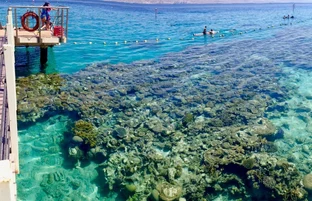
At the southern tip of Israel, a 4-hour drive across the Negev from Tel Aviv or Jerusalem, the Red Sea resort of Eilat is a world apart from the rest of the country. It’s a place where Israelis and tourists love to come for a few days to unwind and relax. There’s no history to absorb, just easily accessible coral reefs to snorkel and plenty of beaches. Even in winter, when Jerusalem can be cold and raw and Tel Aviv can be chilly, Eilat’s beaches are usually warm enough for sunbathing and at least a quick swim in the Red Sea. There are tons of hotels in every price range, and although most are not directly on the town’s beachfronts, most have large swimming pools with many of them heated for winter. Summers in Eilat are blazing hot and usually filled with vacationing Israeli families.
Eilat is also the closest and most convenient border crossing into Jordan if you plan to visit Petra—unlike the busy Allenby Bridge Crossing from the West Bank into Jordan (where you must have a visa issued at a Jordanian embassy ahead of time), visas are issued on the spot at the Eilat-Aqaba Crossing, and there are far fewer crowds and processing delays.
Petra (in Jordan), the legendary and extraordinary, long lost ancient city carved from the walls of a hidden canyon, has become a must-see destination for thousands of world travelers. Although 1-day package bus tours from Eilat can give you a 2-hour glimpse of Petra, this amazing site and the dramatic landscape of southern Jordan are well worth several days of your attention.
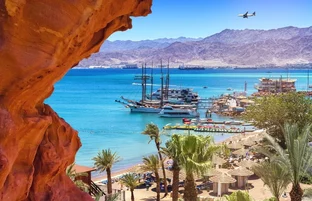
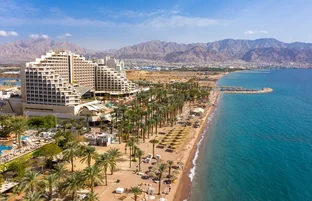
Eilat’s chief claims to fame for the tourist are busy beaches with almost no wave action, coral reefs filled with exotic fish, and year-round sunshine. What was once a small, relaxed desert and Red Sea resort town now hosts 50 gargantuan upscale hotels, vast shopping malls, and a downtown waterfront lined with jewelry shops, sneaker stores, and hawker’s booths where visitors can while away their evenings. It’s easygoing, fun, and Israelis, both Jewish and Arab, flock here to forget the pressures of daily life. Lots of European package tourists jet directly into Eilat (and see nothing else in Israel). Eilat’s planners have not emphasized the desert and Bedouin traditions of the region—instead they’ve aimed for the generic look of a gleaming white international resort, such as Cancún. During Israeli school holidays, Eilat is usually overrun with families and kids.
Eilat is also a military outpost and a major shipping port—you’ll see ample evidence of this all along the shoreline. The city’s hotel area is less than a mile from the Jordanian border, and you can see the Jordanian port city of Aqaba, with a population of 30,000, across the bay in a haze of desert sand, ringed by date palms. Until Israel and Jordan signed a peace treaty in 1994, Aqaba seemed as unattainable as a mirage. There is now a border crossing for tourists just north of Eilat, and from Eilat you can also book excursions to Jordan’s fabulous lost canyon city of Petra. Saudi Arabia is 20km (12 miles) south of Aqaba—you can see it from the beaches in Eilat.
During summer, the outdoor afternoon heat in Eilat can exceed 110 degrees F (43 degrees C); it’s best to stay in the shade between noon and 4pm. In winter, the weather can be cool to chilly and dry, but the Red Sea is warm enough for swimming, especially if you’re used to the waters of the North Atlantic. Pools in better hotels are often heated.