Home > Destinations > Asia > Japan > Planning a Trip > Fast Facts
Frommers.com Frommers.com
Most Recent Destination Forum Posts
Most Recommended Articles
Most Commented Articles
  Print This Article Print Get Frommer's RSS Feed RSS

Fast Facts

American Express -- There are no American Express customer-service offices in Japan.

Business Hours -- Government offices and private companies are generally open Monday through Friday 9am to 5pm. Banks are open Monday through Friday 9am to 3pm (but usually will not exchange money until 10:30 or 11am, after that day's currency exchange rates come in). Neighborhood post offices are open Monday through Friday 9am to 5pm. Major post offices, however (usually located near major train stations), have longer hours and may be open weekends as well. (Some central post offices, such as those in Tokyo and Osaka, are open 24 hr. for mail.)

Department stores are open from about 10am to 8pm; they sometimes close irregularly (but always the same day of the week). Smaller stores are generally open from 10am to 8pm, closed 1 day a week. Convenience stores such as 7-Eleven are open 24 hours.

Keep in mind that museums, gardens, and attractions stop selling admission tickets at least 30 minutes before the actual closing time. Similarly, restaurants take their last orders at least 30 minutes before the posted closing time (even earlier for kaiseki restaurants). Most museums are closed on Monday.

Drugstores -- Drugstores, called kusuri-ya, are found readily in Japan. Note, however, that you cannot have a foreign prescription filled in Japan without first consulting a doctor in Japan, so it's best to bring an adequate supply of important medicines with you. No drugstores in Japan stay open 24 hours. However, convenience stores, open day and night throughout Japan, carry such nonprescription items as aspirin.

Earthquakes -- Kobe's tragic 1995 earthquake brought attention to the fact that Japan is earthquake-prone, but in reality, most earthquakes are too small to detect (of the more than 100,000 earthquakes annually in Japan, only 1% are big enough to feel). However, in case of an earthquake you can feel, there are a few precautions you should take. If you're indoors, take cover under a doorway or against a wall and do not go outdoors. If you're outdoors, stay away from trees, power lines, and the sides of buildings; if you're surrounded by tall buildings, seek cover in a doorway. If you're near a beach or the bay, evacuate to higher ground to avoid danger in case of a tsunami. Never use elevators during a quake. Other precautions include noting emergency exits wherever you stay; all hotels supply flashlights, usually found attached to your bedside table.

Electricity -- The electricity throughout Japan is 100 volts AC, but there are two different cycles in use: In Tokyo and in regions northeast of the capital, it's 50 cycles, while in Nagoya, Kyoto, Osaka, and all points to the southwest, it's 60 cycles. Leading hotels in Tokyo often have two outlets, one for 110 volts and one for 220 volts; almost all have hair dryers in the rooms. You can use many American appliances in Japan because the American standard is 110 volts and 60 cycles, but they may run a little slowly. Note, too, that the flat, two-legged prongs used in Japan are the same size and fit as in North America, but three-pronged appliances are not accepted.

Embassies & Consulates -- Most embassies are located in Tokyo. There are, however, U.S., British, and Australian consulates in Osaka. For the location of other consulates, inquire at the respective embassies.

Emergencies -- The national emergency numbers are tel. 110 for police and tel. 119 for ambulance and fire. You do not need to insert money into public telephones to call these numbers. However, if using a green public telephone, you must push a red button before dialing. If calling from a gray public telephone or one that accepts only prepaid cards, simply lift the receiver and dial. Be sure to speak slowly and precisely.

Language -- English is widely understood in major hotels, restaurants, and shops, but it's hit and miss elsewhere. Be sure to pick up the free "Tourist's Language Handbook," at the Tourist Information Center.

Laundry & Dry Cleaning -- All upper- and most midrange hotels offer laundry and dry-cleaning services (but it's expensive, with a laundered shirt costing about ¥400/$3.35/£1.65). For same-day service, it's usually necessary to turn in your laundry by 10am; many hotels do not offer laundry service on Sundays and holidays. Budget accommodations sometimes have coin-operated machines. Otherwise, launderettes are abundant, and many hotel guest rooms have a pull-out laundry line over the tub for hand washables.

Legal Aid -- Contact your embassy if you find yourself in legal trouble. The Legal Counselling Center, 1-4 Yotsuya, Shinjuku (tel. 03/5367-5280; www.horitsu-sodan.jp; station: Yotsuya), is operated by three bar associations and provides legal counseling with English interpreters Monday to Friday from 1 to 4pm.

Liquor Laws -- The legal drinking age is 20. Beer, wine, and spirits are readily available in grocery stores, some convenience stores, and liquor stores. Many bars, especially in nightlife districts in major cities, are open until dawn. If you intend to drive in Japan, you are not allowed even one drink.

Lost & Found -- Be sure to notify all your credit card companies the minute you discover your wallet has been lost or stolen, and file a report at the nearest police precinct. Your credit-card company or insurer may require a police report number or record of the loss. Most credit card companies have an emergency toll-free number to call if your card is lost or stolen; they may be able to wire you a cash advance immediately or deliver an emergency credit card in a day or two. Visa's emergency number in Japan is tel. 00531/11-15555. American Express cardholders can call tel. 03/3220-6220 and for traveler's checks it's tel. 0120/779-656. MasterCard holders should call tel. 00531/11-3886 in Japan. If you need emergency cash over the weekend when all banks are closed, you can have money wired to you via Western Union (tel. 800/325-6000; www.westernunion.com).

Luggage & Lockers -- Because storage space on Shinkansen bullet trains is limited, travel with the smallest bag you can get away with. Coin-operated lockers are located at all major train stations as well as at most subway stations, but most lockers are generally not large enough to store huge pieces of luggage (and those that are large are often taken). Lockers generally cost ¥300 to ¥800 ($2.50-$6.65/£1.25-£3.35) depending on the size. Some major stations also have check-in rooms for luggage, though these tend to be rare. If your bag becomes too much to handle, you can have it sent ahead via takkyu-bin, a wonderful and efficient luggage/parcel forwarding service available at upper-range hotels and all convenience stores in Japan. At Narita and Kansai international airports, delivery service counters will send luggage to your hotel the next day (or vice versa) for about ¥2,000 ($17/£8.35) per bag for bags up to 20 kilograms (44 lb.).

Mail -- If your hotel cannot mail letters for you, ask the concierge for the location of the nearest post office, recognizable by the red logo of a capital T with a horizontal line over it. Mailboxes are bright orange-red. It costs ¥110 (90¢/45p) to airmail letters weighing up to 25 grams and ¥70 (60¢/30p) to mail postcards to North America and Europe. Domestic mail costs ¥80 (65¢/35p) for letters weighing up to 25 grams, and ¥50 (40¢/20p) for postcards. Post offices throughout Japan are also convenient for their ATMs, which accept international bank cards operating on the PLUS and Cirrus systems, as well as MasterCard and Visa.

Although all post offices are open Monday through Friday from 9am to 5pm, international post offices (often located close to the central train station) have longer hours, often until 7pm or later on weekdays and with open hours also on weekends (in Tokyo and Osaka, counters are open 24 hr.). If your hotel does not have a shipping service, it is only at these larger post offices that you can mail packages abroad. Conveniently, they sell cardboard boxes in several sizes with the necessary tape. Packages sent via surface mail cannot weigh more than 20 kilograms (about 44 lb.) and take about a month to reach North America, with a package weighing 10 kilograms (about 22 lb.) costing ¥6,750 ($56/£28). Express packages, which take 3 days to North America and can weigh up to 30 kilograms (66 lb.), cost ¥12,550 ($105/£53) for 10 kilograms (22 lb.). For more information, check the website www.post.japanpost.jp.

Measurements -- Before the metric system came into use in Japan, the country had its own standards for measuring length and weight. One of these old standards is still common: Rooms are still measured by the number of tatami straw mats that will fit in them. A six-tatami room, for example, is the size of six tatami mats, with a tatami roughly 3 feet wide and 6 feet long.

Newspapers & Magazines -- Three English-language newspapers are published daily in Japan: the Japan Times and the Daily Yomiuri (both with weekly supplements from the Los Angeles Times, Washington Post, and London's Times), as well as the International Herald Tribune/Asahi Shimbun. Hotels and major bookstores carry the international editions of such newsmagazines as Time and Newsweek. You can also read the Japan Times online at www.japantimes.co.jp.

Passports -- For Residents of Australia: You can pick up an application from your local post office or any branch of Passports Australia, but you must schedule an interview at the passport office to present your application materials. Call the Australian Passport Information Service at tel. 131-232, or visit the government website at www.passports.gov.au.

For Residents of Canada: Passport applications are available at travel agencies throughout Canada or from the central Passport Office, Department of Foreign Affairs and International Trade, Ottawa, ON K1A 0G3 (tel. 800/567-6868; www.ppt.gc.ca).

For Residents of Ireland: You can apply for a 10-year passport at the Passport Office, Setanta Centre, Molesworth Street, Dublin 2 (tel. 01/671-1633; www.irlgov.ie/iveagh). Those under age 18 and over 65 must apply for a 3-year passport. You can also apply at 1A South Mall, Cork (tel. 021/272-525) or at most main post offices.

For Residents of New Zealand: You can pick up a passport application at any New Zealand Passports Office or download it from their website. Contact the Passports Office at tel. 0800/225-050 in New Zealand or 04/474-8100, or log on to www.passports.govt.nz.

For Residents of the United Kingdom: To pick up an application for a standard 10-year passport (5-yr. passport for children under 16), visit your nearest passport office, major post office, or travel agency or contact the United Kingdom Passport Service at tel. 0870/521-0410 or search its website at www.ukpa.gov.uk.

For Residents of the United States: Whether you're applying in person or by mail, you can download passport applications from the U.S. Department of State website at http://travel.state.gov. To find your regional passport office, either check the U.S. Department of State website or call the National Passport Information Center toll-free number (tel. 877/487-2778) for automated information.

Police -- The national emergency number for police is tel. 110.

Restrooms -- If you need a restroom, your best bets are at train and subway stations (though these tend to be dirty), big hotels, department stores, and fast-food restaurants. Use of restrooms is free in Japan, and though most public facilities supply toilet paper, it's a good idea to carry a packet of tissues.

In parks and some restaurants, especially in rural areas, don't be surprised if you go into some restrooms and find men's urinals and private stalls in the same room. Women are supposed to walk right past the urinals without noticing them.

Many toilets in Japan, especially those at train stations, are Japanese-style toilets: They're holes in the ground over which you squat facing the end that has a raised hood. Men stand and aim for the hole. Although Japanese lavatories may seem uncomfortable at first, they're actually much more sanitary because no part of your body touches anything.

Across Japan, the rage nowadays is Washlets, combination toilet/bidets with heated toilet seats, buttons and knobs directing sprays of water of various intensities to various body parts, and even lids that raise when you open the stall. But alas, instructions are usually in Japanese only. Listen to the voice of experience: Don't stand up until you've figured out how to turn the darn spray off.

Smoking -- You must be 20 years old to smoke in Japan. Smoking is banned in most public areas, including train and subway stations and office buildings. In many cities, there are also nonsmoking ordinances that ban smoking on sidewalks but allow it in marked areas, usually near train stations. Many restaurants nowadays have nonsmoking sections, though bars do not. Most hotels have designated nonsmoking floors, except for some business hotels and Japanese-style inns. If you want to sit in the nonsmoking car of the Shinkansen bullet train, ask for the kinensha (though some lines are completely smoke-free). During peak times, be sure to reserve a seat in the nonsmoking car in advance.

Taxes -- A 5% consumption tax is imposed on goods and services in Japan, including hotel rates and restaurant meals. Although hotels and restaurants are required to include the tax in their published rates, a few have yet to comply (especially on English-language menus). In Tokyo, hotels also levy a separate accommodations tax of ¥100 (85¢/40p) per person per night on rooms costing ¥10,000 to ¥14,999 ($83-$125/£42-£62); rates ¥15,000 and up are taxed at ¥200 ($1.65/85p) per night per person. Some hotels include the local tax in their published rack rates, others do not. In hot-spring resort areas, a ¥150 ($1.45) onsen tax is added for every night of your stay.

In addition to these taxes, a 10% to 15% service charge will be added to your bill in lieu of tipping at most of the fancier restaurants and at moderately priced and upper-end hotels and ryokan, or Japanese-style inns. Business hotels, minshuku, youth hostels, and inexpensive restaurants do not impose a service charge.

As for shopping, a 5% consumption tax is also included in the price of most goods. (Some of the smaller vendors are not required to levy tax.) Travelers from abroad, however, are eligible for an exemption on goods taken out of the country, although only the larger department stores and specialty shops seem equipped to deal with the procedures. In any case, most department stores grant a refund on the consumption tax only when the total amount of purchases for the day exceeds ¥10,000 ($83/£42). You can obtain a refund immediately by having a sales clerk fill out a list of your purchases and then presenting the list to the tax-exemption counter of the department store; you will need to show your passport. Note that no refunds for consumption tax are given for food, drinks, tobacco, cosmetics, film, and batteries.

Television -- If you enjoy watching television, you've come to the wrong country. Almost nothing is broadcast in English; even foreign films are dubbed in Japanese. Most upper-range hotels, however, offer bilingual televisions (you can switch from Japanese to English if the program or movie was originally in English), though very few (and fairly dated) English movies and sitcoms are broadcast each week. The plus of bilingual TVs is that you can listen to the nightly national news broadcast by NHK at 7 and 9pm. Otherwise, major hotels in larger cities have cable TV with English-language programs including CNN broadcasts (sometimes in Japanese only) and BBC World as well as in-house pay movies. But even if you don't understand Japanese, I suggest that you watch TV at least once; maybe you'll catch a samurai series or a sumo match. Commercials are also worth watching.

A word on those pay video programs offered by hotels and many resort ryokan: Upper-range hotels usually have a few choices in English, and these are charged automatically to your bill. Most business hotels usually offer only one kind of pay movie -- generally "adult entertainment" programs. If you're traveling with children, you'll want to be extremely careful about selecting your TV programs. Many adult video pay channels appear with a simple push of the channel-selector button, and they can be difficult to get rid of. In budget accommodations, you may come across televisions with coin boxes attached to their sides, or, more common nowadays, vending machines offering prepaid cards. These are also for special adult entertainment videos. Now you know.

Time Zone -- Japan is 9 hours ahead of Greenwich Mean Time, 14 hours ahead of New York, 15 hours ahead of Chicago, and 17 hours ahead of Los Angeles. Since Japan does not go on daylight saving time, subtract 1 hour from the above times in the summer when calling from countries that have daylight saving time such as the United States.

Because Japan is on the other side of the International Date Line, you lose a day when traveling from the United States to Asia. (If you depart the United States on Tues, you'll arrive on Wed.) Returning to North America, however, you gain a day, which means that you arrive on the same day you left. (In fact, it can happen that you arrive in the States at an earlier hour than you departed from Japan.)

Tipping -- One of the delights of being in Japan is that there's no tipping -- not even to waitresses, taxi drivers, or bellhops. If you try to tip them, they'll probably be confused or embarrassed. Instead, you'll have a 10% to 15% service charge added to your bill at higher-priced accommodations and restaurants.

Water -- The water is safe to drink anywhere in Japan, although some people claim it's too highly chlorinated. Bottled water is also readily available.


Back to Top


Note: This information was accurate when it was published, but can change without notice. Please be sure to confirm all rates and details directly with the companies in question before planning your trip.


  Print This Article Print Get Frommer's RSS Feed RSS
Destination Guide
Destination Guide Destination Guide Destination Guide
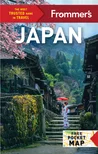
Destination Guide Destination Guide Frommer's Japan, 9th Edition Destination Guide Frommer's Japan, 9th Edition

Author: Beth Reiber
Pub Date: August 04, 2008
Price: $24.99

Add to Cart
Destination Guide Destination Guide Destination Guide Related Titles:
Comrades and Strangers: Behind the Closed Doors of North Korea
Destination Guide
Frommer's Bangkok Day by Day, 1st Edition
Destination Guide
Frommer's Beijing Day by Day, Official U.S.O.C. Edition, 1st Edition
Destination Guide
Destination Guide Destination Guide
Destination Guide Destination Guide Destination Guide
Destination Guide
Destinations
Destinations
Home > Destinations > Asia > Japan > Planning a Trip > Fast Facts