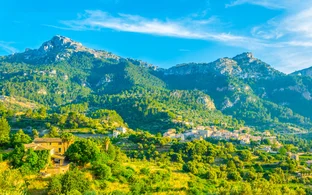
engel.ac / Shutterstock
Majorca Travel Guide
The most popular of Spain’s Mediterranean islands, Mallorca draws millions of visitors each year. About 209km (130 miles) from Barcelona and 145km (90 miles) from Valencia, Mallorca has a coastline 500km (311 miles) long. An explorer’s paradise in its interior, it’s overbuilt along certain coastal regions. The north is mountainous; the fertile southern flatlands offer olive and almond groves interrupted by windmills. The main city, Palma, is the financial and political capital of the Balearic Islands.
The golden sands of Mallorca are famous, with lovely beaches such as Ca’n Pastilla and El Arenal, but tend to fill with package tourists. Both Cala Mayor and Sant Agustí have good beaches, including Playa Magaluf, the longest beach on the Calvía coast. Cala de San Vicente, 6.5km (4 miles) north of Pollença, is a beautiful beach bordered by a pine grove and towering cliffs. Stretches of golden beach lie between Cala Pi and Cala Murta on the Formentor peninsula. You can swim from June to October. Warning: don’t believe the promoters who try to sell you on mild Mallorcan winters in January and February—it gets downright cold.
Majorca: Not an Island for All Seasons
July and August are high season for Mallorca; don’t even think of coming then without a reservation. It’s possible to swim comfortably from June to October; after that, the water is prohibitively cold and many hotels and restaurants close until May.
Start Exploring

Things To Do in Majorca