Bear Foto / Shutterstock
Nerja Travel Guide
52km (32 miles) E of Málaga, 168km (104 miles) W of Almería, 548km (340 miles) S of Madrid
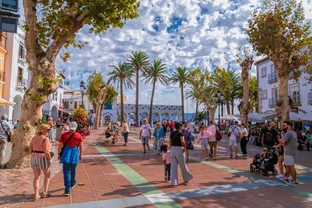
The picturesque village of Nerja puts its best face forward. Flowering plants bedeck the whitewashed buildings with ebullient color. Everything in town focuses on the Balcón de Europa, overlooking the ocean. This palm-shaded promenade juts defiantly out into the Mediterranean. Although it is crowded with visitors looking for selfie angles, it is also perhaps the most gracious spot on the coast east of Marbella’s alameda.
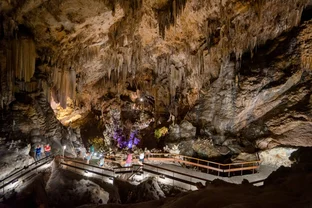
At the mouth of the Chillar River, Nerja gets its name from the Arabic word narixa, meaning "bountiful spring." Nerja is known for its pebbly beaches and small coves, its seclusion, its narrow streets and courtyards, and the peculiar flat-roofed architecture of its houses. Nearby is one of Andalucía’s top geological attractions, La Cueva de Nerja. To reach the best beaches, head west from the Balcón and follow the shoreline.
Nerja is known for its good beaches and small coves, its seclusion, its narrow streets and courtyards, and its whitewashed flat-roofed houses. Nearby is one of Spain's greatest attractions, the Cave of Nerja.
Its most dramatic spot is the Balcón de Europa (Balcony of Europe), a palm-shaded promenade jutting out into the Mediterranean. The walkway was built in 1885 in honor of a visit from the Spanish king Alfonso XIII in the wake of an earthquake that had shattered part of nearby Málaga. To reach the best beaches, head west from the Balcón and follow the shoreline.