Luca Quadrio / Shutterstock
Orange Travel Guide
658km (409 miles) S of Paris; 55km (34 miles) NE of Nîmes; 26km (16 miles) S of Avignon
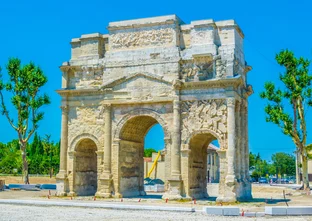
Antiquities-rich Orange was not named for citrus fruit, but as a dependency of the Dutch House of Orange-Nassau during the Middle Ages. It is home to two UNESCO World Heritage sites: Europe’s third-largest triumphal arch and its best-preserved Roman theatre. Louis XIV, who once considered moving the theatre to Versailles, claimed: “It is the finest wall in my kingdom.” The Théâtre Antique is now the site of Les Chorégies d’Orange (www.choregies.fr), a summertime opera and classical music festival.
Just 10km (6 miles) south along the D68 is Châteauneuf-du-Pape, a prestigious appellation known for its bold red wines. Spend an afternoon visiting the village’s numerous tasting rooms, winding your way up to the ruins of a castle that served as a summer residence for Pope John XXII. A prime place to best to try a wide selection of top wines is at the Vinothèque, or wine library, of Vinadea (www.vinadea.com), where a union of Châteauneuf-du-Pape wines are stored. A 25€ dégustation of five wines accompanies a historical lesson about the region, all held in a cool cellar.
Wine-lovers may also drop into the Maison Brotte Wine Museum, av. Saint Pierre de Luxembourg (www.brotte.com; tel. 04-90-83-59-44). Displays include ancient vineyard tools and a 17th-century wooden wine press. The museum is open daily 9am to 5:45 pm. Admission is 12€.