Home > Destinations > Europe > France > Paris > Restaurants
Bookstore Travel Talk - Our Message Boards Tips and Tools Book a Trip Deals and News Trip Ideas, Activities, Lifestyles Hotels Destinations Frommers.com Home
Frommer's - The best trips start here. Frommer's - The best trips start here.
Sign up for our FREE Newsletters! Win a FREE Trip
  Email This Article Email Print This Article Print Get Frommer's RSS Feed RSS

Restaurants

Welcome to the city that prides itself on being the world's culinary capital. Only in Paris can you turn onto the nearest little crooked side street; enter the first nondescript bistro you see; sit down at a bare, wobbly table; order from an illegibly hand-scrawled menu; and get a wonderfully memorable meal.

Can You Dine Badly in Paris? -- The answer is an emphatic yes. Our mailbox fills with complaints from readers who've encountered haughty service and paid outrageous prices for swill. Often, these complaints are about restaurants catering to tourists. Avoid them by following our suggestions or looking in nontouristy areas for new discoveries. If you ask Parisians for recommendations, specify that you're looking for restaurants where they would dine, not where they think you, as a tourist, would dine.

Don't Leave Home without Them -- No matter how long you stay in Paris, we suggest you indulge in at least one break-the-bank French meal at a fabulous restaurant. It will be a memory you'll treasure long after you've recovered from paying the tab. However, to get a table at one of these places, you must reserve far in advance -- at least a day or two ahead, sometimes even a few weeks or months ahead! We suggest you look over these listings and call for reservations before you leave home or at least as soon as you get into town.

What's Cooking in France? -- Once you arrive in Paris, you'll find that the word "French," although used frequently, isn't very helpful in describing cuisine. "French" covers such a broad scope that it doesn't prepare you for the offerings of the specialty chefs. Even the Parisians themselves might ask, "What type of French cooking?"

Sometimes a chef will include regional specialties, classic dishes, and even modern cuisine all on one menu. In that case, such a restaurant is truly "French." Other chefs prefer a more narrow focus and feature the cooking of one region or one style -- classic or modern. Still others prefer to strike a middle ground between classic and modern; they're called "creative."

Regional cuisine showcases the diversity of the provinces of France, from Alsace on the German border to the Basque country at the frontier of Spain. The climate has a lot to do with this diversified offering -- olive oil, garlic, and tomatoes from Provence in the south to oysters and saltwater fish from Brittany. Every region is known for special dishes -- Burgundy for its escargots plucked off the grapevines; Périgord for its truffles and foie gras; Normandy for its soft, rich cheeses, Calvados, and cream sauces; and Alsace for its sauerkraut and wines. Today, one or more restaurants in Paris represent almost every region of France. You can go on a complete culinary tour of the country without leaving the city.

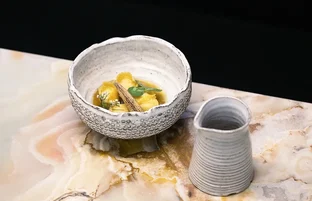
Few chefs today use the expression "nouvelle cuisine," now called "modern." This cooking style, which burst upon us in the early 1970s, is now old hat (or should we say old toque?). It was a rebellion against the fats, butter, and sauces of haute cuisine, and used reductions of foodstuff to create flavor, along with vegetable purées and lighter ingredients. Portions were reduced. Diners were shocked to see a piece of boeuf (beef) the size of an egg on their plate under a slice of fresh kiwi. Created in the name of innovation, many of these dishes were successful, while others, such as asparagus ice cream, were dismal failures.

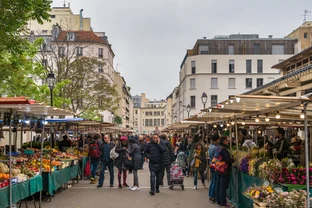
From nouvelle cuisine grew cuisine improvisée, which is creative cookery based on the freshest ingredients available. Chefs make their selections at the morning market and then rush back to their kitchens to create spontaneously, often while dictating the menu of the day to an assistant who rushes it into print.

But fans of the great chef Escoffier can rest assured that modern hasn't replaced classic cuisine--France is still awash in béchamel and ablaze with cognac. Haute gastronomie is alive and thriving at restaurants not only in Paris, but also throughout France. This richly extravagant fare is often lethal in price as it makes use of expensive ingredients, including fatted ducks, lobster, truffles, and plenty of butter and cream, plus sauces that consume endless time in their preparation. Breaking from Escoffier, many chefs today have forged ahead with a "new classic cuisine," in which they have taken classic dishes and branded them with their own distinctive style and flavor, often reducing the calories.

Paris's Range of Restaurants -- Paris boasts a surplus of restaurants and cafes. Ultra-expensive temples of gastronomy include Alain Ducasse, L'Astor, Taillevent, Pierre Gagnaire, Lasserre, Jacques Cagna, Le Grand Véfour, and La Tour d'Argent. Savvy diners confine their trips to luxe places for special occasions. An array of other choices awaits, including simpler restaurants dispensing cuisine from every province of France and former colonies such as Morocco and Algeria.

Paris has hundreds of restaurants serving exotic international fare, reflecting the changing complexion of Paris itself and the city's increasing appreciation for food from other cultures. Your most memorable meal in Paris may turn out to be Vietnamese or West African.

You'll also find hundreds of bistros, brasseries, and cafes. In modern times, their designations and roles have become almost meaningless. Traditionally, a bistro was a small restaurant, often with Mom at the cash register and Pop in the kitchen. Menus are most often handwritten or mimeographed, and the selection of dishes tends to be small. They can be chic and elegant, sometimes heavily Mediterranean, and often dispensing gutsy fare, including the pot-au-feu (beef simmered with vegetables) that the chef's grandmother prepared for him as a kid.

French for "brewery," most brasseries have an Alsatian connection, and that means lots of beer, although Alsatian wines are also featured. Brasseries are almost always brightly lit and open 24 hours. Both snacks and full meals are available. The Alsatian establishments serve sauerkraut with an array of pork products.

The cafe is a French institution and not just a place for an aperitif, a café au lait, or a croissant. Many cafes serve rib-sticking fare as well, certainly entrecôte (rib steak) with french fries, but often classics such as blanquette de veau (veal in white sauce).

More attention in the late 1990s focused on the wine bar, a host of which we recommend in chapter 11, "Paris After Dark." Originally, wine bars concentrated on their lists of wines, featuring many esoteric choices and ignoring the food except for some charcuterie (cold cuts) and cheeses. Today, you're likely to be offered various daily specials, from homemade foie gras to boeuf à la mode (marinated beef braised with red wine and served with vegetables).

Paris prices may seem extravagant to visitors from other parts of the world, particularly those who don't live in big cities, but there has been an emergence of moderately priced informal restaurants here, and we recommend several.

Although not as fashionable as before, baby bistros are still around. At these reasonably priced spinoffs from deluxe restaurants, you can get a taste of the cuisine of famous chefs without breaking the bank. We cover the best of them.

Dining Savoir-Faire

  • Most restaurants serve lunch between noon and 2:30pm and dinner from 7 to 10pm. In a cafe, if you stand at the bar for a drink, coffee, or sandwich, prices are reduced from what they would be if you were seated at a table. French cookery reaches perfection when accompanied by wine. The general label on bottles of national wine is known as Appellation d'Origine Contrôllée (abbreviated AOC). Wine labels are narrowed down to a particular vine-growing region. Of course, labels are only part of the story: It's the vintage that counts.

  • Some of the most satisfying wines come from unlabeled house bottles or carafes, called vin de la maison. They're also the cheapest wines served. Some restaurants include a beverage in their fixed-price menu (boisson compris). French beers are cheaper than imported beers. One of the best French beers has a German sounding name. It's Kronenbourg, and it's bottled in Alsace.

  • Three-star dining remains quite expensive, with appetizers sometimes priced at 58€ ($75) and dinners easily costing 185€ to 250€ ($241-$325) per person in the top dining rooms of celebrated chefs. But you can get around that high price tag in many places by dining at lunch (when prices are always cheaper) or ordering a prix-fixe meal at lunch or dinner.

  • The prix-fixe (fixed-price) menu or le menu is a set meal that the chef prepares that day. It is most often fresh and promptly served, and represents a greater bargain than dining a la carte. Of course, it's limited, so you'll have to like the choices provided. Sometimes there are one to three menus, beginning with the less expensive and going up for a more elaborate meal. A lot depends on your pocketbook and appetite.

  • In France, lunch (as well as dinner) tends to be a full-course meal with meat, vegetables, salad, bread, cheese, dessert, wine, and coffee. It may be difficult to find a restaurant that serves the type of light lunch North Americans usually eat. Cafes, however, offer sandwiches, soup, and salads in a relaxed setting.

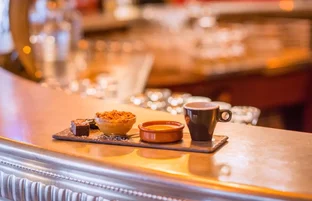
  • Coffee in France is served after the meal and carries an extra charge. The French consider it barbaric to drink coffee during the meal and, unless you order it with milk (au lait), it'll be served black. In more conscientious places, it's prepared as the traditional café filtre, a slow but rewarding java draw.

  • In years gone by, no man would consider dining out, even at the neighborhood bistro, without a suit and tie, and no woman would be seen without a smart dress or suit. That dress code is more relaxed now, except in first-class and luxe establishments. Relaxed doesn't mean sloppy jeans and jogging attire, however. Parisians still value style, even when dressing informally.

  • Sometimes service is added to your tab -- usually 12% to 15%. If not, look for the words service non compris on your bill. That means that the cost of service was not added, and you'll be expected to leave a tip.


    Back to Top


    Best Dining Bets     List All Restaurants


    Maps

    Note: This information was accurate when it was published, but can change without notice. Please be sure to confirm all rates and details directly with the companies in question before planning your trip.


      Email This Article Email Print This Article Print Get Frommer's RSS Feed RSS
    Frommer's Paris 2008 Frommer's Paris 2008

    Author: Darwin Porter
    Pub Date: August 27, 2007
    Price: $17.99

    Buy Now!
    Related Titles:
    France For Dummies, 4th Edition
    Frommer's 24 Great Walks in London, 1st Edition
    Frommer's 24 Great Walks in Paris, 1st Edition
    Sponsored Links: What's This?
    Fall 2008 River Cruises - Use code FRHSRC200 by Aug 15 at time of booking to save!
    Holiday River Cruises - Use code FRHSRC200 by Aug 15 at time of booking to save!
  • Add Frommers.com RSS Feed  Add Frommers.com RSS Feed (What's This?)
    Add Frommers.com Deals & News to Your Web Site
    Add to My Yahoo!     Add to My MSN     More RSS Readers
    Add Frommers.com Podcast Add Frommers.com Podcast (What's This?)
    Home > Destinations > Europe > France > Paris > Restaurants