|
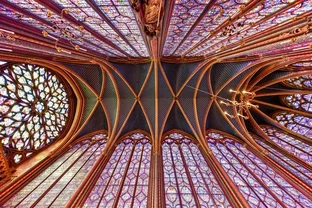
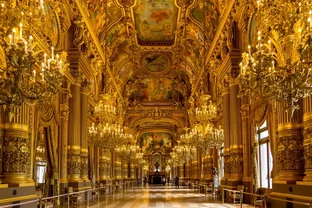
The NeighborhoodsTHE RIGHT BANK Les Halles, Louvre and Palais Royal (1er and 2e) Crowned by the Louvre, this central area that flanks the Seine packs in a high density of important museums, centered around the magnificent former royal palace and its expansive Jardin des Tuileries. Though the Louvre is on top of most visitors' to do lists, don't forget that there's also some wonderful smaller museums close by, and great shopping too. The New Les Halles -- For eight centuries, Les Halles was the city's primary wholesale fruit, meat, and vegetable market. In the 19th century, Zola famously called it "the belly of Paris." The smock-clad vendors, beef carcasses, and baskets of vegetables all belong to the past, for the original market was torn down in the early '70s and relocated to a massive steel-and-glass edifice at Rungis, a suburb near Orly. Today, Les Halles includes the city's chief transportation hub and a major shopping complex, the Forum des Halles (1-7 rue Pierre-Lescot, 1er). This large mall, much of it underground, contains shops, restaurants, and movie theaters. In 2010, the city embarked on a massive 810-million euro renovation program that will overhaul the underground shopping and transportation zones as well as the garden above. Renovations are slated to be completed in 2016, but the complex should remain open and operational during the renovations. For more information, visit www.parisleshalles.fr. Le Marais, Ile St-Louis and Ile de la Cité (3e and 4e) This historic neighborhood, home to royalty and aristocracy in the 17th and 18th centuries, preserves exceptional architecture -- some of it dating back to the Renaissance. Its narrow, winding streets are from another age. While it features some blockbuster attractions, including the Hôtel de Ville and the Centre Pompidou, the Marais is notable for its density of charming smaller museums, where you hopefully won't be fighting through crowds. The two islands in the Seine -- Ile St-Louis and Ile de la Cité -- set the stage for some impressive medieval monuments, the Cathédrale de Notre-Dame, the Conciergerie, and the glorious Sainte-Chapelle. Note: the Musée Picasso, which has been closed for renovations over the past few years, should reopen in 2012. Pont Neuf -- Don't miss the ironically named Pont Neuf (New Bridge) at the tip of the Ile de la Cité island, opposite from Notre-Dame. The span isn't new -- it's Paris's oldest bridge, begun in 1578 and finished in 1604. In its day, it had two unique features: It was paved, and it wasn't flanked with houses and shops. Actually, with 12 arches, it's not one bridge but two (they don't quite line up) -- one from the Right Bank to the island and the other from the Left Bank to the island. At the Musée Carnavalet, a painting called The Spectacle of Buffoons shows what the bridge was like between 1665 and 1669. Duels were fought on it, the nobility's great coaches crossed it, peddlers sold their wares, and entertainers such as Tabarin went there to seek a few coins from the gawkers. As public facilities were lacking, the bridge also served as a de facto outhouse. Champs-Élysées and Western Paris (8e, 16e and 17e) Money and power dominate this neighborhood and its emblematic avenue, the Champs-Élysées. There is also a wealth of exceptional museums here from the Musée d'art Moderne, a testament to Paris's Modernist glory days, to the Palais de Tokyo, a pioneering contemporary art space. In this area, you'll also find the Maison Baccarat, the Musée Nissim de Camondo, and the Musée Jacquemart-André. Opéra and Canal St-Martin (9e and 10e) The impressive Opéra Garner dominates its dynamic neighborhood, which delivers perhaps more opportunities for outstanding retail experiences than for cultural ones. But perhaps the greatest attraction in this area is the picturesque Canal St-Martin itself. It connects the river Seine, near Bastille, to the Canal de l'Ourcq, near the Villette in the 19th arrondissement. When Parisians talk about le canal, they are usually referring to the popular stretch of the Quais Jemmapes and Valmy, which begins just above République and runs up by the Gare de l'Est. The canal was inaugurated in 1825 with the aim of bringing fresh drinking water to the heart of the city. During the 19th and early 20th centuries, this water highway attracted much commerce and industry to the surrounding areas. Painter Alfred Sisley was inspired by this canal -- you can admire his painting "Vue du canal Saint-Martin à Paris" (1870) at the Musée d'Orsay. After almost being destroyed in the 1970s to make way for more roads, the canal was classified as a historic monument in 1993, and today, visitors can explore the canal at their leisure. If you'd like to take a scenic boat tour of the canal, contact Paris Canal (tel. 01-42-40-96-97; www.pariscanal.com) or Canauxrama (tel. 01-42-39-15-00; www.canauxrama.com). Pigalle and Montmartre (18e) Perched on the city's highest point, the Sacré-Coeur basilica may be the area's only significant monument, but Montmartre's cobblestone streets and unique, villagelike architecture are an attraction in themselves. The harmless red-light district of neighboring Pigalle can't be reduced to a single attraction either, but it is an exciting area to explore. République, Bastille and Eastern Paris (11e and 12e) The two public squares, Place de la République and Place de la Bastille, provide a historical and geographical heart to these two largely residential neighborhoods. Place de la Bastille -- This square is symbolic of the French Revolution, which began here with the storming of the Bastille prison on July 14, 1789. (This date continues to mark Bastille Day, a French national holiday.) Almost nothing remains of the prison, except for a few foundations -- you can see one from the platform of line 5 at Bastille Métro station. The statue in the middle of the square, the July Column, was inaugurated in 1840 in commemoration of the Trois Glorieuses, or 3 days of insurrections in 1830 that brought down the French monarchy for a second time. The square's rich political symbolism makes it a preferred location for various public meetings and demonstrations, hosting everything from the Gay Pride Parade to Socialist Party events. Former president François Mitterand even celebrated his 1981 election victory here. Note that the city's second national opera house, l'Opéra Bastille, is located on the southeastern rim of the square; it's regularly criticized for its architecture and reportedly average acoustics. Place de la République -- The colossal bronze monument in the middle of the Place de la République was inaugurated on July 14, 1883, in celebration of the French Republic. The figure of Marianne, a symbol of the French state, sits on a carved stone column that is decorated with allegories of liberté, égalité, and fraternité. Marianne holds an olive branch as a symbol of peace in her right hand, and in her left, a tablet inscribed with the Rights of Man (les Droits de l'Homme). Because of its powerful symbolism, the monument is the preferred departure point for many left-wing demonstrations. Belleville and Northeast Paris (19e and 20e) Located on the edge of Paris, La Villette not only encompasses Paris's biggest park, Parc de la Villette, it is an exceptional 21st-century cultural compound including museums, concert halls, circus tents, and exhibition spaces that host a great year-round program. The lure of this former industrial zone is its outdoor attractions: In addition to La Villette, the renowned Père-Lachaise cemetery and the wonderful Buttes Chaumont park are also located in this area. Note that the area around the Belleville Métro station is also home to one of the city's bustling Chinatowns. THE LEFT BANK Latin Quarter (5e) This leafy neighborhood is defined by the medieval university at its heart: the Sorbonne. In fact, it gets its name from the Latin the students spoke in their classes there up until 1793. The Roman occupation, from 52 B.C. until A.D. 486, remains visible too; the Rue Saint-Jacques and Boulevard Saint-Michel mark the former Roman cardo, and you can explore Roman ruins at the Cluny Museum. St-Germain-des-Prés and Luxembourg (6e) This neighborhood in the 6th arrondissement was the postwar home of existentialism, associated with great writers and philosophers Jean-Paul Sartre, Simone de Beauvoir, Albert Camus, and an intellectual bohemian crowd that gathered at Café de Flore or Les Deux Magots. St-Germain-des-Prés still retains an intellectually stimulating bohemian street life, full of many interesting bookshops, art galleries, caveau (basement) clubs, bistros, and coffeehouses. But the stars of the area are two churches, St-Germain-des-Prés and St-Sulpice, and the Musée National Eugène Delacroix. Gregorians Unplugged -- St-Germain-des-Prés stages wonderful concerts on the Left Bank; it boasts fantastic acoustics and a marvelous medieval atmosphere. The church was built to accommodate an age without microphones, and the sound effects will thrill you. For more information, call tel. 01-55-42-81-33 or visit www.eglise-sgp.org. Arrive about 45 minutes before the performance if you'd like a front-row seat. Tickets are 15€ to 50€. Eiffel Tower and Nearby (7e) The Eiffel Tower has become a symbol for Paris itself. For years it remained the tallest man-made structure on earth, until skyscrapers such as the Empire State Building surpassed it. After admiring and climbing the elegant structure, stroll west along the river to two other important attractions: the Musée du Quai Branly and the Musée d'Orsay. Montparnasse and Southern Paris (13e, 14e and 15e) For the "Lost Generation," life centered around the cafes of Montparnasse, at the border of the 6th and 14th arrondissements. Hangouts such as the Dôme, Coupole, Rotonde, and Sélect became legendary, as artists -- especially American expats -- turned their backs on touristy Montmartre. Picasso, Amedeo Modigliani, Man Ray, and Hemingway frequented this neighborhood, as did Fitzgerald when he was poor (when he was rich, you'd find him at the Ritz). William Faulkner, Archibald MacLeish, Joan Miró, James Joyce, Ford Madox Ford, and even Leon Trotsky spent time here. Today Montparnasse plays second fiddle to St-Germain-des-Près, though the Jean Nouvel-designed Fondation Cartier remains a real stand out. A different French architect, Dominique Perrault, is behind the massive new national library out in the 13th arrondissement, which signals the resurrection of this former industrial heartland. BEYOND CENTRAL PARIS With regular Métro, train, and bus service, it is easy to access the major attractions outside of Paris, like Basilique St-Denis and La Grande Arche de la Défense.
Note: This information was accurate when it was published, but can change without notice. Please be sure to confirm all rates and details directly with the companies in question before planning your trip. Related Features Deals & News
|
|
|||||||||||||||||||||||