Alexey Fedorenko / Shutterstock
Perpignan Travel Guide
849km (527 miles) SW of Paris; 318km (197 miles) NW of Marseille; 64km (40 miles) S of Narbonne
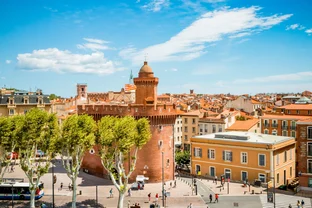
Perpignan is a flourishing city with several grand new renovation projects and buildings. The former capital of the kingdom of Majorca and second city of Catalonia is just 45 min. from Barcelona, making it a Catalan cultural and business hub and confirming its multi-cultural status. Perpignan’s new Espace Méditerranée neighborhood around the Théâtre de l’Archipel arts complex was designed by France’s favorite architect, Jean Nouvel.
Perpignan retains the relaxed pace it is famous for. At night things heat up as it embodies the late-night culture and love of partying of its Spanish neighbors.
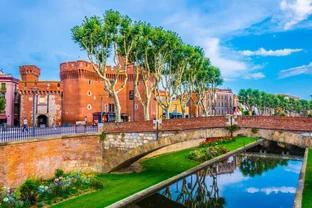
This is one of the sunniest places in France, but during summer afternoons in July and August, it’s a cauldron. That’s when many locals catch the 9.5km (6-mile) ride to the beach resort of Canet-en-Roussillon. Bus no. 63 runs from the center of Perpignan every 30 min. in the summer and costs 1.30€. A young scene brings energy to Perpignan, especially along the flower-decked quays of the Basse River, site of impromptu nighttime concerts, beer drinking, and tapas eating, a tradition adopted from nearby Barcelona.