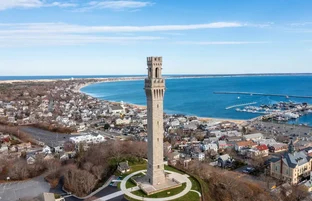
Provincetown Travel Guide
56 miles NE of Sandwich; 42 miles NE of Hyannis
You made it all the way to the end of the Cape: one of the most interesting, rewarding spots on the Eastern seaboard. Throughout history the place has thrilled just about everyone who's come here. Explorer Bartholomew Gosnold was surely pleased in 1602, when he and his crew happened upon a "great stoare of codfysshes" here (it wasn't quite the gold they were seeking, but valuable enough to warrant changing the peninsula's name). The Pilgrims, of course, were overjoyed when they slogged into the harbor 18 years later: Never mind that they'd landed several hundred miles off course -- it was a miracle they'd made it around the treacherous Outer Cape at all. Portuguese fishing and whaling crews from the Azores came here on purpose, found the sea generous, and built a life.
The painter Charles Hawthorne "discovered" the near-derelict fishing town in the late 1890s. Besotted by the "jumble of color in the intense sunlight accentuated by the brilliant blue of the harbor," he introduced the place to New York City's Greenwich Village intelligentsia. He'd probably be aghast at the commercial circus that rolls into town each summer, but he'd no doubt be proud that the Provincetown Art Association & Museum, which he helped found in 1914, is still going strong.
Every so often, Provincetown has had an off year or dull stretch, but the town is wholeheartedly dedicated to creative expression, both visual and verbal, and right now it's on a roll. Some would ascribe the inspiration to the quality of the light (and it is particularly lovely -- soft and diffuse) or the solitude afforded by long, lonely winters. But the general atmosphere of open-mindedness plays at least as pivotal a role, allowing a very varied assortment of individuals to pull together in pushing the cultural envelope. That same warm embrace of different lifestyles accounts for Provincetown's ascendancy as a gay and lesbian resort. During peak season, Provincetown's streets are a celebration of individual freedom and of the right to be as out as imagination allows.
The very traditional, devout Portuguese-American community still plies the maritime trades in Provincetown, and you might think that such a conservative culture would clash with free-spirited gays and artists. In fact, "family values" enjoy a very broad definition in this isolated settlement founded by the adventurous. Those who have chosen Provincetown (affectionately referred to as "P-town") know they live in a very special place, and in that, they have something precious in common.