Home > Destinations > Europe > Italy > Rome > Restaurants
Frommers.com Frommers.com
Most Recent Rome Forum Posts
Most Recommended Articles
Most Commented Articles
  Print This Article Print Get Frommer's RSS Feed RSS

Restaurants

Rome remains one of the world's great capitals for dining, with more diversity today than ever. Although most of the trattorie haven't changed their menus in a quarter of a century (except to raise prices), there's an increasing number of chic, upscale spots with chefs willing to experiment, as well as a growing handful of ethnic spots for those days when you just can't face another plate of pasta. The great thing about Rome is that you don't have to spend a fortune to eat really well.

It's difficult to compile a list of the best restaurants in a city such as Rome. Everybody -- locals, expatriates, even those who have chalked up only one visit -- has personal favorites and finds. This is not a comprehensive list of all the best restaurants of Rome, but simply a running commentary on a number of our favorites. For the most part, we've chosen not to review every deluxe spot known to all big spenders. We've chosen a handful of splurge restaurants where you'll really get what you pay for, and then we've reviewed a large selection of moderately priced and affordable restaurants where you'll get a wonderful meal, authentic cuisine, and a lovely experience without breaking the bank.

Roman meals customarily include at least three separate courses: pasta, a main course (usually a meat dish with vegetables or salad), and dessert. Meats, though tasty, are definitely secondary to the pasta dishes, which are generous and filling. The wine is so excellent (especially the local white Frascati wine) and affordable that you might want to do as the Romans do and have it with both lunch and dinner.

Roman Cuisine

Many visitors from North America erroneously think of Italian cuisine as one-dimensional. Of course, everybody's heard of minestrone, spaghetti, chicken cacciatore, and spumoni ice cream. But chefs hardly confine themselves to such a limited repertoire.

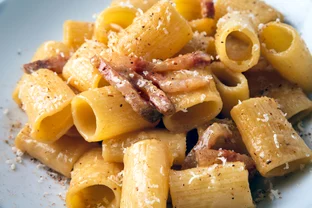
Rome's cooking isn't subtle, but its kitchens rival anything that the chefs of Florence or Venice can turn out. The city's chefs borrow -- and sometimes improve on -- the cuisine of other regions. Throughout your Roman holiday you'll encounter such savory treats as zuppa di pesce (a soup or stew of various fish, cooked in white wine and herbs), cannelloni (tube-shape pasta baked with any number of stuffings), riso col gamberi (rice with shrimp, peas, and mushrooms, flavored with white wine and garlic), scampi alla griglia (grilled prawns, one of the best-tasting and most expensive dishes in the city), quaglie con risotto e tartufi (quail with rice and truffles), lepre alla cacciatore (hare flavored with tomato sauce and herbs), zabaglione (a cream made with sugar, egg yolks, and Marsala), gnocchi alla romana (potato-flour dumplings with a sauce made with meat and covered with grated cheese), stracciatella (chicken broth with eggs and grated cheese), abbacchio (baby spring lamb, often roasted over an open fire), saltimbocca alla romana (literally "jump-in-your-mouth" -- thin slices of veal with cheese, ham, and sage), fritta alla romana (a mixed fry that's likely to include everything from brains to artichokes), carciofi alla romana (tender artichokes cooked with mint and garlic, and flavored with white wine), fettuccine all'uovo (egg noodles served with butter and cheese), zuppa di cozze o vongole (a hearty bowl of mussels or clams cooked in broth), fritta di scampi e calamaretti (fast-fried baby squid and prawns), fragoline (wild strawberries, in this case from the Alban Hills), and finocchio (fennel, a celery-like raw vegetable, often eaten as a dessert and in salads).

Incidentally, except in the south, Italians don't use as much garlic in their food as most visitors seem to believe. Most northern Italian dishes are butter based. Virgin olive oil is preferred in the south. Spaghetti and meatballs is not an Italian dish, although certain restaurants throughout the country have taken to serving it for homesick Americans.

Wines & Other Drinks

Italy is the largest wine-producing country in the world; as far back as 800 B.C., the Etruscans were vintners. It's said that more soil is used in Italy for the cultivation of grapes than for growing food. Many Italian farmers produce wine just for their own consumption or for their relatives. It wasn't until 1965, however, that laws were enacted to guarantee regular consistency in wine making. Wines regulated by the government are labeled DOC (Denominazione di Origine Controllata). If you see DOCG on a label (the G means garantita), it means even better quality control.

Lazio (Rome's region) is a major wine-producing region of Italy. Many of the local wines come from the Castelli Romani, the hill towns around Rome. These wines, experts agree, are best drunk when they are young; and they are most often white, mellow, and dry (or else demi-sec). There are seven different types, including Falerno (yellowish straw in color) and Cecubo (often served with roast meat). Try also Colli Albani (straw-yellow with amber tints and served with both fish and meat). The golden-yellow wines of Frascati are famous, produced in both a demi-sec and a sweet variety, the latter served with dessert.

Romans drink other libations as well. Their most famous drink is Campari, bright red in color and herb flavored, with a quinine-like bitterness to it. It's customary to serve it with ice cubes and soda.

Beer is also made in Italy and, in general, is lighter than German beer. If you order beer in a Roman bar or restaurant, chances are good that it will be imported unless you specify otherwise, and you'll be charged accordingly. Some famous names in European beer-making now operate plants in Italy, where the brew has been "adjusted" to Italian taste.

High-proof grappa is made from the leftovers after the grapes have been pressed. Many Romans drink this before or after dinner (some put it into their coffee). To an untrained foreign palate, it often seems harsh; some say it's an acquired taste.

Other popular drinks include several liqueurs. Try herb-flavored Strega, or perhaps an almond-flavored Amaretto. One of the best known is Maraschino, taking its name from a type of cherry used in its preparation. Galliano is also herb flavored, and Sambuca (anisette) is made of aniseed and is often served with a "fly" (coffee bean) in it. On a hot day, the true Roman orders a vermouth, Cinzano, with a twist of lemon, ice cubes, and a squirt of soda water.

Take a Gelato Break

If you're craving luscious gelato, our top choice is Giolitti, Via Uffici del Vicario 40 (tel. 06-6991243; www.giolitti.it), the city's oldest ice-cream shop, open daily from 7am to 1:30am. You'll find the usual vaniglia (vanilla), cioccolato (chocolate), fragola (strawberry), and caffé (coffee), but you'll also find great combinations like gianduia (chocolate hazelnut), plus such treats as cassata alla siciliana (orange-flavored sponge cake with canola cream), zabaglione (light custard flavored with Marsala-sweet wine), mascarpone (crème fraiche, double cream, and buttermilk) and maron glace (chestnuts in a vanilla and butter glaze). The preposterously oversize showpiece sundaes have names such as Coppa Olimpica (made with sponge cake, zabaione, nougat, chocolate, and a touch of liquor flavoring). Other ice-cream flavors include stracciatella, champagne, yogurt, coconut, peach, apricot, grape, mandarin, and blackberry.

Another favorite is the Palazzo del Freddo Giovanni, Via Principe Eugenio 65-67 (tel. 06-4464740). More than 100 years old, this ice-cream outlet (part of a gelato factory) turns out yummy concoctions and specializes in rice ice cream. It's open Tuesday through Sunday from noon to 12:30am.

If you're fond of frothy frullati frappes, head to Pascucci, Via Torre Argentina 20 (tel. 06-6864816), where blenders work all day grinding fresh fruit into delectable drinks. It's open Monday through Saturday from noon to 1am.

Prices at these shops range from 2€ to 8€ ($3.20 to $13).

Quick Bites

Lunchtime offers you the perfect opportunity to savor Roman fast food: pizza rustica, by the slice (often called pizza à taglio), half wrapped in waxed paper for easy carrying. Just point to the bubbling, steaming sheet with your preferred toppings behind the counter; 2.50€ ($4) buys a healthy portion of "plain" tomato sauce: basil-and-cheese pizza margherita. Pizza rossa (just sauce) and pizza con patate (with cheese and potatoes) cost even less, as does the exquisitely simple pizza bianca (plain dough brushed with olive oil and sprinkled with salt and sometimes rosemary).

A rosticceria is a pizza à taglio with spits of chickens roasting in the window and a few pasta dishes kept warm in long trays. You can also sit down for a quick pasta or prepared meat dish steaming behind the glass counters at a tavola calda (literally "hot table") for about half the price of a trattoria. A Roman bar, though it does indeed serve liquor, is what we'd call a cafe, a place to grab a cheap panino (flat roll stuffed with meat, cheese, or vegetables) or tramezzino (large triangular sandwiches on white bread with the crusts cut off).

Near Campo De' Fiori & the Jewish Ghetto

Inexpensive -- Vegetarians looking for monstrous salads (or anyone who just wants a break from heavy meats and starches) can find great food at the neighborhood branch of Insalata Ricca, Largo dei Chiavari 85 (tel. 06-68803656).

Near the Vatican

Inexpensive -- The sixth branch of Insalata Ricca, the popular chain of salad-and-light-meals restaurants, is across from the Vatican walls at Piazza del Risorgimento 5 (tel. 06-39730387).

In Villa Borghese

A Romantic Picnic in the Borghese Gardens -- Our favorite place for a picnic in all of Rome is in the Borghese Gardens, followed by a reserved visit to the Galleria Borghese. Gina, 7A Via San Sebastianello (tel. 06-6780251), has come up with a marvelous idea. This deli will provide you with a hamper complete with thermos, glasses, and linen for a picnic to be enjoyed in the fabled gardens. For 40€ ($64), two persons can enjoy panini (tomato, eggplant, and mozzarella on focaccia) along with a fresh fruit salad, dessert, and coffee.


Back to Top


Best Dining Bets     List All Restaurants


Maps

Note: This information was accurate when it was published, but can change without notice. Please be sure to confirm all rates and details directly with the companies in question before planning your trip.


  Print This Article Print Get Frommer's RSS Feed RSS
Destination Guide
Destination Guide Destination Guide Destination Guide
Destination Guide Destination Guide Frommer's Rome, 19th Edition Destination Guide Frommer's Rome, 19th Edition

Author: Darwin Porter
Pub Date: December 31, 2008
Price: $16.99

Add to Cart
Destination Guide Destination Guide Destination Guide Related Titles:
Frommer's 24 Great Walks in Rome, 1st Edition
Destination Guide
Frommer's 24 Great Walks in Venice, 1st Edition
Destination Guide
Frommer's Florence and Tuscany Day by Day, 2nd Edition
Destination Guide
Destination Guide Destination Guide
Destination Guide Destination Guide Destination Guide
Destination Guide
Destinations
Destinations
Home > Destinations > Europe > Italy > Rome > Restaurants