|
Roman Forum (Foro Romano), Palatine Hill (Palatino), and Palatine Museum (Museo Palatino)
|
||||||||||||||||||||||||||||||||||||||||||||||||||||||||||||||||||||||||||||||||||||||||||||||||||||||||||||||||||||||||||||||||||||||||||||||||||||||||||||||||||||||||||||||||||||||||||||||||||||||||||||||||||||||||||||||||||||||||||||||||
| Hours | Guided tours of Roman Forum daily 1pm. Oct 30-Feb 15 daily 8:30am-4:30pm; Feb 16-Mar 15 daily 8:30am-5pm; Mar 16-26 daily 8:30am-5:30pm; Mar 27-Aug 31 daily 8:30am-7:15pm; Sept daily 8:30am-7pm; Oct 1-29 daily 8:30am-6:30pm. Last admission 1 hr. before closing | ||
| Location | Largo Romolo e Remo | ||
| Transportation | Metro: Colosseo. Bus: 60, 75, 85, 87, 95, or 175 | ||
| Phone | 06-39967700 | ||
| Prices | Admission 9€ ($14); ticket good for same-day admission to the Colosseum and Palatine Hill. Guided tours of Roman Forum 4€ ($6.40) | ||
| Season | Closed holidays | ||
Frommer's Review
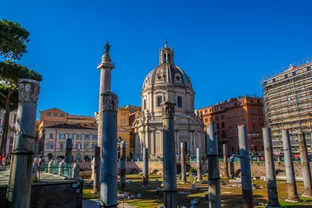
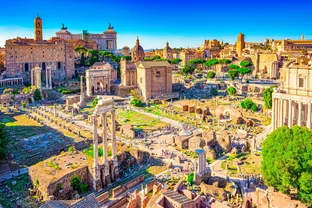
When it came to cremating Caesar, purchasing a harlot for the night, or sacrificing a naked victim, the Roman Forum was the place to be. Traversed by the Via Sacra (Sacred Way), the Broadway of ancient Rome, the Forum was built in the marshy land between the Palatine and Capitoline hills, and it flourished as the center of Roman life in the days of the Republic before it gradually lost prestige to the Imperial Forums.
You'll see only ruins and fragments, an arch or two, and lots of overturned boulders, but with some imagination you can feel the rush of history here. That any semblance of the Forum remains today is miraculous because it was used for years (like the Colosseum) as a quarry. Eventually it reverted to what the Italians call a campo vaccino (cow pasture). But excavations in the 19th century began to bring to light one of the world's most historic spots.
By day, the columns of now-vanished temples and the stones from which long-forgotten orators spoke are mere shells. Bits of grass and weeds grow where a triumphant Caesar was once lionized. But at night, when the Forum is silent in the moonlight, it isn't difficult to imagine Vestal Virgins still guarding the sacred temple fire. The best view of the Roman Forum at night is from Campidoglio, or Capitoline Hill, Michelangelo's Renaissance piazza that overlooks the Forum.
You can spend at least a morning wandering through the ruins of the Forum. Or, to imbue the stones with some meaning, buy a detailed plan at the gate (the temples are hard to locate otherwise).
Turn right at the bottom of the entrance slope to walk west along the old Via Sacra toward the arch. Just before it on your right is the large brick Curia built by Julius Caesar, the main seat of the Roman Senate (if the doors are open, you can lean in to see the 3rd-c. marble inlay floor).
The triumphal Arch of Septimius Severus (A.D. 203) displays time-bitten reliefs of the emperor's victories in what are today Iran and Iraq. During the Middle Ages, Rome became a provincial backwater, and frequent flooding of the nearby river helped to rapidly bury most of the Forum. This former center of the empire became a cow pasture. Some bits did still stick out above ground, including the top half of this arch, which was used to shelter a barbershop! It wasn't until the 19th century that people really became interested in excavating these ancient ruins to see what Rome in its glory must have been like.
Just to the left of the arch, you can make out the remains of a cylindrical lump of rock with some marble steps curving off it. That round stone was the Umbilicus Urbus, considered the center of Rome and of the entire Roman Empire; the curving steps are those of the Imperial Rostra, where great orators and legislators stood to speak, and the people gathered to listen. Nearby, the much-photographed trio of fluted columns with Corinthian capitals supporting a bit of architrave form the corner of the Temple of Vespasian and Titus.
Start heading to your left toward the eight Ionic columns marking the front of the Temple of Saturn (rebuilt 42 B.C.), which housed the first treasury of Republican Rome. It was also the site of one of the Roman year's biggest annual blowout festivals, the December 17 feast of Saturnalia, which, after a bit of tweaking, is now celebrated as Christmas. Now turn left to start heading back east, past the worn steps and stumps of brick pillars outlining the enormous Basilica Julia, built by Julius Caesar. Past it are the three Corinthian columns of the Temple of the Dioscuri, dedicated to the Gemini twins, Castor and Pollux. Forming one of the most celebrated sights of the Roman Forum, a trio of columns supports an architrave fragment. The founding of this temple dates from the 5th century B.C.
Beyond the bit of curving wall that marks the site of the little round Temple of Vesta (rebuilt several times after fires started by the sacred flame housed within), you'll find the partially reconstructed House of the Vestal Virgins (3rd-4th c. A.D.) against the south side of the grounds. This was the home of the consecrated young women who tended the sacred flame in the Temple of Vesta. Vestals were young girls chosen from patrician families to serve a 30-year-long priesthood. During their tenure, they were among Rome's most venerated citizens, with unique powers such as the ability to pardon condemned criminals. The cult was quite serious about the "virgin" part of the job description -- if any of Vesta's earthly servants were found to have "misplaced" her virginity, the miscreant Vestal was summarily buried alive. (Her amorous accomplice was merely flogged to death.) The overgrown rectangle of their gardens is lined with broken, heavily worn statues of senior Vestals on pedestals.
The path dovetails back to join Via Sacra at the entrance. Turn right and then left to enter the massive brick remains and coffered ceilings of the 4th-century Basilica of Constantine and Maxentius. These were Rome's public law courts, and their architectural style was adopted by early Christians for their houses of worship (the reason so many ancient churches are called "basilicas").
Return to the path and continue toward the Colosseum, veering right to the second great surviving triumphal arch, the Arch of Titus (A.D. 81), on which one relief depicts the carrying off of treasures from Jerusalem's temple -- look closely and you'll see a menorah among the booty. The war that this arch glorifies ended with the expulsion of Jews from the colonized Judea, signaling the beginning of the Jewish Diaspora throughout Europe. From here you can climb the Palatine Hill (admission is included with your combined ticket to the Forum and Colosseum). Before you make the climb, look for a sign pointing to Santa Maria Antigua, the oldest Christian church in the Roman Forum, dating from the 16th century.
The Palatine, tradition tells us, is the spot on which the first settlers built their huts, under the direction of Romulus. In later years, the hill became a patrician residential district that attracted such citizens as Cicero. In time, however, the area was gobbled up by imperial palaces and drew a famous and infamous roster of tenants, such as Livia (some of the frescoes in the House of Livia are in miraculous condition), Tiberius, Caligula (murdered here by members of his Praetorian Guard), Nero, and Domitian.
Only the ruins of its former grandeur remain today, and you really need to be an archaeologist to make sense of them because they're more difficult to understand than those in the Forum. But even if you're not interested in the past, it's worth the climb for the panoramic view of the ruins of Rome.
The Palatine Museum (Museo Palatino) displays a good collection of Roman sculpture from the ongoing digs in the Palatine villas. In summer you can take guided tours in English Monday through Sunday at 11:30am for 4€ ($6.40); call in winter to see whether they're still available. If you ask the museum's custodian, he might take you to one of the nearby locked villas and let you in for a peek at surviving frescoes and stuccoes. Orti Farnesiani, or the Farnese Gardens, were ordered laid out by Cardinal Alessandro Fernese, Pope Paul III's nephew, in the 16th century. The designer was Gincomo de Vignola, the great Renaissance architect. Resplendent with wild flowers, spring-scented orange groves, and delightful walkways, the site is one of the world's first botanical gardens. It has pavilions, rose gardens, terraces, and panoramic views of the Forum over Ancient Rome. Certain sections are sometimes closed due to reconstruction work and ongoing excavations.
Note: This information was accurate when it was published, but can change without notice. Please be sure to confirm all rates and details directly with the companies in question before planning your trip.
| Back to Top |
| RSS | |||||||
|
Frommer's Rome, 19th Edition
Author: Darwin Porter |
Related Titles:
|
|||||||||||||||||||||