Frommers.com Frommers.com
Most Recent Destination Forum Posts
Most Recommended Articles
Most Commented Articles
  Print This Article Print Get Frommer's RSS Feed RSS

Shopping

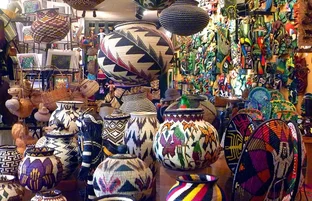
Serious shoppers will be disappointed in Costa Rica. Aside from coffee and oxcarts, there isn't much that's distinctly Costa Rican. To compensate for its own relative lack of goods, Costa Rica does a brisk business in selling crafts and clothes imported from Guatemala, Panama, and Ecuador.

The Shopping Scene -- San José's central shopping corridor is bounded by avenidas 1 and 2, from about Calle 14 in the west to Calle 13 in the east. For several blocks west of the Plaza de la Cultura, Avenida Central is a pedestrian-only street mall where you'll find store after store of inexpensive clothes for men, women, and children. Depending on the mood of the police that day, you might find a lot of street vendors as well. Most shops in the downtown district are open Monday through Saturday from about 8am to 6pm. Some shops close for lunch, while others remain open (it's just the luck of the draw for shoppers). You'll be happy to find that the sales and import taxes have already been figured into the display price.

International laws prohibit trade in endangered wildlife, so don't buy any plants or animals, even if they're readily for sale. Do not buy any kind of sea-turtle products (including jewelry); wild birds; lizards, snakes, or cat skins; corals; or orchids (except those grown commercially). No matter how unique, beautiful, insignificant, or inexpensive it might seem, your purchase will directly contribute to the further hunting of these species.

It's especially hard to capture the subtle shades and colors of the rainforests and cloud forests, and many a traveler has gone home thinking that his or her undeveloped film contained the full beauty of the jungle, only to return from the photo developer with 36 bright-green blurs. To avoid this heartache, you might want to pick up some postcards of the sights you want to remember forever and send them to yourself.

Joe to Go

Two words of advice: Buy coffee. Lots of it.

Coffee is the best shopping deal in all of Costa Rica. Although the best Costa Rican coffee is allegedly shipped off to North American and European markets, it's hard to beat the coffee that's roasted right in front of you here. Best of all is the price: One pound of coffee sells for around $3 to $6 (£1.50-£3). It makes a great gift and truly is a local product.

Café Britt is the big name in Costa Rican coffee. These folks have the largest export business in the country, and, although high-priced, its blends are very dependable. Café Britt is widely available at gift shops around the country, and at the souvenir concessions at both international airports. My favorites, however, are the coffees roasted and packaged in Manuel Antonio and Monteverde, by Café Milagro and Café Monteverde, respectively. If you visit either of these places, definitely pick up their beans.

In general, the best place to buy coffee is in any supermarket. Why pay more at a gift or specialty shop? You can also try Café Trébol, on Calle 8 between avenidas Central and 1 (on the western side of the Central Market; tel. 2221-8363). It's open Monday through Saturday from 7am to 6:30pm and Sunday from 8:30am to 12:30pm.

Be sure to ask for whole beans; Costa Rican grinds are often too fine for standard coffee filters. The store will pack beans for you in whatever size bag you want. If you buy prepackaged coffee in a supermarket in Costa Rica, the whole beans will be marked either grano (grain) or grano entero (whole bean). If you opt for ground varieties (molido), be sure the package is marked puro; otherwise, it will likely be mixed with a good amount of sugar, the way Ticos like it.

One good coffee-related gift to bring home is a coffee sock and stand. This is the most common mechanism for brewing coffee beans in Costa Rica. It consists of a simple circular stand, made out of wood or wire, which holds a sock. Put the ground beans in the sock, place a pot or cup below it, and pour boiling water through. You can find the socks and stands at most supermarkets and in the Mercado Central. In fancier crafts shops, you'll find them made out of ceramic. Depending on its construction, a stand will cost you between $1.50 and $15 (75p-£7.50); socks run around 30¢ (15p), so buy a few spares.

Markets

There are several markets near downtown, but by far the largest is the Mercado Central, located between avenidas Central and 1 and calles 6 and 8. Although this dark maze of stalls is primarily a food market, inside you'll find all manner of vendors, including a few selling Costa Rican souvenirs, crude leather goods, and musical instruments. Be especially careful about your wallet or purse and any prominent jewelry because very skilled pickpockets frequent this area. All the streets surrounding the Mercado Central are jammed with produce vendors selling from small carts or loading and unloading trucks. It's always a hive of activity, with crowds of people jostling for space on the streets. Your best bet is to visit on Sunday or on weekdays; Saturday is particularly busy. In the hot days of the dry season, the aromas can get quite heady.

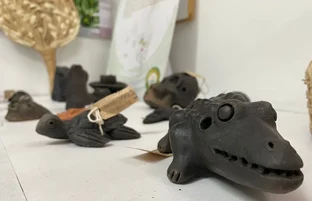
There is also a daily street market on the west side of the Plaza de la Democracia. Here you'll find two long rows of outdoor stalls selling T-shirts, Guatemalan and Ecuadorian handicrafts and clothing, small ceramic ocarinas (a small musical wind instrument), and handmade jewelry. The atmosphere here is much more open than at the Mercado Central, which I find just a bit too claustrophobic. You might be able to bargain prices down a little bit, but bargaining is not a traditional part of the vendor culture here, so you'll have to work hard to save a few dollars.

Finally, two other similar options downtown are La Casona, Calle Central between avenidas Central and 1 (tel. 2222-7999), a three-story warren of crafts and souvenir shops; and El Pueblo, a tourism complex built in the style of a mock colonial-era village, with a wide range of restaurants, gift shops, art galleries, bars, and discos.

Modern Malls -- With globalization and modernization taking hold in Costa Rica, much of the local shopping scene has shifted to large megamalls. Modern multilevel affairs with cineplexes, food courts, and international brand-name stores are becoming more ubiquitous. The biggest and most modern of these malls include the Mall San Pedro, Multiplaza, Terra Mall, and Mall Real Cariari. Although they lack the charm of small shops found around San José, they are a reasonable option for one-stop shopping; most contain at least one or two local galleries and crafts shops, along with a large supermarket, which is always the best place to stock up on local coffee, hot sauces, liquors, and other non-perishable foodstuffs.


Back to Top


List All Stores and Shops

Note: This information was accurate when it was published, but can change without notice. Please be sure to confirm all rates and details directly with the companies in question before planning your trip.


  Print This Article Print Get Frommer's RSS Feed RSS
Destination Guide
Destination Guide Destination Guide Destination Guide
Destination Guide Destination Guide Frommer's Costa Rica 2009 Destination Guide Frommer's Costa Rica 2009

Author: Eliot Greenspan
Pub Date: September 09, 2008
Price: $19.99

Add to Cart
Destination Guide Destination Guide Destination Guide Related Titles:
Costa Rica For Dummies, 2nd Edition
Destination Guide
Costa Rica For Dummies, 3rd Edition
Destination Guide
Frommer's Belize, 3rd Edition
Destination Guide
Destination Guide Destination Guide
Destination Guide Destination Guide Destination Guide
Destination Guide
Destinations
Destinations