
Andrew Mayovskyy
Turkey Travel Guide
First-time visitors to Turkey (or anywhere, for that matter) often leave home with preconceived notions about what their destination will be like. But Turkey represents many, often contradictory things: It's ancient and modern, Westernized and Oriental, religious and secular, wondrous and ordinary, familiar and exotic. But there is one undeniable common denominator, and that is that Turkey, and the Turkish people, know how to do hospitality. This from a population in which 20% of the people live below the poverty line and yet the native language has no word for "bitter."
Turkey is a unique country: a rich, layered, and magical world full of history, culture, gastronomy, humanity, and commerce -- increasingly Europeanized yet (notwithstanding the über-cosmopolitan center that is Istanbul) still unspoiled and innocent. In the heartland, people are still pleasantly surprised and proud of the fact that people come to visit from far and wide.
Yet it wasn't until recently that Turkey's tourism industry finally began reaping the rewards appropriate for the custodian of three world empires, countless potent kingdoms, and a dazzling 8,333km (5,178-mile) coastline. This geographic and cultural bridge boasts more Greek ruins than Greece, more Roman archaeological sites than all of Italy, and -- in Antalya alone -- more resort hotels than all the coast of Spain. Turkey is also a major custodian of sacred sites revered by Christians, Jews, and Muslims alike, and of invaluable artifacts of early Greek civilization, Byzantine majesty, and Ottoman supremacy. Business is now booming, the middle class is spending, and cities are growing and expanding. Foreign direct investment and receipts from skyrocketing levels of tourism are creating opportunity, advancement, and progress not seen in Turkey in centuries. Dirt roads are now paved; single-lane asphalt roads have doubled in width; and new superhighways now serve Istanbul, Ankara, and Izmir. Turkey is also directing an unparalleled amount of funding into the country's cultural sites, exposing "secondary" archaeological sites to the light of day while increasing the visibility and longevity of the A-list sites.
Meanwhile, foreigners are descending on Turkey as if it were going out of business. Istanbul, Antalya, Ankara, and Cappadocia witnessed in 2007 as much as a 20% increase in arrivals from 2006. Parallel to this new -- and renewed -- popularity in Turkey as a travel destination is that Europeans, and particularly Brits, are profiting by unprecedented strength in their respective currencies, and where there's demand, there are both higher prices and growth. Hotels that once quoted prices in U.S. dollars switched to the symbol of the € in Istanbul, Cappadocia, and in other popular regions, and to the British pound sterling on the Mediterranean coast. For visitors wielding euros, Turkey is still very much an affordable destination, and for Brits, it's a veritable bargain basement. But for Americans paying in the pathetic dollar, Turkey is anything but the bargain it used to be. So is all of this dynamism worth it?
Absolutely. But you'll need to find the right balance. Traveling off-season will give you the strongest bargaining power, and you may have to forego that sunrise balloon ride over Cappadocia. But if you go, I guarantee that you'll soon see why people in the know just can't get enough of Turkey.
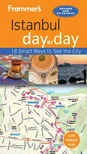
Start Exploring

Things To Do in Turkey

Suggested Itineraries in Turkey
In Depth in Turkey
Frommer's Favorite Experiences in Turkey
Best Hotel Bets in Turkey
The Best Beaches in Turkey
The Best Ruins in Turkey
The Best Small Towns and Villages in Turkey
The Best Things to Bring Home from Your Visit in Turkey
The Best Websites in Turkey
The Best Museums, Mosques & Churches in Turkey