Port Royal National Historic Site

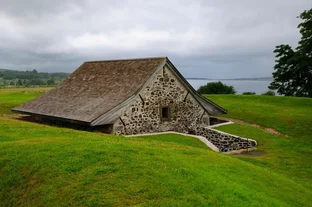
Canada's first permanent European settlement, Port Royal was located on an attractive point with sweeping views of the Annapolis Basin. After spending the dreadful winter of 1604 on an island in the St. Croix River (along the current Maine-New Brunswick border), the survivors moved to this better-protected location. Settlers lived here for 8 years in a high style on the verge of decadency; many of the handsome, compact, French-style farmhouse buildings originally here were designed by Samuel de Champlain to recreate the comfort they might have enjoyed at home.
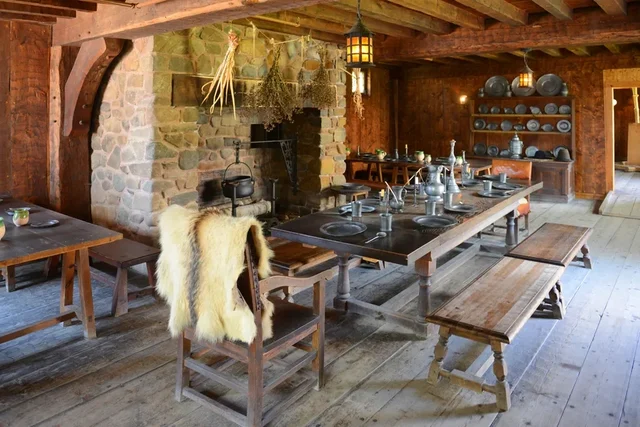
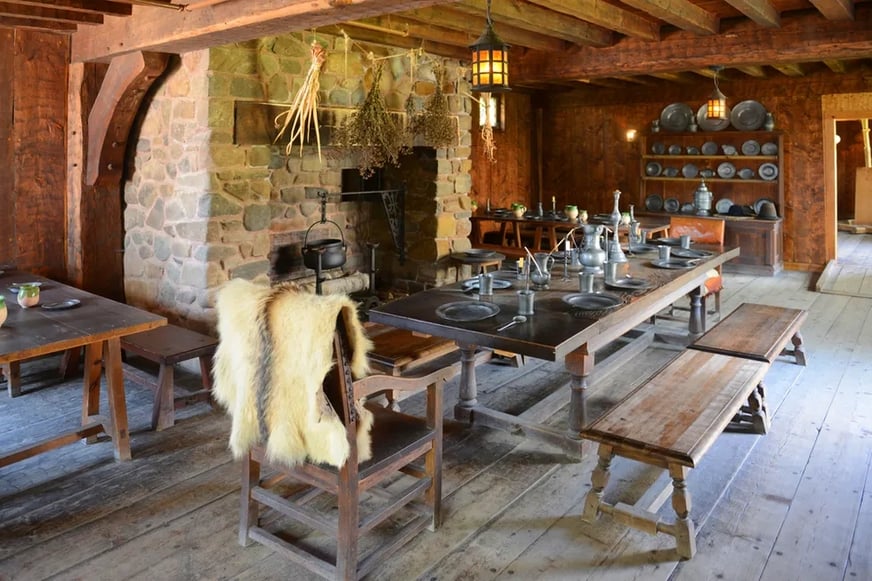
Although the original settlement was abandoned and eventually destroyed, this 1939 reproduction is convincing in all the details. You'll find a handful of costumed interpreters engaged in traditional handicrafts like woodworking. Have the interpreters show some of the tools and techniques ("rat-tailing"? "Mortise and tenon"? Check) used in these construction techniques. They're also happy to fill you in on life in the colony during those difficult early years when the French first forged an uneasy alliance with local natives (demonstrations include ancient Mi’kmaq healing remedies). Allow 1 or 2 hours to wander and explore.
Canada's first permanent European settlement, Port Royal was located on an attractive point with sweeping views of the Annapolis Basin. After spending the dreadful winter of 1604 on an island in the St. Croix River (along the current Maine-New Brunswick border), the survivors moved to this better-protected location. Settlers lived here for 8 years in a high style on the verge of decadency; many of the handsome, compact, French-style farmhouse buildings originally here were designed by Samuel de Champlain to recreate the comfort they might have enjoyed at home.
Although the original settlement was abandoned and eventually destroyed, this 1939 reproduction is convincing in all the details. You'll find a handful of costumed interpreters engaged in traditional handicrafts like woodworking. Have the interpreters show some of the tools and techniques ("rat-tailing"? "Mortise and tenon"? Check) used in these construction techniques. They're also happy to fill you in on life in the colony during those difficult early years when the French first forged an uneasy alliance with local natives (demonstrations include ancient Mi’kmaq healing remedies). Allow 1 or 2 hours to wander and explore.
Details
Bookstore

Available as paperback
and as e-book.