Basílica de San Vicente

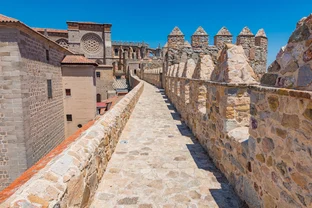
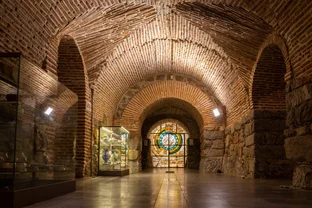
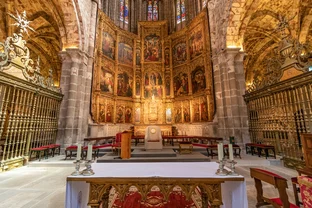
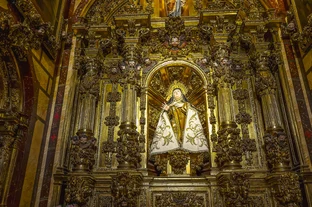
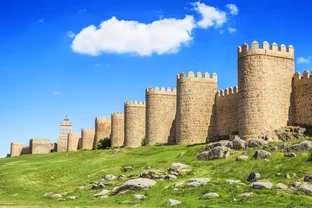
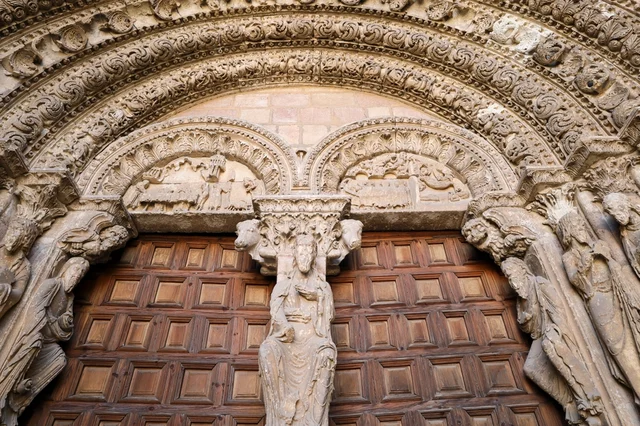
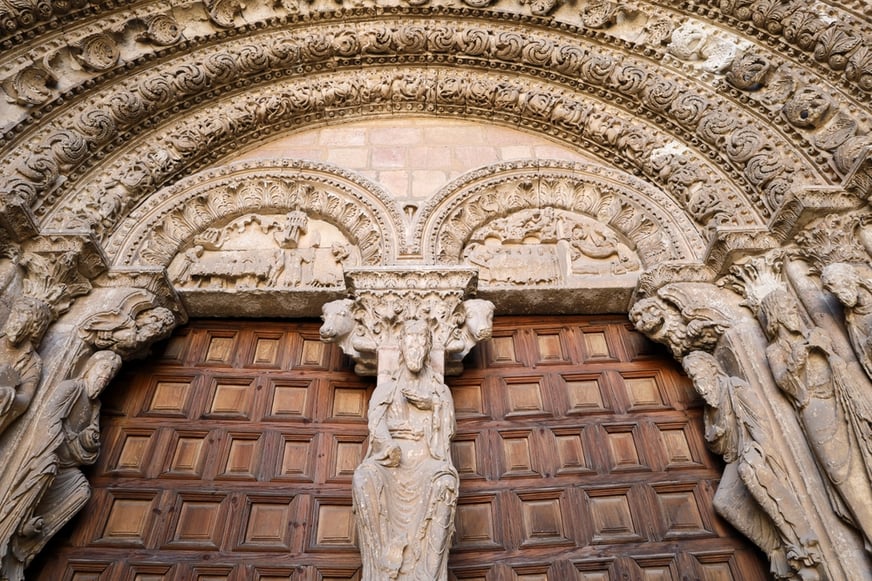
One of Spain’s finest Romanesque churches, this faded sandstone basilica with a huge nave and three apses stands outside the medieval ramparts—a defiant Christian structure built to claim the high ground in the name of the cross. Its fiercely moralistic carvings, especially on the cornice of the southern portal, play out the struggle between good and evil. The western portal ★★, dating from the 13th century, has the best Romanesque bas-reliefs. Inside is the tomb of San Vincente, martyred here in the 4th century. The tomb’s medieval carvings, which depict his torture and martyrdom, are fascinating, if disturbing and revealing of medieval Spanish institutional anti-Semitism. The story casts “a rich Jew” as the villain, and hastens to note that he was saved by repenting, converting to Christianity, and building this church.
One of Spain’s finest Romanesque churches, this faded sandstone basilica with a huge nave and three apses stands outside the medieval ramparts—a defiant Christian structure built to claim the high ground in the name of the cross. Its fiercely moralistic carvings, especially on the cornice of the southern portal, play out the struggle between good and evil. The western portal ★★, dating from the 13th century, has the best Romanesque bas-reliefs. Inside is the tomb of San Vincente, martyred here in the 4th century. The tomb’s medieval carvings, which depict his torture and martyrdom, are fascinating, if disturbing and revealing of medieval Spanish institutional anti-Semitism. The story casts “a rich Jew” as the villain, and hastens to note that he was saved by repenting, converting to Christianity, and building this church.
Details
Bookstore

Available as paperback
and as e-book.