Peary-MacMillan Arctic Museum

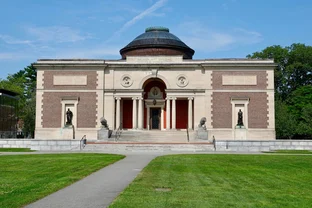
While Admiral Robert E. Peary (Bowdoin class of 1887) is better known for his accomplishments—he “discovered” the North Pole at age 53 in 1909—Donald MacMillan (class of 1898) also racked up an impressive string of Arctic achievements. You can learn about both men (and the wherefores of arctic exploration) in this tucked-away museum on the Bowdoin campus, just across the lawn from the college’s fine museum of art.
Why here? Admiral Robert Peary and non-admiral Donald MacMillan graduated from Bowdoin in consecutive years late in the 19th century. When they returned from their respective polar travels, the two men donated many items they collected to their alma mater. The front room features mounted animals from the Arctic, including some impressive polar bears.
A second room outlines Peary’s historic 1909 expedition, complete with excerpts from his journal, and another room includes varied displays of Inuit arts and crafts, some historic and some modern.
Rotating exhibits focus on Inuit and First Nations art, scrimshaw, contemporary Arctic photography, and more. It’s a compact museum that can be visited in about 20 minutes or so.
While Admiral Robert E. Peary (Bowdoin class of 1887) is better known for his accomplishments—he “discovered” the North Pole at age 53 in 1909—Donald MacMillan (class of 1898) also racked up an impressive string of Arctic achievements. You can learn about both men (and the wherefores of arctic exploration) in this tucked-away museum on the Bowdoin campus, just across the lawn from the college’s fine museum of art.
Why here? Admiral Robert Peary and non-admiral Donald MacMillan graduated from Bowdoin in consecutive years late in the 19th century. When they returned from their respective polar travels, the two men donated many items they collected to their alma mater. The front room features mounted animals from the Arctic, including some impressive polar bears.
A second room outlines Peary’s historic 1909 expedition, complete with excerpts from his journal, and another room includes varied displays of Inuit arts and crafts, some historic and some modern.
Rotating exhibits focus on Inuit and First Nations art, scrimshaw, contemporary Arctic photography, and more. It’s a compact museum that can be visited in about 20 minutes or so.
Details
Bookstore

Available as paperback
and as e-book.