Abbaye aux Hommes

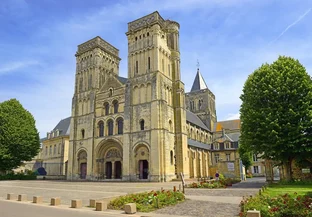
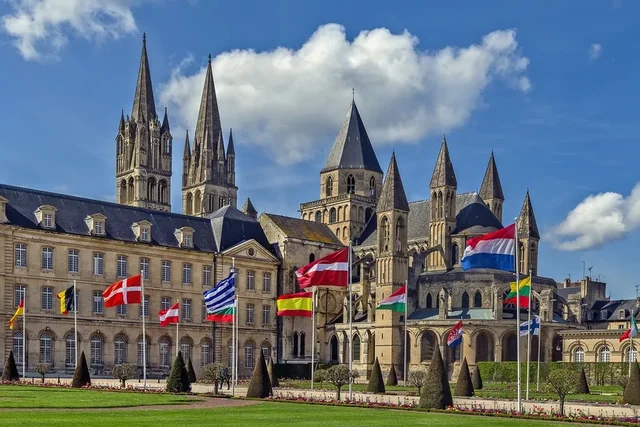
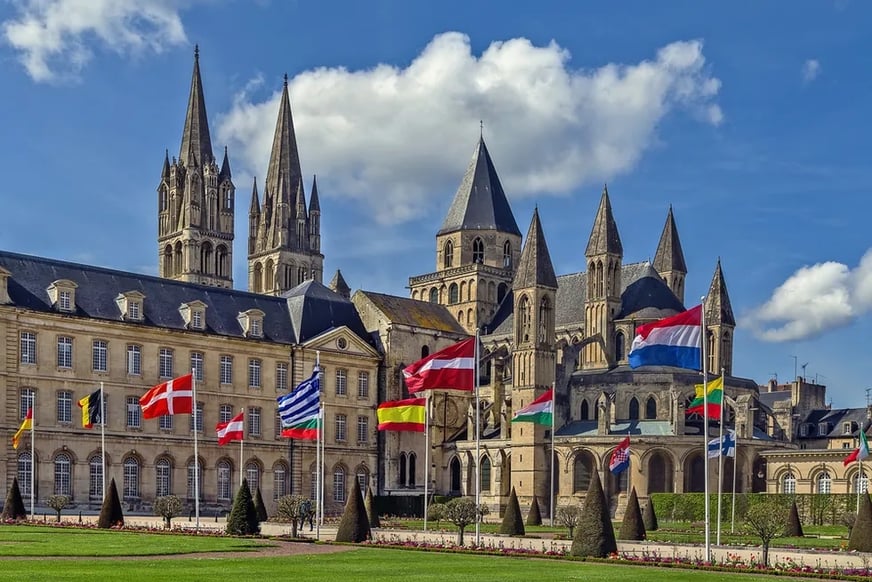
Founded by William the Conqueror in 1066 to ensure a papal pardon for marrying his distant cousin Mathilda, this abbey is next to the Église St-Etienne. During the Allied invasion, residents of Caen fled to St-Etienne for protection. Twin Romanesque towers 84m- (276 ft.-) tall dominate the church. A marble slab inside the high altar marks the site of William’s tomb. The Huguenots destroyed the tomb in 1562—only a hipbone was recovered. During the French Revolution, the last of William’s dust was scattered to the wind. The hand-carved wooden doors and elaborate wrought-iron staircase are exceptional. From the cloisters, you get a good view of the two towers of St-Etienne.
Founded by William the Conqueror in 1066 to ensure a papal pardon for marrying his distant cousin Mathilda, this abbey is next to the Église St-Etienne. During the Allied invasion, residents of Caen fled to St-Etienne for protection. Twin Romanesque towers 84m- (276 ft.-) tall dominate the church. A marble slab inside the high altar marks the site of William’s tomb. The Huguenots destroyed the tomb in 1562—only a hipbone was recovered. During the French Revolution, the last of William’s dust was scattered to the wind. The hand-carved wooden doors and elaborate wrought-iron staircase are exceptional. From the cloisters, you get a good view of the two towers of St-Etienne.
Details
Bookstore

Available as paperback
and as e-book.