Nova Scotia Highland Village Museum

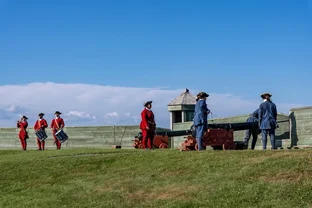
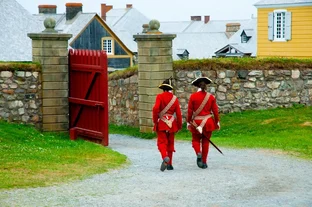
This 16-hectare (40-acre) living history museum is located outside Iona, on a grassy hillside with sweeping views over the lake. It features a set of buildings reflecting the region’s Gaelic heritage, some of them actual historic structures relocated here from elsewhere on the island, and some are quite impressive replicas. Inside, they contain rug-hooking tools, furniture, old Celtic music scores, info on the Gaelic language, and many more artifacts. Poke through the (ca. 1790) Black House, a stone-and-sod hut of the sort an immigrant would have lived in prior to departing Scotland, or the schoolhouse and general store, which date from the 1920s. Staffers dressed in historical costumes are happy to answer your (or your kids’) questions about island life in the early days. It’s worth spending at least an hour, more if you’ve got a group of kids keenly interested in history.
This 16-hectare (40-acre) living history museum is located outside Iona, on a grassy hillside with sweeping views over the lake. It features a set of buildings reflecting the region’s Gaelic heritage, some of them actual historic structures relocated here from elsewhere on the island, and some are quite impressive replicas. Inside, they contain rug-hooking tools, furniture, old Celtic music scores, info on the Gaelic language, and many more artifacts. Poke through the (ca. 1790) Black House, a stone-and-sod hut of the sort an immigrant would have lived in prior to departing Scotland, or the schoolhouse and general store, which date from the 1920s. Staffers dressed in historical costumes are happy to answer your (or your kids’) questions about island life in the early days. It’s worth spending at least an hour, more if you’ve got a group of kids keenly interested in history.
Details
Bookstore

Available as paperback
and as e-book.