Fingal

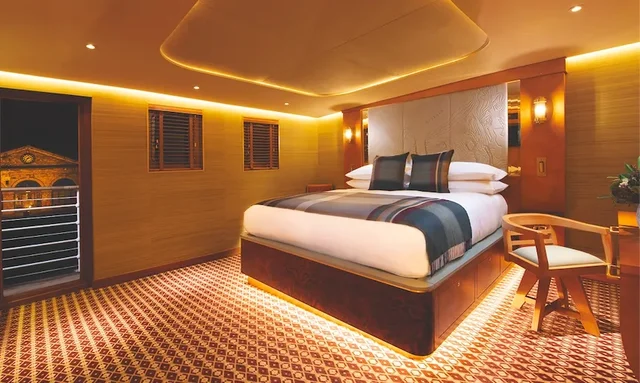
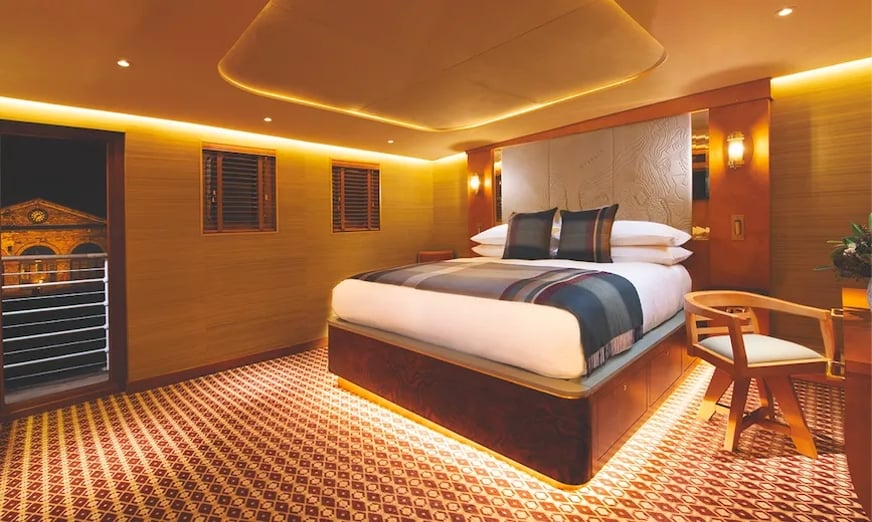
Commissioned by the Northern Lighthouse Board in 1963, the twin-screw motorship Fingal worked around the north and west coasts of Scotland for 36 years, ferrying lighthouse keepers and supplies as well as undertaking repairs to navigational aids. After being retired from service at the turn of the millenium, she was eventually taken on by The Royal Yacht Britannia Trust in 2014 and brought to Leith. A £5-million project converted her into the luxury floating hotel she is today. Guests board the ship over a red-carpeted gangway and, after being greeted aboard and asked whether newspapers are required in the morning, are shown up to their cabins via a round glass elevator, built to echo a lighthouse. The cabins themselves have all the glamour of a superyacht, with porthole windows, heated bathroom floors, and fluffy bathrobes. To learn about the ship’s history, you can visit the engine room, where a glass walkway has been constructed to display two impressive six-cylinder diesel British Polar engines and the original telegraphs; there is also The Bridge, where you can peruse the old ship’s logs. On the top deck, The Lighthouse Restaurant and Bar is more relaxed than you might imagine, without losing any of the luxurious atmosphere: warm, soft light is refracted through bullseye glass and reflected back down from shiny beaten metal ceilings.
Commissioned by the Northern Lighthouse Board in 1963, the twin-screw motorship Fingal worked around the north and west coasts of Scotland for 36 years, ferrying lighthouse keepers and supplies as well as undertaking repairs to navigational aids. After being retired from service at the turn of the millenium, she was eventually taken on by The Royal Yacht Britannia Trust in 2014 and brought to Leith. A £5-million project converted her into the luxury floating hotel she is today. Guests board the ship over a red-carpeted gangway and, after being greeted aboard and asked whether newspapers are required in the morning, are shown up to their cabins via a round glass elevator, built to echo a lighthouse. The cabins themselves have all the glamour of a superyacht, with porthole windows, heated bathroom floors, and fluffy bathrobes. To learn about the ship’s history, you can visit the engine room, where a glass walkway has been constructed to display two impressive six-cylinder diesel British Polar engines and the original telegraphs; there is also The Bridge, where you can peruse the old ship’s logs. On the top deck, The Lighthouse Restaurant and Bar is more relaxed than you might imagine, without losing any of the luxurious atmosphere: warm, soft light is refracted through bullseye glass and reflected back down from shiny beaten metal ceilings.
Details
Bookstore

Available as paperback
and as e-book.