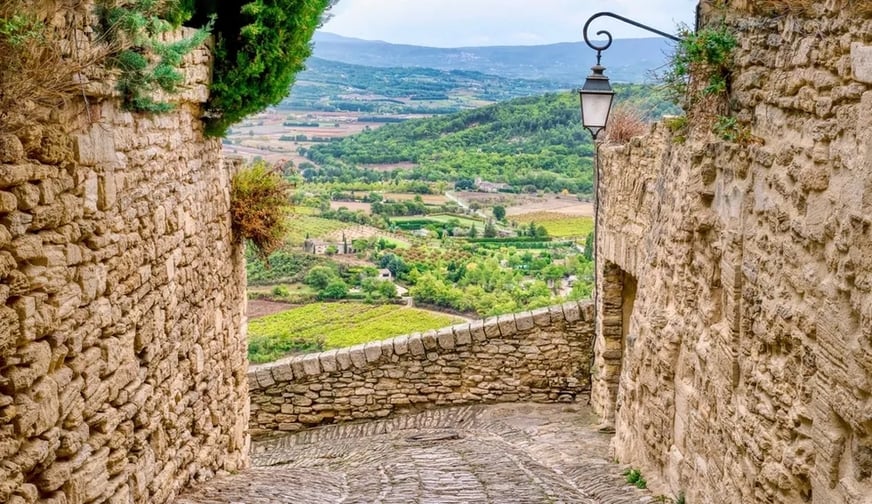
CherylRamalho / Shutterstock
Planning a trip to France
Of almost any destination in the world, flying into France is one of the most effortless undertakings in global travel. There are no immunizations to get and no particular safety precautions, and more and more French people now speak English.
With your passport, airline or train ticket, and enough money, you just go. In the pages that follow, you’ll find everything you need to know to plan your trip: getting around the country, deciding when to go, and much, much more.
Jump to:
- Regions in Brief
- Tips for Gay and Lesbian Travelers
- Sustainable Travel & Ecotourism
- Entry Requirements & Customs
- Staying Connected
- Health & Insurance
- Getting Around
- Money
- Visitor Information
- When to Go
- Escorted & Package Tours
- Tips for Families
- Special-Interest Vacations
- Tips for Multicultural Travelers
- Calendar of Events
- Tips on Accommodations
- Tips for Senior Travelers
- Fast Facts
- Getting There
- Tips for Travelers with Disabilities
Regions in Brief
Although France’s 547,030 sq. km (211,209 sq. miles) make it slightly smaller than the American state of Texas, no other country has such a diversity of sights and scenery in such a compact area. A visitor can travel through the north’s flat, fertile lands; the Loire Valley’s green hills; the east’s Alpine ranges; the Pyrénées; and the southeast’s Mediterranean coast. Even more noteworthy are the cultural and historical differences of each region.
Destinations in France are within easy reach from Paris and each other. French National Railroads (SNCF) offers fast service to and from Paris. For example, the highlights of Normandy and the Loire Valley (the château country) are just 1 or 2 hr. from Paris by train. You can travel from Paris to Cannes on the Riviera in 5 hr.—or fly down in 45 min.
You can motor along nearly 71,000km (about 44,020 miles) of French roads, including a good number of well-maintained superhighways. But do your best to drive the secondary roads too: Nearly all of France’s scenic splendors are along these routes.
A “grand tour” of France is nearly impossible for the visitor who doesn’t have a lifetime to explore. If you want to get to know a province, try to devote at least a week to a specific region. Note that you’ll probably have a more rewarding trip if you concentrate on getting to know two or three areas at a leisurely pace rather than racing around trying to see everything! To help you decide where to spend your time, we’ve summarized the highlights of each region for you.
Paris & Ile de France
The Ile de France is an island only in the sense that rivers—with odd-sounding names such as Essonne, Epte, Aisne, Eure, and Ourcq—and a handful of canals delineate its boundaries (about an 81km/50-mile radius from the center of Paris). France was born in this temperate basin, where the attractions include Paris, Versailles, Fontainebleau, Notre-Dame de Chartres, and Giverny. Despite industrialization (and Disneyland Paris), many pockets of charm remain, including the forests of Rambouillet and Fontainebleau, and the artists’ hamlet of Barbizon.
The Loire Valley
This area includes two ancient provinces, Touraine (centered on Tours) and Anjou (centered on Angers). It was beloved by royalty and nobility, flourishing during the Renaissance until Henry IV moved his court to Paris. Head here to see the most magnificent castles in France. Irrigated by the Loire River and its many tributaries, the valley produces many superb wines.
Normandy
This region will forever be linked to the 1944 D-day invasion. Some readers consider a visit to the D-day beaches the most emotionally worthwhile part of their trip. Normandy boasts 599km (371 miles) of coastline and a maritime tradition. It’s a popular weekend getaway from Paris, and many hotels and restaurants thrive here, especially around the casino town of Deauville. Normandy's great attractions include Rouen's cathedral, medieval Bayeux, the fishing village of Honfleur, and the abbey at Mont St-Michel.
Brittany
Jutting into the Atlantic, the westernmost region of France is known for its rocky coastlines, Celtic roots, frequent rain, and ancient dialect, akin to the Gaelic tongues of Wales and Ireland. Many French vacationers love the seacoast (rivaled only by the Côte d’Azur) for its sandy beaches, cliffs, and relatively modest—by French standards—prices. Quimper is Brittany's cultural capital, whereas Carnac is home to ancient Celtic dolmens and burial mounds.
Champagne Country
Every French monarch since A.D. 496 was crowned at Reims, and much of French history is linked with this holy site. In the path of any invader wishing to occupy Paris, Reims and the Champagne district have seen much bloodshed, including the World War I battles of the Somme and the Marne. Industrial sites sit among patches of forest, and vineyards sheath the steep sides of valleys. The 126km (78-mile) road from Reims to Vertus, one of the Routes du Champagne, takes in a trio of winegrowing regions that produce 80 percent of the world’s bubbly.
Burgundy
Few trips will prove as rewarding as several leisurely days spent exploring Burgundy, with its splendid old cities such as Dijon. Besides its famous cuisine (boeuf and escargots à la bourguignonne), the district contains, along its Côte d’Or, hamlets whose names (Mercurey, Beaune, Puligny-Montrachet, Vougeot, and Nuits-St-Georges) are synonymous with great wine.
The Ardennes & Northern Beaches
This northern region is often ignored by North Americans (which is why we feature it as a side trip from Reims). In summer, French families arrive by the thousands to visit Channel beach resorts such as Le Touquet-Paris-Plage. This district is quite industrialized and has always suffered in wars. Its best-known port, Calais, was a bitterly contested English stronghold for centuries. Calais is now the port of disembarkation for ferries, hydrofoils, and Channel Tunnel arrivals from Britain. Notre-Dame Cathedral in Amiens, the medieval capital of Picardy, is a treasure, with a 42m-high (138-ft.) nave -- the highest in France.
Alsace-Lorraine
Between Germany and the forests of the Vosges is the most Teutonic of France’s provinces: Alsace, with cosmopolitan Strasbourg as its capital. Celebrated for its cuisine, particularly its foie gras and choucroute, this area is home to villages with half-timbered designs and the oldest wine road in France. Lorraine, birthplace of Joan of Arc, witnessed many battles during the world wars, though its capital Nancy, remains elegant and holds the beautiful place Stanislas. The much-eroded peaks of the Vosges forest, the closest thing to a wilderness in France, offer lovely hiking.
The French Alps
This area’s resorts rival those of neighboring Switzerland and contain incredible scenery: snowcapped peaks, glaciers, and Alpine lakes. Chamonix is a famous ski resort facing Mont Blanc, western Europe’s highest mountain. Courchevel and Megève are chicer. During the summer, you can enjoy such spa resorts as Evian and the restful 19th-century resorts ringing Lake Geneva.
The Rhône Valley
This fertile area in eastern France follows the curves of the River Rhône from Beaujolais wine country in the north towards the borders of Provence in the south. The district is thoroughly French, unflinchingly bourgeois, and dedicated to preserving the gastronomic and cultural traditions that have produced some of the most celebrated chefs in France. Only 2 hr. by train from Paris, the region’s cultural centerpiece, Lyon, is France’s “second city.” Wine lovers will enjoy contrasting the aromatic red wines of Beaujolais with the robust red wines of the Northern Rhône or mythical appellations such as Côte Rôtie and Hermitage. Gourmands should travel to Valence to dine with France’s only Michelin-starred female chef or to Bresse’s ancient capital, Bourg-en-Bresse, which produces the world’s finest poultry. Try to visit the medieval villages of Pérouges and Vienne, 27km (17 miles) south of Lyon; the latter is known for its Roman ruins.
Languedoc-Roussillon
Languedoc may not be as chic as Provence, but it’s less frenetic and more affordable. Roussillon is the rock-strewn French answer to Catalonia, just across the Spanish border. Also appealing are Toulouse, the bustling pink capital of Languedoc; and the “red city” of Albi, birthplace of Toulouse-Lautrec. Carcassonne, a marvelous walled city with fortifications begun around A.D. 500, is the region’s highlight.
Provence
One of France’s most popular destinations stretches from the southern Rhône River to the Italian border. Long frequented by starving artists, la bourgeoisie, and the downright rich and famous, its premier cities are Aix-en-Provence, associated with Cézanne; Arles, famous for bullfighting and Van Gogh; Avignon, the 14th-century capital of Christendom; and Marseille, a port city established by the Phoenicians that today is the melting pot of France. Quieter and more romantic are villages such as St-Rémy-de-Provence, Les Baux, and Gordes. To the west, the Camargue is the marshy delta formed by two arms of the Rhône River. Rich in bird life, it’s famous for its grassy flats and such fortified medieval sites as Aigues-Mortes.
The French Riviera (Côte d’Azur)
The resorts of the fabled Côte d’Azur (Azure Coast) still evoke glamour: Cannes, St-Tropez, Cap d’Antibes, and Juan-les-Pins. July and August are the most buzzing months, while spring and fall are still sunny but way more laid-back. Nice is the biggest city and most convenient base for exploring the area. The Principality of Monaco only occupies about 2 sq. km (.75 sq. miles) but has enough sights, restaurants, and opulence to go around. Along the coast are some sandy beaches, but many are pebbly. Topless bathing is common, especially in St-Tropez, and some of the restaurants are citadels of conspicuous consumption. Dozens of artists and their patrons have littered the landscape with world-class galleries and art museums.
The Basque Country
Since prehistoric times, the rugged Pyrénées have formed a natural boundary between France and Spain. The Basques, one of Europe’s most unusual cultures, flourished in the valleys here. In the 19th century, resorts such as Biarritz and St-Jean-de-Luz attracted the French aristocracy; the empress Eugénie’s palace at Biarritz is now a hotel. Four million Catholics make annual pilgrimages to the city of Lourdes. In the villages and towns of the Pyrénées, the old folkloric traditions, permeated with Spanish influences, continue to thrive.
Bordeaux & The Atlantic Coast—Flat, fertile, and frequently ignored by North Americans, this region includes towns pivotal in French history (Poitiers, Angoulême, and La Rochelle), as well as wine- and liquor-producing villages (Cognac, St-Emilion, and Sauternes) whose names are celebrated around the world. Bordeaux, the district’s largest city, has an economy based on wine merchandising and showcases grand 18th-century architecture.
The Dordogne & the Lot
The splendid Dordogne River valley has been a favorite vacation spot since Cro-Magnon peoples were painting bison on cave walls in Lascaux. Today visitors flock to the valley to marvel at prehistoric sites near Les Eyzies-de-Tayac and to ramble through exquisite villages like Sarlat-le-Canéda and Beynac-et-Cazenac. The land of truffles and foie gras, Périgord has long been famed as a gastronomic Mecca, while nearby Cahors is celebrated for its rich red wine.
The Massif Central
The rugged heartland of south-central France, this underpopulated district contains ancient cities, unspoiled scenery, and an abundance of black lava, from which many buildings were created. The largest cities are Clermont-Ferrand and Limoges -- the medieval capitals of the provinces of the Auvergne and the Limousin. Bourges, a gateway to the region and once capital of Aquitaine, has a beautiful Gothic cathedral.
Tips for Gay and Lesbian Travelers
France is one of the world's most tolerant countries toward gays and lesbians. "Gay Paree" boasts a large gay population, with many clubs, restaurants, organizations, and services.
Paris's largest, best-stocked gay bookstore is Les Mots à la Bouche, 6 rue Ste-Croix-de-la-Bretonnerie, 4e (tel. 01-42-78-88-30; www.motsbouche.com; Métro: Hôtel-de-Ville) which carries publications in both French and English. Both www.paris-gay.com and www.gayvox.fr have updated listings about the gay and lesbian scene.
The International Gay and Lesbian Travel Association (IGLTA; tel. 954/630-1637; www.iglta.org) is the trade association for the gay and lesbian travel industry, and offers an online directory of gay- and lesbian-friendly travel businesses and tour operators.
Many agencies offer tours and travel itineraries specifically for gay and lesbian travelers. Above and Beyond Tours (tel. 800/397-2681; www.abovebeyondtours.com) are gay Australia tour specialists. San Francisco-based Now, Voyager (tel. 800/255-6951; www.nowvoyager.com) offers worldwide trips and cruises, and Olivia (tel. 800/631-6277; www.olivia.com) offers lesbian cruises and resort vacations.
Gay.com Travel (tel. 415/834-6500; www.gay.com/travel or www.planetout.com), is an excellent online successor to the popular Out & About print magazine. It provides regularly updated information about gay-owned, gay-oriented, and gay-friendly lodging, dining, sightseeing, nightlife, and shopping establishments in every important destination worldwide.
The following travel guides are available at many bookstores, or you can order them from any online bookseller: Spartacus International Gay Guide (Bruno Gmünder Verlag; www.spartacusworld.com/gayguide); Odysseus: The International Gay Travel Planner, 17th edition (www.odyusa.com); and the Damron guides (www.damron.com), with separate annual books for gay men and lesbians.
Sustainable Travel & Ecotourism
From pioneering eco-friendly autopartage (car-sharing) programs to an unabashed enthusiasm for biodynamique wines, the French have embraced sustainability. In an age when environmental, ethical, and social concerns are becoming ever more important, France’s focus on green principles—whether through traditional markets, carbon-neutral public transport, or all-natural outdoor adventure—offers visitors and residents alike plenty in the way of sustainable tourism.
In 2007, Paris mayor Bertrand Delanoë introduced the Vélib’ scheme (www.velib.paris.fr), a public bicycle “sharing” program. With tens of thousands of bicycles and bike-rental stations spread throughout the city, it is a fast and inexpensive way to get around. Similar schemes are in place in many other major French cities, including Nice, Avignon, Aix-en-Provence, Rouen, Lyon, Bordeaux, and Marseille.
Also under Delanoë’s guidance, a similar car-sharing program called the Autolib’ (www.autolib.fr) was launched in Paris in 2011. More than 5,000 eco-friendly and exhaust-free public cars now slip silently around the Parisian streets; passes for their use can be purchased by the hour, day, month, or year. Nice followed suit in 2012 with Auto Bleue (www.auto-bleue.org). Nearly 200 electric cars with a range of 100km (62 miles) now ply the streets. More importantly, the scheme’s 50 recharging points serve as charging depots for an increasing number of resident-owned electric cars. Similar systems now exist across France, like AutoCool (www.bordeaux.citiz.coop) in Bordeaux.
In order to crisscross France’s vast countryside, many French ditch their cars and opt instead for travel on a TGV (www.tgv-europe.com). This network of high-speed trains is powered by SNCF, France’s government-owned rail company, which is dedicated to becoming completely carbon-neutral. TGVs run from Paris’s hub to cities throughout the country, including Nantes, Rouen, Lyon, Dijon, Rennes, Avignon, Aix-en-Provence, Nice, and Marseille.
Many hotels in France have undertaken measures to preserve the environment, and those that have are awarded with a green label. Look for hotels with the title of La Clef Verte (Green Key; www.laclefverte.org). The label rewards hotels that take a more environmental approach to water, energy, and waste, and help raise the awareness of their guests. Even if you don’t stay at a green hotel, you can still do your bit: Turn off the air-conditioning when you leave the room, request that your sheets aren’t changed every day, and use your towels more than once. Laundry makes up around 40 percent of an average hotel’s energy use.
When planning your travels, it’s equally important to consider the impact your visit will have on the environment. France’s rippling vineyards, Grande Randonnée (GR) hiking trails, and pristine coastline all make for enchanting (and eco-friendly) escapes.
Responsible tourism also means leaving a place in the same condition you found it. You can do this by not dropping litter and respecting the color-coded garbage bin system. Support the local economy and culture by shopping in small neighborhood stores and at open-air markets that showcase the seasonal harvest of local, often organic (bio) producers. Look out for organic and biodynamique (biodynamic) wines, frequently sold at wine shops and farmers’ markets, too. And given the myriad of tiny, family-run restaurants scattered throughout France’s cities, towns, and countryside, it’s all too easy to dig into a home-cooked meal.
Two overlapping components of sustainable travel are eco-tourism and ethical tourism. The International Ecotourism Society (TIES) defines eco-tourism as responsible travel to natural areas that conserves the environment and improves the well-being of local people. You can find some eco-friendly travel tips and statistics, as well as touring companies and associations -- listed by destination under "Travel Choice" -- at the TIES website, www.ecotourism.org. Also check out Ecotravel.com, which lets you search for sustainable touring companies in several categories (water-based, land-based, spiritually oriented, and so on).
While much of the focus of eco-tourism is about reducing impacts on the natural environment, ethical tourism concentrates on ways to preserve and enhance local economies and communities, regardless of location. You can embrace ethical tourism by staying at a locally owned hotel or shopping at a store that employs local workers and sells locally produced goods.
Responsible Travel (www.responsibletravel.com) is a great source of sustainable travel ideas; the site is run by a spokesperson for ethical tourism in the travel industry. Sustainable Travel International (www.sustainabletravelinternational.org) promotes ethical tourism practices, and manages an extensive directory of sustainable properties and tour operators around the world.
In the U.K., Tourism Concern (www.tourismconcern.org.uk) works to reduce social and environmental problems connected to tourism. The Association of Independent Tour Operators (AITO; www.aito.co.uk) is a group of specialist operators leading the field in making holidays sustainable.
Volunteer travel has become popular among those who want to venture beyond the standard group-tour experience to learn languages, interact with locals, and make a positive difference while on vacation. Some programs provide free housing and food, but many require volunteers to pay for travel expenses, which can add up quickly. Organizations with volunteer programs in France include International Volunteer Program (tel. 415/477-3667; www.ivpsf.org), CARE France (tel. 01-53-19-89-89 in Paris; www.carefrance.org), and Volunteers for Peace (tel. 802/259-2759; www.vfp.org).
Before you commit to a volunteer program, it's important to make sure any money you're giving is truly going back to the local community, and that the work you'll be doing will be a good fit for you. Volunteer International (www.volunteerinternational.org) has a helpful list of questions to ask to determine the intentions of a volunteer program.
General Resources for Green Travel
In addition to the resources for France listed above, the following websites provide valuable wide-ranging information on sustainable travel.
- Responsible Travel (www.responsibletravel.com) is a great source of sustainable travel ideas; the site is run by a spokesperson for ethical tourism in the travel industry. Sustainable Travel International (www.sustainabletravelinternational.org) promotes ethical tourism practices, and manages an extensive directory of sustainable properties and tour operators around the world.
- In the U.K., Tourism Concern (www.tourismconcern.org.uk) works to reduce social and environmental problems connected to tourism. The Association of Independent Tour Operators (AITO) (www.aito.co.uk) is a group of specialist operators leading the field in making vacations sustainable.
- In Canada, www.greenlivingonline.com offers extensive content on how to travel sustainably, including a travel and transport section and profiles of the best green shops and services in Toronto, Vancouver, and Calgary.
- In Australia, the national body which sets guidelines and standards for eco-tourism is Ecotourism Australia (www.ecotourism.org.au). The Green Directory (www.thegreendirectory.com.au), Green Pages (www.thegreenpages.com.au), and Eco Directory (www.ecodirectory.com.au) offer sustainable travel tips and directories of green businesses.
- Carbonfund (www.carbonfund.org), TerraPass (www.terrapass.org), and Carbon Neutral (www.carbonneutral.org) provide info on "carbon offsetting," or offsetting the greenhouse gas emitted during flights.
- Greenhotels (www.greenhotels.com) recommends green-rated member hotels around the world that fulfill the company's stringent environmental requirements. Environmentally Friendly Hotels (www.environmentallyfriendlyhotels.com) offers more green accommodations ratings. The Hotel Association of Canada (www.hacgreenhotels.com) has a Green Key Eco-Rating Program, which audits the environmental performance of Canadian hotels, motels, and resorts.
- Sustain Lane (www.sustainlane.com) lists sustainable eating and drinking choices around the U.S.; also visit www.eatwellguide.org for tips on eating sustainably in the U.S. and Canada.
- For information on animal-friendly issues throughout the world, visit Tread Lightly (www.treadlightly.org). For information about the ethics of swimming with dolphins, visit the Whale and Dolphin Conservation Society (www.wdcs.org).
- Volunteer International (www.volunteerinternational.org) has a list of questions to help you determine the intentions and the nature of a volunteer program. For general info on volunteer travel, visit www.volunteerabroad.org and www.idealist.org.
Entry Requirements & Customs
Passports
It's always wise to have plenty of documentation when traveling with children. For changing details on entry requirements for children traveling abroad, keep up-to-date by going to the U.S. State Department website at www.travel.state.gov. Children of all ages (from birth) require a passport; children 16 and up follow the same rules for a first-time passport applicant. To obtain a passport, the child must be present at the center issuing the passport. Both parents or guardians must be present as well; if not, then a notarized statement from the absent parent or guardian is required.
To prevent international child abduction, E.U. governments have initiated procedures at entry and exit points. These often (but not always) include requiring documentary evidence of relationship and permission for the child's travel from the parent or legal guardian not present. Having such documentation on hand, even if not required, facilitates entries and exits. Any questions parents or guardians might have can be answered by calling the National Passport Information Center at tel. 877/487-2778 Monday to Friday 8am to 8pm Eastern Standard Time.
For Residents of Australia -- Contact the Australian Passport Information Service at tel. 131-232, or visit the government website at www.passports.gov.au.
For Residents of Canada -- Contact the central Passport Office, Department of Foreign Affairs and International Trade, Ottawa, ON K1A 0G3 (tel. 800/567-6868; www.ppt.gc.ca).
For Residents of Ireland -- Contact the Passport Office, Setanta Centre, Molesworth Street, Dublin 2 (tel. 01/671-1633; www.irlgov.ie/iveagh).
For Residents of New Zealand -- Contact the Passports Office at tel. 0800/225-050 in New Zealand, or 04/474-8100, or log on to www.passports.govt.nz.
For Residents of the United Kingdom -- Visit your nearest passport office, major post office, or travel agency or contact the United Kingdom Passport Service at tel. 0870/521-0410 or search its website at www.ukpa.gov.uk.
For Residents of the United States -- To find your regional passport office, either check the U.S. State Department website or call the National Passport Information Center toll-free number (tel. 877/487-2778) for automated information.
Customs
What You Can Bring into France -- Customs restrictions for visitors entering France differ for citizens of European Union (E.U.) and non-E.U. countries. Non-E.U. nationals can bring in duty-free either 200 cigarettes, 100 cigarillos, 50 cigars, or 250 grams of smoking tobacco. This amount is doubled if you live outside Europe. You can also bring in 2 liters of wine and 1 liter of alcohol over 22%, and 2 liters of wine 22% or under. In addition, you can bring in 60cc of perfume, a quarter liter of eau de toilette. Visitors ages 15 and over can bring in other goods totaling 175€; for those under 15, the limit is 90€. Customs officials tend to be lenient about general merchandise as the limits are very low. Citizens of E.U. countries can bring in any amount of goods as long as the goods are intended for their personal use and not for resale.
What You Can Take Home from France -- For information on what you're allowed to bring home, contact one of the following agencies:
U.S. Citizens: U.S. Customs & Border Protection (CBP), 1300 Pennsylvania Ave., NW, Washington, DC 20229 (tel. 877/287-8667; www.cbp.gov).
Canadian Citizens: Canada Border Services Agency (tel. 800/461-9999 in Canada, or 204/983-3500; www.cbsa-asfc.gc.ca).
U.K. Citizens: HM Customs & Excise at tel. 0845/010-9000 (from outside the U.K., 020/8929-0152), or consult their website at www.hmce.gov.uk.
Australian Citizens: Australian Customs Service at tel. 1300/363-263, or log on to www.customs.gov.au.
New Zealand Citizens: New Zealand Customs, The Customhouse, 17-21 Whitmore St., Box 2218, Wellington (tel. 04/473-6099 or 0800/428-786; www.customs.govt.nz).
Staying Connected
Telephones
Public phones can still be found in France. All require a phone card (known as a télécarte), which can be purchased at post offices or tabacs.
To call France:
1. Dial the international access code: 011 from the U.S.; 00 from the U.K., Ireland, or New Zealand; or 0011 from Australia.
2. Dial the country code: 33.
3. Dial the city code, which is always two digits, beginning with a zero, but drop that first zero, and then the eight-digit number.
To make international calls from France: First dial 00 and then the country code (U.S. or Canada 1, U.K. 44, Ireland 353, Australia 61, New Zealand 64). Next, dial the area code and number. For example, if you wanted to call the British Embassy in Washington, D.C., you would dial tel. 00-1-202-588-7800.
For directory assistance: Dial tel. 12 for assistance in French; in English, dial tel. 0-800/364-775. For international inquiries, dial tel. 08-36-59-32-12. This will link you with a bilingual (French and English) phone operator. You are allowed to request only two numbers for which you pay a service charge of 3€.
For operator assistance: If you wish to use an operator to call your home country, you dial the toll-free number of tel. 08-00-99-00 plus the digits of your country code (for example, tel. 08-00-99-00- 1 for the U.S. and Canada).
Toll-free numbers: Most four-digit numbers starting with 10, 30, and 31 are free of charge. Numbers beginning with 08 and followed by 00 are toll-free. But be careful: Numbers that begin with 08 followed by 36 carry a .35€ surcharge per minute.
Cellphones
The three letters that define much of the world's wireless capabilities are GSM (Global System for Mobiles), a seamless network that makes for easy cross-border cellphone use throughout France and dozens of other countries worldwide. (In the U.S., T-Mobile, AT&T Wireless, and Cingular use this quasi-universal system; in Canada, Microcell and some Rogers customers are GSM.) In general, reception is good. Unfortunately, per-minute charges can be high -- usually $1 to $1.50 in western Europe and up to $5 in many international destinations. Calls to the U.S. average $1.40 per minute. Using your own phone abroad can be expensive, so it’s a good idea to get it “unlocked” before you leave. This means you can buy a French SIM card from one of the three main French providers, Bouygues Télécom (www.bouyguestelecom.fr), Orange (www.orange.fr), or SFR (www.sfr.fr). Or do like the locals do and use Skype (www.skype.com) or WhatsApp (www.whatsapp.com) for long-distance calls.
For many, renting a phone is a good idea. While you can rent a phone from any number of overseas sites, including kiosks at airports and at car-rental agencies, we suggest renting the phone before you leave home. North Americans can rent one before leaving home from InTouch USA (tel. 800/872-7626 or 703/222-7161; www.intouchglobal.com). InTouch will also, for free, advise you on whether your existing phone will work overseas.
Buying a phone can be economically attractive, as many nations have cheap prepaid phone systems. Once you arrive in France, stop by a local cellphone shop and get the cheapest package; you'll probably pay less than $100 for a phone and a starter calling card. Local calls may be as low as 10¢ per minute, and in many countries incoming calls are free.
Internet & E-Mail
With Your Own Computer -- More and more hotels, cafes, and retailers are signing on as Wi-Fi (wireless fidelity) "hot spots." Mac owners have their own networking technology: Apple AirPort. T-Mobile Hotspot (www.t-mobile.com/hotspot or www.t-mobile.co.uk) serves up wireless connections at coffee shops nationwide. Boingo (www.boingo.com) and Wayport (www.wayport.com) have set up networks in airports and high-class hotel lobbies. IPass providers also give you access to a few hundred wireless hotel lobby setups. To locate other hot spots that provide free wireless networks in cities in France, go to www.jiwire.com.
For dial-up access, most business-class hotels offer dataports for laptop modems, and a few thousand hotels in France now offer free high-speed Internet access. In addition, major Internet service providers (ISPs) have local access numbers around the world, allowing you to go online by placing a local call. The iPass network also has dial-up numbers around the world. You'll have to sign up with an iPass provider, who will then tell you how to set up your computer for your destination(s). For a list of iPass providers, go to www.ipass.com and click on "Individuals Buy Now." One solid provider is i2roam (tel. 866/811-6209 or 920/233-5863; www.i2roam.com).
Wherever you go, bring a connection kit of the right power and phone adapters, a spare phone cord, and a spare Ethernet network cable -- or find out whether your hotel supplies them to guests.
Without Your Own Computer -- There are hundreds of cybercafes all over France. For a list of Internet cafes, go to www.cybercaptive.com or www.cybercafe.com. The most popular in Paris seems to be Luxembourg Micro, 81 bd. Saint-Michel, 5e (tel. 01-46-33-27-98; www.luxembourg-micro.com; Métro: Luxembourg); it's open daily from 9am to 11pm.
Health & Insurance
General Availability of Healthcare
In general, France is a safe destination. You don't need shots, most food is safe, and the water is potable. It is easy to get a prescription filled, and nearly all destinations have English-speaking doctors at hospitals with well-trained staffs.
Contact the International Association for Medical Assistance to Travelers (IAMAT; tel. 716/754-4883 or 416/652-0137 in Canada; www.iamat.org) for tips on travel and health concerns in the countries you're visiting, and for lists of local English-speaking doctors. The United States Centers for Disease Control and Prevention (tel. 800/311-3435 or 888/232-6348; www.cdc.gov) provides up-to-date information on health hazards by region or country and offers tips on food safety. Travel Health Online (www.tripprep.com), sponsored by a consortium of travel medicine practitioners, may also offer helpful advice on traveling abroad. You can find listings of reliable medical clinics overseas at the International Society of Travel Medicine (www.istm.org).
The following government websites offer up-to-date health-related travel advice:
- Australia: www.smartraveller.gov.au
- Canada: www.hc-sc.gc.ca
- U.K.: www.nathnac.org
- U.S.: www.cdc.gov/travel
What to Do If You Get Sick Away from Home -- For travel abroad, you may have to pay all medical costs upfront and be reimbursed later. Medicare and Medicaid do not provide coverage for medical costs outside the U.S. Before leaving home, find out what medical services your health insurance covers. To protect yourself, consider buying medical travel insurance.
U.K. nationals will need a European Health Insurance Card (EHIC; tel. 0845/605-0707; www.ehic.org.uk) to receive free or reduced-costs health benefits during a visit to a European Economic Area (EEA) country (European Union countries plus Iceland, Liechtenstein, and Norway) or Switzerland.
If you suffer from a chronic illness, consult your doctor before your departure. Pack prescription medications in your carry-on luggage and carry them in their original containers, with pharmacy labels -- otherwise they won't make it through airport security. Carry the generic name of prescription medicines, in case a local pharmacist is unfamiliar with the brand name.
Safety
The most common menace, especially in large cities -- particularly Paris -- is the plague of pickpockets. Take precautions and be vigilant at all times: Don’t take more money with you than necessary, keep your passport in a concealed pouch or leave it at your hotel, and ensure that your bag is firmly closed at all times. In cafes, bars, and restaurants, it’s best not to leave your bag under the table, on the back of your chair, or on an empty chair beside you. Keep it between your legs or on your lap. Never leave valuables or luggage in a car, and never travel with your car unlocked.
In general, Paris is a safe city and it is safe to use the Métro late at night, though it is always best to not drawn attention to the fact you are foreign by speaking loudly in English. Use common sense when taking public transport at night.
Much of the country, particularly central France, the northeast, Normandy, and Brittany, remains relatively safe, although no place in the world is crime-free. Those intending to visit the south of France, especially the Riviera, should exercise caution; robberies and muggings are more likely to occur here than in other parts of the country. It's best to check your baggage into a hotel and then go sightseeing instead of leaving it unguarded in the trunk of a car, which can easily be broken into. Marseilles is among the most dangerous French cities.
Female travelers should not expect any more hassle than in other major cities, and the same precautions apply. Avoid walking alone at night and never get into an unmarked taxi. If you are approached in the street or on public transportation, it’s best to avoid entering into conversation, and walk into a well-lit, populated area.
Insurance
If you take regular medication, pack it in its original pharmacy containers, along with a copy of your prescription.
Medical Insurance -- For travel overseas, most U.S. health plans (including Medicare and Medicaid) do not provide coverage, and the ones that do often require you to pay for services upfront and reimburse you only after you return home.
As a safety net, you may want to buy travel medical insurance, particularly if you're traveling to a remote or high-risk area where emergency evacuation might be necessary. If you require additional medical insurance, try MEDEX Assistance (tel. 410/453-6300; www.medexassist.com) or Travel Assistance International (tel. 800/821-2828; www.travelassistance.com; for general information on services, call the company's Worldwide Assistance Services, Inc. at tel. 800/777-8710; www.worldwideassistance.com).
Canadians should check with their provincial health plan offices or call Health Canada (tel. 866/225-0709; www.hc-sc.gc.ca) to find out the extent of their coverage and what documentation and receipts they must take home in case they are treated overseas.
Travelers from the U.K. should carry their European Health Insurance Card (EHIC), which replaced the E111 form as proof of entitlement to free/reduced cost medical treatment abroad (tel. 0845/605-0707; www.ehic.org.uk). Note, however, that the EHIC only covers "necessary medical treatment," and for repatriation costs, lost money, baggage, or cancellation, travel insurance from a reputable company should always be sought (www.travelinsuranceweb.com).
Travel Insurance -- The cost of travel insurance varies widely, depending on the destination, the cost and length of your trip, your age and health, and the type of trip you're taking, but expect to pay between 5% and 8% of the vacation itself. You can get estimates from various providers through InsureMyTrip.com (tel. 800/487-4722). Enter your trip cost and dates, your age, and other information, for prices from more than a dozen companies.
U.K. citizens and their families who make more than one trip abroad per year may find an annual travel insurance policy works out cheaper. Check www.moneysupermarket.com (tel. 0845/345-5708), which compares prices across a wide range of providers for single- and multitrip policies.
Most big travel agencies offer their own insurance and will probably try to sell you their package when you book a holiday. Think before you sign. Britain's Consumers' Association recommends that you insist on seeing the policy and reading the fine print before buying travel insurance. The Association of British Insurers (tel. 020/7600-3333; www.abi.org.uk) gives advice by phone and publishes Holiday Insurance, a free guide to policy provisions and prices. You might also shop around for better deals: Try Columbus Direct (tel. 0870/033-9988; www.columbusdirect.net).
Trip-Cancellation Insurance -- Trip-cancellation insurance will help retrieve your money if you have to back out of a trip or depart early, or if your travel supplier goes bankrupt. Trip cancellation traditionally covers such events as sickness, natural disasters, and State Department advisories. The latest news in trip-cancellation insurance is the availability of expanded hurricane coverage and the "any-reason" cancellation coverage -- which costs more but covers cancellations made for any reason. You won't get back 100% of your prepaid trip cost, but you'll be refunded a substantial portion. TravelSafe (tel. 888/885-7233; www.travelsafe.com) offers both types of coverage. Expedia also offers any-reason cancellation coverage for its air-hotel packages. For details, contact one of the following recommended insurers: Access America (tel. 866/284-8300; www.accessamerica.com); Travel Guard International (tel. 800/826-4919; www.travelguard.com); Travel Insured International (tel. 800/243-3174; www.travelinsured.com); and Travelex Insurance Services (tel. 800/228-4602; www.travelex-insurance.com).
Getting Around
Within most major cities—including Paris, Lyon, and Marseille—public transportation is efficient, comprehensive, and cheap. In smaller towns, such as Rouen, Arles, or Antibes, it’s easy to navigate the city center on foot. See each chapter for specific details.
By Plane
Air France (www.airfrance.com; tel. 800/237-2747 in the U.S.), with its low-cost offshoot HOP!, is the country’s primary carrier, serving around 30 cities in France and 30 more destinations throughout Europe. Air travel time from Paris to almost anywhere in France is about 1 hr. British Airways (www.ba.com) links London with Paris, Bordeaux, Chambery, Grenoble, Lyon, Marseille, Montpellier, Nantes, Strasbourg, Toulouse, and Nice. Low-cost airline easyJet (www.easyjet.com) also links London with a dozen French cities. The budget airline offers additional internal flights between Paris, Bordeaux, Lyon, Nantes, Toulouse, and Nice, and connects French cities to dozens of other European destinations.
By Car
The most charming châteaux and country hotels always seem to lie away from the main cities and train stations. Renting a car is a good way to travel around the French countryside, especially along the Normandy beaches, the Loire Valley, the vineyards of Bordeaux, and in rural Provence. Day car hire is inexpensive, so visitors may want to rent a vehicle just for a day en route if they wish.
Driving schedules in Europe are largely a matter of conjecture, urgency, and how much sightseeing you do along the way. Driving time is 2.5 hr. from Paris to Rouen, 3.5 hr. to Nantes, and 7 hr. to anywhere in Provence.
Rentals -- To rent a car, you’ll need to present a passport, a driver’s license, and a credit card. You will also have to meet the company’s minimum-age requirement: 21 or above at most rental agents. The biggest agencies have pickup spots all over France, including Budget (www.budget.com; tel. 800/472-3325); Hertz (www.hertz.com; tel. 800/654-3001); and Europcar (www.europcar.com; tel. 877/940-6900). We highly recommend AutoSlash.com over other online car rental services. It applies every available coupon on the market to the booking, yielding surprisingly low daily rates. If the cost of a rental drops, it automatically rebooks, again lowering the price.
Note: The best deals are always booked online, in advance. Though the rental company won’t usually mind if you drive your car into, say, Germany, Switzerland, Italy, or Spain, it’s often forbidden to transport your car by ferry, including across the Channel to England.
In France, collision damage waiver (CDW) is usually factored into the overall rate quoted, but you should always verify this before taking a car on the road. At most companies, the CDW provision won’t protect you against theft, so if this is the case, ask about purchasing extra theft protection. Automatic transmission is a luxury in Europe. If you prefer it to stick-shift, you must specifically request it—and you’ll pay a little extra for it.
Gasoline -- Known in France as essence, gas is expensive for those accustomed to North American prices, although the smaller cars common in Europe use far less gas. Depending on your car, you’ll need either leaded (avec plomb) or unleaded (sans plomb).
Note: Sometimes you can drive for miles in rural France without encountering a gas station; don’t let your tank get dangerously low.
Driving Rules -- Everyone in the car, in both the front and the back seats, must wear seat belts. Children 10 and under must ride in the back seat.
In France, you drive on the right. Drivers are supposed to yield to the car on their right (priorité a droite), except where signs indicate otherwise, as at traffic circles. If you violate the speed limit, expect a big fine. Limits are 130kmph (80 mph) on expressways, 110kmph (68 mph) on major national highways, and 90kmph (55 mph) on country roads. In towns, don’t exceed 50kmph (31 mph).
Note: It’s illegal to use a cellphone while you’re driving in France; you will be ticketed if you’re stopped.
Maps -- While most French drivers are happy with Google Maps, traditional motorists opt for the large Michelin maps of the country and regions (www.viamichelin.com) on sale at all gas stations. Big travel-book stores in North America carry these maps as well. GPS navigation devices can be rented at most car-hire stations.
Breakdowns/Assistance -- A breakdown is called une panne in France. Call the police at 📞 17 (if calling from a landline) or 📞 112 (if calling from a mobile phone) anywhere in France to be put in touch with the nearest garage. Most local garages offer towing.
By Train
The world’s fastest trains—known as Train à Grande Vitesse, or TGVs—link some 50 French cities, allowing you to travel from Paris to just about anywhere else in the country within hours. With 32,000km (20,000 miles) of track and 3,000 stations, SNCF (French National Railroads; www.oui.sncf or call tel. 36-35 at .40€/min. in France) is fabled for its on-time performance and comfy trains. You can travel in first or second class by day and couchette by night. Most trains have light dining facilities.
For information or reservations, go to the website www.oui.sncf. You can also visit any local travel agency. If you have a chip credit card and know your PIN, you can use your card to buy your ticket at the easy-to-use billetteries (ticket machines with an English-menu option) in every train station.
OUIGO (www.ouigo.com) is a subsidiary of SNCF that offers cheap TGV travel to 19 destinations throughout France. Flat-rate tickets start at 10€ per adult and 5€ per child. Taking a cue from Europe’s low-cost airlines, OUIGO charges 5€ per piece of baggage larger than an airline carry on.
Rail Passes -- Rail passes as well as individual rail tickets are available from Rail Europe (www.raileurope.com; tel. 800/622-8600 in the U.S.). Options include a five-day rail pass usable for a one-month period in First Class for $354. Eurail (www.eurail.com) offers regional rail passes throughout Europe, including a France pass for $223, allowing four days of first-class travel within a one-month period in First Class, including a Eurostar trip from London to Paris.
Money
Frommer's lists exact prices in the local currency. However, rates fluctuate, so before departing consult a currency exchange website such as www.oanda.com/convert/classic to check up-to-the-minute rates.
For decades Paris was known as one of the most expensive cities on earth. It still is a pricey destination, but London has surpassed it. Paris is not as expensive as Tokyo or Oslo, but even an average hotel can cost $200 or more -- in many cases, much, much more.
It's always advisable to bring money in a variety of forms on a vacation: a mix of cash, credit cards, and traveler's checks. You should also exchange enough petty cash to cover airport incidentals, tipping, and transportation to your hotel before you leave home, or withdraw money upon arrival at an airport ATM.
In many international destinations, ATMs offer the best exchange rates. Avoid exchanging money at commercial exchange bureaus and hotels, which often have the highest transaction fees.
Not just Paris, but all of France is a very expensive destination. To compensate, you can often find top-value food and lodging. Part of the cost is the value-added tax (VAT in English, TVA in French), which adds between 6% and 33% to everything.
Rental cars (and fuel) are expensive, and flying within France costs more than within the U.S. Train travel is relatively inexpensive, especially with a rail pass. Prices in Paris and on the Riviera are higher than in the provinces. Three of the most visited areas -- Brittany, Normandy, and the Loire Valley -- have reasonably priced hotels and restaurants offering superb food at moderate prices.
ATMs
ATMs are widely available in France, certainly in all cities and bigger towns, and even at a bank or two in smaller places. But don't always count on it. If you're venturing into rural France, it's always good to have euros in your pocket.
The easiest and best way to get cash away from home is from an ATM, sometimes referred to as a "cash machine" or a "cashpoint." The Cirrus (tel. 800/424-7787; www.mastercard.com) and PLUS (tel. 800/843-7587; www.visa.com) networks span the globe; look at the back of your bank card to see which network you're on, then call or check online for ATM locations at your destination. Be sure you know your personal identification number (PIN) and daily withdrawal limit before you depart.
There are problems involved in the use of ATMs. For example, if you make a mistake and punch your secret code wrong into the machine three times, that machine will swallow your card on the assumption that it is being fraudulently used.
Users with alphabetical rather than numerical PINs may be thrown off by the lack of letters on French cash machines. If your PIN is longer than four digits, check with your bank to see if you can use the first four digits, or if you will have to get a new number for use in France.
To get a cash advance by using a credit card at an ATM, ask for a PIN from your credit card company before leaving your home country.
Note: Remember that many banks impose a fee every time you use a card at another bank's ATM, and that fee can be higher for international transactions (up to $5 or more) than for domestic ones (where they're rarely more than $2). In addition, the bank from which you withdraw cash may charge its own fee. For international withdrawal fees, ask your bank.
Credit Cards
Credit cards are another safe way to carry money. They provide a convenient record of all your expenses, and they generally offer relatively good exchange rates. You can usually withdraw cash advances from your credit cards at banks or ATMs, provided you know your PIN. Keep in mind that you'll pay interest from the moment of your withdrawal, even if you pay your monthly bills on time. Also, note that many banks now assess a 1% to 3% "transaction fee" on all charges you incur abroad (whether you're using the local currency or your native currency).
Chip and PIN represents a change in the way that credit and debit cards are used. The program is designed to cut down on the fraudulent use of credit cards. More banks are issuing customers Chip and PIN versions of their debit or credit cards, and more vendors are asking for a four-digit personal identification number, which must be entered into a keypad near the cash register. In some cases, a waiter will bring a hand-held model to your table to verify your credit card.
For the time being, both the new and old cards are accepted in shops, hotels, and restaurants regardless of whether they have the new Chip and PIN machines installed. However, some establishments might not accept your credit card unless you have a computer chip imbedded in it; in the changeover in technology, some retailers have falsely concluded that they can no longer accept swipe cards or signature cards without PINs.
Visitor Information
Before you go, your best source of information is the French Government Tourist Office (www.franceguide.com), which can be reached at the following addresses:
- United States: 825 Third Ave., 29th Floor, New York, NY 10022 (tel. 514/288-1904; fax 212/838-7855); 205 N. Michigan Ave., Chicago, IL 60601 (tel. 514/288-1904); or 9454 Wilshire Blvd., Ste. 715, Beverly Hills, CA 90212 (tel. 514/288-1904).
- Canada: 1800 av. McGill College, Ste. 490, Montreal, QC H3A 2W9 (tel. 514/288-2026; fax 514/845-4868).
- United Kingdom: 178 Piccadilly, London W1J 9AL (tel. 09068/244-123 [60p per min.]; fax 020/7493-6594).
- Australia: 25 Blight St., Sydney, NSW 2000 (tel. 02/9231-5244; fax 02/9221-8682).
Although AAA has maps of France, the best are cartes routiéres (road maps) published by Michelin. Both map books and fold-outs are available at almost any large bookstore in Paris and other French cities, and are sometimes available at news kiosks. The Michelin maps offer alternative routes de dégagement, which you can travel to skirt big cities and avoid traffic-clogged highways. We recommend the France Tourist and Motoring Atlas (No. 20197).
Getting Tickets -- Global Tickets can order tickets to many of the musical and theatrical events at the Avignon festival as well as other cultural happenings throughout France. You'll pay a hefty fee (as much as 20%) for the convenience. Contact Global at 234 W. 44th St., Ste. 1000, New York, NY 10036 (tel. 800/669-8687; www.keithprowse.com).
Useful Websites
- www.franceguide.com: The official website of the French Government Tourist Office, with helpful trip-planning information.
- www.franceway.com: A helpful site for dining, hotels, and transportation, with detailed Paris listings.
- www.parisinfo.com: The website of the Paris Convention and Visitors Bureau provides information on hotels, restaurants, attractions, entertainment, and events. (For more Paris-specific sites, see Frommer's Paris 2010.)
- www.parisfranceguide.com: This site has plenty of useful information about Paris, with current nightlife, restaurant, music, theater, and events listings.
- www.chateauversailles.fr: The best site for the major attractions visited outside Paris.
- www.normandy-tourism.fr: This site takes you to Normandy, land of Calvados and the D-day beaches, with info including the most visited gardens in the region.
- www.bretagne.com: This site tries to lure you away from Normandy to sample the offerings of its neighbor to the west, with information on places of interest, hotels, transportation, and a calendar of events.
- www.nice-coteazur.org: It could be more helpful, but this site provides hotel data for Nice and a calendar of events.
- www.cannes-on-line.com: This site offers hotel data, a map of Cannes, and a calendar of events.
- www.sncf.fr: The official website of the SNCF (French National Railroads) provides timetables and fares, and sells seats online.
- www.mappy.fr: This useful site for motorists gives precise directions and toll prices, and estimates the amount of time required to drive to towns and cities in France.
When to Go
The best time to visit Paris is in the spring (Apr-June) or fall (Sept-Nov), when things are easier to come by -- from Métro seats to good-tempered waiters. The weather is temperate year-round. July and August are the worst for crowds. Parisians desert their city, leaving it to the tourists.
Hotels used to charge off-season rates during the cold, rainy period from November to February; now, they're often packed with business travelers, trade fairs, and winter tour groups, and hoteliers have less incentive to offer discounts. Airfares are still cheaper during these months, and more promotions are available. They rise in the spring and fall, peaking in the summer, when tickets cost the most.
In even-numbered years, don't come to Paris during the first 2 weeks of October without a confirmed hotel room. The weather's fine, but the city is jammed for the auto show.
Weather -- France's weather varies from region to region and even from town to town. Despite its latitude, Paris never gets very cold; snow is rare. The hands-down winner for wetness is Brittany. Brest (known for the mold -- probably caused by the constant damp -- that adds flavor to its blue cheeses) receives a staggering amount of rain between October and December. Rain usually falls in a steady, foggy drizzle and rarely lasts more than a day. May is the driest month.
The Mediterranean coast in the south has the driest climate. When it does rain, it's heaviest in spring and autumn. (Cannes sometimes receives more rainfall than Paris.) Summers are comfortably dry -- beneficial to humans but deadly to vegetation, which (unless it's irrigated) often dries and burns up in the parched months.
Provence dreads le mistral (an unrelenting, hot wind), which most often blows in the winter for a few days but can last for up to 2 weeks.
Escorted & Package Tours
Escorted tours are structured group tours, with a group leader. The price usually includes everything from airfare to hotels, meals, tours, admission costs, and local transportation.
The two largest operators conducting escorted tours of France and Europe are Globus + Cosmos Tours (tel. 866/755-8581; www.globusandcosmos.com) and Trafalgar (tel. 866/544-4434; www.trafalgartours.com). Both have first-class and budget tours. The differences are mainly in hotel location and the number of activities. There's little difference in the companies' services, so choose your tour based on the itinerary and date of departure. Brochures are available at travel agencies, and all tours must be booked through travel agents.
Tauck World Discovery, 10 Norden Place, Norwalk, CT 06855 (tel. 800/788-7885; www.tauck.com), provides first-class, escorted coach grand tours of France as well as 1-week general tours of regions in France.
Despite the fact that escorted tours require big deposits and predetermine hotels, restaurants, and itineraries, many people derive security and peace of mind from the structure they offer. Escorted tours -- whether they're navigated by bus, motorcoach, train, or boat -- let travelers sit back and enjoy the trip without having to drive or worry about details. They take you to the maximum number of sights in the minimum amount of time with the least amount of hassle. They're particularly convenient for people with limited mobility and they can be a great way to make new friends.
On the downside, you'll have little opportunity for serendipitous interactions with locals. The tours can be jampacked with activities, leaving little room for individual sightseeing, whim, or adventure -- plus they often focus on the heavily touristed sites, so you miss out on many a lesser known gem.
Tips for Families
Recommended family travel websites include Family Travel Forum (www.familytravelforum.com), a comprehensive site that offers customized trip planning; Family Travel Network (www.familytravelnetwork.com), an online magazine providing travel tips; TravellingInternationallyWithYourKids.com (www.travelwithyourkids.com), a comprehensive site written by parents for parents offering sound advice for long-distance and international travel with children; and Family Travel Files (www.thefamilytravelfiles.com), which offers an online magazine and a directory of off-the-beaten-path tours and tour operators for families.
Special-Interest Vacations
Academic Trips & Language Classes
The Alliance Française, 101 bd. Raspail, Paris 75006 (www.alliancefr.org; tel. 01-42-84-90-00), is a nonprofit French-language teaching organization with a network of 1,040 establishments in 136 countries. The school in Paris is open all year; 3-week courses range from 100€ to 314€.
Just outside Nice, the Institut de Francais, 23 av. Général-Leclerc, Villefranche-sur-Mer 06230 (www.institutdefrancais.com; tel. 04-93-01-88-44), offers highly acclaimed month-long French immersion courses. Each day includes 8 hr. of lessons, plus breakfast and lunch taken together with professors. Prices range from 3,260€ to 3,930€.
A clearinghouse for information on French-language schools is Lingua Service Worldwide (www.linguaserviceworldwide.com; tel. 800/394-5327). Its programs are available in many cities throughout France. Cost ranges from around $200 to close to $6,000 per week, depending on the city, the school, and accommodation.
Adventure Trips
Active Vacations -- Bourgogne Escapades (www.bourgogne-escapades.com; tel. 06-26-97-01-70) offers a variety of activity holidays in Burgundy including walking (occasionally accompanied by donkeys), cycling, sailing, wine tours, and golf. In the Beaune area, Dilivoyage (www.dilivoyage.com; tel. 03-80-24-24-82) specializes in short breaks on the themes of wine tourism, local heritage, and family fun.
Exodus Travels (www.exodustravels.com; tel. 844/227-9087) offer adventure travel around France from white water rafting to Alpine hiking. Their six-night Trekking in the French Pyrenees trip costs $1,700.
Barge Cruises -- Before the advent of rail, many crops, building supplies, raw materials, and finished products were barged through France on a series of rivers, canals, and estuaries. Many of these waterways retain their old-fashioned locks and pumps, allowing shallow-draft boats easy access through idyllic countryside.
European Waterways (www.europeanwaterways.com; tel. 877/879-8808) operates cruises departing from all around France plus traditional barge hire. Trips include a seven-night tour from Marseille up the Canal du Midi to rural Provence. Fares start for this voyage start at 4,110€ per person (based on double occupancy) including bike tours, vineyards visits, and all meals and drinks.
Viking River Cruises (www.vikingrivercruises.com; tel. 800/304-9616) leads one-week tours from Paris through Normandy, with stops in Rouen and at the D-Day beaches, through the wine country of Bordeaux and St-Emilion, and along the Rhône, taking in Arles and Avignon en route. For double occupancy, prices start at $1,356.
Wellness Trips
The luxury hotel La Cueillette (www.lacueillette.com; tel. 03-80-20-62-80), located in Meursault, Burgundy, offers well-being stays of 3 to 5 nights which include bike rides through the vineyards and spa treatments using products from their own grape-based Fruitithérapie range.
For serious Provençal pampering just outside of Gordes, the five-star Les Bories Hotel & Spa (www.hotellesbories.com, tel. 04-90-72-00-51) offers two- to five-day treatment programs at their on-site spa, La Maison d’Ennea. Facials, massages, and wraps use locally sourced essential oils, such as lavender and sweet orange.
Plenty of excellent yoga and meditation retreats are dispersed around the country. A few popular places include Les Passesroses (www.passeroses.com), set inside a Charentaise longere, or longhouse, northeast of Bordeaux, and LuxYoga (www.luxyoga.com), based in a rambling Provence villa above the French Riviera, which serves gluten-free, organic meals based on Ayurvedic principles.
Food & Wine Trips
The famous/infamous Georges Auguste Escoffier (1846–1935) taught the Edwardians how to eat. Today the Hôtel Ritz maintains the Ecole Ritz Escoffier, 15 pl. Vendôme, Paris 75001 (www.ritzescoffier.com; tel. 01-43-16-30-50), with culinary, cocktail, and pastry workshops, as well as professional-level courses and lessons for kids.
Established in 1895, Le Cordon Bleu, 8 rue Léon Delhomme, 75015 Paris (www.cordonbleu.edu; tel. 01-53-68-22-50), is the most famous French cooking school, where Julia Child learned to perfect her pâté brisée and mousse au chocolat. The best-known courses last nine months and cost 28,850€, including equipment and uniform, after which you are awarded a certificate. Many enthusiasts prefer a less intense immersion, opting for a two-day bread-making workshop (from 470€) or a 1- to 2-hr. demonstration class (from 40€).
Less formal but equally enjoyable are the cooking classes offered by La Cuisine Paris, 80 quai de l’Hôtel de Ville, 75004 (www.lacuisineparis.com; tel. 01-40-51-78-18), a friendly school set up by a Franco-American team. It organizes small classes by professional chefs in both French and English, including the popular French Macaron Class. Prices range from 69€ for a 2-hr. soufflé lesson to 99€ for a 3-hr. poultry cooking class. Alternatively, Les Caves du Louvre (www.cavesdulouvre.com; tel. 01-40-28-13-11) offers English guided tours of former royal wine cellars (32€ including a dégustation of three wines). Plus, serious oenophiles can create their own wines in one of the workshops (75€).
At Home with Patricia Wells (www.patriciawells.com) is a Paris- and Provence-based cooking school taught by Patricia Wells, cookbook author and famed former restaurant critic for the “International Herald Tribune.” The extremely popular five-day classes are limited to either seven students (in Paris) or 10 students (in Provence) and cost $6,000 (accommodation not included).
Les Petits Farcis (www.petitsfarcis.com), run by Cordon Bleu–trained Canadian chef Rosa Jackson, offers tours of Nice’s colorful produce market, followed by daylong gourmet cooking sessions. Prices begin at 195€ per person and include a four-course lunch with wine.
In Burgundy, L’Ecole des Vins de Bourgogne (www.ecoledesvins-bourgogne.com; tel. 03-80-26-35-10) in Beaune has courses ranging from 2 hr. to 12 days for both novices and experts to learn about the region’s wines. Or explore the market in Beaune on Wednesday or Saturday morning with American chef Marjorie Taylor and The Cook’s Atelier (www.thecooksatelier.com; tel. 06-84-83-16-18), before preparing and eating your lunch in her chic 16th-century kitchen.
Bordovino (www.bordovino.com) is a specialist in wine tourism in the Bordeaux area, offering everything from 2-hr. intensive tasting classes (45€), to an all-day bike trip to St-Emilion and nearby vineyards (145€). Also in Bordeaux, Wine Cab (www.wine-cab.com) conducts behind-the-scenes tours around the city’s top vineyards from the back of a decommissioned London black cab. The fleet of three former taxis ply the narrow lanes of the Médoc and St-Emilion, with tasting tours starting at 500€ for three persons. Uncorked Wine Tours (www.uncorkedwinetours.com; tel. 06-50-04-28-84) offer a wide range of options for getting the inside route into Bordeaux châteaux, courtesy of friendly Irish owner Caroline Matthews. Nationwide wine specialist Arblaster & Clarke (www.arblasterandclarke.com; tel. 888/479-6040), operate tours from Alsace to the Loire Valley, including a 3-day Champagne tour for $1,095.
Guided Tours
Bike Tours -- Some of the best cycling tours of France are offered by Butterfield & Robinson (www.butterfield.com; tel. 866/551-9090), which offers some 20 trips through most scenic parts of France. Rides range from a gentle peddle among the Loire’s châteaux or skirting Burgundy’s legendary vineyards, to a more challenging exploration of the D-Day beaches. Prices start at $3,295 per person, with luxury accommodation and gourmet meals thrown in.
Cycling for Softies (www.cycling-for-softies.co.uk; tel. 020-7471-7760 in the U.K.) is ideal for easygoing travelers with little cycling experience. Tours cover most of France. Prices vary according to type of tour (both self-guided and small groups are available); buffet breakfasts and gourmet dinners are included.
Fat Tire Bike Tours (http://paris.fattirebiketours.com; tel. 01-56-58-10-54) offers a 4-hr. day or night tour of Paris by bike; adult tickets cost 35€. It also organizes cycling tours of Versailles and Giverny.
Chauffeured Tours
4 Roues Sous 1 Parapluie (www.4roues-sous-1parapluie.com; tel. 08-00-80-06-31) offers chauffeur-driven themed rides around Paris and Versailles in its colorful fleet of Citroën 2CV. Tours for three start at 60€ per person for a 1.5-hr. tour. The fewer people in the car, the more expensive the tour. Or tour Paris in an original 1970s Combi Van, with Combi Paris (www.combi.paris; tel. 06-95-94-39-77). Depending on the time of day you’ll sample breakfast, lunch, or champagne from carefully selected bakeries or winemakers. A 3-hr. tour costs 350€ for up to seven passengers. For small group travel look no further than award-winning agency France Off The Beaten Path (www.traveloffthebeatenpath.com; tel. 877/846-2831), which operate cozy cooking, cultural, and wine tours in Provence, Bordeaux and the Loire Valley.
Shopping Tours
Paris is a dream come true for shopaholics. Chic Shopping Paris (www.chicshoppingparis.com; tel. 06-77-65-08-01) offers tours designed to give visitors a behind-the-scenes shopping experience. Themed tours include “Chic Consignment” and “Unique Boutique.” All of the standard tours are 4 to 4.5 hr. and start at 100€ per person.
Tips for Multicultural Travelers
Since the days of the celebrated chanteuse Josephine Baker and, later, the author James Baldwin, France has welcomed African-American travelers. That welcome continues today. A good book on the subject is Tyler Stovall's Paris Noir. Another worthwhile resource is the website www.cafedelasoul.com.
Regrettably, anti-Semitism has been on the rise in Europe, especially in France, which has registered a significant increase in incidents against Jews. French Jews (not visitors from abroad) have suffered assaults and attacks against synagogues, cemeteries, schools, and other Jewish property. Officials say they believe that attacks in France are linked to the worsening of the Israeli-Palestinian conflict. Some sources -- none official -- recommend that travelers conceal Star of David jewelry and other such items to ensure personal safety while traveling in France.
Officially, the government of France welcomes Jewish visitors and promises a vigorous defense of their safety and concerns. The French Government Tourist Office website (www.franceguide.com) has a FranceGuide for the Jewish Traveler in the "Publications" section with more information.
Although there is a significant level of discrimination against West and North African immigrants, there has been almost no harassment of African-American tourists to Paris or France itself in recent decades. However, S.O.S. Racisme, 51 av. de Flandre, 19e (www.sos-racisme.org; tel. 01-40-35-36-55), offers legal advice to victims of prejudice and will even intervene to help with the police.
Calendar of Events
January
Monte Carlo Motor Rally (Le Rallye de Monte Carlo). The world’s most venerable car race. Mid-January. www.acm.mc
February
Carnival of Nice. Parades, music, fireworks, and “Les Batailles des Fleurs” (Battles of the Flowers) are all part of this celebration. The climax is the burning of the Carnival king effigy. Late February to early March. www.nicecarnaval.com
March
International Ready-to-Wear Fashion Shows (Le Salon International de Prêt-à-Porter). Tapis Rouge, 67 rue du Faubourg St-Martin, Paris. See what you’ll be wearing next season. Early March; also held late September. www.capsuleshow.com
April
Foire du Trône, on the Reuilly Lawn of the Bois de Vincennes, 12e, Paris. This mammoth fun fair operates daily from noon to midnight. Early April to late May. www.foiredutrone.com
International Garden Festival, Château de Chaumont, Amboise (Loire). An international competition showcasing the best in garden design. Mid-April to mid-October. www.domaine-chaumont.fr
International Marathon of Paris. Runners from around the world compete along the Champs-Elysées. Early April. www.parismarathon.com
Vin’Estival, Mâcon. France’s largest wine tourism festival allows visitors to learn about and taste the wines of the Mâconnais and Beaujolais regions. There is also a competition to find France’s best Grand Vin. www.vinestival.com
May
Cannes Film Festival (Festival International du Film). Movie madness transforms this Mediterranean town into a media circus. Admission to films and parties is by invitation. Other films play 24 hours a day. Mid-May. www.festival-cannes.com
Normandy Impressionist Festival. New region-wide event that showcases the area’s favorite painters (Monet, Manet, Signac) in museums across Normandy, held every 2 to 3 years; last one was in 2016. April to September. www.normandie-impressionniste.eu
Monaco Formula 1 Grand Prix. The world’s most high-tech cars race through Monaco’s narrow streets in a blizzard of hot metal and ritzy architecture. Late May. www.formula1.com
Coupes Moto Légende, Dijon. Thousands of motorcyclists, including well-known names, descend upon Dijon to race their vintage bikes around the Prenois track. Late May. www.coupes-moto-legende.fr
Festival de St-Denis. A celebration of music in the burial place of the French kings, a grim early Gothic monument in Paris’s northern suburb of St-Denis. Late May to late June. www.festival-saint-denis.com
French Open Tennis Championship, Stade Roland-Garros, 16e, Paris. The French Open features two weeks of men’s, women’s, and doubles tennis on hot, red, dusty clay courts. Late May to early June. www.rolandgarros.com
June
Prix du Jockey Club and Prix Diane-Longines, Hippodrome de Chantilly. Thoroughbreds from as far away as Kentucky and Dubai compete in this race. On race days, dozens of trains depart from Paris’s Gare du Nord for Chantilly, where racegoers take free shuttle buses to the track. Early to mid-June. www.france-galop.com
Paris Air Show. France’s military-industrial complex shows off its high-tech hardware. Fans, competitors, and industrial spies mob Le Bourget Airport. Next event mid-June 2015. www.paris-air-show.com
Catalpa Festival, Auxerre. This 3-night world music festival takes place in various venues around town including the atmospheric surrounds of the cloister of the Abbaye Saint-Germain. www.lesilex.fr
French Formula 1 Grand Prix. The classic track at Le Castellet near Toulon, where previous winners have included Jackie Stewart and Alain Prost, became the new home of the French Grand Prix in 2018. Mid-June. www.formula1.com
Les 24 Heures du Mans Voitures. Racing cars blast around the clock at this venerable circuit. Also hosts the huge September motorcycle rally. Mid-June. www.24h-lemans.com
Festival Chopin, Paris. Everything you’ve ever wanted to hear by the Polish exile, who lived most of his life in Paris. Piano recitals take place in the Orangerie du Parc de Bagatelle, 16e. Mid-June to mid-July. www.frederic-chopin.com
Gay Pride Parade, place du 18 Juin 1940 to place de la Bastille, Paris. A week of expositions and parties climaxes in a parade patterned after those in New York and San Francisco. Late June. www.gaypride.fr
July
Fêtes Médiévales, Bayeaux. The Middle Ages come to life as many of Normandy’s picturesque towns put on lively medieval festivals. The biggest and most spectacular is in Bayeux. Costumed performers fill the streets alongside market stalls, medieval games for kids, and colorful jousters. First weekend of July. www.bayeux.fr
Les Chorégies d’Orange, Orange. One of southern France’s most important lyric festivals presents oratorios, operas, and choral works in France’s best-preserved Roman amphitheater. Early July to early August. www.choregies.fr
Les Nocturnes du Mont-St-Michel. This sound-and-light tour meanders through the stairways and corridors of one of Europe’s most impressive medieval monuments. Early July to late August. www.ot-montsaintmichel.com
Colmar International Festival, Colmar. Classical concerts are held in public buildings of one of the most folkloric towns in Alsace. Early July. www.festival-colmar.com
Tour de France. The world’s most hotly contested bicycle race sends crews of wind-tunnel–tested athletes along an itinerary that detours deep into the Pyrenees, Alps, Provence, and Normandy. The finish line is on the Champs-Elysées. First 3 weeks of July. www.letour.fr
Festival d’Avignon. This world-class festival has a reputation for exposing new talent to critical scrutiny and acclaim. The focus is usually on avant-garde works in theater, dance, and music. Last three weeks of July. www.festival-avignon.com
Bastille Day. Celebrating the birth of modern-day France, the nation’s festivities reach their peak with country-wide street fairs, fireworks, and feasts. In Paris, the day begins with a parade down the Champs-Elysées and ends with fireworks at Montmartre. July 14.
Paris Quartier d’Eté. For four weeks, music rules around the city. Two-dozen French and international performances take place at unusual venues like the Musée de Cluny, the Gare du Nord, and the Parc de Belleville. Mid-July to mid-August. www.quartierdete.com
Nice Jazz Festival. The most prestigious jazz festival in Europe. Concerts begin in the afternoon and go on until late at night (sometimes all night) in place Masséna and the Jardin Albert 1er, overlooking Nice’s promenade des Anglais. Mid-July. www.nicejazzfestival.fr
Festival d’Aix-en-Provence. A musical event par excellence, with everything from Gregorian chants to operas composed on synthesizers. Recitals are in the medieval cloister of the Cathédrale St-Sauveur. Expect heat, crowds, and loud sounds. July. www.festival-aix.com
Réncontre d’Arles. The prettiest town in Provence hosts a city-wide photography festival. Prepare to be wowed. July to September. www.rencontres-arles.com
Festival de Cornouaille, Quimper. An annual weeklong celebration of Breton culture. The festivities include parades in traditional costume and Celtic and Breton concerts throughout the city. Late July. www.festival-cornouaille.com
August
Festival Interceltique de Lorient, Brittany. Celtic verse and lore are celebrated in the Celtic heart of France. The 150 concerts include classical and folkloric musicians, dancers, singers, and painters. Traditional Breton pardons (religious processions) take place in the once-independent maritime duchy. Early August. www.festival-interceltique.com
Musical Gatherings (Les Rencontres Musicales), Vézelay. Four days of classical music concerts held in several venues including the magnificent basilica. www.rencontresmusicalesdevezelay.com
September
Deauville American Film Festival. The likes of Clooney, Pitt, and Travolta jet in for a yearly celebration of movies, glitz, and glamour. First week September. www.festival-deauville.com
La Villette Jazz Festival. Some 50 concerts are held in churches, auditoriums, and concert halls in the Paris suburb of La Villette. Past festivals have included Kenny Garrett, Jamie Callum, and other international artists. Early to mid-September. www.jazzalavillette.com
Festival d’Automne, Paris. One of France’s most famous festivals is also one of its most eclectic, focusing mainly on modern music, ballet, theater, and art. Mid-September to mid-January. www.festival-automne.com
Festival de la Loire, Orléans (Loire). The Loire River and its banks come alive with sails, music, and food during the largest boat festival in Europe. Late September, every other year; next in 2019. www.orleans.fr
October
Paris Auto Show, Parc des Expositions, Porte de Versailles, 15e, Paris. This biennial showcase for European car design comes complete with glitzy attendees, lots of hype, and the latest models. Mid-October; next in 2018. www.mondial-automobile.com
Prix de l’Arc de Triomphe, Hippodrome de Longchamp, 16e, Paris. France’s answer to England’s Ascot is the country’s most prestigious horse race, culminating the equine season in Europe. Early October. www.prixarcdetriomphe.com
November
Armistice Day, nationwide. In Paris, the signing of the document that ended World War I is celebrated with a military parade from the Arc de Triomphe to the Hôtel des Invalides. November 11.
Dijon Gastronomy Fair (Foire gastronomique de Dijon). One of France’s biggest food fairs attracts around 600 exhibitors and 200,000 visitors each year. www.dijon-congrexpo.com
Hospices de Beaune Wine Auction (Vente des vins des Hospices de Beaune). Three days of wine tastings, street entertainment and a half marathon culminating in the world-famous charity wine auction. www.beaune-tourisme.fr
December
Boat Fair (Le Salon Nautique de Paris). Europe’s major exposition of what’s afloat, at Porte de Versailles. One week in early December. www.salonnautiqueparis.com
Fête de Lumières, Lyon. In honor of the Virgin Mary, lights are placed in windows throughout the city. Early December. www.fetedelumieres.lyon.fr
Fête de St-Sylvestre (New Year’s Eve), nationwide. In Paris, this holiday is most boisterously celebrated in the Latin Quarter. At midnight, the city explodes. Strangers kiss, and boulevard St-Michel and the Champs-Elysées become virtual pedestrian malls. December 31.
Tips on Accommodations
The French government rates hotels on a one- to four-star system. One-star hotels are budget accommodations; two-star lodgings are quality tourist hotels; three stars go to first-class hotels; and four stars are reserved for deluxe accommodations. In some of the lower categories, the rooms may not have private bathrooms; instead, many have what the French call a cabinet de toilette (hot and cold running water and maybe a bidet). In such hotels, bathrooms are down the hall. Nearly all hotels in France have central heating, but in some cases, you might wish the owners would turn it up a little on a cold night.
For apartment, farmhouse, or cottage stays of 2 weeks or more, Idyll Untours (tel. 888/868-6871; www.untours.com) provides exceptional vacation rentals for a reasonable price -- which includes air/ground transportation, cooking facilities, and on-call support from a local resident. Best of all: Untours -- named the "Most Generous Company in America" by Newman's Own -- donates most profits to provide low-interest loans to underprivileged entrepreneurs around the world. At press time, Untour's French offerings included lodging in Alsace, Provence, and Paris. Also check out www.venere.com for more information on accommodations.
Relais & Châteaux
Now known worldwide, this organization of deluxe and first-class hostelries began in France for visitors seeking the ultimate in hotel living and dining in a traditional atmosphere. Relais & Châteaux establishments (there are about 150 in France) are former castles, abbeys, manor houses, and town houses converted into hostelries or inns and elegant hotels. All have a limited number of rooms, so reservations are imperative. Sometimes these owner-run establishments have pools and tennis courts. The Relais part of the organization refers to inns called relais, meaning "post house." These tend to be less luxurious than the châteaux, but are often charming. Top-quality restaurants are relais gourmands. Throughout this guide, we list our favorite Relais & Châteaux members, but there are many more.
For a catalog of member establishments, contact Relais & Châteaux at tel. 800/735-2478 or www.relaischateaux.com.
There is also another possibility for châteaux living. For the ultimate in luxury, Grand Etapes Françaises, 21 Square St. Charles in Paris (tel. 01-40-02-99-99; www.grandesetapes.fr), can book you into 10 châteaux or luxury hotels throughout the country. Each hotel or château is unique, and most of them lie only a 1-hour drive from Paris. For example, Le Château d'Esclimont in the Ile de France, outside the village of St-Symphorien le Château, is like a fairy-tale castle, lying between Versailles and Chartres.
Bed & Breakfasts
Called gîtes-chambres d'hôte in France, these may be one or several bedrooms on a farm or in a village home. Many offer one main meal a day (lunch or dinner).
La Maison des Gîtes de France et du Tourisme Vert, 59 rue St-Lazare, Paris 75439 (tel. 01-49-70-75-75; www.gites-de-france.fr), lists at least 6,000 gîtes-chambres d'hôte. Sometimes these B&Bs aren't as simple as you may think: Instead of a bare-bones farm, you may be in a mansion in the countryside.
Condos, Villas, Houses & Apartments
If you can stay for at least a week and don't mind doing your own cooking and cleaning, you may want to rent long-term accommodations. The local French Tourist Board might help you obtain a list of agencies that offer this type of rental (which is popular at ski resorts). In France, one of the best groups of agents is the Fédération Nationale des Agents Immobiliers, 106 rue de l'Université, Paris 75007 (tel. 01-47-05-44-36; www.fnpc.fr).
In the United States, At Home Abroad, Inc., 163 Third Ave., Box 319, New York, NY 10003 (tel. 212/421-9165; fax 212/228-4860; www.athomeabroadinc.com), specializes in villas on the French Riviera and in the Dordogne as well as places in the Provençal hill towns. Rentals are usually for 2 weeks. You'll receive photographs of the properties and a newsletter.
New York Habitat (tel. 212/255-8018; fax 212/627-1416; www.nyhabitat.com) rents furnished apartments and vacation accommodations in Paris and the south of France. Bookings should be done at least 3 months in advance (even farther out for the south of France) and can be arranged online or over the phone. Prices in Paris range from 450€ to 8,000€, in the south of France 55€ to 1,350€.
CyberRentals is a worldwide vacation rental website (tel. 512/684-1098; www.cyberrentals.com) that lists vacation homes, condos, luxury villas, cabins, chalets, and other real estate available for rent by owner. For example, you can find properties such as one typical -- and lovely -- villa in Gordes in the Provence region that sleeps six and rents for between $2,000 and $4,000 per week, depending on season.
If you want to rent an apartment in Paris, the Barclay International Group, 6800 Jericho Turnpike, Syosset, NY 11791 (tel. 800/845-6636 or 516/364-0064; fax 516/364-4468; www.barclayweb.com), can give you access to about 3,000 apartments and villas throughout Paris (and 39 other cities in France), ranging from modest modern units to the most stylish lodgings. Units rent for 1 night to 6 months; all have TVs and kitchenettes, and many have concierge staffs and lobby-level security. The least expensive cost around $170 per night, double occupancy. Discounts are given for a stay of 1 week or longer. Rentals must be prepaid in U.S. dollars or with a U.S. credit or charge card.
Hometours International, Inc., 1108 Scottie Lane, Knoxville, TN 37919 (tel. 865/690-8484; hometours@aol.com), offers more than 400 moderately priced apartments, apartment hotels, and villas in Paris. On the Riviera, you can rent villas, with pools, at reasonable rates.
Drawbridge to Europe, Inc., 98 Granite St., Ashland, OR 97520 (tel. 888/268-1148; www.drawbridgetoeurope.com), offers everything from Paris apartments to villas scattered throughout France, including Provence. Rentals are selected for their location, interiors, and possibly historical character.
The aptly named Homes Away, 45 St. Clair Ave. W., Ste. 1100, Toronto, Ontario, Canada M4V 1K9 (tel. 800/374-6637; http://homesaway.com), provides private vacation villas throughout France, including apartments in Paris. Rentals lie in the most tourist-rich provinces of France, including Burgundy, the French Riviera, Provence, and the Dordogne.
Interhome, Inc., 2860 State Rd. 84, Ste. 116 PMB 241, Fort Lauderdale, FL 33312 (tel. 800/882-6864; www.interhomeusa.com), offers some 30,000 rental properties in 21 countries, including France. Take your choice, apartment or villa. The agency is especially noted for its villas in Provence and on the Riviera.
Other agencies include Villanet (tel. 800/964-1891 or 206/417-3444; www.rentavilla.com), which in France specializes in rentals in Provence and the Riviera. Villas & Apartments Abroad operates out of 183 Madison Ave., Ste. 201, New York, NY 10016 (tel. 800/433-3020 or 212/213-6436; www.vaanyc.com), and has been satisfying villa seekers for more than 30 years. It seems to have a very personalized service to hook customers up with the right rental.
Worldwide Vacation Rentals, 17 Fox Lane, San Anselmo, CA 94960 (tel. 800/221-2260; www.villasintl.com), seems to be doing something right, as it supposedly attracts more repeat customers among villa rentals.
Absolu Living, 236 rue Saint Martin, 75003 Paris (tel. 01-44-54-97-17; www.absoluliving.com), is the leader in furnished apartment rentals serving the gay community. Long- or short-term apartment rentals are arranged throughout France. By renting an apartment instead of a hotel, costing from 72€ per night for two persons, you gain more space and freedom -- and at a lower price.
Hotel Chains
One good moderately priced choice is the Mercure chain, an organization of simple, modern hotels throughout France.
HotelF1 properties are basic but safe, offering motel-esque rooms for affordable rates. The chain has more than 150 outposts throughout France.
Mercure and HotelF1 are both owned by the French hotel giant Accor.
Other worthwhile economy bets, sometimes with a bit more charm, are the hotels and restaurants of the Fédération Nationale des Logis de France. This is an association of 3,000 hotels, usually country inns convenient for motorists, most rated one or two stars. The association publishes an annual directory.
Surfing for Hotels
In addition to the online travel booking sites Travelocity, Expedia, Orbitz, Priceline, and Hotwire, you can book hotels through Hotels.com; Quikbook (tel. 800/789-9887; www.quikbook.com); and Travelaxe (www.travelaxe.net).
HotelChatter.com is a daily webzine offering smart coverage and critiques of hotels worldwide. Go to TripAdvisor.com or HotelShark.com for helpful independent consumer reviews of hotels and resort properties.
It's a good idea to get a confirmation number and make a printout of any online booking transaction.
It’s not impossible to get a good deal by calling a hotel, but you’re more likely to snag a discount online and with an app. Here are some strategies:
1. Browse extreme discounts on sites where you reserve or bid for lodgings without knowing which hotel you’ll get. You’ll find these on Priceline.com and Hotwire.com, and they can be money-savers, particularly if you’re booking within a week of travel (that’s when the hotels get nervous and resort to deep discounts). These feature major chains, so it’s unlikely you’ll book a dump.
2. Review discounts on the hotel’s website. Hotels often give the lowest rates to those who book through their sites rather than through a third party. But you’ll only find these truly deep discounts in the loyalty section of these sites—so join the club.
3. Use the right hotel search engine. They’re not all equal, as we at Frommers.com learned in the spring of 2017 after putting the top 20 sites to the test in 20 destinations around the globe. We discovered that Booking.com listed the lowest rates for hotels in the city center, and in the under $200 range, 16 out of 20 times—the best record, by far, of all the sites we tested. And Booking.com includes all taxes and fees in its initial results (not all do, which can make for a frustrating shopping experience). For top-end properties, again in the city center, both Priceline.com and HotelsCombined.com came up with the best rates, tying at 14 wins each.
Throughout France, as in many tourist centers worldwide, hotels routinely overbook, so booking by credit card doesn't automatically hold your room if you arrive later than expected or after 6pm. The hotel clerk always asks when you expect to arrive, and the hotel usually holds the room until that time. Always pad your expected arrival by a few hours to be safe. However, all bets are off after 7pm, and the hotel is likely to give your room away unless you call and specifically ask them to hold it. If you've made a reservation very far in advance, confirm within 24 hours of your expected arrival. If you're experiencing a major delay, alert the hotel as soon as you can.
Beware of billing. Readers report that sometimes in France they booked a room online (say, $100 a night), but were charged $125 when they checked out. Keep your online confirmation in case of a dispute.
Tips for Senior Travelers
Many discounts are available to seniors -- men and women of the "third age," as the French say; contact the French Government Tourist Office for information. Senior citizens do not get a discount for traveling on public transport in Paris, but national trains have senior discounts. Check out www.oui.sncf for more information.
Air France offers seniors a 10% reduction on its regular nonexcursion fares within France. Some restrictions apply. Discounts of around 10% are offered to passengers ages 62 and older on select Air France international flights. Be sure to ask for the discount when booking.
Members of AARP, 601 E St. NW, Washington, DC 20049 (tel. 888/687-2277; www.aarp.org), get discounts on hotels, airfares, and car rentals. AARP offers members a wide range of benefits, including AARP The Magazine and a monthly newsletter. Anyone over 50 can join.
Many reliable agencies and organizations target the 50-plus market. Elderhostel (tel. 800/454-5768; www.elderhostel.org) arranges worldwide study programs for those aged 55 and over.
Recommended publications offering travel resources and discounts for seniors include the quarterly magazine Travel 50 & Beyond (www.travel50andbeyond.com) and the best-selling paperback Unbelievably Good Deals and Great Adventures That You Absolutely Can't Get Unless You're Over 50 2007-2008, 17th edition (McGraw-Hill), by Joann Rattner Heilman.
Fast Facts
American Express -- The Paris office is at 11 rue Scribe (tel. 01-47-77-79-28). It operates as a travel agency, a tour operator, and a mail pickup service every Monday to Friday from 9:30am to 6:30pm, Saturday 9am to 5:30pm. Its banking section, for issues involving American Express credit cards, transfers of funds, and credit-related issues, is open Monday to Saturday from 9am to 6:30pm. In Marseille there's an office at 39 bd. de la Canebiére (tel. 04-91-13-71-26); it's open Monday to Friday 9am to 6pm and Saturday 9am to noon and 2 to 5:30pm.
Area Code -- All French telephone numbers consist of 10 digits, the first two of which are like an area code. If you're calling anywhere in France from within France, just dial all 10 digits -- no additional codes are needed. If you're calling from the United States, drop the initial 0 (zero).
Business Hours -- Business hours in France can be erratic. Most banks are open Monday through Friday from 9:30am to 4:30pm. Many, particularly in small towns, take a long lunch break. Hours are usually posted on the door. Most museums close 1 day a week (often Tues), and they’re generally closed on national holidays. Usual hours are from 9:30am to 5pm. In Paris or other big French cities, stores are open from around 10am to 6 or 7pm, with or without a lunch break (up to 2 hr.). Some shops, delis, cafes, and newsstands open at 8am and close at 8 or 9pm; restaurants often have two seatings, one for lunch and a second for dinner, and close in between. Beware seasonal closings for many businesses in regions dependent on seasonal tourism, such as the coastal resorts and Alpine ski areas.
Customs & Etiquette -- French value pleasantries and take manners seriously: Say “Bonjour, Madame/Monsieur” when entering an establishment and “Au revoir” when you depart. Always say “Pardon” when you accidentally bump into someone. With strangers, people who are older than you and professional contacts use vous rather than tu (vous is the polite form of the pronoun you).
Doctors -- Doctors are listed in Pages Jaunes (Yellow Pages; www.pagesjaunes.fr) under “Médecins: Médecins généralistes.” The minimum fee for a consultation is about 23€—for this rate, look for a doctor who is described as “secteur 1.” The higher the “secteur,” the higher the fee. SOS Médecins (www.sosmedecins.fr; tel. 36-24) can make house calls.
Drinking Laws -- As well as bars and restaurants, supermarkets and cafes sell alcoholic beverages. The legal drinking age is 18, but persons under that age can be served alcohol if accompanied by a parent or guardian. Drinking and driving is illegal, and incurs a heavy fine. You can drink in public, but you cannot be drunk in public. Local laws may prohibit drinking at certain times or in certain places.
Drugstores/Pharmacies -- Spot French pharmacies by the green neon cross above the door. If your local pharmacy is closed, there should be a sign on the door indicating the nearest one open. Alternatively, Pharmacies de Garde (www.pharmaciesdegarde.com or www.3237.fr; tel. 32-37) can direct you to the nearest open pharmacy.
Electricity -- Electricity in France runs on 220 volts AC (60 cycles). Adapters or transformers are needed to fit sockets, which you can buy in branches of Darty or FNAC.
Embassies & Consulates -- If you have a passport, immigration, legal, or other problem, contact your consulate. Many are open Monday to Friday, approximately 10am to 5pm. However, call or check online before you visit to confirm. The following offices are all in Paris.
Australian Embassy: 4 rue Jean-Rey, 15e (www.france.embassy.gov.au; tel. 01-40-59-33-00; Métro: Bir Hakeim).
Canadian Embassy: 35 av. Montaigne, 8e (www.amb-canada.fr; tel. 01-44-43-29-00; Métro: Franklin-D-Roosevelt or Alma-Marceau).
Irish Embassy: 4 rue Rude, 16e (www.embassyofireland.fr; tel. 01-44-17-67-00; Métro: Argentine).
New Zealand Embassy: 7ter rue Léonard de Vinci, 16e (www.nzembassy.com/france; tel. 01-45-01-43-43; Métro: Victor Hugo).
UK/British Embassy: 35 rue du Faubourg St-Honoré, 8e (http://ukinfrance.fco.gov.uk; tel. 01-44-51-34-00; Métro: Concorde or Madeleine).
United States Embassy: 2 av. Gabriel, 8e (http://france.usembassy.gov; tel. 01-43-12-22-22; Métro: Concorde).
Emergencies -- In an emergency while at a hotel, contact the front desk. If the emergency involves theft, go to the police station in person. Otherwise, call 📞 112 from a cellphone. The fire brigade can be reached at tel. 18. For an ambulance, call tel. 15. For the police, call tel. 17. SOS Help is a hotline for English-speaking callers in crisis tel. 01-46-21-46-46 (www.soshelpline.org). Open 3 to 11pm daily.
Holidays -- Major holidays are New Year’s Day (Jan 1), Easter Sunday and Monday (late Mar/Apr), Labor Day (May 1), VE Day (May 8), Ascension Thursday (40 days after Easter), Pentecost/Whit Sunday and Whit Monday (seventh Sun/Mon after Easter), Bastille Day (July 14), Assumption Day (Aug 15), All Saints’ Day (Nov 1), Armistice Day (Nov 11), and Christmas Day (Dec 25).
Hospitals -- Dial tel. 15 for medical emergencies. In Paris, the American Hospital, 63 bd. Victor-Hugo, in the suburb of Neuilly-sur-Seine (www.american-hospital.org; 📞 01-46-41-25-25; Métro: Pont-de-Levallois), operates a 24-hour, bilingual emergency service. For hospitals in other major French cities, see individual chapters.
Hotlines -- SOS Help is a hotline for English-speaking callers in crisis tel. 01-46-21-46-46 (www.soshelpline.org). Open 3 to 11pm daily.
Legal Aid -- If you get into any legal troubles, contact your consulate.
Lost & Found -- To speed the process of replacing your personal documents if they're lost or stolen, make a photocopy of the first few pages of your passport and write down your credit card numbers (and the serial numbers of your traveler's checks, if you're using them). Leave this information with someone at home -- to be faxed to you in an emergency -- and swap it with your traveling companion. Be sure to tell all of your credit card companies the minute you discover your wallet has been lost or stolen, and file a report at the nearest police precinct. Your credit card company or insurer may require a police report number or record of the loss.
Use the following numbers in France to report your lost or stolen credit card: American Express (call collect U.S. tel. 336/393-1111); MasterCard (tel. 08-00-90-13-87; www.mastercard.com); Visa tel. 08-00-90-11-79; www.visaeurope.com). Your credit card company may be able to wire you a cash advance immediately or deliver an emergency card in a day or two.
If you need emergency cash over the weekend when all banks and American Express offices are closed, you can have money wired to you via Western Union (tel. 800/325-6000; www.westernunion.com). Travelers Express/MoneyGram is the largest company in the U.S. for money orders. You can transfer funds either online or by phone in about 10 minutes (tel. 800/MONEYGRAM [666-3947]; www.moneygram.com).
Identity theft and fraud are potential complications of losing your wallet, especially if you lose your driver's license with your cash and credit cards. Notify the major credit-reporting bureaus immediately; placing a fraud alert on your records may protect you against liability for criminal activity. The three major U.S. credit-reporting agencies are Equifax (www.equifax.com), Experian (tel. 888/397-3742; www.experian.com), and TransUnion (tel. 800/680-7289; www.transunion.com).
If you've lost all forms of photo ID, call your airline and explain the situation; your carrier may let you board the plane if you have a copy of your passport or birth certificate and a copy of the police report you've filed.
Mail -- Most post offices in France are open Monday to Friday from 8am to 5pm and every Saturday from 8am to noon. A 24-hour post office is located in Paris at 52 rue du Louvre 1e (tel. 36-31). Allow 5 to 8 days to send or receive mail from home. Stamps are also sold in tabacs (tobacconists). For more information, see www.laposte.fr.
Newspapers & Magazines -- The most popular French newspapers are “Le Monde” (www.lemonde.fr), “Le Figaro” (www.lefigaro.fr), and left-leaning “Libération” (www.liberation.fr). The “International New York Times” (www.nytimes.com) has a key office in Paris. Published from Monday to Saturday, it is distributed all over France.
Police -- In an emergency, call tel. 17 or 112 from a land-line or mobile phone anywhere in France.
Smoking -- Smoking is banned in all public places in France, including cafes, restaurants, and nightclubs. It’s permitted on outdoor and semi-enclosed terraces.
Student Travel -- Student discounts are less common in France than in other countries, simply because young people under 26 are usually offered reduced rates. Be on the lookout for the Ticket Jeunes Week-end when using the Métro in Paris. It can be used on a Saturday, Sunday, or bank holiday, and provides unlimited travel in zones 1 to 3 for 4.10€. SNCF also offer discounts for under-26-year-olds traveling on national trains (www.oui.sncf).
Taxes -- As a member of the European Union, France routinely imposes a value-added tax (VAT in English; TVA in French) on most goods. The standard VAT is 20%, and prices that include it are often marked TTC (toutes taxes comprises, “all taxes included”). If you’re not an E.U. resident, you can get a VAT refund if you’re spending less than 6 months in France, you purchase goods worth at least 175€ at a single shop on the same day, the goods fit into your luggage, and the shop offers vente en détaxe (duty-free sales or tax-free shopping). Give them your passport and ask for a bordereau de détaxe (export sales invoice). When you leave the country, you need to get all three pages of this invoice validated by France’s Customs officials. They’ll keep one sheet, and you must post the pink one back to the shop. Once the shop receives its stamped copy, it will send you a virement (fund transfer) using the payment method you requested. It may take several months. You can also opt to receive your VAT refund in cash at some airports for an additional fee.
Telephones -- Public phones can still be found in France. All require a phone card (known as a télécarte), which can be purchased at post offices or tabacs.
The country code for France is 33. To make a local or long-distance call within France, dial the person or place’s 10-digit number. If you’re calling from outside of France, drop the initial 0 (zero).
Mobile numbers begin with 06 or 07. Numbers beginning with 0-800, 0-804, 0-805, and 0-809 are free in France; other numbers beginning with 8 are not. Most four-digit numbers starting with 10, 30, and 31 are free of charge.The French use a télécarte, or phone debit card, which you can purchase at rail stations, post offices, and other places. Sold in two versions, it allows you to use either 50 or 120 charge units (depending on the card) by inserting the card into the slot of most public phones. Depending on the type of card you buy, the cost starts at 10€ and goes up from there. You must use this card when making calls within France; coins are no longer accepted. You can use a major credit card in much the same way as a télécarte, but there's a catch: To do so involves a minimum charge of 20€. The phone system gives you 30 days to use up this 20€ credit. If possible, avoid making calls from your hotel; some establishments will double or triple the charges.
Time -- France is on Central European Time, which is 1 hour ahead of Greenwich Mean Time. French daylight saving time lasts from the last Sunday in March to the last Sunday in October, when clocks are set 1 hour ahead of the standard time. France uses the 24-hour clock (so 13h is 1pm, 14h15 is 2:15pm, and so on).
Tipping -- By law, all bills in cafes, bars, and restaurants say service compris, which means the service charge is included. However, it is customary to leave 1€ or 2€, depending on the quality of the service; in more upscale restaurants leave 5€ to 10€. Taxi drivers usually expect a 5 percent to 10 percent tip, or for the fare to be rounded up to the next euro. The French tip hairdressers around 15 percent, and if you go to the theater, you’re expected to tip the usher about 2€.
Toilets -- If you’re in dire need, duck into a cafe or brasserie to use the lavatory. It’s customary to make a small purchase if you do so. Paris is full of gray-colored automatic street toilets, some of which are free to use, and are washed and disinfected after each use. France still has some hole-in-the-ground squat toilets. Try not to lose your change down the pan!
Useful Phone Numbers -- U.S. Dept. of State Travel Advisory (tel. 202/647-5225, staffed 24 hr.); U.S. Passport Agency (tel. 202/647-0518); U.S. Centers for Disease Control International Traveler's Hotline (tel. 404/332-4559; www.cdc.gov).
Visas -- E.U. nationals don’t need a visa to enter France. Nor do U.S., Canadian, Australian, New Zealand, or South African citizens for trips of up to 3 months. Nationals of other countries should make inquiries or look online at the nearest French embassy or consulate.
Visitor Information -- Before you go, your best source of information is the French Government Tourist Office (www.francetourism.com).
Water -- Drinking water is generally safe. If you ask for water in a restaurant, it’ll be served bottled (for which you’ll pay), unless you specifically request une carafe d’eau or l’eau du robinet (tap water). Your waiter may ask if you’d like your water avec gas (carbonated) or sans gas (without bubbles).
Getting There
By Plane
The two Paris airports—Orly (airport code: ORY) and Charles de Gaulle (airport code: CDG)—are about even in terms of convenience to the city’s center. Orly, the older of the two, is 13km (8 miles) south of the center; Charles de Gaulle is 22km (14 miles) northeast. Air France serves Charles de Gaulle (Terminal 2E) from North America. U.S. carriers land at both airports. Flight status and transport information for both airports can be found online (www.aeroportsdeparis.fr). If you’re heading to the South of France, Nice Côte d’Azur (airport code: NCE; www.nice.aeroport.fr) is served by direct flights from New York.
Most airlines charge their lowest fares between November and mid-March. The shoulder season (Oct and mid-Mar to May) is a bit more expensive, but we think it’s the ideal time to visit France.
By Train
Paris is one of Europe’s busiest rail junctions, with trains departing from its seven major stations every few minutes. If you are in the U.K., Germany, Holland, Italy, or Spain, our recommendation is to travel to the country by train.
Eurostar (www.eurostar.com; tel. 800/387-6782 in the U.S.) links London directly with Paris Gare du Nord station from as little as $66 one-way; trip time just over 2 hr. It also runs direct seasonal routes to Disneyland Paris, Avignon, Marseille, and Aix-en-Provence. Better still, trips from London can be booked online to any major station in France. For the best deals, book as tickets become available exactly 3 months in advance (although tickets between London and Paris are available up to 6 months in advance). Highly recommended is train and accommodation specialist Great Rail (www.greatrail.com; tel. 866/711-2858 in the U.S.). Their specialized teams can plan rail journeys throughout France.
By Bus
Paris is a major arrival and departure point for Europe’s largest bus operator, Eurolines (www.eurolines.fr; tel. 08-92-89-90-91). Its rather nasty bus terminal, Gallieni, is a 35-min. Métro ride from central Paris, at the terminus of line no. 3 (Métro: Gallieni). Despite the inconvenience, tickets are cheap, cheap, cheap. Standard singles to London are $29; trip time is around 7 hr.
Long-haul buses are equipped with toilets, and they stop at mealtimes for rest and refreshment. Tickets must be purchased online before you travel.
By Car
The major highways into Paris are A1 from the north (Great Britain and Benelux); A13 from Rouen, Normandy, and northwest France; A11 from Nantes and the Loire valley; and the A6 from Lyon, Provence, the Riviera, and Italy.
By Boat from England
Ferries and hydrofoils operate day and night from the English Channel ports to Normandy. The major routes include at least 12 trips a day between Dover or Folkestone and Calais or Boulogne. Ferries often drop passengers off by the rail junction of each port.
Various ferry operators cross the channel for multiple ports in France. P&O Ferries (www.poferries.com; tel. 0871/664-2121 in the U.K.) operate car and passenger ferries between Dover, England and Calais, France. Brittany Ferries (www.brittanyferries.com; tel. 0871/244-0744) operates ferry services from Portsmouth to Cherbourg, Caen, Le Havre or St. Malo, France; from Poole, England to Cherbourg, France; and from Plymouth, England to Roscoff, France. DFDS Seaways (www.dfds.co.uk; tel. 0844/576-8836 in the U.K.) sail twice daily between Newhaven and Dieppe; and up to 44 times daily between Dover and Calais and Dover and Dunkirk.
Tips for Travelers with Disabilities
Most disabilities shouldn't stop anyone from traveling. There are more options and resources out there than ever before.
Facilities for travelers in France, and nearly all modern hotels, provide accessible rooms. The TGVs (high-speed trains) are wheelchair accessible; older trains have compartments for wheelchair boarding. If you visit the Paris tourist office website (www.parisinfo.com) and click on “Practical Paris,” the section “Practical Information for Disabled Visitors” includes links to a number of websites dedicated to travelers with disabilities. For disabled-access to Paris public transport, see www.infomobi.com. Older hotels (unless they've been renovated) may not provide elevators, special toilet facilities, or wheelchair ramps. The TGVs (high-speed trains) are wheelchair accessible; older trains have compartments for wheelchair boarding. On the Paris Métro, passengers with disabilities are able to sit in wider seats. Guide dogs ride free. However, some stations don't have escalators or elevators.
Knowing which hotels, restaurants, and attractions are accessible can save you a lot of frustration. Association des Paralysés de France, 17 bd. Auguste-Blanqui, Paris 75013 (tel. 01-40-78-69-66; www.apf.asso.fr), provides documentation, moral support, and travel ideas for individuals who use wheelchairs. In addition to the Paris office, it maintains an office in each of the 90 départements ("ministates" into which France is divided) and can help find hotels, transportation, sightseeing, house rentals, and (in some cases) companionship for paralyzed or partially paralyzed travelers. It's not, however, a travel agency.
Organizations that offer a vast range of resources and assistance to travelers with disabilities include MossRehab (tel. 800/CALL-MOSS [225-5667]; www.mossresourcenet.org); the American Foundation for the Blind (AFB; tel. 800/232-5463; www.afb.org); and Society for Accessible Travel & Hospitality (SATH; tel. 212/447-7284; www.sath.org). AirAmbulanceCard.com (tel. 877/424-7633) is now partnered with SATH and allows you to preselect top-notch hospitals in case of an emergency.
Access-Able Travel Source (www.access-able.com) offers a comprehensive database on travel agents from around the world with experience in accessible travel; destination-specific access information; and links to such resources as service animals, equipment rentals, and access guides.
Many travel agencies offer customized tours and itineraries for travelers with disabilities. Among them are Flying Wheels Travel (tel. 507/451-5005; www.flyingwheelstravel.com) and Accessible Journeys (tel. 800/846-4537 or 610/521-0339; www.disabilitytravel.com).
Flying with Disability (www.flying-with-disability.org) is a comprehensive information source on airplane travel. The "Accessible Travel" link at Mobility-Advisor.com (www.mobility-advisor.com) offers a variety of travel resources to persons with disabilities. Also check out the quarterly magazine Emerging Horizons (www.emerginghorizons.com), available by subscription.
British travelers should contact Holiday Care (tel. 0845-124-9971 in the U.K. only; www.holidaycare.org.uk) to access a wide range of travel information and resources for elderly people and those with disabilities.