Real Monasterio de Santa María de Guadalupe

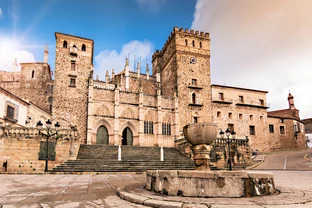
In the late 13th century, a farmer named Gil Cordero was searching for a stray cow when he discovered a statue of the Virgin Mary buried in the soil. A chapel was built on the site and in time, as the saint’s reputation for miracles grew, Guadalupe became Spain’s leading pilgrimage destination. Explorers spread its fame to the New World and Our Lady of Guadalupe became patron saint of all the territories conquered by Spain, generating enormous wealth. Columbus came to give thanks for his safe return from the New World, and even today many visitors come from Latin America and the Philippines to pay their respect. Over the centuries, the lavishly decorated monastery has undergone numerous extensions and refurbishments in a variety of styles—Gothic, Mudéjar, Renaissance, and Baroque. It was abandoned in 1835 when the Spanish government confiscated much of the Church’s property, and restored at the beginning of the 20th century by the Franciscan monks who maintain it today.
To explore the monastery and see the Virgin up close, buy a ticket for the guided tour that leaves the entrance hall every half-hour. The tour, in Spanish only, races through various museums and chapels ahead of the main event. That’s a pity, because the treasures are astounding. The Museo de las Bordados, in the old refectory, houses a collection of richly embroidered vestments from as early as 1415, including a chasuble made from a cloak belonging to the Catholic Monarchs Isabel and Fernando. The Museo de Miniados contains mammoth leather-bound choir books with beautifully illuminated manuscripts. The Museo de Esculturas y Pinturas is a small collection containing works by El Greco, Goya, Zurbarán, and an ivory crucifix attributed to Michelangelo. The artistic highlight is the intensely decorated Sacristía, known as the Spanish Sistine Chapel, which contains a series of superb paintings by the Extremaduran master Francisco de Zurbarán. They depict scenes from the lives of the Hieronymite monks who lived and worked here in the 1630s. In the chapel hangs his masterpiece, the Apotheosis of St Jerome. After a quick look at the Relicario, crammed with holy memorabilia, items from the Virgin’s dress collection, and a table belonging to Philip II, you’ll be handed over to a habit-wearing monk for the finale.
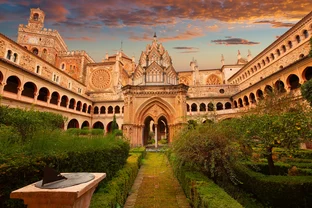
The statue of Our Lady of Guadalupe is housed in the 18th-century Camarín chapel. Your monastic guide will perform a slow build-up, describing a set of paintings by Luca Giordano of scenes from the life of Mary and polychromes of female biblical figures. Female pilgrims fan themselves impatiently. At last, with a game-show flourish, the monk swivels a gilded panel to reveal the black Madonna. Pilgrims queue to approach the Virgin, and many leave the chapel overcome with emotion. Afterwards, unwind in the tranquil Mudéjar cloister with its horseshoe arches, fruit trees, and a fountain pavilion.
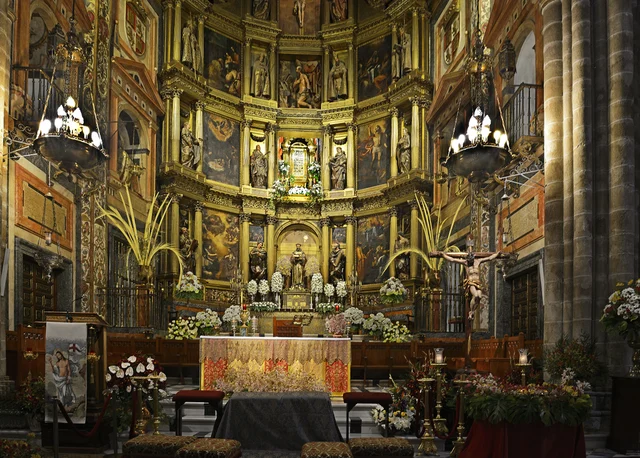
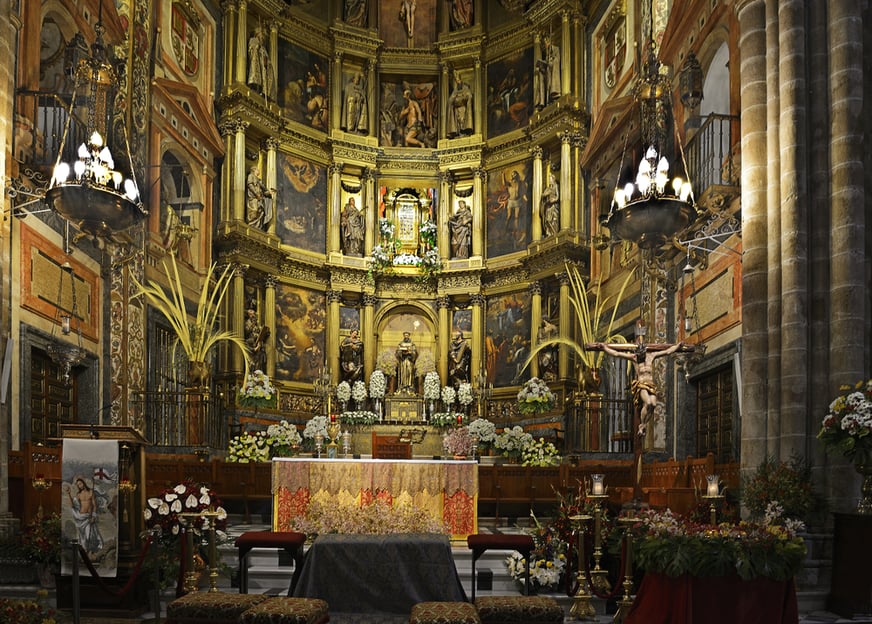
The Gothic Basílica, which is visited separately (free admission), is understated by comparison. Highlights are the intricately carved wooden choir and a Renaissance wrought-iron grille, said to have been forged from the chains of freed slaves. At the center of the floor-to-ceiling altarpiece, on a golden throne, you will again see the robed statue of the Virgin. Every few minutes she disappears, swiveled by the monk on the other side of the wall as another group of pilgrims shuffles in.
In the late 13th century, a farmer named Gil Cordero was searching for a stray cow when he discovered a statue of the Virgin Mary buried in the soil. A chapel was built on the site and in time, as the saint’s reputation for miracles grew, Guadalupe became Spain’s leading pilgrimage destination. Explorers spread its fame to the New World and Our Lady of Guadalupe became patron saint of all the territories conquered by Spain, generating enormous wealth. Columbus came to give thanks for his safe return from the New World, and even today many visitors come from Latin America and the Philippines to pay their respect. Over the centuries, the lavishly decorated monastery has undergone numerous extensions and refurbishments in a variety of styles—Gothic, Mudéjar, Renaissance, and Baroque. It was abandoned in 1835 when the Spanish government confiscated much of the Church’s property, and restored at the beginning of the 20th century by the Franciscan monks who maintain it today.
To explore the monastery and see the Virgin up close, buy a ticket for the guided tour that leaves the entrance hall every half-hour. The tour, in Spanish only, races through various museums and chapels ahead of the main event. That’s a pity, because the treasures are astounding. The Museo de las Bordados, in the old refectory, houses a collection of richly embroidered vestments from as early as 1415, including a chasuble made from a cloak belonging to the Catholic Monarchs Isabel and Fernando. The Museo de Miniados contains mammoth leather-bound choir books with beautifully illuminated manuscripts. The Museo de Esculturas y Pinturas is a small collection containing works by El Greco, Goya, Zurbarán, and an ivory crucifix attributed to Michelangelo. The artistic highlight is the intensely decorated Sacristía, known as the Spanish Sistine Chapel, which contains a series of superb paintings by the Extremaduran master Francisco de Zurbarán. They depict scenes from the lives of the Hieronymite monks who lived and worked here in the 1630s. In the chapel hangs his masterpiece, the Apotheosis of St Jerome. After a quick look at the Relicario, crammed with holy memorabilia, items from the Virgin’s dress collection, and a table belonging to Philip II, you’ll be handed over to a habit-wearing monk for the finale.
The statue of Our Lady of Guadalupe is housed in the 18th-century Camarín chapel. Your monastic guide will perform a slow build-up, describing a set of paintings by Luca Giordano of scenes from the life of Mary and polychromes of female biblical figures. Female pilgrims fan themselves impatiently. At last, with a game-show flourish, the monk swivels a gilded panel to reveal the black Madonna. Pilgrims queue to approach the Virgin, and many leave the chapel overcome with emotion. Afterwards, unwind in the tranquil Mudéjar cloister with its horseshoe arches, fruit trees, and a fountain pavilion.
The Gothic Basílica, which is visited separately (free admission), is understated by comparison. Highlights are the intricately carved wooden choir and a Renaissance wrought-iron grille, said to have been forged from the chains of freed slaves. At the center of the floor-to-ceiling altarpiece, on a golden throne, you will again see the robed statue of the Virgin. Every few minutes she disappears, swiveled by the monk on the other side of the wall as another group of pilgrims shuffles in.
Details
Bookstore
Available as paperback
and as e-book.