


- Amalfi Coast
- Bay of Naples
- Bologna and Emilia Romagna
- Campania
- Campania's Hidden Towns
- Central Sicily
- Chianti
- Coastal Tuscany and Pisa
- Costa Smeralda
- Dolomites and South Tirol
- Friuli-Venezia Giulia
- Liguria and the Italian Riviera
- Lombardy
- Northeastern Tuscany
- Northern Italy
- Northern Umbria
- Northwestern Tuscany
- Palermo Area
- Piedmont Wine Country
- Piedmont and Valle d'Aosta
- Puglia
- Sorrentine Peninsula
- Southeast Sicily
- Southern Amalfi Coast
- Southern Sicily
- Southern Tuscany
- Southern Umbria
- The Cinque Terre
- The Lakes
- The Phlegrean Fields
- The Veneto
- Tuscan Archipelago
- Tuscany and Umbria
- Tyrrhenian Coast
- Valdichiana
- Vesuvian Archaeological Area
- Western Sicily

Zigres / Shutterstock
Italy Travel Guide
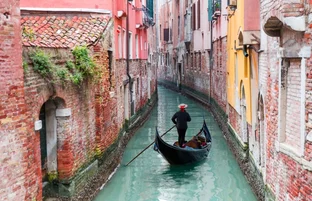
Just speak the word “Italy” and you can already see it. The noble stones of ancient Rome and the Greek temples of Sicily. The wine hills of Piedmont and Tuscany, the ruins of Pompeii, and the secret canals and crumbling palaces of Venice. For centuries, visitors have come here looking for their own slice of the good life, and for the most part, they have found it.
Nowhere in the world is the impact of the Renaissance felt more fully than in its birthplace, Florence, the repository of artistic works left by Masaccio, Botticelli, Leonardo, Michelangelo, and many, many others. Much of the “known world” was once ruled from Rome, a city supposedly founded by twins Romulus and Remus in 753 b.c. There’s no place with more artistic treasures—not even Venice, a seemingly impossible floating city that was shaped by its merchants and their centuries of trade with the Byzantine and Islamic worlds to the east.
And there’s more. Long before Italy was a country, it was a loose collection of city-states. Centuries of alliance and rivalry left a legacy of art and architecture in Verona, with its romance and an intact Roman Arena, and in Mantua, which blossomed during the Renaissance under the Gonzaga dynasty. Padua and its sublime Giotto frescoes are within easy reach of Venice, too. In Siena, the ethereal art and Gothic palaces survive, barely altered since the city’s heyday in the 1300s.
Earlier still, the eruption of Vesuvius in a.d. 79 preserved Pompeii and Herculaneum under volcanic ash for 2 millennia. It remains the best place to get close-up with the world of the Roman Empire. The buildings of ancient Greece still stand at Paestum, in Campania, and at sites on Sicily, the Mediterranean's largest island.
The corrugated, vine-clad hills of the Chianti and the cypress-studded, emerald-green expanses of the Val d'Orcia serve up iconic images of Tuscany. Adventurous walkers of all ages can hike between the coastal villages of the Cinque Terre, where you can travel untroubled by the 21st century. Whether it's seafood along the Sicilian coast, pizza in Naples, pasta in Bologna, pesto in Genoa, or the red Barolo and Barbaresco wines of Piedmont, your tastebuds are in for an adventure of their own. Milan and Florence are centers of world fashion. Welcome to La Bella Italia.
Start Exploring
The Best of Italy
Things To Do in Italy

Suggested Itineraries in Italy
In Depth in Italy
What's New in Italy
Traveler's Guide to Art & Architecture in Italy
Zigres / Shutterstock
Most Overrated Experiences
muratart / Shutterstock
Frommer's Favorite Experiences in Italy
Best Dining Bets in Italy
Best Hotels
Best for Families
The Best Luxury Hotels in Italy
The Best Mid-Range Hotels in Italy
The Best Museums in Italy
The Best Cathedrals in Italy
The Best Ruins in Italy
The Best Wine-Growing Regions in Italy
The Best Buys in Italy
The Best Romantic Getaways in Italy
Best Active Adventures
Best Free Things to Do
Best Architectural Landmarks
Best Undiscovered Italy
Best Neighborhoods