National Gallery

When the bells of St Martin-in-the-Fields peal each morning at 10am, the doors promptly open on one of the world’s greatest artistic fireworks shows—each famous picture follows an equally famous picture. Few museums can compete with the strongest, widest collection of Western European paintings in the world—one of every important style is on display, and it’s almost always the best in that genre. There are 2,300 works, which is plenty to divert you for as long as you can manage, although most visitors just wander around without getting properly close to the brushwork. Be different.
FINDING WORKS: This stupendous and palatial institution, founded in 1824, is marred by opaque presentation; it’s very difficult to find the works you want to see. The map (£2) is a poor value that omits many masterpieces. Directional signs lack room numbers, and the museum is so popular (nearly six million people most years) that staff is mostly concerned with controlling visitors, not edifying them. It’s almost like they want you to wander confused and unenriched, which is why I strongly suggest preparing for your visit by searching for works on its website: www.nationalgallery.org.uk/paintings/search-the-collection. If it’s on display, the location will appear under Key Facts. The museum offers free Wi-Fi, but it may not work, and it doesn’t offer a place for you to recharge your phone after you’ve done all that work.
LEARNING ABOUT WORKS: Posted signs are awfully straitlaced. You can glean a little more information if you download the Smartify app (free; bring earbuds) and point your phone at works you want to learn more about. The website has some itinerary (“trail”) suggestions, and the short spotlight videos on its YouTube channel (nationalgallerylondon) can help you appreciate a little of what you’ll be seeing, but your visit would be best illuminated by some expert input. Check the info desk or the website’s Events section for free perks such as the 10-Minute Talks about a single work (Mon–Fri 4pm); 45-minute Lunchtime Talks (1pm) about a specific work or artist; storytelling for kids; or the few hour-long tours (check the schedule online). Permanent displays are supplemented by temporary exhibitions, one free and one paid (£8–£18, and having a ticket can speed you past the main entry queue). The Gallery schedules most family activities for Sundays. The two restaurants are top-quality but overpriced, and besides, the view from the restaurant at the National Portrait Gallery next door (see below) is better. Don’t miss the superlative gift shops, which will print you a color-matched custom copy of any of the 1,200 works or even mail a framed version home.
Note: Recent renovations for the Gallery’s 200th anniversary may have shifted the location of some works from what is listed below. To pinpoint current gallery numbers, search for works on the website before coming.
Top Don't-Miss Exhibits at London's National Gallery
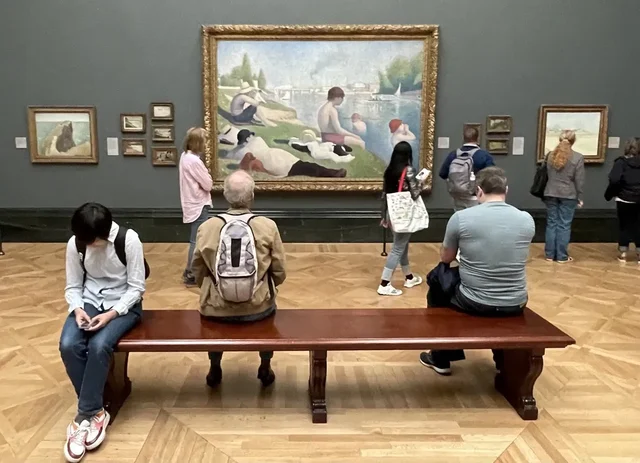
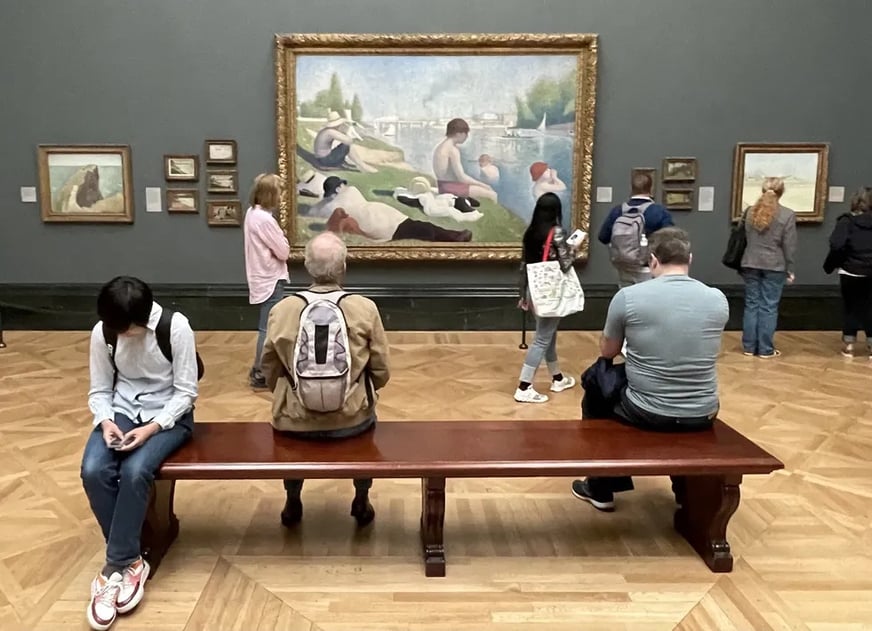
There’s much more: George Seurat’s almost-pointillist Bathers at Asnières (1884, room 43); Monet’s The Water-Lily Pond (1899, room 41); Van Gogh’s Sunflowers (1888, room 43); the Pollaiuolo brothers’ The Martyrdom of Saint Sebastian (1475, room 59); Jan van Eyck’s instantly recognizable The Arnolfini Portrait (Sainsbury Wing, room 63), a mysterious but fabulously skillful depiction of light that dates to 1434 and looks years ahead of its time. Brueghels (room 26; bring your reading glasses to see the crazy details). Cézannes. Uccellos. There’s so much good stuff here that you may want to go twice during your visit. The Gallery is centrally located, so you can.
When the bells of St Martin-in-the-Fields peal each morning at 10am, the doors promptly open on one of the world’s greatest artistic fireworks shows—each famous picture follows an equally famous picture. Few museums can compete with the strongest, widest collection of Western European paintings in the world—one of every important style is on display, and it’s almost always the best in that genre. There are 2,300 works, which is plenty to divert you for as long as you can manage, although most visitors just wander around without getting properly close to the brushwork. Be different.
FINDING WORKS: This stupendous and palatial institution, founded in 1824, is marred by opaque presentation; it’s very difficult to find the works you want to see. The map (£2) is a poor value that omits many masterpieces. Directional signs lack room numbers, and the museum is so popular (nearly six million people most years) that staff is mostly concerned with controlling visitors, not edifying them. It’s almost like they want you to wander confused and unenriched, which is why I strongly suggest preparing for your visit by searching for works on its website: www.nationalgallery.org.uk/paintings/search-the-collection. If it’s on display, the location will appear under Key Facts. The museum offers free Wi-Fi, but it may not work, and it doesn’t offer a place for you to recharge your phone after you’ve done all that work.
LEARNING ABOUT WORKS: Posted signs are awfully straitlaced. You can glean a little more information if you download the Smartify app (free; bring earbuds) and point your phone at works you want to learn more about. The website has some itinerary (“trail”) suggestions, and the short spotlight videos on its YouTube channel (nationalgallerylondon) can help you appreciate a little of what you’ll be seeing, but your visit would be best illuminated by some expert input. Check the info desk or the website’s Events section for free perks such as the 10-Minute Talks about a single work (Mon–Fri 4pm); 45-minute Lunchtime Talks (1pm) about a specific work or artist; storytelling for kids; or the few hour-long tours (check the schedule online). Permanent displays are supplemented by temporary exhibitions, one free and one paid (£8–£18, and having a ticket can speed you past the main entry queue). The Gallery schedules most family activities for Sundays. The two restaurants are top-quality but overpriced, and besides, the view from the restaurant at the National Portrait Gallery next door (see below) is better. Don’t miss the superlative gift shops, which will print you a color-matched custom copy of any of the 1,200 works or even mail a framed version home.
Note: Recent renovations for the Gallery’s 200th anniversary may have shifted the location of some works from what is listed below. To pinpoint current gallery numbers, search for works on the website before coming.
Top Don't-Miss Exhibits at London's National Gallery
There’s much more: George Seurat’s almost-pointillist Bathers at Asnières (1884, room 43); Monet’s The Water-Lily Pond (1899, room 41); Van Gogh’s Sunflowers (1888, room 43); the Pollaiuolo brothers’ The Martyrdom of Saint Sebastian (1475, room 59); Jan van Eyck’s instantly recognizable The Arnolfini Portrait (Sainsbury Wing, room 63), a mysterious but fabulously skillful depiction of light that dates to 1434 and looks years ahead of its time. Brueghels (room 26; bring your reading glasses to see the crazy details). Cézannes. Uccellos. There’s so much good stuff here that you may want to go twice during your visit. The Gallery is centrally located, so you can.
Details
Bookstore

Available as paperback
and as e-book.