Grand-Pré National Historic Site

For Acadians around the world, this site represents the core of their ancestral homeland and a powerful symbol of the enduring bonds that still connect them. They vastly altered the landscape of this region, in large part by constructing a series of dikes outfitted with ingenious log valves, which allowed farmers to convert the saltwater marshes to productive farmland. The modern visitor center at this UNESCO World Heritage Site tells the story of the massive engineering effort behind these dikes, as well as the tragic history of the Acadians who populated the Minas Basin from 1680 until their expulsion (le Grand Dérangement) at the hands of the British in 1755. Some 11,500 were forcefully deported from these and other Acadian communities, their homes and farms burned when they refused to sign oaths of allegiance to the British crown. Many died on their way to Louisiana, where they became the Cajuns.
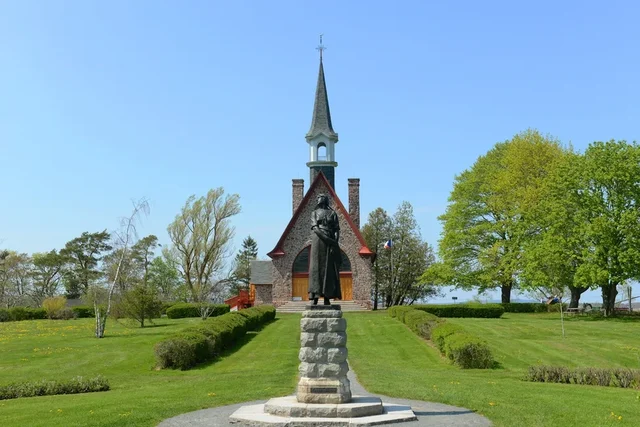
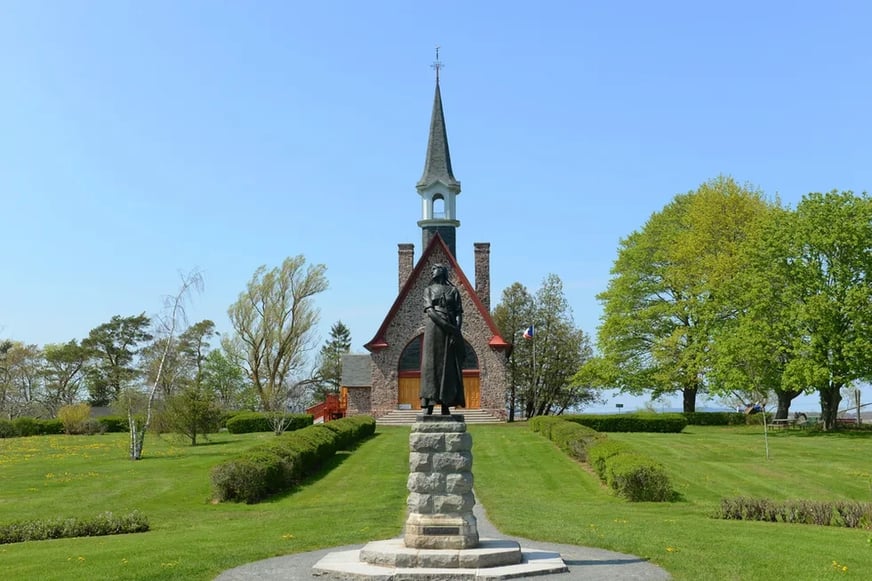
Along with the visitor center, Grand-Pré (“great meadow”) has handsome green lawns studded by weeping willows, and a graceful stone church—built in 1922 on the presumed site of the original Acadian church—filled with commemorative works of art and fascinating artifacts, like a ledger that lists all those deported. Evangeline Bellefontaine, the revered (albeit fictional) heroine of Longfellow’s epic poem Evangeline, was said to have been born here; look for the tragic heroine’s iconic statue (created in 1920 by Canadian sculptor Philippe Hérbert) in the garden gazing longingly over her shoulder at the church. Cyclists use this as a starting point for the 9km (5.6 miles) trail of hardpacked-dirt along the tops of the dike.
For Acadians around the world, this site represents the core of their ancestral homeland and a powerful symbol of the enduring bonds that still connect them. They vastly altered the landscape of this region, in large part by constructing a series of dikes outfitted with ingenious log valves, which allowed farmers to convert the saltwater marshes to productive farmland. The modern visitor center at this UNESCO World Heritage Site tells the story of the massive engineering effort behind these dikes, as well as the tragic history of the Acadians who populated the Minas Basin from 1680 until their expulsion (le Grand Dérangement) at the hands of the British in 1755. Some 11,500 were forcefully deported from these and other Acadian communities, their homes and farms burned when they refused to sign oaths of allegiance to the British crown. Many died on their way to Louisiana, where they became the Cajuns.
Along with the visitor center, Grand-Pré (“great meadow”) has handsome green lawns studded by weeping willows, and a graceful stone church—built in 1922 on the presumed site of the original Acadian church—filled with commemorative works of art and fascinating artifacts, like a ledger that lists all those deported. Evangeline Bellefontaine, the revered (albeit fictional) heroine of Longfellow’s epic poem Evangeline, was said to have been born here; look for the tragic heroine’s iconic statue (created in 1920 by Canadian sculptor Philippe Hérbert) in the garden gazing longingly over her shoulder at the church. Cyclists use this as a starting point for the 9km (5.6 miles) trail of hardpacked-dirt along the tops of the dike.
Details
Bookstore

Available as paperback
and as e-book.