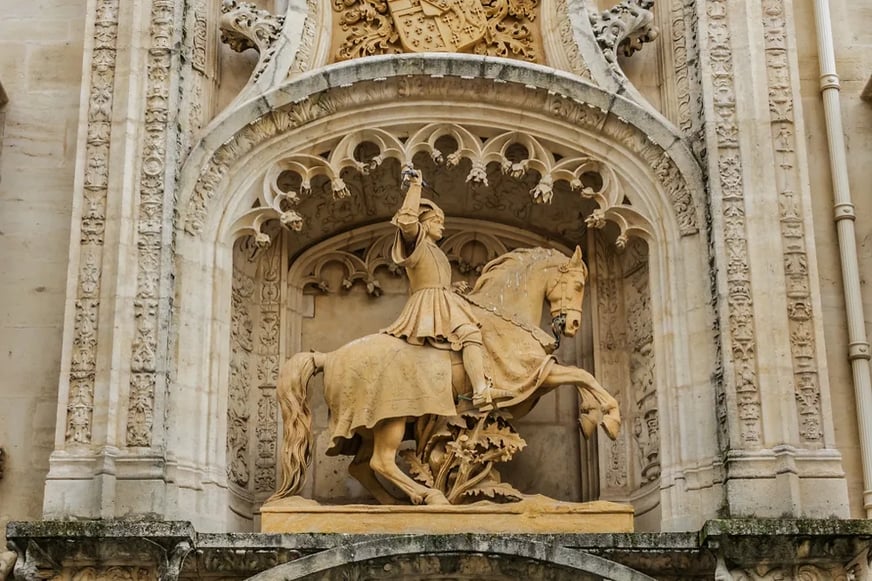
Musée Historique Lorrain

This is one of France’s great museums, covering the art and history of the Lorraine region from ancient times. The first floor devotes an entire room to Jacques Callot, an engraver born in Nancy in 1592; it includes a famous yet dark series on the Miseries and Misfortunes of War (a later inspiration for Goya). Galerie des Cerfs displays tapestries. You’ll see a collection of 17th-century masterpieces by Jacques Bellange, Jacques Callot, Georges de la Tour, and Claude Deruet, dating from when the duchy was known as a cultural center.
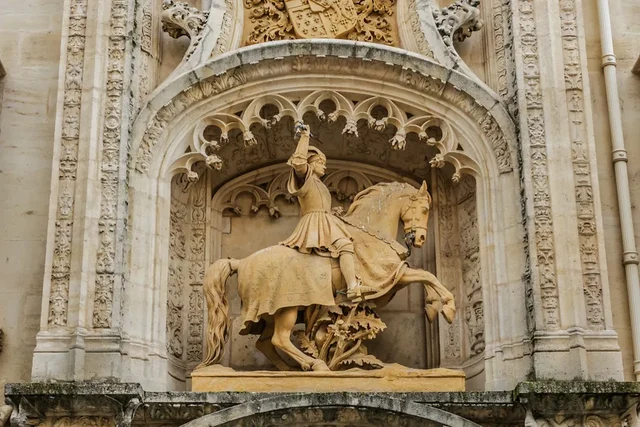
Until the Revolution, this was a Franciscan convent. Franciscans were known as Cordeliers—hence the name of the church that adjoins the museum. The Flamboyant Gothic Eglise des Cordeliers is the burial site of the dukes of Lorraine. The most notable of the burial monuments are those of René II (1509; attributed to the sculptor Mansuy Gauvain) and a reclining statue of his second wife, Philippa of Gueldres, by Ligier Richier. The limestone rendering of Philippa is one of Nancy’s most stunning examples of Renaissance portraiture. The octagonal Chapel of the Dukes (1607) holds the baroque sarcophagi. The rest of the display tells the story of the daily life of the area’s country folk with artwork, rooms from period homes, and farming equipment.
Important: As we went to press, the the museum was closed for extensive renovations and expansion. It’s scheduled to reopen in 2029. However, some works, including Georges de La Tour’s “La Femme à la Puce,” will be on display at the Musée des Beaux-Arts and the Eglise des Cordeliers will remain open and free of charge.
This is one of France’s great museums, covering the art and history of the Lorraine region from ancient times. The first floor devotes an entire room to Jacques Callot, an engraver born in Nancy in 1592; it includes a famous yet dark series on the Miseries and Misfortunes of War (a later inspiration for Goya). Galerie des Cerfs displays tapestries. You’ll see a collection of 17th-century masterpieces by Jacques Bellange, Jacques Callot, Georges de la Tour, and Claude Deruet, dating from when the duchy was known as a cultural center.
Until the Revolution, this was a Franciscan convent. Franciscans were known as Cordeliers—hence the name of the church that adjoins the museum. The Flamboyant Gothic Eglise des Cordeliers is the burial site of the dukes of Lorraine. The most notable of the burial monuments are those of René II (1509; attributed to the sculptor Mansuy Gauvain) and a reclining statue of his second wife, Philippa of Gueldres, by Ligier Richier. The limestone rendering of Philippa is one of Nancy’s most stunning examples of Renaissance portraiture. The octagonal Chapel of the Dukes (1607) holds the baroque sarcophagi. The rest of the display tells the story of the daily life of the area’s country folk with artwork, rooms from period homes, and farming equipment.
Important: As we went to press, the the museum was closed for extensive renovations and expansion. It’s scheduled to reopen in 2029. However, some works, including Georges de La Tour’s “La Femme à la Puce,” will be on display at the Musée des Beaux-Arts and the Eglise des Cordeliers will remain open and free of charge.
Details
Bookstore

Available as paperback
and as e-book.