Prince Edward Island National Park

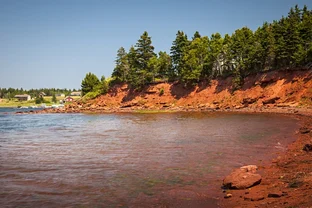
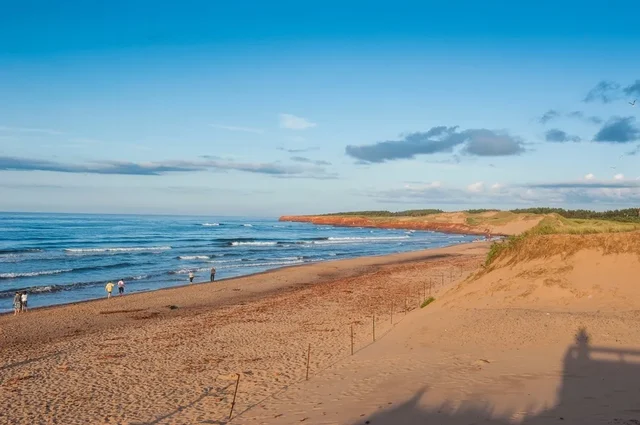
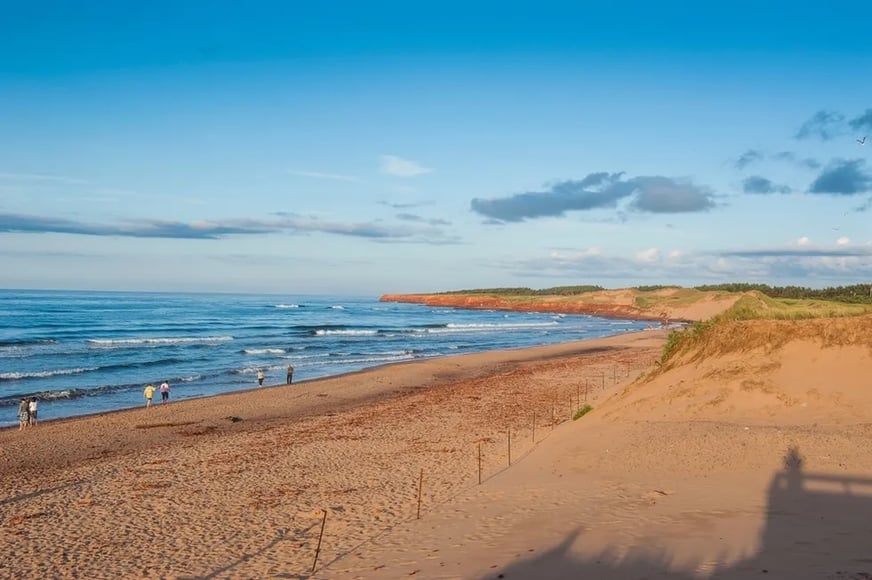
Located along PEI’s sandy north central coast, Prince Edward Island National Park is big and small all at once. In total, the park encompasses just 40 skinny kilometers (25 miles) of sandy beaches and wind-sculpted dunes topped by marram grass, red-sandstone cliffs, salt marshes, and gentle inlets. Even what length it possesses is broached in several places by broad estuarine inlets that connect to harbors; as a result, you can’t drive the entire park’s length in one stretch, but rather must break away from the coastal road (and views) and backtrack inland.
You don’t mind, though, because this is the reason many people come to the island. These empty beaches and lovely dunes define the park for a hefty percentage of PEI visitors. There’s really little point in trying to tour the whole length of the park in 1 day. It’s better to simply pick out one stretch of beach, stake a claim, and settle in and enjoy the gentle surroundings.
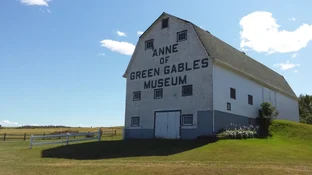
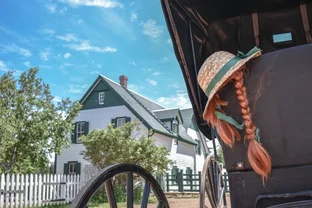
There’s more to this national park than just beaches and dunes. Within its boundaries you can also find considerable woods and meadows, full of wildlife—you might spot red foxes (who den in the dunes), muskrats, mink, eagles, or osprey. In the marshes and tidal flats, great blue heron stalk their aquatic prey near sunset. And, where beach and dune meet, watch for the piping plover, a tiny, endangered beach bird that scratches its shallow, hard-to-spot nest right out of the beach sand. Walking trails and interpretive programs enrich a visit. Be sure to head to Greenwich at the far eastern reaches of the Park, near St. Peters. There are fewer visitors here, and the interpretive center has very informative displays about the park’s ecology and nature. The national park also administers the Green Gables house and grounds, but they’re a bit of a drive from the beaches and a world apart from them, aesthetically speaking; see “Cavendish,” earlier in this chapter, for details on “Anne’s Land”.
Visitor Information in Prince Edward Island National Park
The Cavendish Visitor Information Centre, north of the intersection of routes 6 and 13, supplies information on the park’s destinations and activities. It opens daily from mid-May through early September.
At the far eastern end of the park, past St. Peters, the modern Greenwich Interpretation Centre (tel. 902/961-2514) is open daily in July and August from 10am to 6pm, June and September until 4pm.
Beaches in Prince Edward Island National Park
PEI National Park is home to two kinds of sandy beaches: popular, sometimes crowded strands with changing rooms, lifeguards, snack bars, and other amenities; and all the rest. Where you go depends on your temperament. If it’s not a day at the beach without the aroma of other people’s coconut tanning oil, head for Brackley Beach, Dalvay Beach, or Cavendish Beach. (The latter is within walking distance, about a kilometer through the fields of the Green Gables Historic Site and many amusements, thus making it good for families with kids.)
If you’d just as soon be left alone with the waves, sun, and sand, you need to head a bit farther afield—or just keep walking very far down the beaches from parking lots until you have left the crowds behind. Pick up a map of the national park, and look for ways to head away from the popular sites. A hint: “Fewer facilities” almost always translates to “far fewer people.”
Hiking & Biking in Prince Edward Island National Park
You won’t find challenging grinds, or hard-to-navigate landscapes, in PEI National Park, but you will find what PEI is known for: gently rolling trails, scenic vistas, and very walkable trails, 17 in all. (Of course, there’s also the beach, which is perfect for long, leisurely walks.)
The park maintains a total of 45km (28 miles) of trails, so there’s plenty of room to roam. They have also added walking/bicycling lanes, separated from traffic by a grass verge, along paved roads throughout the park.
Among the most appealing is the Homestead Trail, which departs from the Cavendish campground. The trail offers both a 6.7km (4-mile) loop and an 8.8km (5.5-mile) loop and skirts wheat fields, woodlands, and estuaries, with frequent views of the distinctively bumpy dunes at the west end of the national park. Notably, mountain bikes are allowed on this trail, so it can become a relatively busy place on sunny days. If you are going into Green Gables (admission is charged in season), the two short trails—Balsam Hollow and Haunted Wood, each less than 1km (.6 miles)—are lovely but invariably crowded when buses are in the parking lot.
Cycling the seaside roads in the park is sublime. Traffic is generally light, and it’s easy to make frequent stops along the way to explore beaches, woodlands, or the marshy edges of inlets. The two shoreline roads within the national park—between Dalvay and Rustico Island, and from Cavendish to North Rustico Harbour—are especially beautiful as sunset edges into twilight. As a bonus, there are snack bars located both at Brackley Beach and again at Covehead Bay. Both have bike lanes.
For mountain bikers, there’s a trail just for you. At the end of Gulf Shore Way, there’s a stacked, multi-use trail at Robinson’s Island. The 5km (3 mile) trail is open to hikers, but it was built with beginner and intermediate mountain bikers in mind; 11 technical challenges on spurs from the main trail include teeter totters and ramps.
You can rent hybrid and mountain bike rentals at Dalvay Beach Bike Rentals (tel. 888/366-2955 or 902/672-2048). The facility is located at the venerable Dalvay by the Sea resort.
Best Routes to Get to the Park
From downtown Charlottetown, Route 15 (which passes the airport, then continues north) is the most direct route to central sections of the park. To reach the lovely eastern sections and Dalvay by the Sea, you can also drive east on Route 2, then turn north on Route 6 at Bedford. Alternately, to reach the Cavendish (western) area and the attractive Rusticos most quickly, take Route 2 west to Hunter River, then turn north on Route 13. The entire drive from city to beach is only 30 or 40km (20 or 25 miles), yet it will take 45 minutes or more on the small roads, depending on traffic. Once you arrive at the park, if you want to drive its length and survey it more closely, enter at North Rustico and follow the Shore Road. Otherwise take Route 6 to the Cavendish entrances, which is sometimes heavy with traffic.
Located along PEI’s sandy north central coast, Prince Edward Island National Park is big and small all at once. In total, the park encompasses just 40 skinny kilometers (25 miles) of sandy beaches and wind-sculpted dunes topped by marram grass, red-sandstone cliffs, salt marshes, and gentle inlets. Even what length it possesses is broached in several places by broad estuarine inlets that connect to harbors; as a result, you can’t drive the entire park’s length in one stretch, but rather must break away from the coastal road (and views) and backtrack inland.
You don’t mind, though, because this is the reason many people come to the island. These empty beaches and lovely dunes define the park for a hefty percentage of PEI visitors. There’s really little point in trying to tour the whole length of the park in 1 day. It’s better to simply pick out one stretch of beach, stake a claim, and settle in and enjoy the gentle surroundings.
There’s more to this national park than just beaches and dunes. Within its boundaries you can also find considerable woods and meadows, full of wildlife—you might spot red foxes (who den in the dunes), muskrats, mink, eagles, or osprey. In the marshes and tidal flats, great blue heron stalk their aquatic prey near sunset. And, where beach and dune meet, watch for the piping plover, a tiny, endangered beach bird that scratches its shallow, hard-to-spot nest right out of the beach sand. Walking trails and interpretive programs enrich a visit. Be sure to head to Greenwich at the far eastern reaches of the Park, near St. Peters. There are fewer visitors here, and the interpretive center has very informative displays about the park’s ecology and nature. The national park also administers the Green Gables house and grounds, but they’re a bit of a drive from the beaches and a world apart from them, aesthetically speaking; see “Cavendish,” earlier in this chapter, for details on “Anne’s Land”.
Visitor Information in Prince Edward Island National Park
The Cavendish Visitor Information Centre, north of the intersection of routes 6 and 13, supplies information on the park’s destinations and activities. It opens daily from mid-May through early September.
At the far eastern end of the park, past St. Peters, the modern Greenwich Interpretation Centre (tel. 902/961-2514) is open daily in July and August from 10am to 6pm, June and September until 4pm.
Beaches in Prince Edward Island National Park
PEI National Park is home to two kinds of sandy beaches: popular, sometimes crowded strands with changing rooms, lifeguards, snack bars, and other amenities; and all the rest. Where you go depends on your temperament. If it’s not a day at the beach without the aroma of other people’s coconut tanning oil, head for Brackley Beach, Dalvay Beach, or Cavendish Beach. (The latter is within walking distance, about a kilometer through the fields of the Green Gables Historic Site and many amusements, thus making it good for families with kids.)
If you’d just as soon be left alone with the waves, sun, and sand, you need to head a bit farther afield—or just keep walking very far down the beaches from parking lots until you have left the crowds behind. Pick up a map of the national park, and look for ways to head away from the popular sites. A hint: “Fewer facilities” almost always translates to “far fewer people.”
Hiking & Biking in Prince Edward Island National Park
You won’t find challenging grinds, or hard-to-navigate landscapes, in PEI National Park, but you will find what PEI is known for: gently rolling trails, scenic vistas, and very walkable trails, 17 in all. (Of course, there’s also the beach, which is perfect for long, leisurely walks.)
The park maintains a total of 45km (28 miles) of trails, so there’s plenty of room to roam. They have also added walking/bicycling lanes, separated from traffic by a grass verge, along paved roads throughout the park.
Among the most appealing is the Homestead Trail, which departs from the Cavendish campground. The trail offers both a 6.7km (4-mile) loop and an 8.8km (5.5-mile) loop and skirts wheat fields, woodlands, and estuaries, with frequent views of the distinctively bumpy dunes at the west end of the national park. Notably, mountain bikes are allowed on this trail, so it can become a relatively busy place on sunny days. If you are going into Green Gables (admission is charged in season), the two short trails—Balsam Hollow and Haunted Wood, each less than 1km (.6 miles)—are lovely but invariably crowded when buses are in the parking lot.
Cycling the seaside roads in the park is sublime. Traffic is generally light, and it’s easy to make frequent stops along the way to explore beaches, woodlands, or the marshy edges of inlets. The two shoreline roads within the national park—between Dalvay and Rustico Island, and from Cavendish to North Rustico Harbour—are especially beautiful as sunset edges into twilight. As a bonus, there are snack bars located both at Brackley Beach and again at Covehead Bay. Both have bike lanes.
For mountain bikers, there’s a trail just for you. At the end of Gulf Shore Way, there’s a stacked, multi-use trail at Robinson’s Island. The 5km (3 mile) trail is open to hikers, but it was built with beginner and intermediate mountain bikers in mind; 11 technical challenges on spurs from the main trail include teeter totters and ramps.
You can rent hybrid and mountain bike rentals at Dalvay Beach Bike Rentals (tel. 888/366-2955 or 902/672-2048). The facility is located at the venerable Dalvay by the Sea resort.
Best Routes to Get to the Park
From downtown Charlottetown, Route 15 (which passes the airport, then continues north) is the most direct route to central sections of the park. To reach the lovely eastern sections and Dalvay by the Sea, you can also drive east on Route 2, then turn north on Route 6 at Bedford. Alternately, to reach the Cavendish (western) area and the attractive Rusticos most quickly, take Route 2 west to Hunter River, then turn north on Route 13. The entire drive from city to beach is only 30 or 40km (20 or 25 miles), yet it will take 45 minutes or more on the small roads, depending on traffic. Once you arrive at the park, if you want to drive its length and survey it more closely, enter at North Rustico and follow the Shore Road. Otherwise take Route 6 to the Cavendish entrances, which is sometimes heavy with traffic.
Details
Bookstore

Available as paperback
and as e-book.