Things To Do in San Jose, Costa Rica
Bookstore
Available as paperback
and as e-book.
San Jose, Costa Rica Attractions
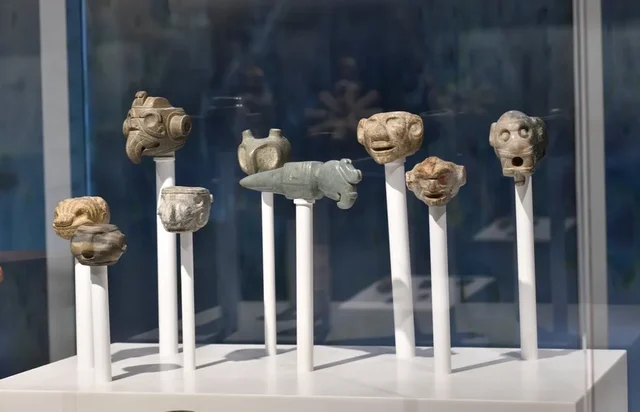
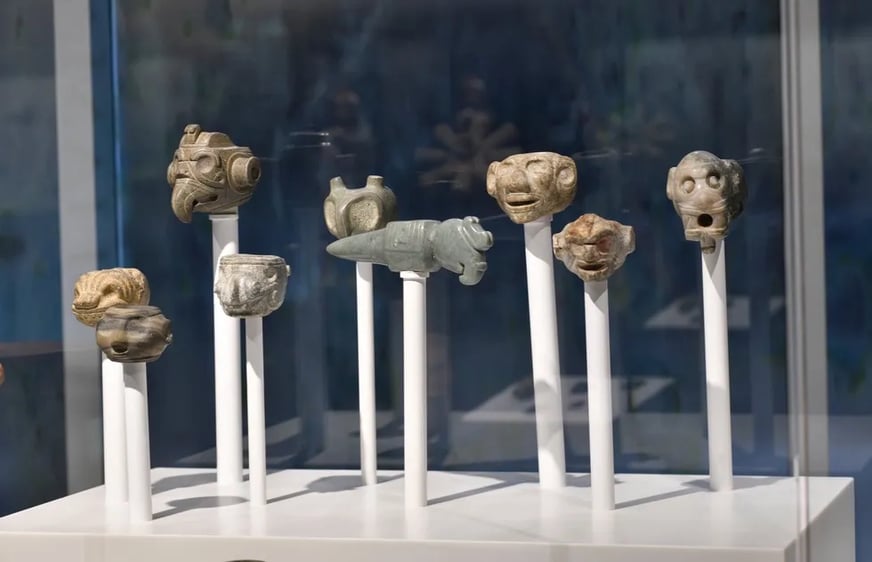
San José has some of the best and most modern museums in Central America, with a wealth of fascinating pre-Columbian artifacts. Standouts include the Museo de Jade (Jade Museum, pictured above) and the Museo de Arte Costarricense (Costa Rican Art Museum), featuring a fine collection of Costa Rican art, and a large and varied, open-air sculpture garden.
Just outside San José in the Central Valley are also several great things to see and do. With day trips out of the city, you can spend quite a few days in this region.

9 Results
- Cathedral
Catedral Metropolitano (Metropolitan Cathedral)
San José’s principal Catholic cathedral was built in 1871. Though rather plain from the outside, the large neoclassical church features a mix of stained-glass works, and assorted sculptures and bas-reliefs. It also has a wonderfully restored 19th-century pipe organ. A well-tended… - Museum
Museo Nacional de Costa Rica (National Museum)
Sitting atop the Plaza de la Democracia, the Museo Nacional provides a solid, all-around sampling of the archaeological, historical, and natural wonders of Costa Rica from pre-Columbian times to the present. That means pre-Columbian art and artifacts, including musical instruments,… - Art museum
Museo de Arte Costarricense (Costa Rican Art Museum)
Originally the main terminal and control tower of San José’s first international airport, this museum houses the largest and most important collection of works by Costa Rican artists from the colonial time to the present. The museum’s permanent collection has over 6,000 pieces,… - Art museum
Museo de Arte y Diseño Contemporáneo
Housed in what was formerly the National Liquor Factory (FANAL), this complex of museums and performance spaces is also home to the Ministry of Culture. The best museum here is the Museum of Contemporary Art and Design (MADC), which has several very large exhibition spaces and… - Museum
Museo de Jade Marco Fidel Tristán (Jade Museum)
No commodity was more valuable among the pre-Columbian cultures of Central America and Mexico than jade; it was worth more than gold. Set on the western edge of the Plaza de la Democracia, this five-story building has more than 7,000 sq. m (75,000 sq. ft.) of exhibition space, which… - Museum
Museo de Los Niños (Children’s Museum)
A massive attraction that’s both fun and informative, the Museo de Los Niños features interactive exhibits and educational displays describing everything from the rainforest to pre-Columbian village life to the interior of a spaceship (in honor of Costa Rican astronaut Franklin… - Museum
Museos del Banco Central de Costa Rica (Gold Museum)
A trove of some 1,600 gold pieces dating from 500 B.C. to 1500 A.D., is the primary lure here; visitors are usually bowled over by the intricate workmanship on the small gold items. Interestingly, gold was used in many forms, from cast animal figurines to jewelry to functional… - Zoo/Aquarium
Parque Zoológico Simón Bolívar
This zoo no longer suffers from the overwhelming sense of neglect and despair that once plagued it, though it's still pretty lackluster and depressing. Why spend time here when you could head out into the forests and jungles? You won't see the great concentrations of wildlife… - Zoo
Spirogyra Butterfly Garden
Smaller and less elaborate than the Butterfly Farm, Spirogyra still provides a good introduction to the life cycle of butterflies. First watch the 18-minute video (it runs continuously), then grab the provided butterfly booklet and take a self-guided tour to seek out the 20 species…
San Jose, Costa Rica Shopping
Serious shoppers may be disappointed in San José, because aside from oxcarts and indigenous masks, there isn’t much that’s distinctly Costa Rican. To compensate for its relative lack of goods, Costa Rica does a brisk business in selling crafts and clothes imported from Guatemala, Panama, and Ecuador.
San José’s central shopping corridor is bounded by avenidas 1 and 2, from about Calle 14 in the west to Calle 13 in the east. For several blocks west of the Plaza de la Cultura, Avenida Central is a pedestrian-only street mall where you’ll find store after store of inexpensive clothes for men, women, and children. Depending on the mood of the police that day, you might find a lot of street vendors as well. Most shops in the downtown district are open Monday through Saturday from about 8am to 6pm. Some shops close for lunch, while others remain open. You’ll be happy to find that sales and import taxes have already been figured into display prices.
Coffee
Two words of advice: Buy coffee.
Coffee is the best shopping deal in all of Costa Rica. Although the best Costa Rican coffee is allegedly shipped off to North American and European markets, it’s hard to beat the coffee that’s roasted right in front of you here. Best of all is the price: One pound of coffee sells for around $7 to $14. It makes a great gift and truly is a local product.You’ll find the best coffee from specialty growers at the small roasters that have popped up all over the country in recent years. In San José, Cafeoteca, which works with 15 small family-run coffee farms, has quickly become one of the premier specialty coffee roasters in the country.
The commercial brands, while not of the level of the artisanal farms, are still quite good, Café Britt is the big name in Costa Rican coffee. It has the largest export business in the country, and its blends are very dependable. Also good are the coffees roasted and packaged in Manuel Antonio and Monteverde, by Café Milagro and Café Monteverde, respectively. In general, these more commercial coffees are widely available at gift shops around the country, and at both international airports. You can also buy their coffee in any supermarket, and we suggest you do! Why pay more at a gift or specialty shop? If you buy prepackaged coffee in a supermarket in Costa Rica, the whole beans will be marked either grano (grain) or grano entero (whole bean). If you opt for ground varieties (molido), be sure the package is marked puro; otherwise, it may be mixed with a good amount of sugar, the way Ticos like it.
One good coffee-related gift to bring home is a coffee sock and stand. This is the most common mechanism for brewing coffee beans in Costa Rica. It consists of a simple circular stand, made out of wood or wire, which holds a “sock.” Put the ground beans in the sock, place a pot or cup below it, and pour boiling water through. You can find the socks and stands at most supermarkets and in the Mercado Central. In fancier crafts shops, you’ll find them made out of ceramic. A stand will cost you between $1.50 and $15; socks run around 30 cents, so buy a few spares.
Markets
Several markets are near downtown, but by far the largest is the Mercado Central ★, located between avenidas Central and 1 and calles 6 and 8.
Modern Malls
With globalization and modernization taking hold in Costa Rica, much of the local shopping scene has shifted to large megamalls. Modern multilevel affairs with cineplexes, food courts, and international brand-name stores are becoming ubiquitous. The biggest and most modern of these malls include the Mall San Pedro, Multiplaza (one each in Escazú and the eastern suburb of Zapote), and Terra Mall (on the outskirts of downtown on the road to Cartago). Although they lack the charm of small shops found around San José, they are a reasonable option for one-stop shopping; most contain at least one or two local galleries and crafts shops, along with a large supermarket, which is always the best place to stock up on local coffee, hot sauces, liquors, and other nonperishable foodstuffs.
Handicrafts
The range and quality of craftworks for sale here has improved greatly in recent years. You might want to check out the works of Lil Mena, a local artist who specializes in painting on handmade papers and rough fibers, and Cecilia “Pefi” Figueres, who specializes in brightly colored abstract and figurative ceramic bowls, pitchers, coffee mugs, and more. Both Mena and Figueres are sold at some of the better gift shops around the city. Another artist to look out for is Barry Biesanz, whose bowls and boxes are works of art. Biesanz’s works are also carried at fine gift shops around San José, as well as in his workshop and gallery in the hills above Escazú. Vendors at the Plaza de la Democracia market also sell handicrafts.
Liquor
The best prices I’ve seen for liquor are at the city’s large supermarkets, such as Más [ts] Menos. A Más [ts] Menos store is on Paseo Colón and Calle 26, and another is on Avenida Central at the east end of town, just below the Museo Nacional de Costa Rica.
16 Results
- Arts & Crafts
Biesanz Woodworks
Biesanz makes a wide range of high-quality wood items, including bowls, jewelry boxes, humidors, and some wonderful sets of chopsticks. The company is actively involved in local reforestation, too. - Arts & Crafts
Chietón Morén
Chietón Morén means “fair deal” in the Boruca language. This place features arts and craft works from a dozen or so different Costa Rican indigenous communities displayed in a space that is part museum and part showroom and market. It operates as a nonprofit and is certified “fair… - Leather Goods
Del Río
This local leather goods manufacturer has several storefronts around the city, and in most of the country’s modern malls. Works are high-quality and fairly priced, and range from wallets and belts to briefcases, boots, and fancy leather jackets and pants. Del Río also has outlets in… - Jewelry
Duo
The outgrowth of a jewelry-making school and studio, this shop has some excellent handcrafted jewelry in a range of styles, using everything from 18-karat white and yellow gold and pure silver, to some less exotic and expensive alloys. Some works integrate gemstones, while many… - Galleries
Galería Kandinsky
Owned by the daughter of one of Costa Rica’s most prominent modern painters, Rafa Fernández, this small gallery usually has a good selection of high-end contemporary Costa Rican paintings, be it the house collection or a specific temporary exhibit. - Arts & Crafts
Galería Namu
Galería Namu has some very high-quality arts and crafts, specializing in truly high-end indigenous works, including excellent Boruca and Huetar carved masks and “primitive” paintings. It also carries a good selection of more modern arts and craft pieces, including the ceramic work of… - Arts & Crafts
Galería Valanti
This is a well-lit and expertly curated gallery. The collection here is ever-evolving, but always includes a good mix of contemporary and classic Costa Rican and Latin American artists. - Arts & Crafts
Hola Lola
This bright, colorful shop is full of delightfully kitschy art prints of Costa Rican scenes and destinations, as well as books and design items. - Jewelry
Kiosco
Attached to the restaurant Kalú, this place features a range of original and one-off pieces of functional, wearable, and practical jewelry made by contemporary Costa Rican and regional artists and designers. While the offerings are regularly changing, you’ll usually find a selection… - Books
Librería Internacional
This is the closest Costa Rica has to a major book retailer. Most of the books here are in Spanish, but there is a small-to-modest selection of English-language contemporary fiction, nonfiction, and natural history texts. Librería Internacional has various outlets around San José,… Mercado Central
Although this tight maze of stalls is primarily a food market, vendors also sell souvenirs, leather goods, musical instruments, and many other items. Be especially careful with your wallet, purse, and prominent jewelry, as skilled pickpockets frequent the area. All the streets around…Plaza de la Democracia
Two long rows of outdoor stalls sell t-shirts, Guatemalan and Ecuadorian handicrafts and clothing, small ceramic ocarinas (a small musical wind instrument), and handmade jewelry. The atmosphere here is much more open than at the Mercado Central, which can be a bit claustrophobic. You…- Art
Satisfactory
What began as a pop-up shop in 2013 has blossomed into San José’s premier space to experience high quality, yet accessible art and design. Every 3 months the space mutates between disciplines and there are regular art fairs and pop-ups showcasing local artists and designers. - Food
Sibú Chocolate
Chocolate lovers will definitely want to visit this gourmet organic chocolate maker, which features a small cafe, gift shop, and tours of its production facility in Escazú. The tour includes an informative presentation about the history and techniques of chocolate making, as well as… - Galleries
TEORetica
This small downtown gallery was founded by one of the more internationally respected collectors and curators in Costa Rica, the late Virginia Pérez-Ratton. It’s still one of the best galleries in the country, bringing in guest curators from around the world, and you’ll usually find… - Jewelry
eÑe
Open since 2006, this eclectic shop features a range of original and one-off pieces of functional, wearable, and practical jewelry and clothes made by more than 60 by contemporary Costa Rican and regional artists and designers. While the offerings are regularly changing, you’ll…
San Jose, Costa Rica Nightlife
Catering to a mix of tourists, college students, and party-loving Ticos, San José has a host of options to meet the nocturnal needs of visitors and residents alike. You’ll find plenty of interesting clubs and bars, a wide range of theaters, and some very lively discos and dance salons.
To find out what’s going on in San José while you’re in town, go to www.ticotimes.net, or pick up La Nación (Spanish; www.nacion.com). The former is a good place to find out where local expats are hanging out; the latter’s “Viva” and “Tiempo Libre” sections have extensive listings of discos, movie theaters, and live music.
Tip: Several very popular nightlife venues are in the upscale suburbs of Escazú and Santa Ana, as well as in Heredia (a college town) and Alajuela. See “The Central Valley” chapter for more info on nightlife in these areas.
The Performing Arts
Visiting artists stop in Costa Rica on a regular basis. Recent concerts have featured hard rockers Aerosmith, Red Hot Chili Peppers, and Metallica; Mexican crooner Lila Downs; pop legend Elton John; Colombian sensation Shakira; and Latin heartthrob Marc Anthony. These performances take place at one of San José’s performing arts theaters or one of the city’s large sporting stadiums.
The National Symphony Orchestra (tel. 2240-0333) is respectable by regional standards, although its repertoire tends to be rather conservative. Symphony season runs March through November, with concerts roughly every other weekend at the Teatro Nacional. Tickets cost between C4,000 and C20,000 and can be purchased at the box office.
Costa Rica’s cultural panorama changes drastically every March when the country hosts large arts festivals. One of these is El Festival Nacional de las Artes, featuring purely local talent. El Festival Internacional de las Artes (FIA) is a month-long party with a nightly smorgasbord of dance, theater, and music from around the world. For dates and details, visit the festival’s Facebook page website, although information is in Spanish.
It is possible to buy tickets to many cultural events and concerts in advance from E-Ticket (www.eticket.cr), though the site is entirely in Spanish.
The Club, Music & Dance Scene
You’ll find plenty of places to hit the dance floor in San José. Salsa and merengue are the main beats that move people here, and many of the city’s dance clubs, discos, and salons feature live music on the weekends. You’ll find a pretty limited selection, though, if you’re looking to catch some small-club jazz, rock, or blues performances.
The daily “Viva” and Friday’s “Tiempo Libre” sections of La Nación newspaper have weekly performance schedules. Some dance bands to watch for are Gaviota, Chocolate, Son de Tikizia, Taboga Band, and La Orquestra Son Mayor. While Ghandi, Foffo Goddy, Kadeho, and Akasha are popular local rock and pop groups, Marfil is a good cover band, and the Blues Devils, Chepe Blues, and the Las Tortugas are outfits that play American-style hard rock and blues. If you’re looking for jazz, check out Editus, El Sexteto de Jazz Latino, or pianist and former Minister of Culture Manuel Obregón. Finally, for a taste of something eclectic, look for Santos y Zurdo, Sonámbulo Psicotrópical, or Cocofunka.
Most of the places listed below charge a nominal cover charge; sometimes it includes a drink or two.
The Bar Scene
San José has something for every taste. Lounge lizards will be happy in most hotel bars downtown, while students and the young at heart will have no problem mixing at the livelier spots around town. Sports fans have plenty of places to catch the most important games, and a couple of brewpubs are drastically improving the quality and selection of local suds.
The best part of the varied bar scene in San José is something called a boca, the equivalent of a tapa in Spain: a little dish of snacks that arrives at your table when you order a drink. Although this is a somewhat dying tradition, especially in the younger, hipper bars, you will still find bocas alive and well in the older, more traditional San José drinking establishments. The most traditional of these are known locally as cantinas. In most, the bocas are free, but in some, where the dishes are more sophisticated, you’ll have to pay for the treats. You’ll find drinks reasonably priced, with beer costing around $3 to $4 a bottle, and mixed drinks costing $4 to $10.
Hanging Out in San Pedro
The funky 2-block stretch of San Pedro ★★ just south of the University of Costa Rica has been dubbed La Calle de Amargura, or the “Street of Bitterness,” and it’s the heart and soul of this eastern suburb and college town. Bars and cafes are mixed in with bookstores and copy shops. After dark, the streets are packed with teens, students, and professors barhopping and just hanging around. You can walk the strip until someplace strikes your fancy—or you can try one of the places listed below. Note: La Calle de Amargura attracts a certain unsavory element. Use caution here. Try to visit with a group, and avoid carrying large amounts of cash or wearing flashy jewelry.
You can get here by heading east on Avenida 2 and following the flow of traffic. You will first pass through the neighborhood of Los Yoses before you reach a large traffic circle with a big fountain in the center (La Fuente de la Hispanidad). The Mall San Pedro is located on this traffic circle. Heading straight through the circle, you’ll come to the Church of San Pedro, about 4 blocks east of the circle. The church is the major landmark in San Pedro. You can also take a bus here from downtown.
The Gay & Lesbian Scene
Because Costa Rica is such a conservative Catholic country, the gay and lesbian communities here are rather discreet. Homosexuality is not generally under attack, but many gay and lesbian organizations guard their privacy, and the club scene is changeable and not well publicized.
The most established and happening gay and lesbian bar and dance club in San José is La Avispa ★, Calle 1 between avenidas 8 and 10 (tel. 2223-5343). It is popular with both men and women, although it sometimes sets aside certain nights for specific persuasions. There’s also Pucho’s Men's Club ★ (tel. 2256-1147), on Calle 11 and Avenida 8; and Bom Bom ★ (tel. 8448-7607), at Calle 1 and Avenidas 1.
Casinos
Gambling is legal in Costa Rica, and there are casinos at many major hotels. However, as with Tico bullfighting, some idiosyncrasies are involved in gambling a la Tica. If blackjack is your game, you’ll want to play “rummy.” The rules are almost identical, except that the house doesn’t pay 1.5 times on blackjack—instead, it pays double on any three of a kind or three-card straight flush. If you’re looking for roulette, what you’ll find here is a bingo-like spinning cage of numbered balls. The betting is the same, but some of the glamour is lost.
You’ll also find a version of five-card-draw poker, but the rule differences are so complex that I advise you to sit down and watch for a while and then ask questions before joining in. That’s about all you’ll find. There are no craps tables or baccarat.
There’s some controversy over slot machines, but you will be able to play electronic slots and poker games. Most casinos here are casual and small by international standards. You may have to dress up slightly at some of the fancier hotels, but most are accustomed to tropical vacation attire.
18 Results
- Bars & Pubs
Apotecario
Barrio Escalante has become a hotbed of craft beer in recent years and the best brewers can be found at Apotecario. Nicknamed the “house of fermentation,” the brewpub produces wild ales under the label Cervecería Calle Cimarrona, including a long list of lambics and other small batch… - The Performing Arts
Auditorio Nacional
Housed inside the Museo de Los Niños, this is the city’s most modern performing arts theater, with the best seats and sound system. However, it gets much less use than the more classic Teatro Nacional and Teatro Melico Salazar. - Bar
Buchón
They call it a cantina, but that’s not quite correct. Buchón is actually one of the better drinking dens in San José. Their cocktails are classic but well made, while their wine list isn’t long but it’s well chosen. There’s also a full menu of homey small plates and bistro fare like… - Dance Clubs
Castro’s
This is a classic Costa Rican dance club. The music varies throughout the night, from salsa and merengue to reggaeton and occasionally electronic trance. It’s open daily from noon to anytime between 3 and 6am. - Bar
Curandero
A cousin to the resturant Sikwa, Curandero is Costa Rica’s most sophisticated cocktail spot. Canadian-born mixologist Liz Furlong, who also runs the Tamarindo bar Cata, likes to ask what type of libations you like and will whip something up on the spot, sometimes utilizing rainforest… - Bars & Pubs
El 13
Having quickly outgrown their original location, this place continues to draw a wide ranging crowd of punks, bohos, artists, and assorted revelers. A simple cafe and sandwich shop during the day, it really gets going at night, with a steady lineup of DJs, special events, and the… - Bars & Pubs
El Cuartel de la Boca del Monte
This popular bar, one of San José’s best, began life as an artist-and-bohemian hangout, and has evolved into a massive melting pot, attracting everyone from the city’s young hipsters to foreign exchange students. Live music is usually Monday, Wednesday, and Friday nights, when the… - Bars & Pubs
El Lobo Estepario
Named after Herman Hesse’s classic novel, “Steppenwolf,” this popular bohemian hangout is a top place to come for alternative music, poetry or theater, or to just to have a few drinks with friends. There’s a dedicated performance space upstairs, and the main room features walls made… - Bars & Pubs
El Observatorio
It’s easy to miss the narrow alley that leads to the main entrance to this hot spot across from the Cine Magaly. Owned by a local filmmaker, the Observatorio’s decor includes a heavy dose of cinema motifs. The main bar and performing space is large, with high ceilings and exposed… - Bars & Pubs
El Sótano
“El Sótano” means “the basement,” and that’s just where you’ll find this tiny bar and performance space. Most nights, some of the city’s best jazz and blues players hold down the scene, and on Tuesdays they host an open jam session. There’s a small menu of bar food and sandwiches.… - Bars & Pubs
Jazz Café
The intimate Jazz Café is one of the more happening spots in San Pedro. Jazz buffs will want to test their knowledge by trying to identify the various artists depicted in large sculpted busts behind the main stage. Most nights feature live music. It’s open daily until about 2am.… - Bars & Pubs
Key Largo
This meticulously restored downtown mansion is also one of San José’s top prostitute pickup bars. Housed in a beautiful old building just off Parque Morazán in the heart of downtown, Key Largo is worth a visit if only to take in the scene and admire the dark-stained carved wood… - Bars & Pubs
Mundoloco
This bar and pizzeria is the brainchild of DJ, radio host, and musician Bernal Monestel. The performance space in the back hosts live music or DJs most nights—usually with a slight cover charge. Bands tend to be eclectic, with a tendency toward electronic and world music, in addition… - Dance Clubs
Salsa 54
This is the place to watch expert salsa dancers and to try some steps yourself. You can take Latin dance classes here, or you might learn something just by watching. This place is popular with Ticos, and tourists are a rare commodity here—tourists who can really dance salsa, even… - The Performing Arts
Teatro Melico Salazar
Built in 1928, this 1,180-seat baroque theater is owned by the Costa Rican Ministry of Culture and houses the National Theater Company and National Dance Company. A regular slate of concerts and dance and theater performances is offered, ranging from productions by in-house… - The Performing Arts
Teatro Nacional (National Theater)
Costa Rica’s most elegant and elaborate theater, the Teatro Nacional opened in 1897. Funded with a special tax on coffee, and modeled on the Paris Opera House, this neo-baroque theater features marble floors and columns; numerous sculptures, including busts of Beethoven and Chopin;… - Bars & Pubs
Terra U
Set on a busy corner in the heart of the university district, this is one of the most “go-to” bars in the area. Part of this is due to the inviting open-air street-front patio area and inexpensive drink specials. Although not officially a “sports bar,” it has flatscreen televisions… - Dance Clubs
Vértigo
Tucked inside a nondescript office building and commercial center on Paseo Colón, this club remains one of the more popular places for rave-style late-night dancing and partying. The dance floor is huge and the ceilings are high, and electronic music rules the roost. It’s open Friday…