Things To Do in Saumur
Bookstore

Available as paperback
and as e-book.
Saumur Attractions
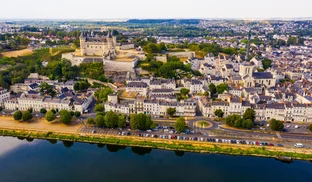
Of all the Loire cities, Saumur remains the most bourgeois; perhaps that’s why Balzac used it for his classic characterization of a smug little town in “Eugénie Grandet.” Saumur is also famous as the birthplace of the couturière Coco Chanel.
The men of Saumur are among the best equestrians in the world. Founded in 1768, the city’s riding school, Cadre Noir de Saumur, av. de l’Ecole Nationale d’Equitation (www.cadrenoir.fr; tel. 02-41-53-50-60), is one of the grandest in Europe, rivaling Vienna’s, enough so to be deemed a UNESCO World Heritage Site in 2011. The stables house some 350 horses. Mid-February to October, 1-hour tours (8€ adults, 6€ children) run from 2pm to 5:30pm Monday, 9am to 12:30pm and 2pm to 5:30pm Tuesday to Friday and 9am to 12:30pm Saturday. Tours depart about every 30 min. with English on request (reservations by email or phone recommended). Some 48km (30 miles) of specialty tracks wind around the town—to see a rider carry out a curvet is a thrill. The performances peak during the Carrousel de Saumur on the third weekend in July.
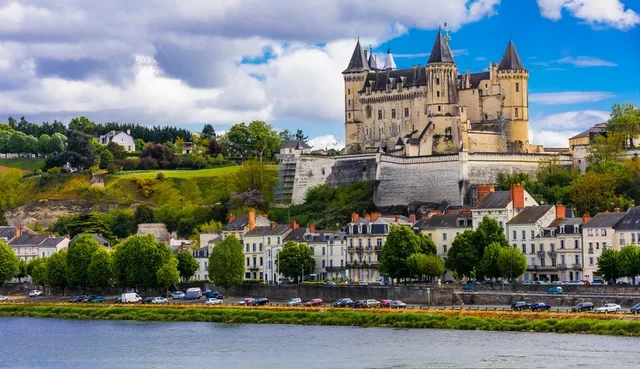
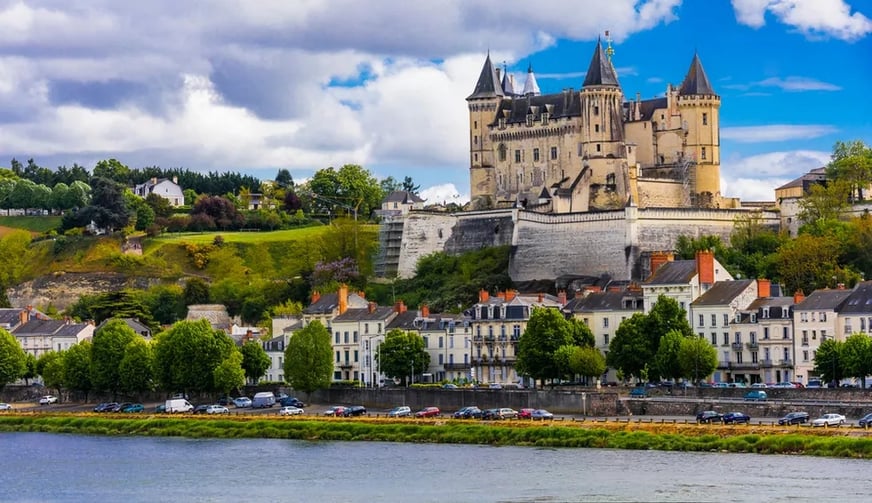
Predating many of the region’s other castles, the 12th-century Château de Saumur (www.chateau-saumur.fr; tel. 02-41-40-24-40) was converted into the royal residence of Philippe II in the early 13th century. In 1410 it was immortalized in the September scene of the famous illuminated manuscript “Les Très Riches Heures” and, as you’ll be able to see for yourself, it hasn’t changed much since. The interior of the castle has displays recounting the history of the château as well as examples of tapestries, porcelain, furniture, and other decorative arts. Admission to the château museum is 8.50€ adults, 6.50€ children 7–16, free for children 6 and under ((July-Aug daily 10am–7pm; April to June and Sept Tues–Sun 10am–6pm and Feb-March and Oct-Dec Tues–Sun 10am–1pm and 2–5:30pm; closed Jan).
The area surrounding the town has become famous for its delicate sparkling wines. In the center of Saumur, you can wander the many aisles of La Maison du Vin, 7 quai Carnot (www.vinsvaldeloire.fr; tel. 02-41-38-45-83), and choose from a large stock direct from the surrounding vineyards.
An alternative is to travel east of Saumur to the village of St-Hilaire, where you’ll find a host of vineyards. One of the better ones is Veuve Amiot, 21 rue Jean-Ackerman (www.veuveamiot.fr; tel. 02-41-83-14-14), where you can tour the wine cellars, taste different vintages, and buy bottles right in the showroom (open daily 10am–1pm and 2–6pm; closed Sun in Jan–Feb, English tours at 11:45am and 4:45pm).
Mushroom enthusiasts can learn about the cultivation of the local fungi first-hand at the Musée du Champignon (www.musee-du-champignon.com; tel. 02-41-50-31-55). Admission to the museum is 9€ adults, 7€ children under 18 (daily Feb to Nov 10am–6pm and until 7pm Apr–Sept).
Going Underground: As you drive along the Loire, something other than castles may catch your eye along the riverbanks. The region of Anjou holds the largest concentration of troglodyte caves in all of France. The beige limestone of the area was put to good use building the many châteaux, and the empty caverns from the excavated stone were not left abandoned. Not surprisingly, the caves were first used to store bottles of the region’s bubbly wine; more recently, however, many have been converted into homes, art galleries, and even restaurants. For a true troglodyte experience, stop in at the bustling and mainly underground artist town of Turquant, 10 km (6 miles) east of Saumur (www.turquant.fr).