Catedral de Toledo

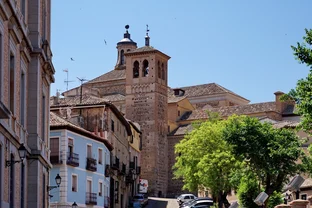
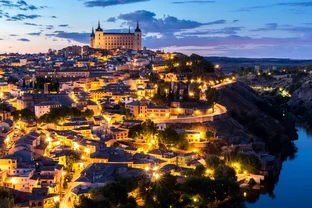
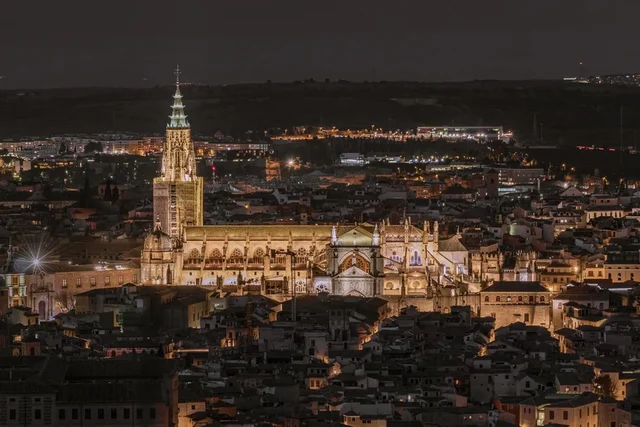
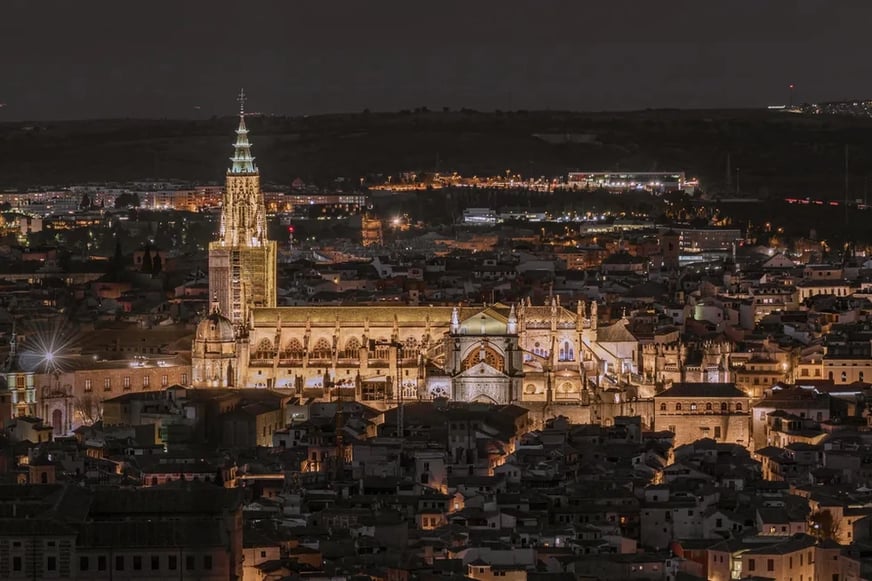
Filled with treasures of religious art and freighted with history as the first cathedral to reclaim central Spain for Christianity, this cathedral remains the ecclesiastical seat of the Roman Catholic church in Spain, long after the political capital moved to Madrid. Set at the center of the hilltop old city, this structure is one of just three High Gothic cathedrals in Spain and is considered by some critics as the finest example.
Construction began in 1227 on the site of Toledo’s former mosque, which was itself built on the foundations of a Visigoth cathedral from the 6th century. The cathedral was finally completed under the Catholic Monarchs Isabel and Fernando in 1493. The Gothic bones are sometimes hard to see for all the ornate Baroque decoration.
The visitor entrance is on Calle Cardenal Cisneros, around the corner from the main façade. To buy your ticket, go to the cathedral shop opposite, or book a timed slot in advance online. You can download an impressively detailed audio guide onto your phone. Allow a good 2 to 3 hours to do the tour justice.
From an art historical point of view, the church is rather like a great old-fashioned antique store stuffed with treasures, each remarkable by itself but only tangentially related to its neighbor. Don’t expect a harmonious assemblage—concentrate on specific beautiful pieces. The jaw-dropping Gothic retablo (altarpiece), for example, was commissioned in the 1490s by Cardinal Cisneros, the power behind the throne of the Catholic Monarchs. Its gilded and polychromed wood carvings recounting the life of Christ took six years to complete and enlisted all the great sculptors of the day. Rising all the way to the ceiling, it is so big that Cisneros demanded the chapel be rebuilt to accommodate it.
The cathedral’s most extraordinary feature, however, is the El Transparente altarpiece in the ambulatory, a Baroque mixed-media masterpiece depicting Mary and Child and the Last Supper. Its sculptor, Narciso Tomé, was unhappy that his work would be shrouded in darkness in the badly lit cathedral, so he cut a large circular hole into the ceiling, surrounding it with sculptures of angels and saints. The shafts of light that illuminate the tabernacle in the afternoon sun are a faithful likeness of heaven.
The intricate carvings of Old Testament characters on the central coro (choir) are also worth lingering over. The upper stalls on the left side were carved in the mid 16th century by Alonso Berruguete, those on the right by his rival Felipe Vigarny—is one of Vigarny’s figures showing a bare backside to the carvings on the other side?
The backs of the lower tier of the seats in the choir, carved by Rodrigo Alemán in 1495, depict the conquest of Granada just a few years earlier (still breaking news at that time). His extraordinary carving of the seat arms in images of knights deep in prayer or thought (some of them hooded like Death himself) may be the most moving statues in a cathedral filled with statuary. VIP tombs—kings Alfonso VII, Sancho II, and Sancho III, as well as Cardinal Mendoza—fill the outer walls.
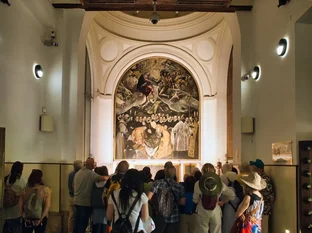
When you reach the art gallery of the sacristía, don’t let the audio guide hurry you along. As you enter, you’ll see a 17th-century wooden statue of St. Francis of Assisi by Pedro de Mena—deeply moving and remarkably contemporary in appearance. Inside the frescoed gallery is a wealth of fine paintings by Titian, Caravaggio, Rubens, Zurbarán, Morales, Goya, and, of course, El Greco. The standout masterpiece is the Disrobing of Christ (1579), with its bright red folds.
In the tesoro (treasury), the main attraction is the Custodia de Arfe, the 225kg (500-pound) gilded silver monstrance that is paraded through the streets of Toledo every Feast of Corpus Christi. It is said to contain the first gold brought back from the New World. Look up at the intricately worked artesonado ceiling, which hangs down like a wasp’s nest.
Sadly, it is not currently possible to climb the belltower to see the Campana Gorda, the largest bell in Spain. It was cast in 1755 but cracked soon after it was first struck and has never sounded correctly.
Filled with treasures of religious art and freighted with history as the first cathedral to reclaim central Spain for Christianity, this cathedral remains the ecclesiastical seat of the Roman Catholic church in Spain, long after the political capital moved to Madrid. Set at the center of the hilltop old city, this structure is one of just three High Gothic cathedrals in Spain and is considered by some critics as the finest example.
Construction began in 1227 on the site of Toledo’s former mosque, which was itself built on the foundations of a Visigoth cathedral from the 6th century. The cathedral was finally completed under the Catholic Monarchs Isabel and Fernando in 1493. The Gothic bones are sometimes hard to see for all the ornate Baroque decoration.
The visitor entrance is on Calle Cardenal Cisneros, around the corner from the main façade. To buy your ticket, go to the cathedral shop opposite, or book a timed slot in advance online. You can download an impressively detailed audio guide onto your phone. Allow a good 2 to 3 hours to do the tour justice.
From an art historical point of view, the church is rather like a great old-fashioned antique store stuffed with treasures, each remarkable by itself but only tangentially related to its neighbor. Don’t expect a harmonious assemblage—concentrate on specific beautiful pieces. The jaw-dropping Gothic retablo (altarpiece), for example, was commissioned in the 1490s by Cardinal Cisneros, the power behind the throne of the Catholic Monarchs. Its gilded and polychromed wood carvings recounting the life of Christ took six years to complete and enlisted all the great sculptors of the day. Rising all the way to the ceiling, it is so big that Cisneros demanded the chapel be rebuilt to accommodate it.
The cathedral’s most extraordinary feature, however, is the El Transparente altarpiece in the ambulatory, a Baroque mixed-media masterpiece depicting Mary and Child and the Last Supper. Its sculptor, Narciso Tomé, was unhappy that his work would be shrouded in darkness in the badly lit cathedral, so he cut a large circular hole into the ceiling, surrounding it with sculptures of angels and saints. The shafts of light that illuminate the tabernacle in the afternoon sun are a faithful likeness of heaven.
The intricate carvings of Old Testament characters on the central coro (choir) are also worth lingering over. The upper stalls on the left side were carved in the mid 16th century by Alonso Berruguete, those on the right by his rival Felipe Vigarny—is one of Vigarny’s figures showing a bare backside to the carvings on the other side?
The backs of the lower tier of the seats in the choir, carved by Rodrigo Alemán in 1495, depict the conquest of Granada just a few years earlier (still breaking news at that time). His extraordinary carving of the seat arms in images of knights deep in prayer or thought (some of them hooded like Death himself) may be the most moving statues in a cathedral filled with statuary. VIP tombs—kings Alfonso VII, Sancho II, and Sancho III, as well as Cardinal Mendoza—fill the outer walls.
When you reach the art gallery of the sacristía, don’t let the audio guide hurry you along. As you enter, you’ll see a 17th-century wooden statue of St. Francis of Assisi by Pedro de Mena—deeply moving and remarkably contemporary in appearance. Inside the frescoed gallery is a wealth of fine paintings by Titian, Caravaggio, Rubens, Zurbarán, Morales, Goya, and, of course, El Greco. The standout masterpiece is the Disrobing of Christ (1579), with its bright red folds.
In the tesoro (treasury), the main attraction is the Custodia de Arfe, the 225kg (500-pound) gilded silver monstrance that is paraded through the streets of Toledo every Feast of Corpus Christi. It is said to contain the first gold brought back from the New World. Look up at the intricately worked artesonado ceiling, which hangs down like a wasp’s nest.
Sadly, it is not currently possible to climb the belltower to see the Campana Gorda, the largest bell in Spain. It was cast in 1755 but cracked soon after it was first struck and has never sounded correctly.
Details
Bookstore
Available as paperback
and as e-book.