Side Trips from Valencia

Parque Natural de l’Albufera
Only about 13km (8 miles) south of the city center on N-332, this stunning region can be visited by bicycle if you don’t mind sometimes sharing a narrow roadway with cars. Nowhere is the contrast of built and natural environments as striking as at the beach in the nearby village of El Saler: Its eastern view zeroes in on cargo ships and tankers in Valencia’s industrial port, yet shore birds practically cover the beach of smooth flat stones. The main street is lined with excellent paella restaurants.
Rice farmers have labored since the a.d. 700s in the flooded fields around L’Albufera, an inlet that has been closed off from the sea for so long that the water has become fresh. The ecosystem of the lake, lagoons, and barrier beach and dunes was declared a natural reserve in 1986. Rice fields still cover about two-thirds of the area, and produce the bulk of the tall, hard-to-cultivate heritage bomba strain that makes the best paella. Many companies in El Saler offer inexpensive boat tours into the lake.
You may see fishermen in small, flat-bottomed boats, mostly catching mullet or collecting American red crayfish, prized for paella. The wetlands between the lake and sea rank among Iberia’s most important breeding grounds for more than 5,000 pairs of herons and four varieties of terns. For details on birding in the park, guided tours, and excursions in traditional boats, stop at the Racó de l’Olla Centre d’Interpretación (tel. 96-386-80-50), open daily 9am‒2pm, at the El Palmar turnoff from CV-500. You can take bus 25 to get here.
Xátiva
Just an hour north of Valencia Nord station on the C2 commuter rail, Xátiva is most famed for its Castillo de Xátiva. The foundations date from 219‒218 b.c., when Carthaginian general Hannibal made it his staging ground for the siege of the Roman city of Saguntum (now Sagunta). The well-restored fortification consists of two castles: the Muslim-era Castell Menor, and the larger Castell Major built by Jaume the Conqueror in the 13th century. If you’re fit and have time, it’s a scenic walk up the 310m (1,000-foot) mountain; otherwise, there’s a shuttle bus in season. The castle is open May‒Aug Tuesday through Sunday 10am‒9pm (closes earlier Sep‒Apr). Admissions are limited, so purchase a ticket in advance (adults 6€, seniors and children 4€) at xativaturismo.com (tel. 96-227-33-46.) A small cafe on the castle plaza serves light meals and drinks.
Gandía
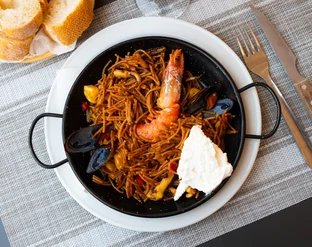
South of Valencia on the coast, Gandía is a 1-hour ride on the C1 commuter rail. While its beaches are justly celebrated, you might want to stick to the historic center for a day trip. The Palau Ducal dels Borja (Calle Duc Alfons el Vell, 1; tel. 96-287-14-65) was the home of the Borja family (the Borgias in Italian), including Pope Calixtus III and Pope Alexander VI. Given their infamy, the palace places greater emphasis on the life of Francis Borja, the saint. It’s open Monday through Saturday 10am‒1pm and 4–7pm, Sunday 10am‒1pm (closes 6pm Nov‒Mar). Admission is 8€ adults, 7€ seniors and students, 4€ ages 6-17. The second reason to visit Gandía is to enjoy a classic fideuà, the toasted noodle version of paella invented here. It’s often on the midday menu of Saona (Carrer de Sant Pasqual, 14; tel. 960-130-563).