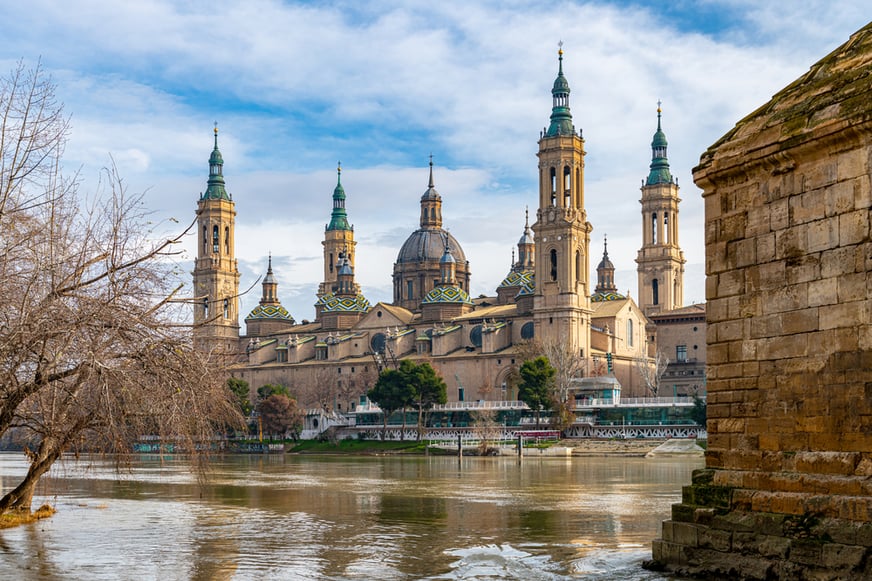
Basílica de Nuestra Señora del Pilar

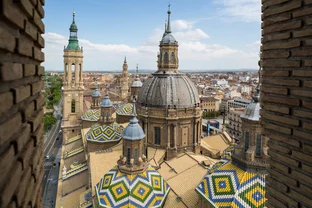
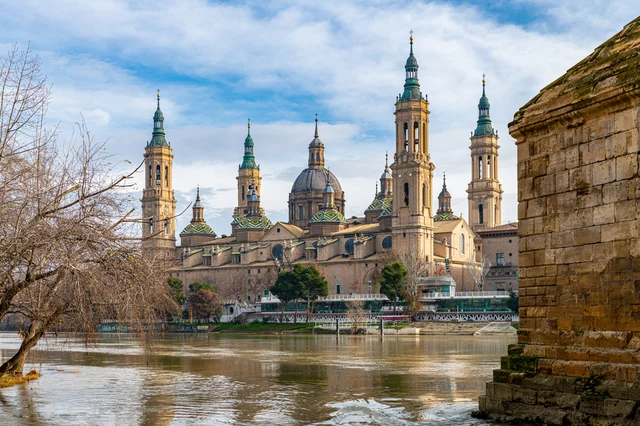
This grandiose 16th- and 17th-century basilica on the bank of the Río Ebro has an almost Byzantine aspect with its domes and towers. Thousands of the faithful travel here annually to pay homage to the tiny statue of the Virgen del Pilar in the Holy Chapel. The basilica is consider a co-cathedral with La Seo del Salvador, and its name, El Pilar, comes from the pillar upon which the Virgin is supposed to have stood when she asked Santiago (St. James) to build the church. (Like “Montserrat,” “Pilar” is a common Spanish woman’s name, often conferred by devout parents.)
During the second week of October, the church is a backdrop for an important festival devoted to Nuestra Señora del Pilar (Our Lady of the Pillar), with a parade of glass floats and an extravagant flower offering to the Virgin, supplemented by bullfights, fireworks, and street dancing.The actual feast day is October 12, and sometimes attracts political terrorists trying to get attention.
For art lovers, the basilica’s main attraction is its frescoes painted by Goya, who was born nearby. The baroque cupolas in the Temple of Pilar were decorated by Goya and Francisco Bayeu, another Zaragoza artist and Goya’s brother-in-law.
For sweeping panoramic views of the river and the historic center, head up to the mirador (viewpoint) of the Torre del Pilar: The first level, 200 feet above the city, is reached by elevator; daredevils can continue even higher by climbing a narrow spiral staircase to the upper viewpoint.
This grandiose 16th- and 17th-century basilica on the bank of the Río Ebro has an almost Byzantine aspect with its domes and towers. Thousands of the faithful travel here annually to pay homage to the tiny statue of the Virgen del Pilar in the Holy Chapel. The basilica is consider a co-cathedral with La Seo del Salvador, and its name, El Pilar, comes from the pillar upon which the Virgin is supposed to have stood when she asked Santiago (St. James) to build the church. (Like “Montserrat,” “Pilar” is a common Spanish woman’s name, often conferred by devout parents.)
During the second week of October, the church is a backdrop for an important festival devoted to Nuestra Señora del Pilar (Our Lady of the Pillar), with a parade of glass floats and an extravagant flower offering to the Virgin, supplemented by bullfights, fireworks, and street dancing.The actual feast day is October 12, and sometimes attracts political terrorists trying to get attention.
For art lovers, the basilica’s main attraction is its frescoes painted by Goya, who was born nearby. The baroque cupolas in the Temple of Pilar were decorated by Goya and Francisco Bayeu, another Zaragoza artist and Goya’s brother-in-law.
For sweeping panoramic views of the river and the historic center, head up to the mirador (viewpoint) of the Torre del Pilar: The first level, 200 feet above the city, is reached by elevator; daredevils can continue even higher by climbing a narrow spiral staircase to the upper viewpoint.
Details
Bookstore
Available as paperback
and as e-book.