
Jonatha Borzicchi/Dreamstime.com
Tuscany is densely populated with tourist attractions -- perhaps more so than any other region in Europe. It could take months to experience all of its art, architecture, food, and wine. Admirers of Michelangelo and Piero della Francesca could spend 2 weeks in Florence and Arezzo. Wine buffs could sip and sniff their way through 2 weeks in Chianti and Montalcino. Romantics could dream away that time in Lucca alone. Here are 19 of our favorite highlights from Tuscany and Umbria, pulled together from our Frommer's Florence, Tuscany & Umbria guidebook, and illustrated with inspiring images. A simple pleasure, but one that can make for a most memorable evening. Good friends, good conversation, and good wine can easily extend a meal for hours, and the Italian dinner is a perfect excuse and vehicle, what with four or five major courses, big pauses in between, and cheese, dessert, coffee, and digestivo liqueur all lined up at the end.
 Every day, the streets around the Mercato Centrale and San Lorenzo are filled with proprietors hawking marbleized paper, knockoff Gucci silk scarves, T-shirts emblazoned with Michelangelo's David, and wallets, purses, jackets, and other leather products galore. All the stall keepers promise "the lowest prices in Florence." That so-called lowest price is usually far from it, and the best part of shopping here is using every bargaining trick in the book to drive the "lowest price" even lower.
 The elegant Republic of Lucca is still snuggled comfortably behind its 16th-century walls, ramparts so thick they were able to be converted into a narrow city park -- a tree-lined promenade running a 4.9km (3-mile) loop around the city rooftops. The bicycle is the preferred mode of transportation in Lucca, and you'll be in good company as you tool under the shade past parents pushing strollers, businessmen walking their dogs, and old men at picnic tables in their 40th year of a never-ending card game.
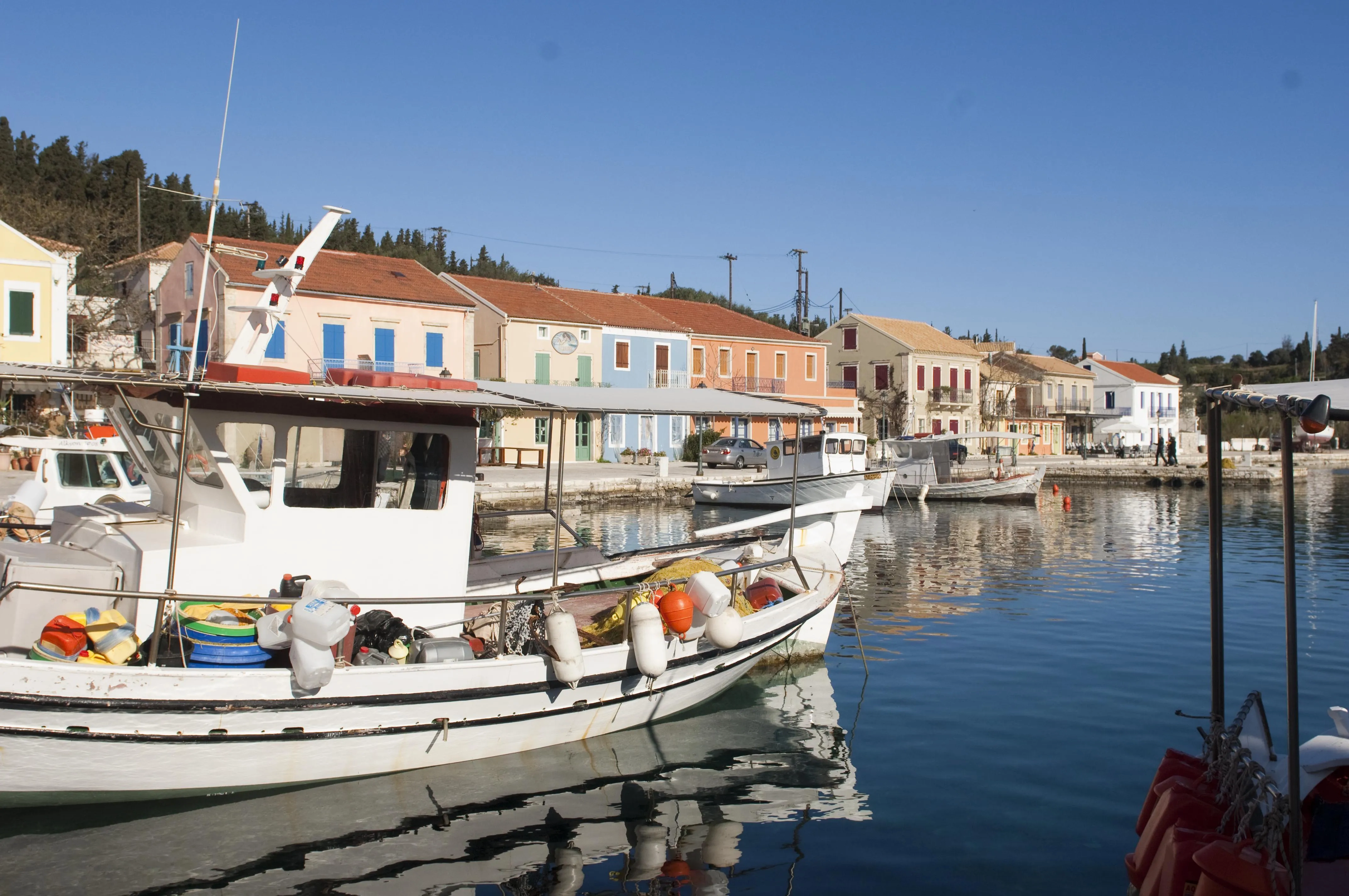 Pisa is home to the most felicitously gorgeous piazza in all of Italy, the Campo dei Miracoli. Even if you're in town for just half a day, grab a sandwich or a slice of pizza and picnic on the small triangle of grass in front of the famous leaning tower -- the campanile with the world's worst posture. Afterward, saunter down to the patch of green surrounding the baptistery and take a nap on the grass with the sun warming your face. And, oh yeah: You can climb the tower, too.
 Three significant tombs lie along the slope and valley of Cortona's mount, including the one where the biggest find in Etruria of the past century was only recently discovered: a sophisticated altar with a sphinx-flaked stairway jutting out of the "Melone II" tumulus. Up in town, a museum houses a bronze Etruscan oil-lamp chandelier, as well as documented findings and displays about the ongoing excavations of "Melone II."
 Though little remains of the Etruscan city Arretium -- the town's best artifact, the bronze chimera, got shipped to Florence long ago -- some of the Roman city it became peeks out at its museum. The collection of Etruscan ceramics sets you up for the corallino pottery display, which showcases the vast Arretium industry that eventually opened branches and workshops all across Roman Italy and France to mass produce the famous waxy red earthenware.
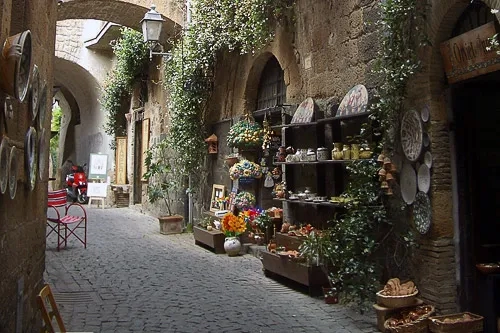 Orvieto, Etruria's ancient religious center, contains three archaeological museums. Taken together, they make up one of the best collections of Etruscan artifacts outside Florence and include Umbria's only accessible tomb paintings, now detached, and works from the Etrusco-Roman period. The town has also started running tours of some of the tunnels and caverns under the city, parts of which, including wells and a possible temple, were carved by the Etruscans. On the edge of town are the grassy remains of an Etruscan temple, and around the edge of the city's walls is a tidy suburban-like necropolis of tombs, some still with inscriptions on the door lintels.
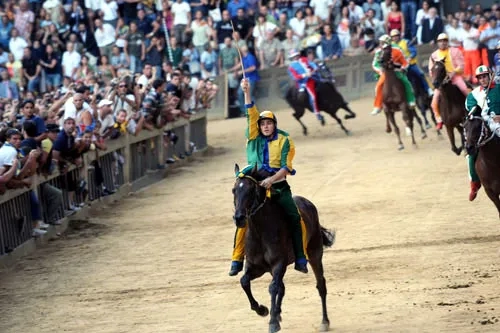 Anything goes at this bareback, breakneck horse race around the dirt-packed Il Campo, and the competitive contrade (traditional neighborhood wards) usually make sure everything does. The square is filled with costumed pageantry before the race, and massive feasts are set up on long outdoor tables that can stretch for blocks on the medieval side streets.
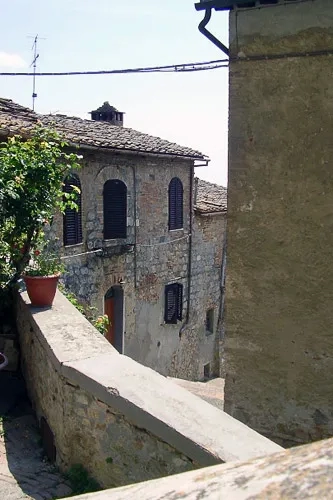 The "Medieval Manhattan" bristles with more than a dozen tall stone towers, all slightly askew. It wins the "Most Densely Decorated Church" award for its old Duomo, whose interior walls are slathered with 15th-century frescoes. San Gimignano's skyline and back alleys, especially when moonlit, make it one of Italy's most romantic hill towns. Stay until all the tour buses have left, when you'll have the gardens and small piazze all to yourself.
 Proud Volterra has been important in western Tuscany since the Etruscan Age. From its magnificent rocky promontory, the city surveys the sometimes wild, vast countryside surrounding it. Volterra is full of workshops where artisans craft the native alabaster into translucent souvenirs. And from a windswept terrace road you can look over some of Tuscany's best-preserved Roman ruins.
 Although Montepulciano has medieval side streets galore, its main attractions are the deep red Vino Nobile wine and one of Italy's finest centrally planned Renaissance temples, a church set in its own little green park below the ancient walls of the town.
 Past early Michelangelo marbles and Giambologna bronzes, the main attraction at the primary sculpture museum of the Renaissance is a room full of famous works that survey the entire career of Donatello, the greatest sculptor since antiquity.
 The Pitti, with thousands of paintings hung thickly in the dozens of rooms of the Medici's old palace, all sumptuously frescoed and decorated, makes the Uffizi look like a preamble. Not only is room after room full of works by Raphael, Rubens, Titian, Caravaggio, Andrea del Sarto, and countless others, but once you get through the paintings, you've got the lavish Medici apartments, a costume gallery, a decorative arts collection, a modern art museum, and the baroque Boboli Gardens to see. You could spend a week here and still not be done.
 Chianti Classico: This is Italy's most famous product of Bacchus. Chianti is as variable as it is versatile, and while there's plenty of mass-produced cheap wine out there, the vintners of the Chianti Classico Zone, in the hills between Florence and Siena, craft excellent wines of the highest quality.
 Brunello has the smell of mossy, damp earth and musky berries. It tastes of dark, jamlike fruits and dry vanilla. This is Tuscany's most powerful red, and perhaps the top wine in all of Italy. Break out this complex elixir to accompany the mighty bistecca alla fiorentina (Florentine-style steak). Visit American-owned Banfi (tel. 0577-816-001) for the wine museum in its medieval castle or Poggio Antico (tel. 0577-848-044) for the direct sales of its award-winning Brunello.
 The Galleria dell'Accademia in Florence houses the Big Guy himself, the perfect Renaissance nude, masterpiece of sculpture, icon of homosexual camp, and symbol of Italy itself.
 In 1401, young Ghiberti won a sculpture competition to craft the doors of Florence's Baptistery. Fifty-one years later, he completed his second and final set, boosting the Gothic language of three dimensions into a Renaissance reality of invented space and narrative line. Art historians consider that 1401 competition to be the founding point of the Renaissance. Michelangelo looked at the doors and simply declared them "so beautiful they would grace the entrance to Paradise."
 Florence's noble orangey-russet cupola reigns over the town in perfectly engineered immensity. When the cathedral was built, all the learned architects in town agreed the space was far too large to support a dome. Brunelleschi revived the secrets of Rome's ancient Pantheon to prove everyone wrong.
Photo from Frommers.com Community.
Photo from Frommers.com Community.