

Riccardo De Luca
Tour the fabulous scenery of the Amalfi Coast, hike the Cinque Terre, drive through Tuscany's vineyards, explore Sicily's best ancient sites, eat your way through the Piedmont, and more highlights from one of the world's most compelling destinations.
Photo Caption: Vernazza and the other Cinque Terre towns can be reached on foot, by train, or by sea. Spend a full day among the magnificent ruins of the ancient city, from the heights of the Palatine to the valley of the Colosseum, and let nostalgia for the glorious and heady days of imperial Rome overcome you.
Photo Caption: The Colosseum's dramatic exterior features Doric, Ionic, and Corinthian columns.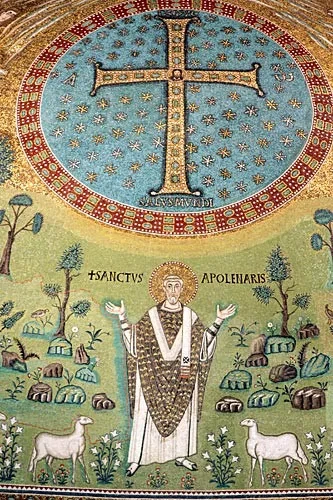 The brilliance of the mosaics glittering within Byzantine churches and monuments is especially touching because the heavenly and earthly scenes are so painstakingly and sincerely rendered -- a last hurrah before Europe slipped into the Dark Ages.
Photo Caption: Sant'Apollinare's apse mosaics depict the eponymous saint, Ravenna's first bishop.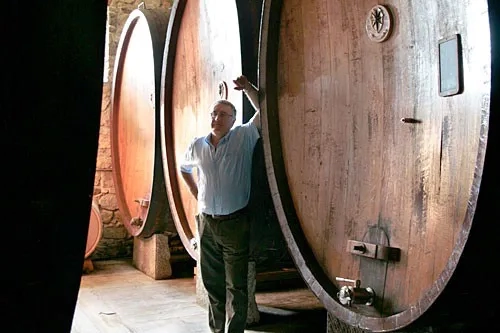 Give the sightseeing a break and concentrate on gluttony in all its forms when visiting this most picturesque and bountiful of Italian regions. Build lazy lunches into your itinerary, stop in at every deli that looks appealing, and sample all the wines, cured meats, and cheeses you possibly can. Our favorite of many options? Montalcino.
Photo Caption: Giant oak barrels help mature the wine at Chianti's Castello Verrazzano.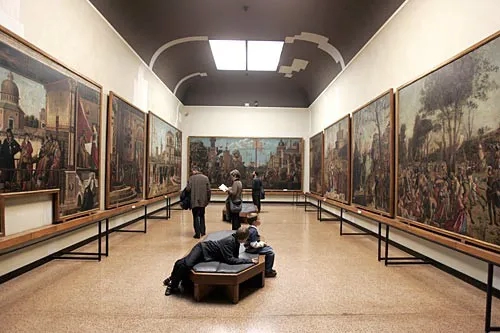 Here in the world's richest repository of Western art, you can take your pick from hundreds of masterpieces. One of our favorites is Carpaccio's Story of St. Ursula, a color-saturated, action-packed medieval travelogue in Venice's Accademia.
Photo Caption: The rooms of the Gallerie dell'Accademia exhibit works by Veronese, Tintoretto, Titian, and others, including Giorgione's The Tempest. Even Venetians take their noses out of their newspapers for the trip, and it doesn't matter how many times we've done it, either
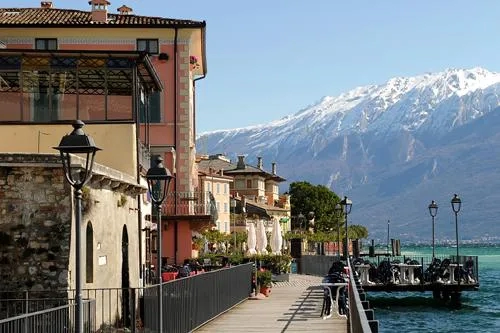 The boat passes villas and gardens and pulls into one pretty town after another. Medieval Gargnano is especially picturesque, and around Limone sul Garda the shores are planted with lemon groves. Most dramatically, the Alps form a solid curtain at the northern end of the lake.
Photo Caption: Picturesque view of the small town of Gargnano on Italy's largest lake, Lake Garda (Lago di Garda)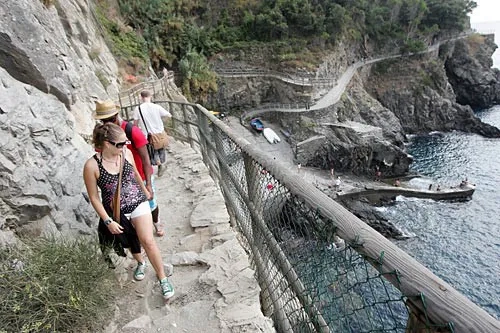 Sure, the paths can be packed, and American-accented English too often disturbs the getaway experience, but scene after scene of the azure sea, vineyards clinging to hillsides, and mirage-like villages hugging the rocky coast are just stunning. A big plus: You can hike until your body screams "No more!" then make the return trip by train.
Photo Caption: The coastal path -- the Sentiero Azzurro, or Blue Trail -- connects all five towns and is the Cinque Terre's most popular hike.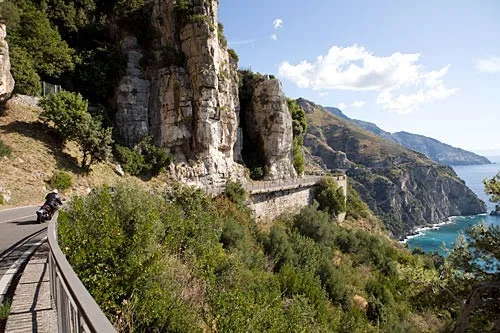 Even the rapturous view from the sea of this spectacular coastline doesn't prepare you for the unbeatable rush of riding a bus along the death-defying curves of the Via Amalfitana. With rugged mountains on one side and sheer drop-offs to the water on the other, it's a thrill ride that goes on for 30km (18 miles).
Photo Caption: The winding stretch of coastal road between Sorrento and Amalfi is one of Europe's classic drives.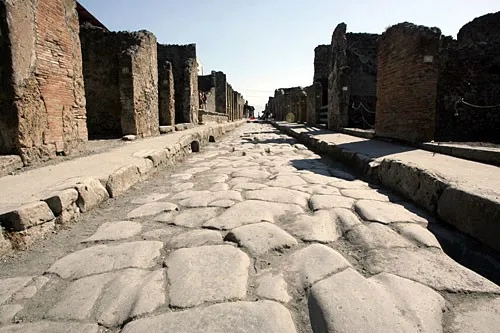 No other archaeological site is so thoroughly transporting: Frozen in time by the eruption of Mt. Vesuvius in AD 79, ancient Pompeii is astonishingly intact, evoking an uncanny sense of familiarity in many who wander the sophisticated ruins of the buried city.
Photo Caption: Ruined cities with Greek and Roman heritage, including Pompeii, shown here, are within reach of Naples and the major towns of the Amalfi Coast.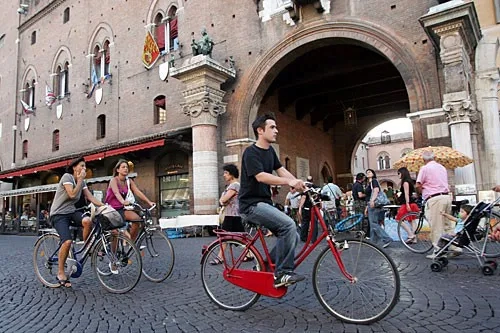 The centerpiece of this Renaissance city of rose-colored brick is the imposing castle of the Este family, who endowed Ferrara with palaces, gardens, and intrigues, including those of their most famous duchess, Lucrezia Borgia.
Photo Caption: Bicycles outnumber cars on the streets of Ferrara -- unusual for an Italian city.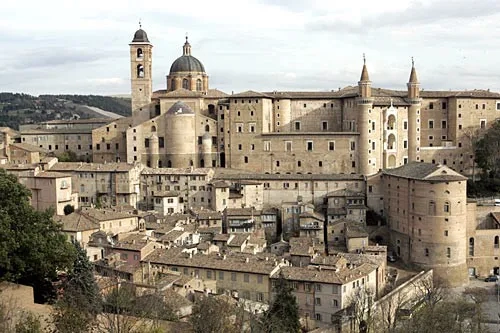 The ideal Renaissance city straddles a pair of ridges in the foothills of the Apennines, a harmonious apparition of towers, walls, and domes amid the rolling hills of the Marches. Duke Federico da Montefeltro and his son, Guidobaldo, oversaw one of Italy's most enlightened courts from their elegant palace, now filled with the collections of the Galleria Nazionale delle Marche.
Photo Caption: The stately city of Urbino, birthplace of Raphael and the setting for some of Piero della Francesca's best work.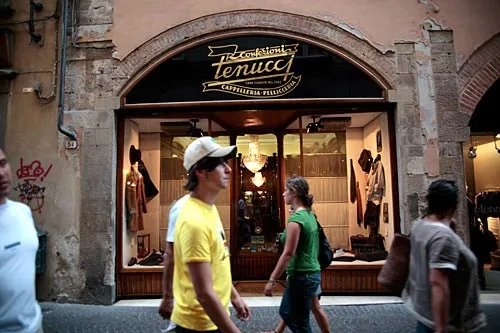 Justly famous for its pristine circuit of town walls, Lucca is much more than a medieval time capsule: The town perpetuates the elegance of the late 19th and early 20th centuries, with stately shopfronts and the spirit of a gentler bygone era.
Photo Caption: Lucca's Via Fillungo is where lucchesi come to shop or take an evening passeggiata.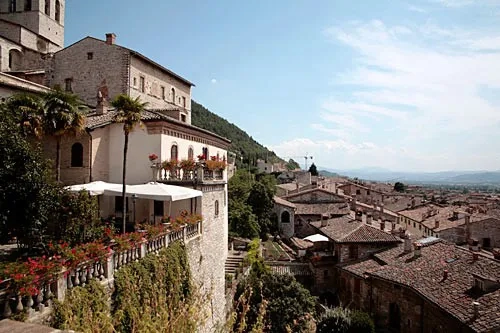 This beautifully preserved, compact agglomeration of pastel, crenellated buildings set against a steep green hill looks like it was plucked out of a 15th-century painting.
Photo Caption: Gubbio's medieval character has been well preserved.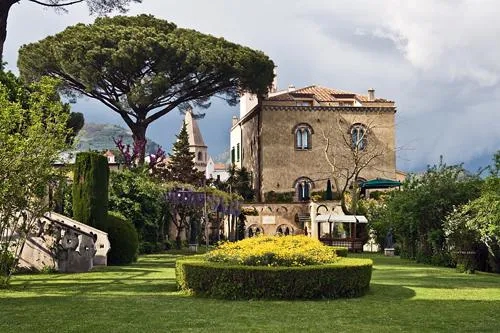 Just when you thought the Amalfi Coast couldn't possibly get any more stunning, along comes Ravello, with views that trump all and sultry gardens, too.
Photo Caption: The Gardens, Villa Cimbrone, Ravello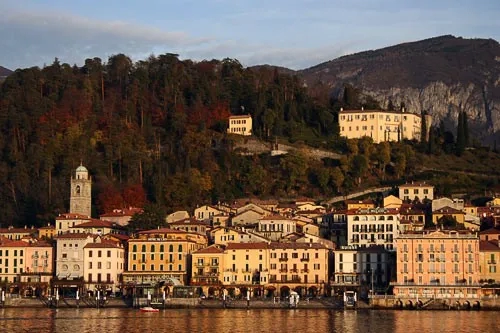 This medieval town of stepped streets on a promontory in Lago di Como is surrounded by gardens and lakeside villas, and backed by the Alps plunging into the deep waters.
Photo Caption: Lake Como's Bellagio from the deck of a ferry.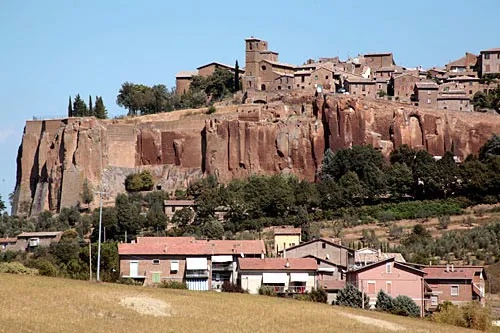 Orvieto. A warren of medieval streets and a spectacular Duomo, all improbably perched on a porous stone bluff, it never fails to impress, nor does a glass of the town's famous Orvieto Classico.
Photo Caption: The plug of tufa rock supporting Orvieto has served as wine cellar, pigeon coop, and World War II bomb shelter.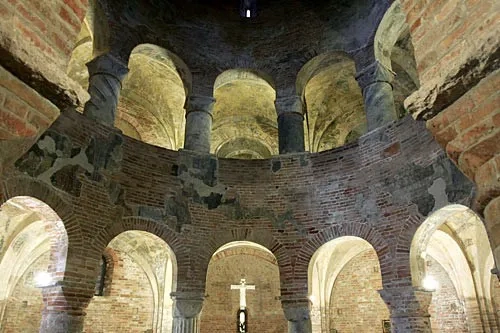 Surrounded by the sweeping, lake-like curve of the River Mincio and built around three beautiful piazzas, Mantua is remote and rather dreamy, locked in a Renaissance world of its own.
Photo Caption: Mantua's Rotonda di San Lorenzo is an ancient church with roots in the 11th century.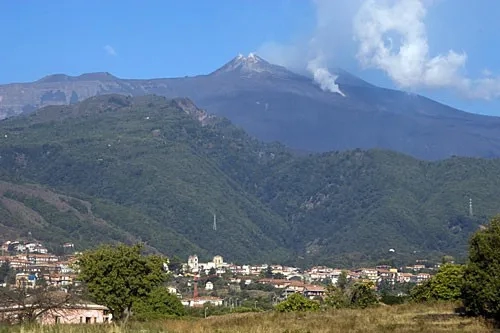 Europe's largest active volcano isn't beautiful, per se, but a trip to the top of this awesome peak -- made via a thrilling cableway ride and all-terrain vehicle -- is the experience of a lifetime.
Photo Caption: Base yourself in Taormina for an assault on the 3,324m (10,906-ft.) peak of Sicily's Olive groves, vineyards, cypresses, wine towns, and wheat fields studded with farmhouses capture the beauty and essence of Tuscany. Pienza is an especially good place to hit.
Photo Caption: Pope Pius II designed Pienza's historic core as the "ideal Renaissance city."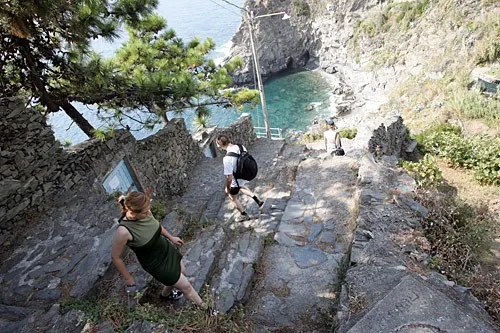 Steep seaside cliffs have defied road builders, and a trail follows the unspoiled coastline through stunning panoramas, fragrant pine groves, and hillsides terraced with vineyards to connect the region's five villages.
Photo Caption: Pack sunscreen, plenty of water, and your Cinque Terre card for a summer's day on the coastal trails.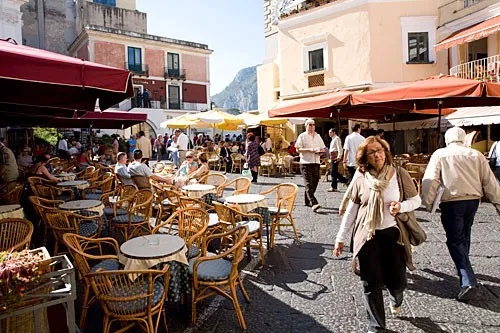 Rugged coastlines of staggering dimension, vertiginous views more breathtaking than any photo can convey, and the imposing cone of Mt. Vesuvius make the Amalfi Coast and the Bay of Naples, including the island of Capri, the most magnificent landscape in Italy.
Photo Caption: La Piazzetta shows its best side after the day-trippers have left Capri town.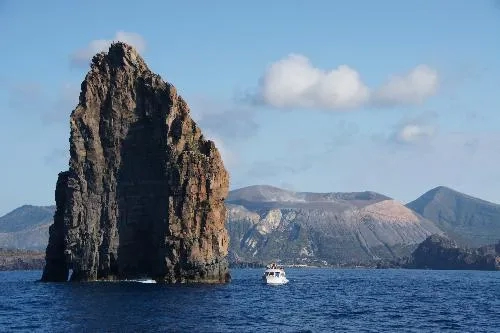 The shores tend to be pebbly inlets or vertical rock faces, but they are riddled with beautiful swimming coves that are best reached by renting your own motorboat.
Photo Caption: Aeolian Islands.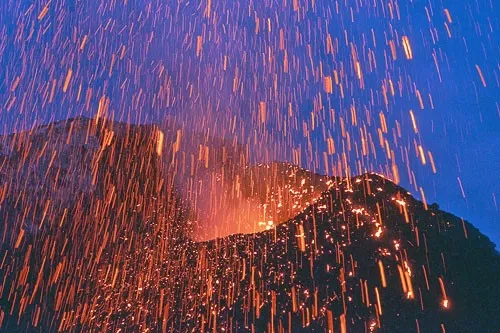 An active but sluggish volcano emits puffs of smoke and lava all the time, and a nighttime trek to the summit provides views of fiery red lava flowing toward the sea.
Photo Caption: Eruptions at night on the isle of Stromboli, Sicily. Photo by C.Mueller-Planitz/Frommers.com Community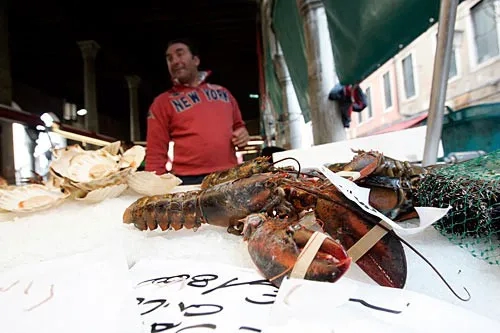 The commercial heart of Venice for more than 1,000 years is a sea of stalls piled high with fruit, vegetables, fish, and souvenirs; the bustle of the place brings to mind old Shylock's oft-quoted question in The Merchant of Venice: "What news on the Rialto?"
Photo Caption: Venice's best seafood eateries buy their catch daily at the renowned Rialto markets.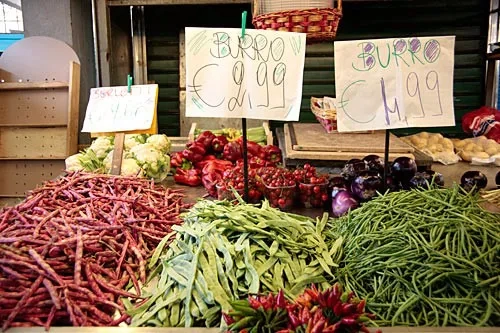 The good-natured haggling, the emphatic gesturing, and the banter between customers and vendors of fresh produce and more is a priceless snapshot of daily Roman life.
Photo Caption: Produce is piled high at the Mercato di Testaccio.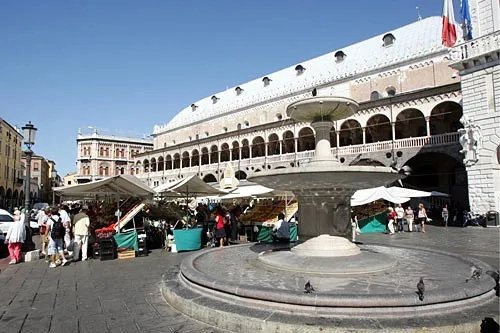 These two adjoining squares in the city center house one of Italy's largest and liveliest markets; produce is on offer in Piazza delle Erbe, and clothing and housewares in Piazza della Frutta.
Photo Caption: Piazza delle Erbe and Piazza della Frutta host one of Italy's largest outdoor markets.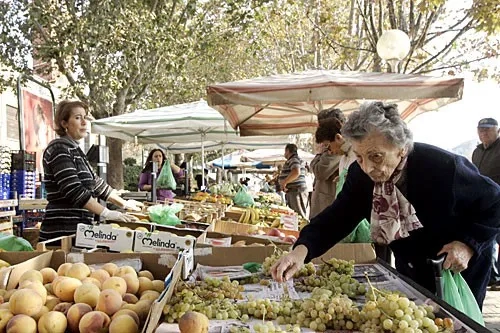 A market that takes over this large square on Wednesday and Saturday mornings provides an excellent introduction to the food and wine for which Asti and the surrounding region is famous -- bags of Arborio rice, piles of hazelnuts and apples, toma and Castelmagno cheeses, truffles, and, of course, bottles of Asti Spumante, Moscato, and Barbera.
Photo Caption: Farmers from the Piedmont hills set up in Asti's Campo del Palio market on Wednesday and Saturday mornings.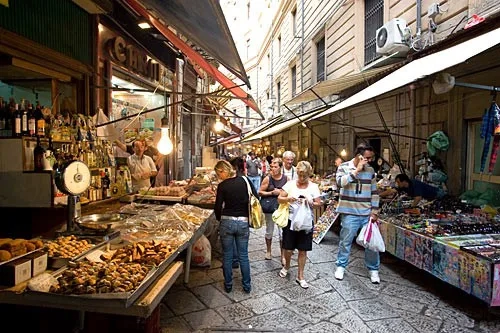 Nowhere is Palermo's multicultural pedigree more evident than at its boisterous street markets that go on for blocks and blocks, hawking everything from spices to seafood to sides of beef to toilet paper to handicrafts to electronics.
Photo Caption: Just about anything you could ever want is on sale at Palermo's Ballarò and Vucciria street markets.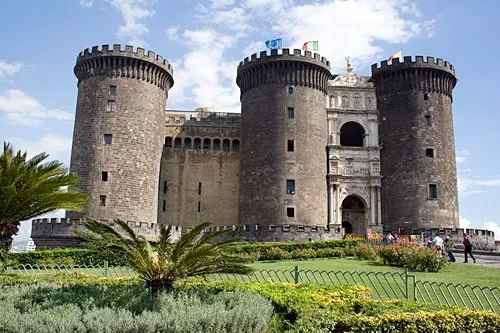 Visitors who arrive in Naples by boat are greeted by the turrets, crenellated parapets, deep moat, and overall storybook appearance of this massive 13th- century fortress overlooking the bay.
Photo Caption: The incongruous triumphal arch was squeezed in between the 13th-century turrets of the Castel Nuovo in the mid-1400s.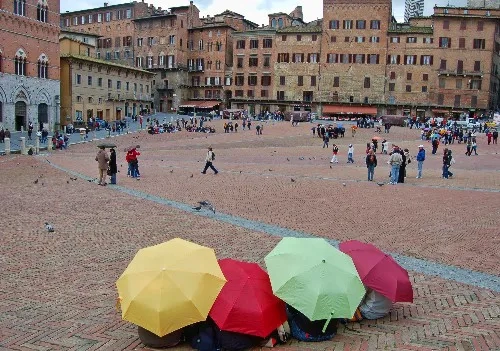 The most beautiful piazza in Italy is dramatically shaped like a sloping scallop shell or fan, divided into nine sections in honor of the Council of Nine, who ruled Siena during its golden age, and graced with a copy of the original Fonte Gaia (Fountain of Joy), created by the city's own Jacopo della Quercia.
Photo Caption: The Campo in Siena, Italy on a drizzly March morning. The monumental heart of Florence is dominated by the imposing gray bulk of Palazzo Vecchio, one of the most formidable medieval monuments in all of Italy, and graced with a copy of Michelangelo's David as well as other ancient and Renaissance statuary.
Photo Caption: Florence's town hall, the Palazzo Vecchio, on the Piazza della Signoria. Napoleon called this civilized square the "drawing room" of Europe, and the Piazza, as it's simply known, is where Venetians and their visitors converge to sip a cappuccino or cocktail on the outdoor terraces of some of Europe's grandest cafes.
Photo Caption: Piazza San Marco at night, Venice.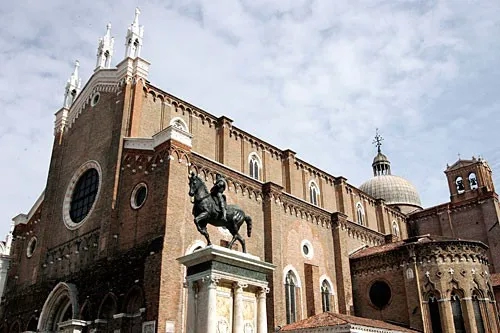 Bartolomeo Colleoni, a 15th-century mercenary, rides across one of Venice's most beautiful squares astride an equestrian monument by Verrocchio, and the Church of Santi Giovanni e Paolo is the final resting place of 25 doges, entombed in marble splendor.
Photo Caption: The basilica in Campo Santi Giovanni e Paolo is known as San Zanipòlo in Venetian dialect.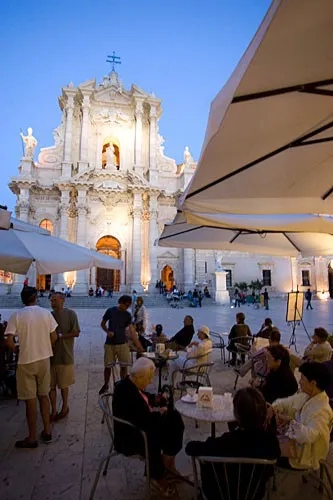 Sicily's most beautiful piazza is baroque, operatic, and surrounded by lovely churches and palaces.
Photo Caption: The ornamental Duomo is just one of the theatrical buildings that ring Piazza del Duomo.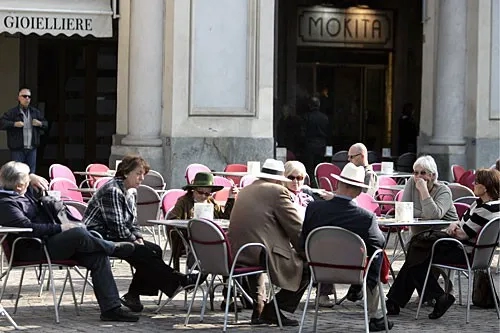 Elegant arcades are lined with fine shops, chocolatiers, and cafes whose terraces provide an outdoor living room for the Torinese.
Photo Caption: Piazza San Carlo is home to Turin's grandest street cafes, including Caffè San Carlo.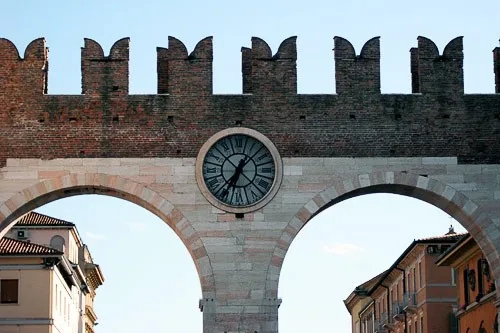 The site of the Roman forum is now Verona's central square, the venue for a daily market; the adjoining Piazza dei Signori was once the scene of assemblies of the medieval citizens' council. Walking between these two beautiful squares involves a risk -- a whalebone suspended in the Arco della Costa (Arch of the Rib) will fall on anyone who has never told a lie.
Photo Caption: Piazza delle Erbe in Vernoa, Italy. Photo by cdavis/Frommers.com Community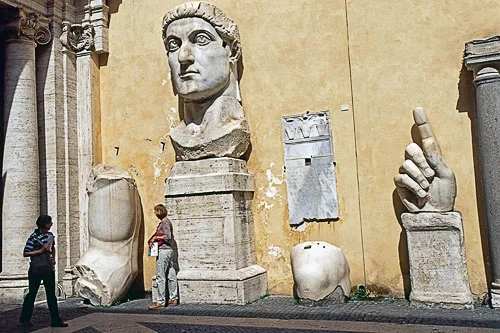 These Michelangelo-designed buildings house some of the most important Roman sculptures in the world, as well as fine works by Caravaggio, Titian, Tintoretto, and Guido Reni.
Photo Caption: The Palazza dei Conservatori in the Musei Capitoline, Rome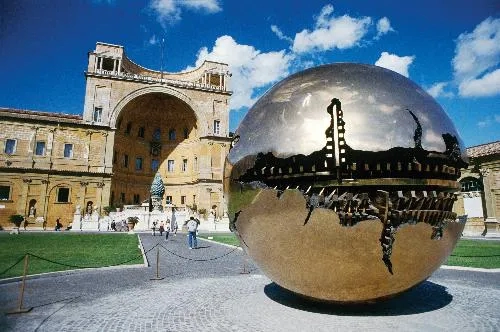 The richest museum of ancient and Renaissance art in the world is enthralling in its quantity and quality. Standouts are the Laocoön and other ancient sculptures, the Raphael Rooms (Stanze di Raffaello) and Michelangelo's frescoes in the Sistine Chapel, and the rest of the collections range from mummies to moonrocks.
Photo Caption: A view of the Vatican Museum in Rome, dominated by the golden sphere that stands outside, The collections at this 17th-century garden estate are modestly sized but come close to perfection, with astonishing marble sculptures by Bernini and Canova and paintings by Caravaggio, Titian, and Raphael.
Photo Caption: Bernini statue amid the ceiling frescoes at Villa Borghese.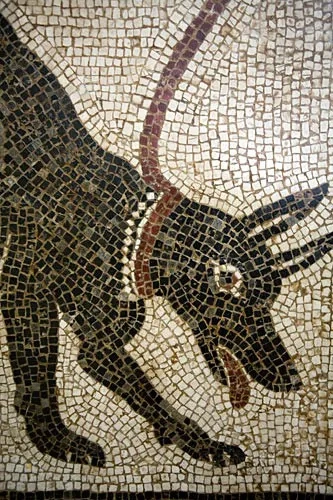 The echoey halls of this enormous Renaissance palazzo house artifacts from Pompeii and other sites buried by the eruption of Mt. Vesuvius, from baking equipment and surgical instruments to eye-popping erotic frescoes. The museum's other star attraction is the renowned Farnese collection of ancient sculpture.
Photo Caption: A famous dog mosaic from Pompeii is preserved in Naples's Museo Archeologico Nazionale.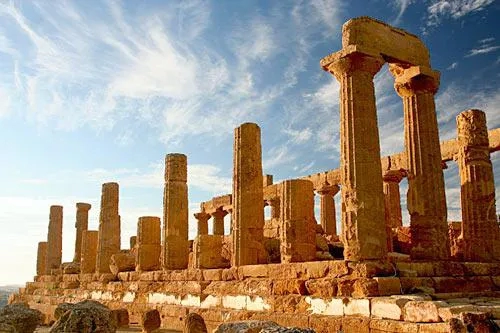 Sicily's most celebrated archaeological site preserves a proud group of temples from the fifth century BC, as well as houses, streets, and tombs -- all set on a ridge amid olive and almond trees and overlooking the sea.
Photo Caption: Agrigento. Photo by gmsanders/Frommers.com Communitiy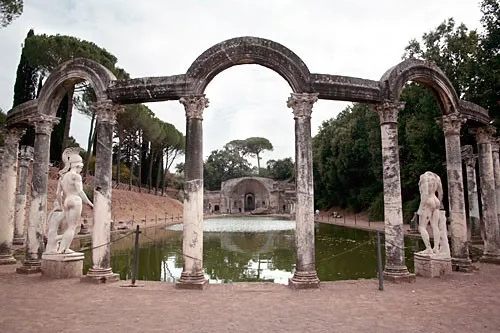 The emperor's summer retreat was an architectural fantasy of pools, an aquarium, and walls of water.
Photo Caption: Hadrian kept himself fit by swimming laps in the Greek-inspired moat at his villa.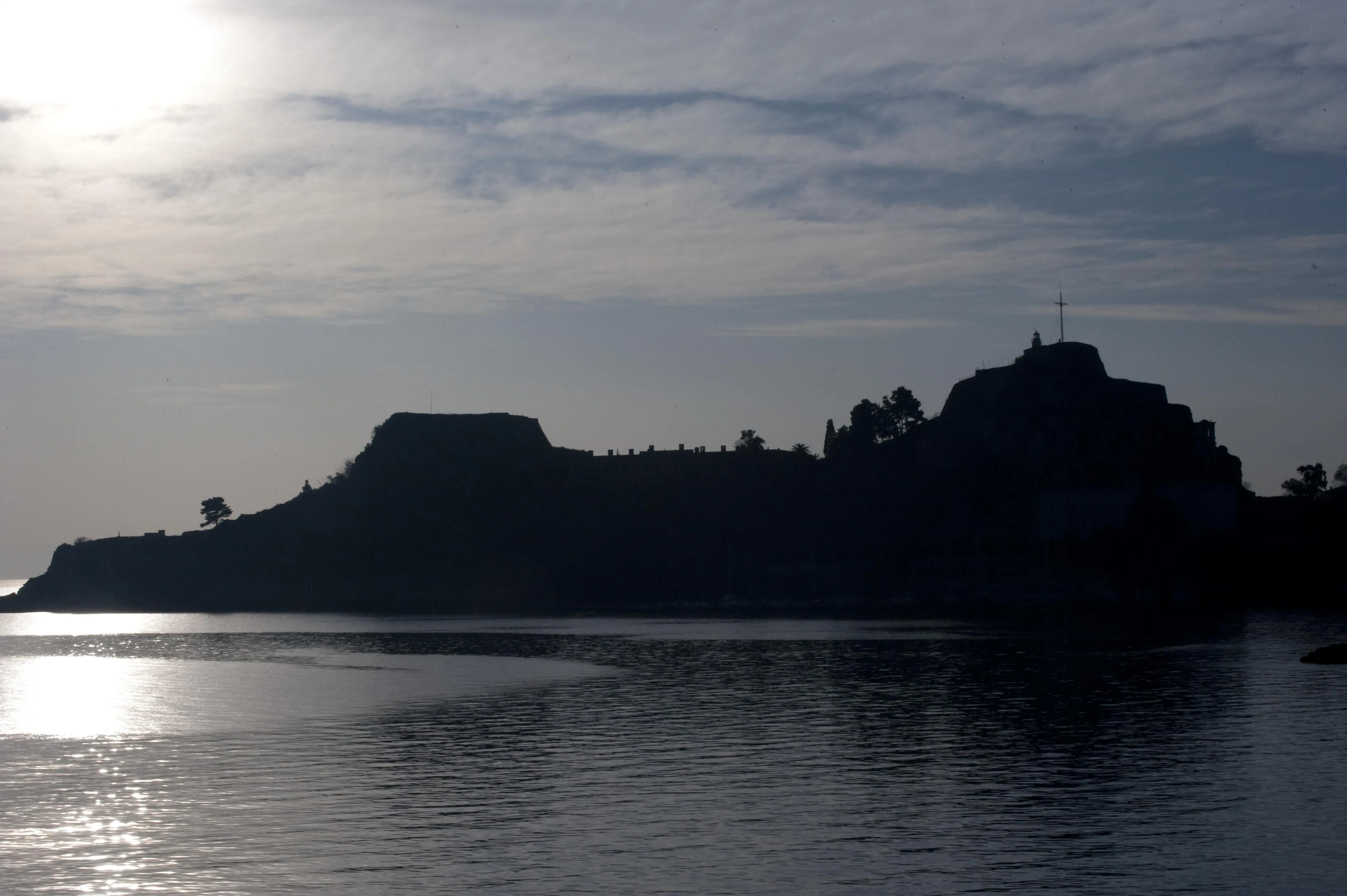 Nothing recalls the glory of ancient Rome like these massive brick ruins, studded by umbrella pines. This is where Rome began -- where Romulus killed Remus in 753 BC -- and where emperors and other wealthy Romans built their palaces and private entertainment facilities.
Photo Caption: The ruins of the Roman forum were excavated in the 19th century.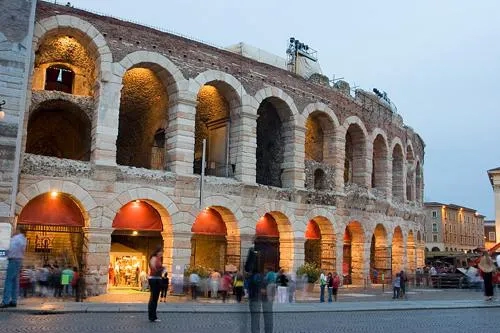 When the best-preserved Roman arena in the world was built in the first century AD, the entire population of Verona could squeeze in for gladiator shows and mock naval battles. The amphitheater is still filled to its 20,000-person capacity when operas are performed on evenings in July and August.
Photo Caption: The Verona Arena, Arena di Verona at dusk, Italy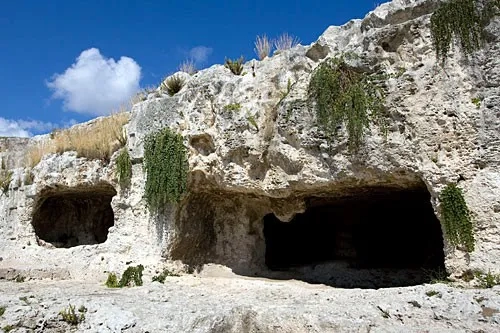 Spread across the vast ruins of ancient Siracusa are the gigantic Teatro Greco (Greek Theater); the Orecchio di Dionisio ("Ear of Dionysius," a tall and vaguely ear-shaped cave where the Greek tyrant Dionysius supposedly kept and eavesdropped on prisoners); the Anfiteatro Romano (Roman Amphitheater); and an artifact-filled museum.
Photo Caption: Siracusa's Parco Archeologico della Neapolis includes ruins from ancient Greek settlements.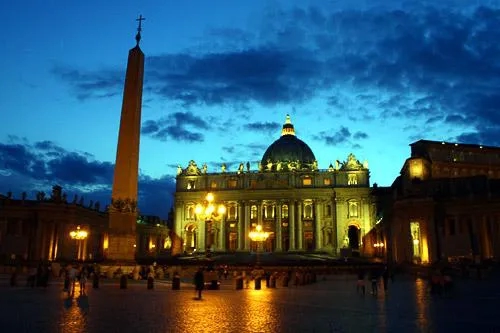 The incomprehensibly voluminous basilica of the Vatican is packed with incalculable riches, from the marble and gold that cover its every surface to such masterpieces as Michelangelo's Pietà and Bernini's Baldacchino.
Photo Caption: St. Peter's Basilica in Rome at dusk. Photo by cat116/ Frommers.com Community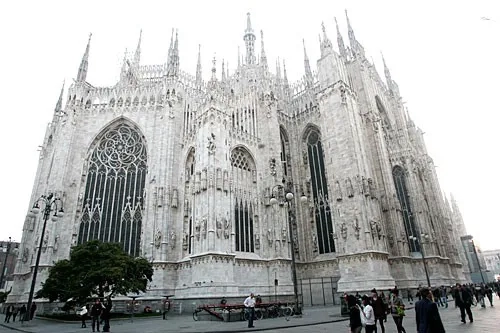 A great accomplishment of the early Renaissance and one of the largest churches in Christendom was a work in progress for six centuries. The facade, with its 140 pinnacles and many tiers of statuary, was not completed until the 19th century, under the orders of Napoleon when he marched into town in 1805 and had himself crowned king of Italy on the high altar.
Photo Caption: Milan's Duomo is one of the largest and most complex Gothic structures ever built.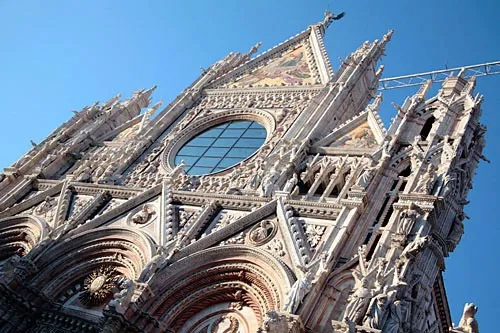 The architectural gem of Siena's golden age is the work of many architects and artists, who created a facade of colored bands of marble, an elaborately designed floor, and rich carvings and frescoes throughout.
Photo Caption: Siena's Duomo is striking, from its Romanesque-Gothic facade to its marble-striped, exuberantly decorated interior.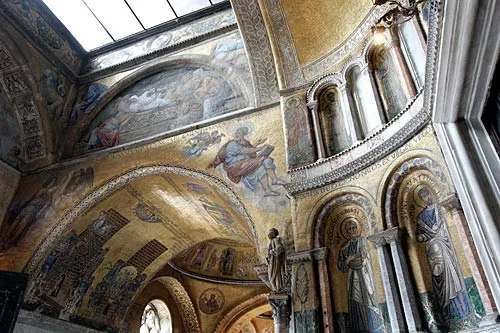 Venice's Byzantine extravaganza is a shrine to the city's patron saint, and the multidomed, mosaic-paved Basilica begun in the 11th century still evokes the might of the Venetian republic. Beyond the glittering facade, more than 3.8 sq. km (1K sq. miles) of colorful glass-tile mosaics sparkle and bedazzle with rich renditions of the religious rank and file, and the treasures include gilded bronze horses and other plunder from the Crusades.
Photo Caption: Mosaics like those decorating the interior of San Marco helped the illiterate masses to understand biblical teachings.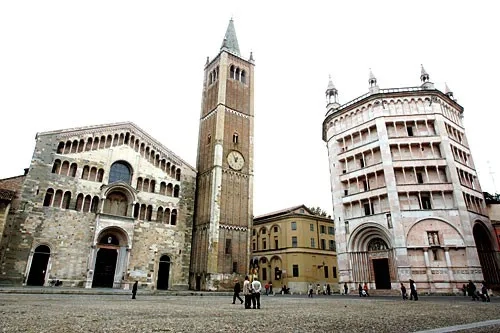 The octagonal baptistery clad in pink marble and rising in five graceful tiers from an airy piazza is the greatest Italian Romanesque work, the creation of Benedetto Antelami. Correggio painted one of his great masterpieces in the cupola of the adjacent Duomo, where the Virgin and her entourage seem to float right through the top of the church into an Easter-egg-blue Heaven.
Photo Caption: Leave yourself at least an hour to soak up the art and architecture of Piazza del Duomo; left to right: the Duomo, campanile, and baptistery.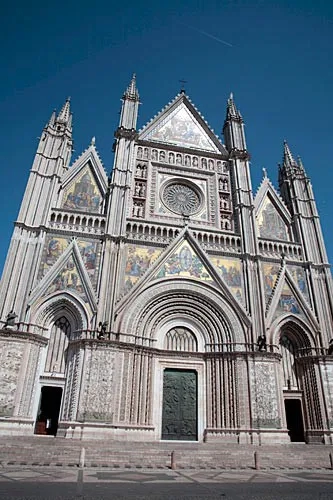 The facade of what may be the most beautiful Gothic church in Italy is a confection of polychrome marble, all pointed arches and spiky spires, and the interior contains fine frescoes by Luca Signorelli.
Photo Caption: The facade of Orvieto's Duomo, the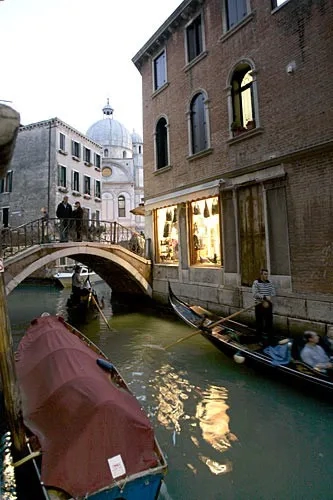 A top contender for the most beautiful church in Venice is sheathed in gleaming white marble; the effect is especially stunning when the exterior is lit at night.
Photo Caption: A canal-level glimpse at Santa Maria dei Miracoli.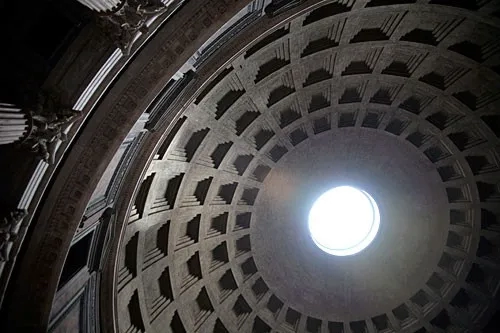 The best-preserved and most elegant ancient building in Rome -- if not the world -- was built and possibly designed by Hadrian from AD 118 to 125 and is crowned with a 44m-wide (143-ft.) dome, poured in concrete almost 2,000 years ago and never structurally modified.
Photo Caption: The ancient construction secrets behind the dome of the Pantheon have intrigued visitors for millennia.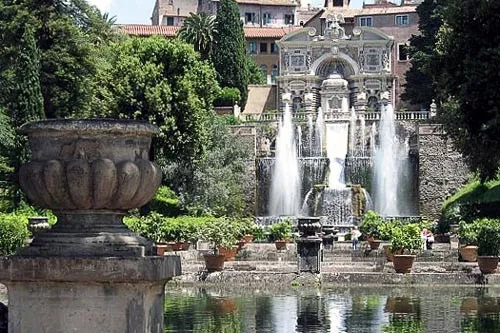 Whimsical grottoes, rushing flumes, and reflecting pools lace the gardens of the pleasure palace of Renaissance noble and cardinal Ippolito d'Este.
Photo Caption: Villa d'Este, located in Tivoli outside of Rome. Photo by MargaritaS/Frommers.com Community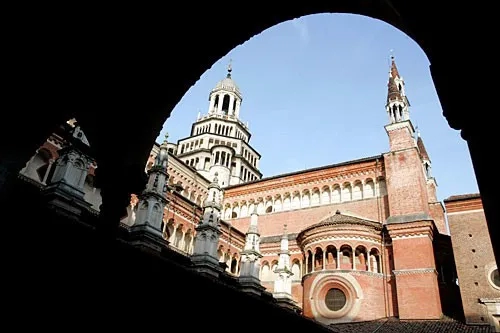 This city south of Milan was a court for the ruling Visconti and Sforza families, and at the Certosa they are entombed behind a facade of richly colored marble, amid frescoes, paintings, and elaborate statuary. Cistercian monks reside at the Certosa in two-story cottages -- each with its own garden plot -- that surround the enormous cloister.
Photo Caption: The Certosa is just one among many architectural wonders of oft-missed Pavia.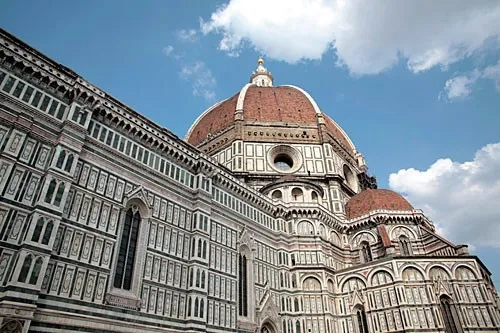 Filippo Brunelleschi's iconic dome (1420-36) is one of the world's most magnificent examples of Renaissance architecture, and on a climb to the top you'll experience the inventive double-shell design firsthand as you squeeze between the interior and outer domes.
Photo Caption: The marble stripes and lozenges of Florence's Duomo predate the Renaissance.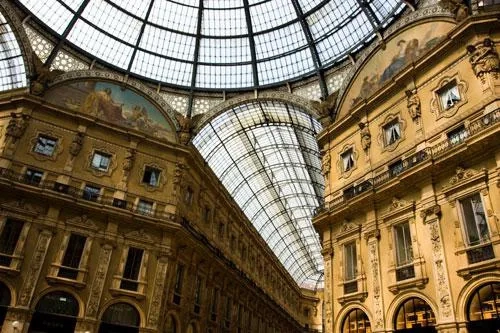 The glass-covered shopping arcade at the center of Milan, tucked between the Duomo and La Scala and inaugurated in 1867, is the prototype for shopping malls around the world. Milanese are proud to refer to their landmark as the "Salotto di Milano" (Living Room of Milan).
Photo Caption: The Galleria Vittorio Emanuele II is a covered double arcade formed of two glass-vaulted arcades at right angles intersecting in an octagon; it is prominently sited on the northern side of the Piazza del Duomo in Milan, and connects to the Piazza della Scala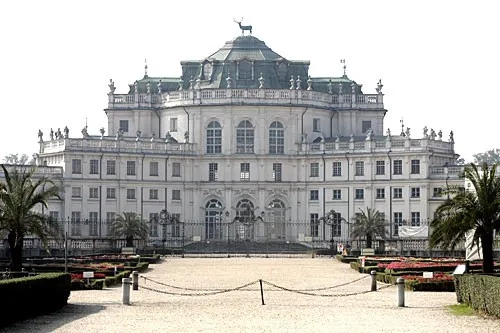 Filippo Juvarra had more than a simple lodge in mind when in 1729 he created this retreat amid the Savoy hunting grounds: 137 rooms and 17 galleries are strung out along four angled wings off an oval-shaped main hall topped by a bronze stag.
Photo Caption: The bronze stag atop the Stupinigi hints at the palace's original use as a royal hunting lodge for the Savoys.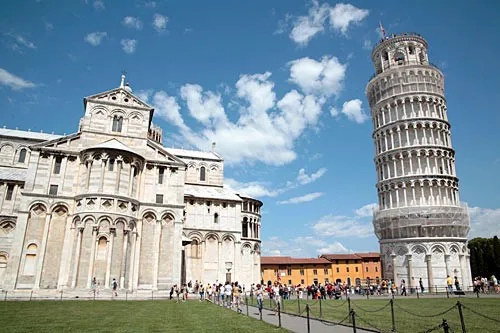 The very word "Pisa" conjures images of a jauntily askance, ornate white marble cylinder, framed by sunny blue skies and as iconic of Italy as pizza and tomato sauce. A view andaphotosessiondo not suffice: Climbing the tower is one of Italy's most exhilarating experiences.
Photo Caption: Though its prominent lean looks disconcerting to prospective climbers, the Leaning Tower of Pisa is now stable.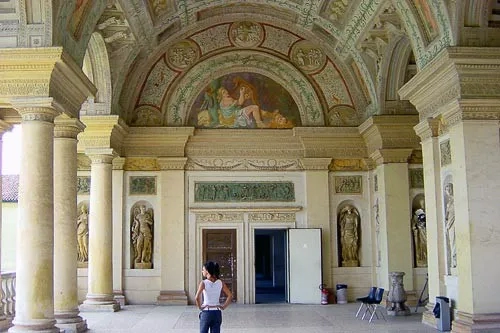 On the monumental archway at the entrance to the pleasure palace of Federico II Gonzaga, the keystone appears to be falling out of place -- a fore-shadowing of the whimsy that lies in the salons beyond, where every surface is covered withfrescoes and stuccos.
Photo Caption: Palazzo Te, Mantua. Photo by Allie Caulfield/Flickr.com The sculpture that Michelangelo considered to be his masterpiece captures the biblical hero with an expression of self-possession and tension, menace and vulnerability, that seems to change before your eyes.
Photo Caption: Michelangelo's David draws throngs of admirers to the Accademia.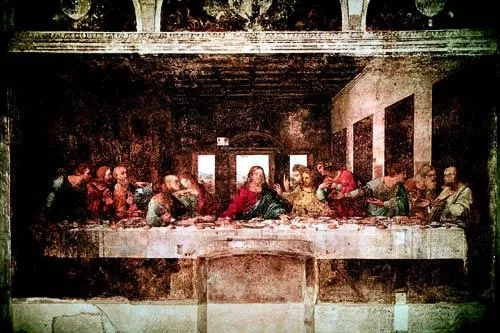 For his fresco on the refectory wall of the church of Santa Maria delle Grazie, Leonardo da Vinci used perspective to create the illusion that the room extends right into the painting and depicted the apostles and Christ with dramatic intensity -- creating one of the world's most memorable images.
Photo Caption: Detail of Leonardo da Vinci's Last Supper. Courtesy De Agostini Picture Library.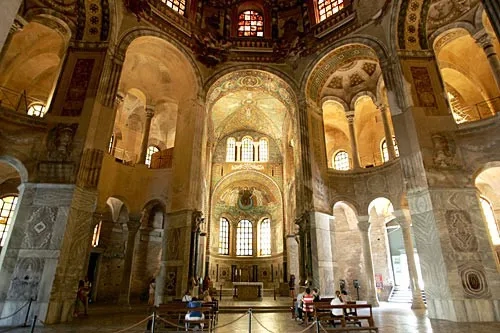
Photo Caption: Vernazza and the other Cinque Terre towns can be reached on foot, by train, or by sea.
Photo Caption: The Colosseum's dramatic exterior features Doric, Ionic, and Corinthian columns.
Photo Caption: Sant'Apollinare's apse mosaics depict the eponymous saint, Ravenna's first bishop.
Photo Caption: Giant oak barrels help mature the wine at Chianti's Castello Verrazzano.
Photo Caption: The rooms of the Gallerie dell'Accademia exhibit works by Veronese, Tintoretto, Titian, and others, including Giorgione's The Tempest.
Photo Caption: Picturesque view of the small town of Gargnano on Italy's largest lake, Lake Garda (Lago di Garda)
Photo Caption: The coastal path -- the Sentiero Azzurro, or Blue Trail -- connects all five towns and is the Cinque Terre's most popular hike.
Photo Caption: The winding stretch of coastal road between Sorrento and Amalfi is one of Europe's classic drives.
Photo Caption: Ruined cities with Greek and Roman heritage, including Pompeii, shown here, are within reach of Naples and the major towns of the Amalfi Coast.
Photo Caption: Bicycles outnumber cars on the streets of Ferrara -- unusual for an Italian city.
Photo Caption: The stately city of Urbino, birthplace of Raphael and the setting for some of Piero della Francesca's best work.
Photo Caption: Lucca's Via Fillungo is where lucchesi come to shop or take an evening passeggiata.
Photo Caption: Gubbio's medieval character has been well preserved.
Photo Caption: The Gardens, Villa Cimbrone, Ravello
Photo Caption: Lake Como's Bellagio from the deck of a ferry.
Photo Caption: The plug of tufa rock supporting Orvieto has served as wine cellar, pigeon coop, and World War II bomb shelter.
Photo Caption: Mantua's Rotonda di San Lorenzo is an ancient church with roots in the 11th century.
Photo Caption: Base yourself in Taormina for an assault on the 3,324m (10,906-ft.) peak of Sicily's
Photo Caption: Pope Pius II designed Pienza's historic core as the "ideal Renaissance city."
Photo Caption: Pack sunscreen, plenty of water, and your Cinque Terre card for a summer's day on the coastal trails.
Photo Caption: La Piazzetta shows its best side after the day-trippers have left Capri town.
Photo Caption: Aeolian Islands.
Photo Caption: Eruptions at night on the isle of Stromboli, Sicily. Photo by C.Mueller-Planitz/Frommers.com Community
Photo Caption: Venice's best seafood eateries buy their catch daily at the renowned Rialto markets.
Photo Caption: Produce is piled high at the Mercato di Testaccio.
Photo Caption: Piazza delle Erbe and Piazza della Frutta host one of Italy's largest outdoor markets.
Photo Caption: Farmers from the Piedmont hills set up in Asti's Campo del Palio market on Wednesday and Saturday mornings.
Photo Caption: Just about anything you could ever want is on sale at Palermo's Ballarò and Vucciria street markets.
Photo Caption: The incongruous triumphal arch was squeezed in between the 13th-century turrets of the Castel Nuovo in the mid-1400s.
Photo Caption: The Campo in Siena, Italy on a drizzly March morning.
Photo Caption: Florence's town hall, the Palazzo Vecchio, on the Piazza della Signoria.
Photo Caption: Piazza San Marco at night, Venice.
Photo Caption: The basilica in Campo Santi Giovanni e Paolo is known as San Zanipòlo in Venetian dialect.
Photo Caption: The ornamental Duomo is just one of the theatrical buildings that ring Piazza del Duomo.
Photo Caption: Piazza San Carlo is home to Turin's grandest street cafes, including Caffè San Carlo.
Photo Caption: Piazza delle Erbe in Vernoa, Italy. Photo by cdavis/Frommers.com Community
Photo Caption: The Palazza dei Conservatori in the Musei Capitoline, Rome
Photo Caption: A view of the Vatican Museum in Rome, dominated by the golden sphere that stands outside,
Photo Caption: Bernini statue amid the ceiling frescoes at Villa Borghese.
Photo Caption: A famous dog mosaic from Pompeii is preserved in Naples's Museo Archeologico Nazionale.
Photo Caption: Agrigento. Photo by gmsanders/Frommers.com Communitiy
Photo Caption: Hadrian kept himself fit by swimming laps in the Greek-inspired moat at his villa.
Photo Caption: The ruins of the Roman forum were excavated in the 19th century.
Photo Caption: The Verona Arena, Arena di Verona at dusk, Italy
Photo Caption: Siracusa's Parco Archeologico della Neapolis includes ruins from ancient Greek settlements.
Photo Caption: St. Peter's Basilica in Rome at dusk. Photo by cat116/ Frommers.com Community
Photo Caption: Milan's Duomo is one of the largest and most complex Gothic structures ever built.
Photo Caption: Siena's Duomo is striking, from its Romanesque-Gothic facade to its marble-striped, exuberantly decorated interior.
Photo Caption: Mosaics like those decorating the interior of San Marco helped the illiterate masses to understand biblical teachings.
Photo Caption: Leave yourself at least an hour to soak up the art and architecture of Piazza del Duomo; left to right: the Duomo, campanile, and baptistery.
Photo Caption: The facade of Orvieto's Duomo, the
Photo Caption: A canal-level glimpse at Santa Maria dei Miracoli.
Photo Caption: The ancient construction secrets behind the dome of the Pantheon have intrigued visitors for millennia.
Photo Caption: Villa d'Este, located in Tivoli outside of Rome. Photo by MargaritaS/Frommers.com Community
Photo Caption: The Certosa is just one among many architectural wonders of oft-missed Pavia.
Photo Caption: The marble stripes and lozenges of Florence's Duomo predate the Renaissance.
Photo Caption: The Galleria Vittorio Emanuele II is a covered double arcade formed of two glass-vaulted arcades at right angles intersecting in an octagon; it is prominently sited on the northern side of the Piazza del Duomo in Milan, and connects to the Piazza della Scala
Photo Caption: The bronze stag atop the Stupinigi hints at the palace's original use as a royal hunting lodge for the Savoys.
Photo Caption: Though its prominent lean looks disconcerting to prospective climbers, the Leaning Tower of Pisa is now stable.
Photo Caption: Palazzo Te, Mantua. Photo by Allie Caulfield/Flickr.com
Photo Caption: Michelangelo's David draws throngs of admirers to the Accademia.
Photo Caption: Detail of Leonardo da Vinci's Last Supper. Courtesy De Agostini Picture Library.