

Sergi Camara
Spain's religious architecture consists of a mix of privative Catholic sites, the rare remnant of Moorish conquest, grandiose monuments to a short-lived Golden Age, and monuments to the country's slow decline under competing European influences. Here are eleven of the finest achievements.
Photo Caption: The Basilica of Montserrat can be reached by road or train and aerial cable car; from there, take a funicular to the peak.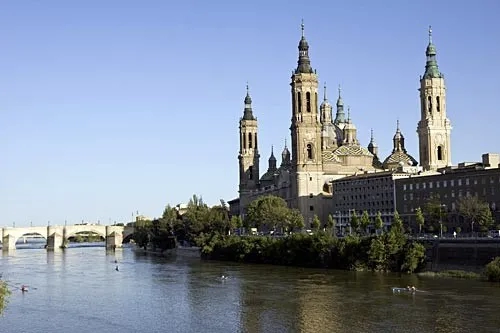 Pilgrims from all over Spain flood into this shrine to the manifestation of the Virgin Mary known as El Pilar. According to church tradition, the Virgin Mary appeared to St. James here in a.d. 40 and gave him a statue of herself mounted on a column, or pilar, of jasper. The tiny statue and column are revered on the altar of the Holy Chapel of this massive baroque church.
Photo Caption: A succession of churches have stood on the miraculous site of the Basilica del Pilar.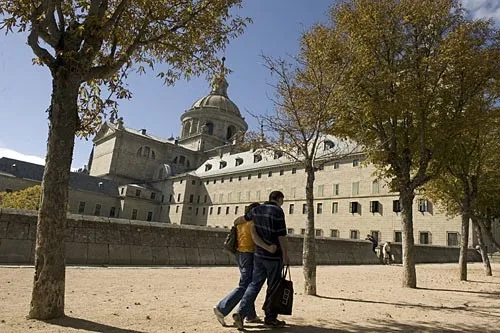 Religious fervor and secular power share the stage in this lavish palace outside Madrid. Felipe II spared no expense in honoring his royal lineage and expressing his religious devotion, and his architects managed to reflect the chastening, ascetic spirit of the Counter-Reformation in the unadorned facades and severely rectangular layout. The interior decorations are another matter, as Felipe's successors went for baroque.
Photo Caption: If the Palacio Real belongs to the Bourbons stylistically, El Escorial belongs to the Hapsburgs.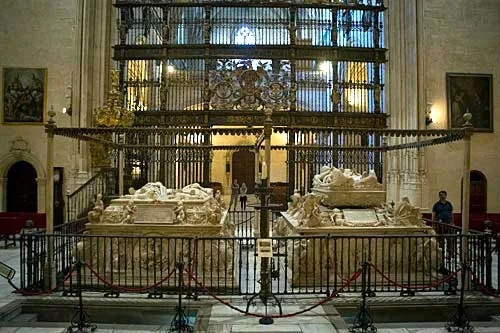 Small is beautiful. It can also be grand if it happens to be the burial site of Spain's famous co-monarchs, Fernando and Isabel, who rest beneath somber and serene sarcophagi. The grill around the main altar is a masterpiece of ironwork. An adjacent museum holds Fernando's sword and Isabel's favorite paintings.
Photo Caption: Making a statement even in death: Fernando and Isabel lie in repose at Granada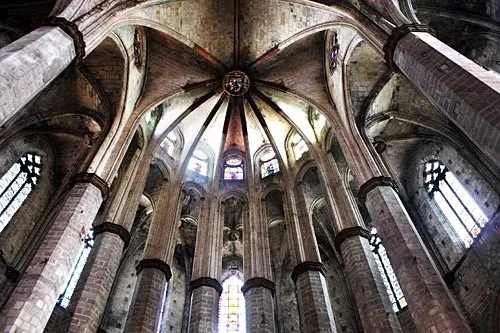 This stunningly beautiful Catalan Gothic church has such graceful dimensions and architectural perfection that you don't even have to be one of the faithful to be moved to tears.
Photo Caption: The much-loved Santa Maria del Mar is one of the purest examples of Catalan Gothic architecture in Barcelona.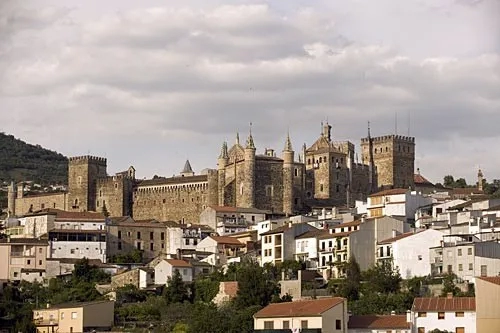 The discovery of another Dark Virgin statue with the power to create miracles made this tiny village of Extremadura into one of Spain's chief pilgrimage sites in the 14th century. Today the ancient statue is rivaled by the basilica's paintings by local boy Francisco de Zurbarán.
Photo Caption: Alfonso XI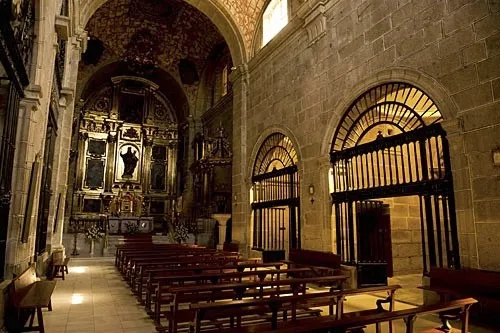 After visiting the convent where Santa Teresa took her vows in 1535 and another that she founded in her later years, this small museum on the site of her childhood home is the best place to learn about her life and enduring legacy. The museum's hagiography only serves to make the flesh-and-blood woman all the more tangible.
Photo Caption: St. Teresa, a 16th-century Catholic mystic and reformer, founded the Convento de San José.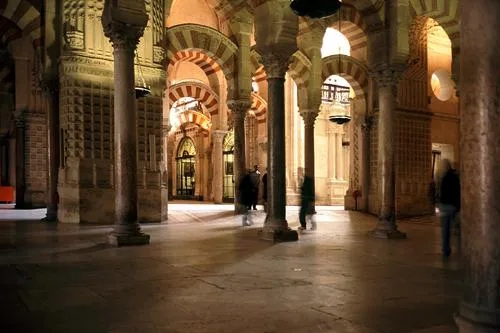 No church in Spain can compete with Córdoba's mosque for simple grandeur and unadorned spirit. Even the incongruous Christian cathedral crudely crammed inside could not still the echoes of 500 years of Islamic prayer.
Photo Caption: Interior of the Mezquita, Catedral de Cordoba in Andalucia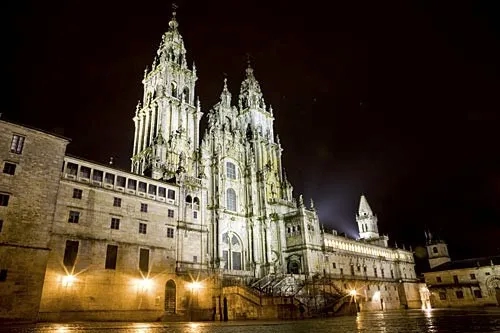 It's impossible not to be moved by the joy, relief, and devotion of the faithful who complete their pilgrimage by embracing a statue of Santiago behind the altar. The sheer artistry of the Romanesque interior is a just reward for the arduous journey to one of Europe's most famous pilgrimage sites, once declared the equal of Rome and Jerusalem by the Pope.
Photo Caption: The storied cathedral of Santiago de Compostela.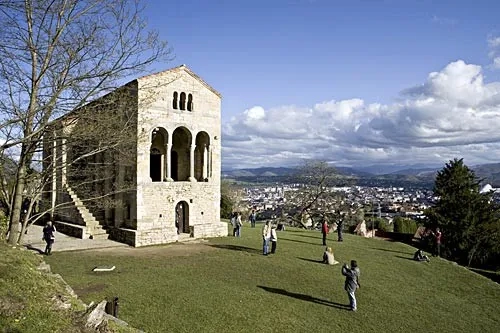 The primitive, almost tribal Catholic faith that drove the Reconquista originated in powerful, sturdy pre-Romanesque churches along the northern rim of the Iberian Peninsula. This pair built in 848 still embody that passionate, unquestioning faith.
Photo Caption: Before it was a church, Santa María del Naranco was the hunting lodge of Ramiro I.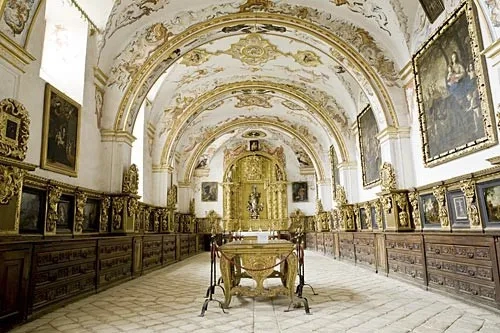 These two remote monasteries trace the history of religious life and architecture from the Visigothic foundations of Suso through the striking 16th-century church at Yuso. Not only can you see the first written examples of the Castilian and Basque languages, you can also purchase a bottle of Rioja wine made by Yuso's small monastic community.
Photo Caption: The library at the Monasterio de Yuso houses over 300 documents dating from the 11th to the 15th centuries.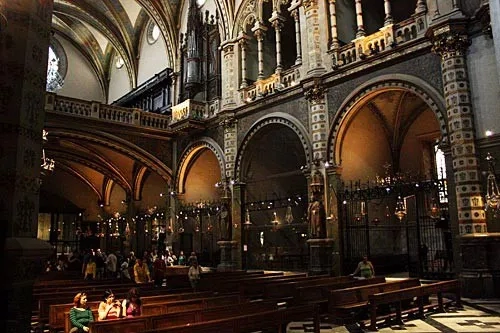
Photo Caption: The Basilica of Montserrat can be reached by road or train and aerial cable car; from there, take a funicular to the peak.
Photo Caption: A succession of churches have stood on the miraculous site of the Basilica del Pilar.
Photo Caption: If the Palacio Real belongs to the Bourbons stylistically, El Escorial belongs to the Hapsburgs.
Photo Caption: Making a statement even in death: Fernando and Isabel lie in repose at Granada
Photo Caption: The much-loved Santa Maria del Mar is one of the purest examples of Catalan Gothic architecture in Barcelona.
Photo Caption: Alfonso XI
Photo Caption: St. Teresa, a 16th-century Catholic mystic and reformer, founded the Convento de San José.
Photo Caption: Interior of the Mezquita, Catedral de Cordoba in Andalucia
Photo Caption: The storied cathedral of Santiago de Compostela.
Photo Caption: Before it was a church, Santa María del Naranco was the hunting lodge of Ramiro I.
Photo Caption: The library at the Monasterio de Yuso houses over 300 documents dating from the 11th to the 15th centuries.