

Mbz1/Wikimedia Commons
By Eric Peterson
The earth is alive in Yellowstone National Park, bubbling, gurgling, and even erupting on a regular basis. Grizzly bears, gray wolves, and bison may be the stars of Yellowstone, but this park also shines in small ways that are best experienced on foot.
Consider this: The park's 2.2 million acres has hundreds of miles of trails -- yet only about one in 10 visitors makes it more than a half-mile from the road.
Want to avoid the hordes of tourists? Here are 10 ways to explore the under-the-radar areas of Yellowstone National Park.
Photo Caption: A view of the Grand Canyon of Yellowstone, which was designated a national park in 1872 and is one of the oldest parks in the system. Photo by Mbz1/Wikimedia Commons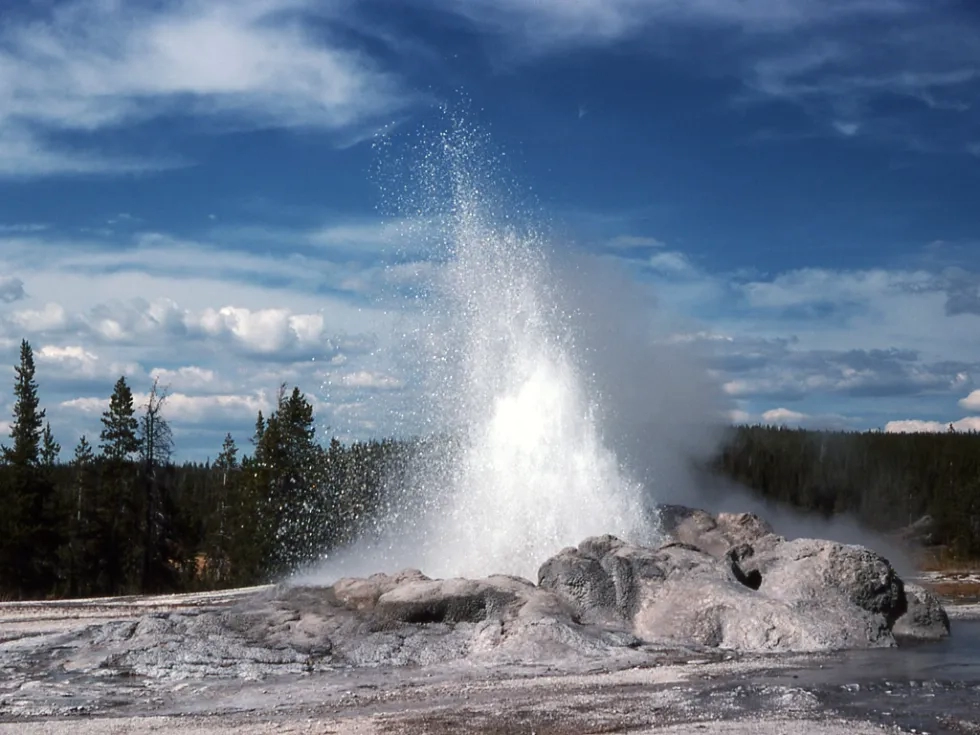 You can drive to Old Faithful and watch geysers erupt with a crowd, or you can hike a few miles and watch geysers erupt all by your lonesome. The park's largest off-road geyser basin with some 500 features, Shoshone Geyser Basin is a good destination for a long day hike (about 17 miles round-trip).
Better yet, strap on a backpack and take a multi-day hike to the basin and around Shoshone Lake, the largest backcountry lake in the lower 48.
More Info: Shoshone Geyser Basin (www.nps.gov/yell/planyourvisit/noldfaith.htm); backpacking in Yellowstone (www.nps.gov/yell/planyourvisit/backcountryhiking.htm)
Photo Caption: Minute Man Geyser erupting at Shoshone Lake Geyser Basin.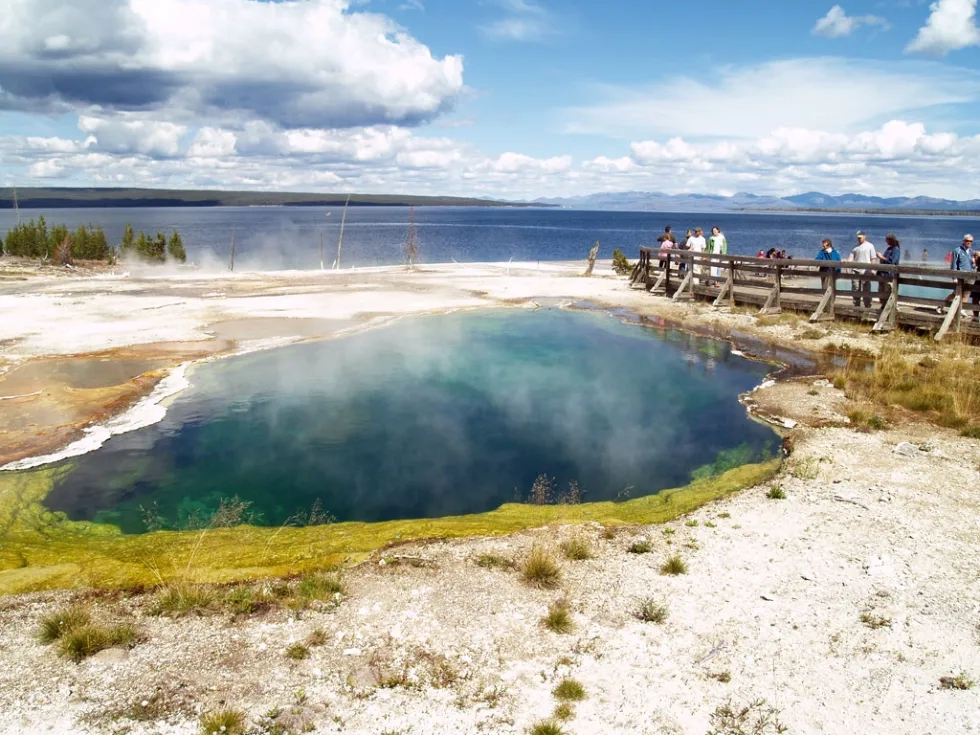 The boardwalks of West Thumb crisscross the lakeside and offer views of some of the park's most photogenic and unique thermal features. There's Fishing Cone, where fishermen once cooked their newly hooked catch -- until the discovery of trace amounts of arsenic in the water ended the practice. You'll also find the seemingly bottomless Abyss Pool. Then there's the aptly named Lake Shore Geyser, which erupts right on the edge of Yellowstone Lake.
More Info: www.nps.gov/yell
Photo Caption: West Thumb, Yellowstone National Park. Photo by Alex1961/Flickr.com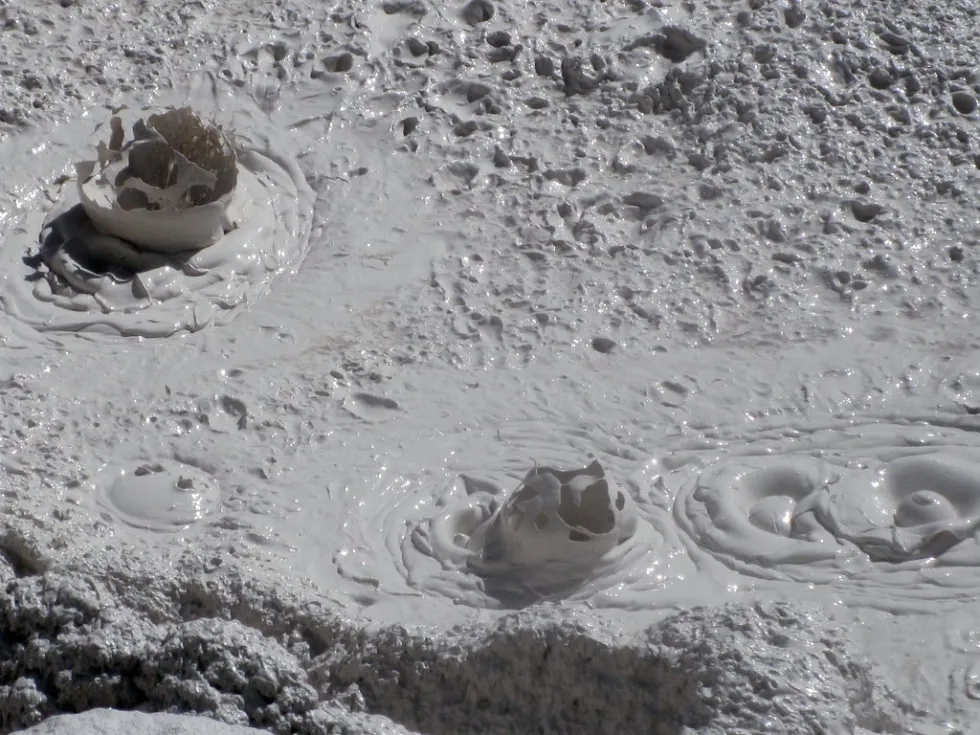 Kids and adults will be hypnotized by the otherworldly collection of multi-hued geothermal features at Artist Paint Pots, which include near-pastel springs, steaming fumaroles, and the slowly belching mud pots. Located south of Norris Junction and just a half-mile long, the boardwalk winding amidst this odd cast of anomalies provides an ideal break from the road, especially in peak tourist season.
More Info: www.nps.gov/yell/planyourvisit/nmadison.htm
Photo Caption: Artist Paint Pots geyser basin. Photo by jinxmcc/Flickr.com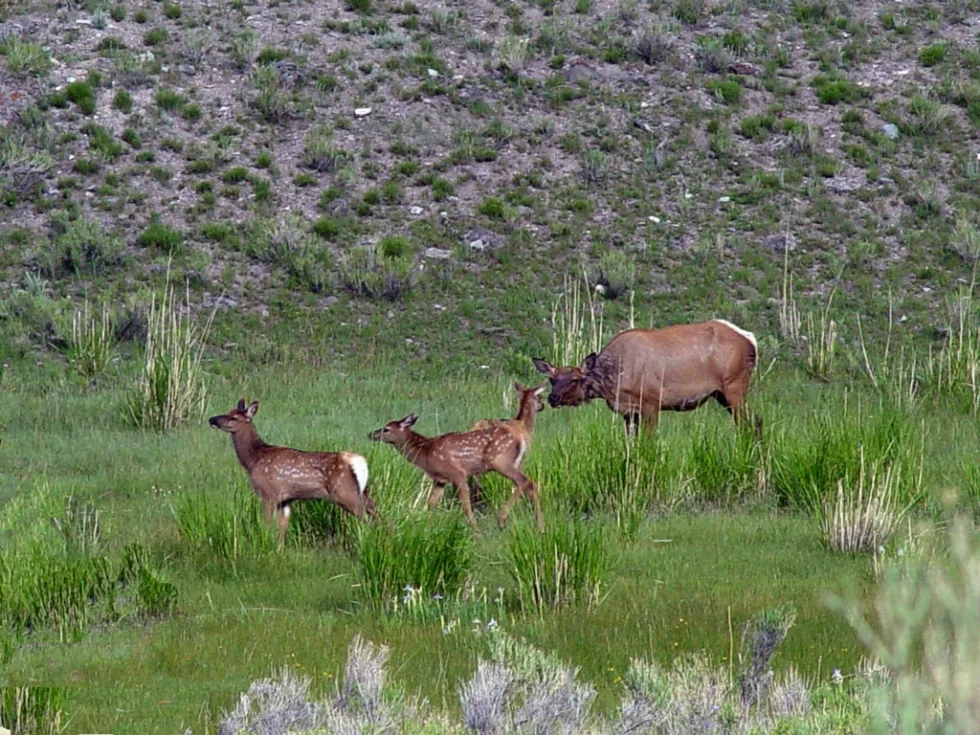 "The Serengeti of North America," Lamar Valley is home to all of the park's big mammals -- wolves, grizzly bears, elk, bison, pronghorns, deer, moose, and more. Beyond the serious wildlife-watching -- the most serious of which takes place in early spring -- the Lamar River offers opportunities for fly-fishing. Hikers and backpackers will find numerous trailheads dotting the roadside. The park road leaves the valley then exits the park at the northeast gate into Cooke City, the smallest of all the gateway towns.
More Info: www.nps.gov/yell
Photo Caption: Elk mother with two calves in Lamar Valley, Yellowstone National Park.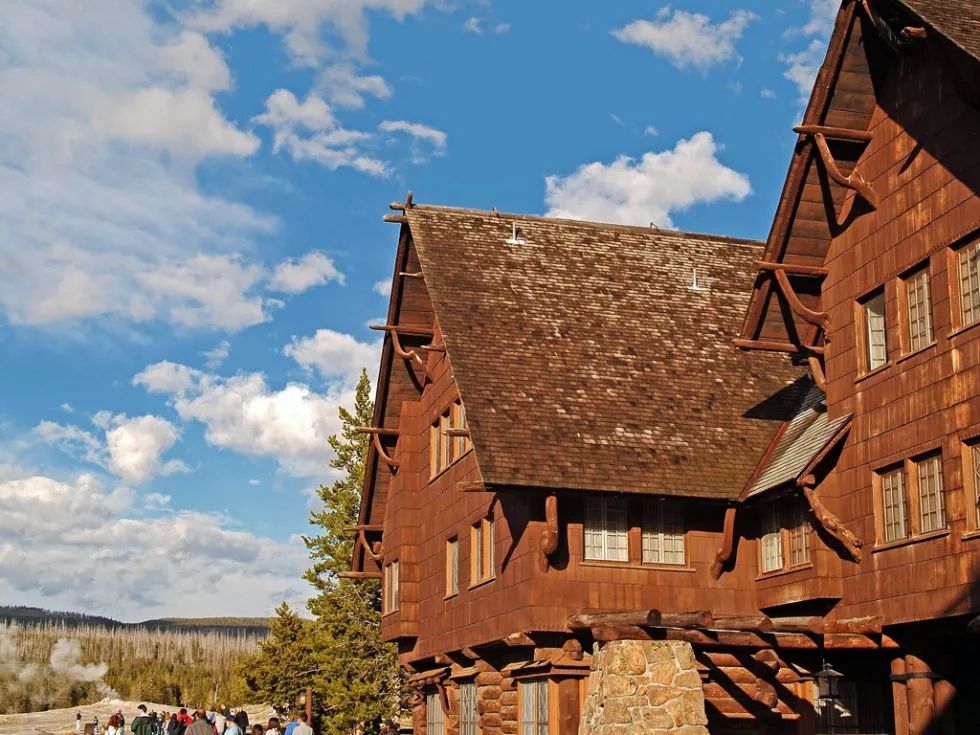 Robert Reamer designed what was to become the template for all national-park lodges to come, and to this day, the Old Faithful Inn is worth a look (if not an overnight stay). Welcoming guests since 1904, the hotel is perfectly suited for its rugged locale, featuring a lobby that's a labyrinthine work of knotty-wood art and a view of the park's definitive attraction, Old Faithful Geyser. Rooms start at $96 with a shared bath and $126 with a private bath.
A stone's throw away, the Old Faithful Snow Lodge is the park's newest lodging, razed and rebuilt from scratch in 1998.
Families may prefer the cowboy-themed Roosevelt Lodge, while couples will like the seclusion and the amenities at Lake Lodge Cabins. Lodgings can sell out months in advance, so book early.
Photo Caption: Old Faithful Inn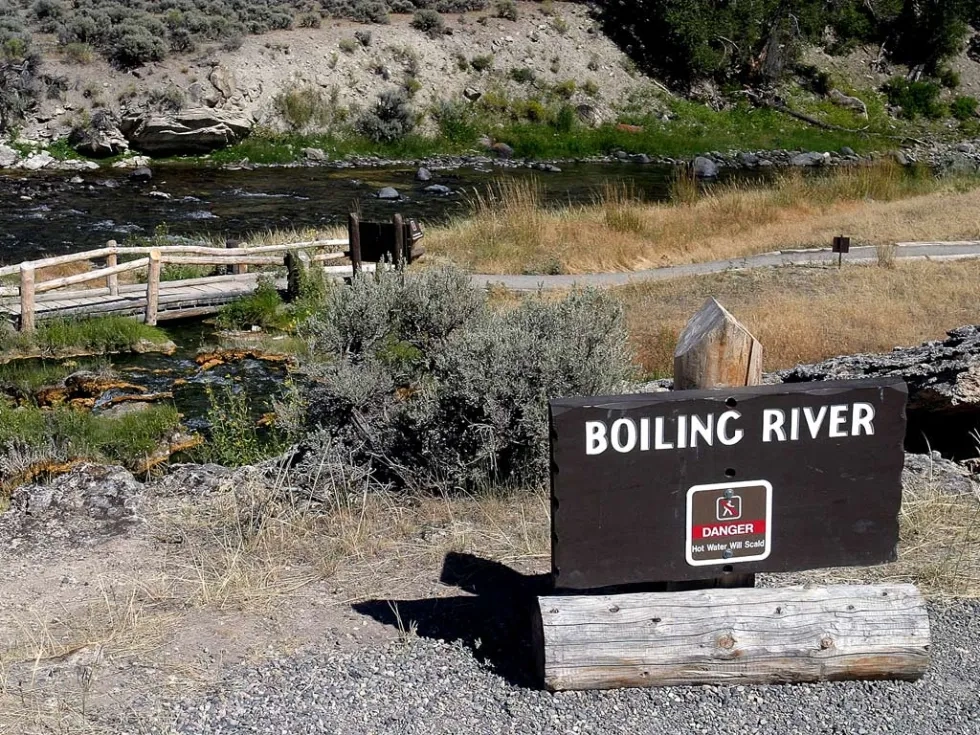 Located between Gardiner, Montana, and Mammoth Hot Springs, Boiling River is the only place you can legally soak in the park. The river isn't literally boiling; rather, this is where the cold Gardner River intermingles with hot springs and becomes a Jacuzzi-like medium.
To beat the heat, head southwest to Firehole Canyon, where there's a picture-perfect swimming hole on a slow part of the Firehole River that's a popular destination for swimmers and even scuba divers.
More Info: Boiling River (www.nps.gov/yell/planyourvisit/nmammoth.htm); Firehole Canyon (www.nps.gov/yell/planyourvisit)
Photo Caption: Boiling River, where Mammoth Hot Springs runoff meets the Gardner River. Photo by gregw66/Flickr.com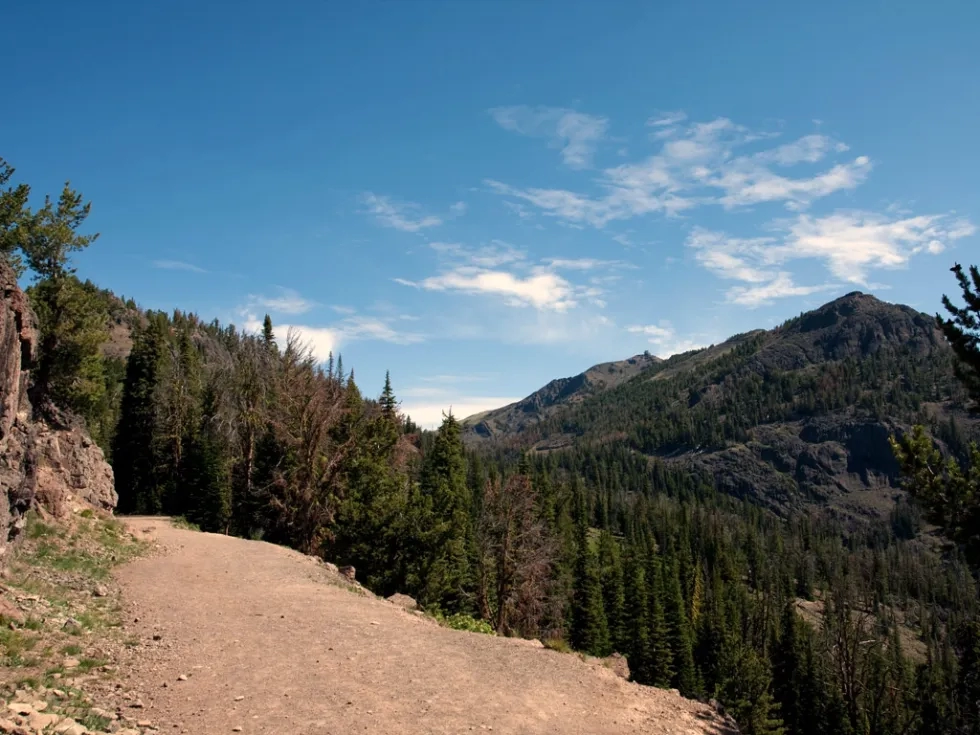 Ascending three miles one-way from 8,878-foot Dunraven Pass up to the 10,223-foot Mount Washburn summit, the popular Mount Washburn Trail rewards your effort with one of the most panoramic vistas in the Rockies. Here, you'll simultaneously gaze at the wonders of Yellowstone Lake and the Grand Canyon of the Yellowstone River Area, while also taking in the views of the Absaroka and Gallatin Mountains (as well as the Tetons) on a clear day.
Photo Caption: Hiking up Mount Washburn Trail, Yellowstone National Park. Photo by brianholsclaw/Flickr.com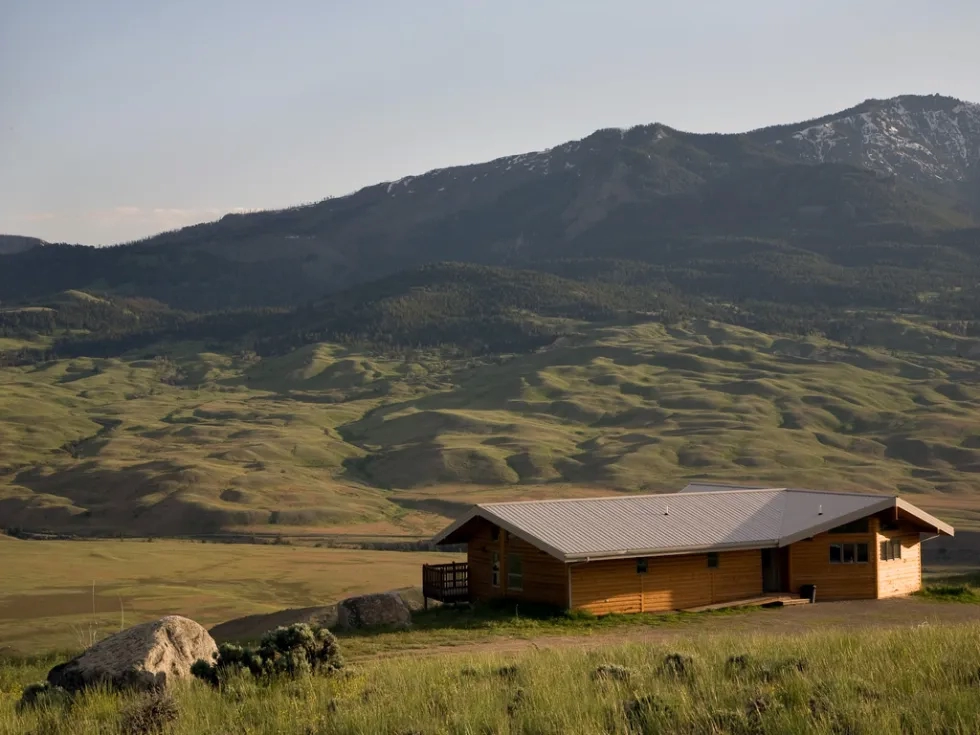 There is no better way to delve into the park than a class or a park tour with the Yellowstone Association Institute. Seminars cover everything from fly-fishing and backpacking to custom day tours that help take the guesswork out of wildlife-watching. There's also the recommended "Lodging and Learning" program, which marries the expert guidance of an Institute naturalist with nights in the park's historic lodges.
Most classes take place at the historic Lamar Buffalo Ranch in Lamar Valley; participants can stay in cabins at the ranch or the new Overlook campus, above Gardiner, Montana. Also worth a visit in Gardiner: the Association's new visitor center, a restored structure that's a good first stop before venturing into the park.
More Info: www.yellowstoneassociation.org
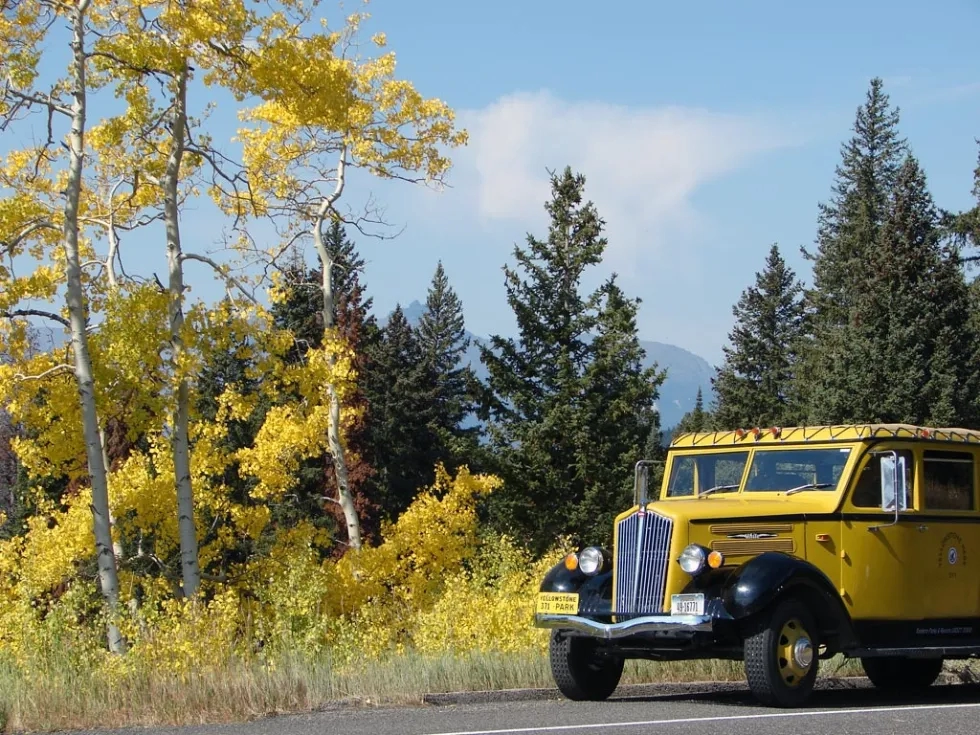 Back in service after a half-century absence, a fleet of restored White Motor Company Touring Buses roams the park, taking passengers on a number of tours of varying length. Used from the 1930s to the 1950s, park concessionaire Xanterra fixed up a number of the park's original buses (which were being used for tours in Skagway, Alaska) and put them back into service in Yellowstone in 2008. Tours vary in length and subject matter—everything from a morning wildlife-watching trip to an evening sunset outing.
More Info: https://www.yellowstonenationalparklodges.com/
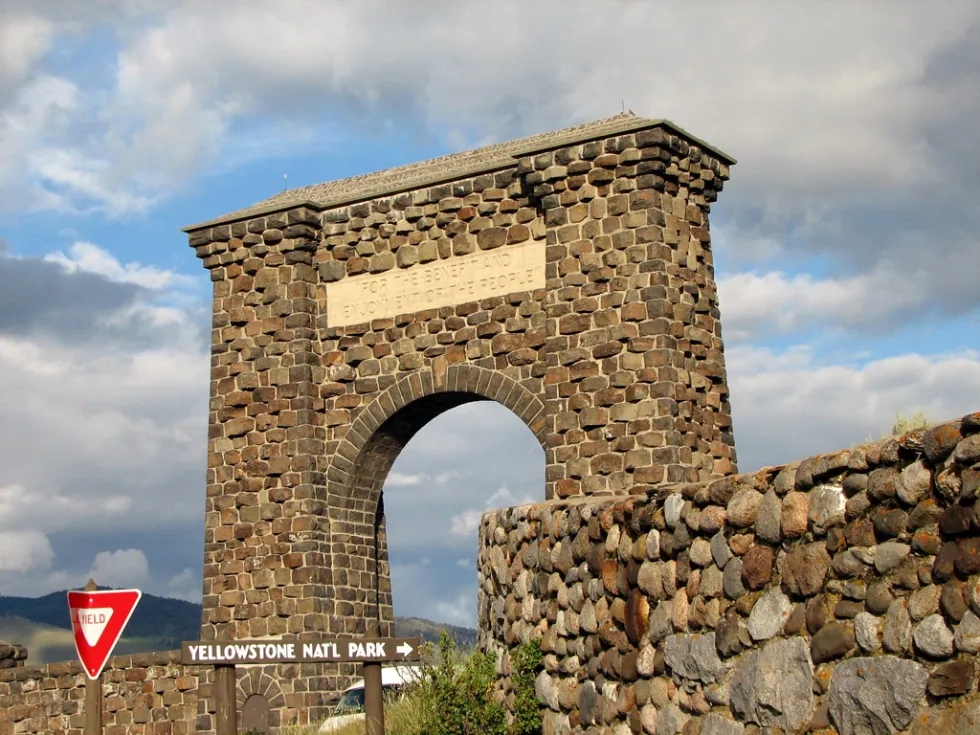
The earth is alive in Yellowstone National Park, bubbling, gurgling, and even erupting on a regular basis. Grizzly bears, gray wolves, and bison may be the stars of Yellowstone, but this park also shines in small ways that are best experienced on foot.
Consider this: The park's 2.2 million acres has hundreds of miles of trails -- yet only about one in 10 visitors makes it more than a half-mile from the road.
Want to avoid the hordes of tourists? Here are 10 ways to explore the under-the-radar areas of Yellowstone National Park.
Photo Caption: A view of the Grand Canyon of Yellowstone, which was designated a national park in 1872 and is one of the oldest parks in the system. Photo by Mbz1/Wikimedia Commons
Better yet, strap on a backpack and take a multi-day hike to the basin and around Shoshone Lake, the largest backcountry lake in the lower 48.
More Info: Shoshone Geyser Basin (www.nps.gov/yell/planyourvisit/noldfaith.htm); backpacking in Yellowstone (www.nps.gov/yell/planyourvisit/backcountryhiking.htm)
Photo Caption: Minute Man Geyser erupting at Shoshone Lake Geyser Basin.
More Info: www.nps.gov/yell
Photo Caption: West Thumb, Yellowstone National Park. Photo by Alex1961/Flickr.com
More Info: www.nps.gov/yell/planyourvisit/nmadison.htm
Photo Caption: Artist Paint Pots geyser basin. Photo by jinxmcc/Flickr.com
More Info: www.nps.gov/yell
Photo Caption: Elk mother with two calves in Lamar Valley, Yellowstone National Park.
A stone's throw away, the Old Faithful Snow Lodge is the park's newest lodging, razed and rebuilt from scratch in 1998.
Families may prefer the cowboy-themed Roosevelt Lodge, while couples will like the seclusion and the amenities at Lake Lodge Cabins. Lodgings can sell out months in advance, so book early.
Photo Caption: Old Faithful Inn
To beat the heat, head southwest to Firehole Canyon, where there's a picture-perfect swimming hole on a slow part of the Firehole River that's a popular destination for swimmers and even scuba divers.
More Info: Boiling River (www.nps.gov/yell/planyourvisit/nmammoth.htm); Firehole Canyon (www.nps.gov/yell/planyourvisit)
Photo Caption: Boiling River, where Mammoth Hot Springs runoff meets the Gardner River. Photo by gregw66/Flickr.com
Photo Caption: Hiking up Mount Washburn Trail, Yellowstone National Park. Photo by brianholsclaw/Flickr.com
Most classes take place at the historic Lamar Buffalo Ranch in Lamar Valley; participants can stay in cabins at the ranch or the new Overlook campus, above Gardiner, Montana. Also worth a visit in Gardiner: the Association's new visitor center, a restored structure that's a good first stop before venturing into the park.
More Info: www.yellowstoneassociation.org
More Info: https://www.yellowstonenationalparklodges.com/