

Guto Costa
By Melinda Quintero
A refreshing drink is the perfect antidote to a day of sightseeing or the perfect end to a day on the beach.
Ice-cold drinks are refreshing in summer, but ice also helpfully dilutes hard spirits in cocktails. Allen Katz, host of the Cocktail Hour on Martha Stewart Living Radio, reminds us that in the summertime heat, hard spirits hit the body faster. "You don't want to be one and done," Katz says. In summer, take your drinks on the rocks.
Of course, water is the ultimate summertime drink. Drinking plenty of water on a long-haul flight will help prevent jet lag and help your body adjust to your new time zone. Staying hydrated in warm climates is especially crucial to warding off sunstroke. If you get sunburned, drink plenty of water to aid the healing process.
Here are the best summer drinks (alcoholic and nonalcoholic) to enjoy in a few classic warm-weather destinations. Plus, we've included some basic recipes to help you mix some summer cocktails and drinks at home.
Photo Caption: Frozen caipirinhas from the Academia da Cachaça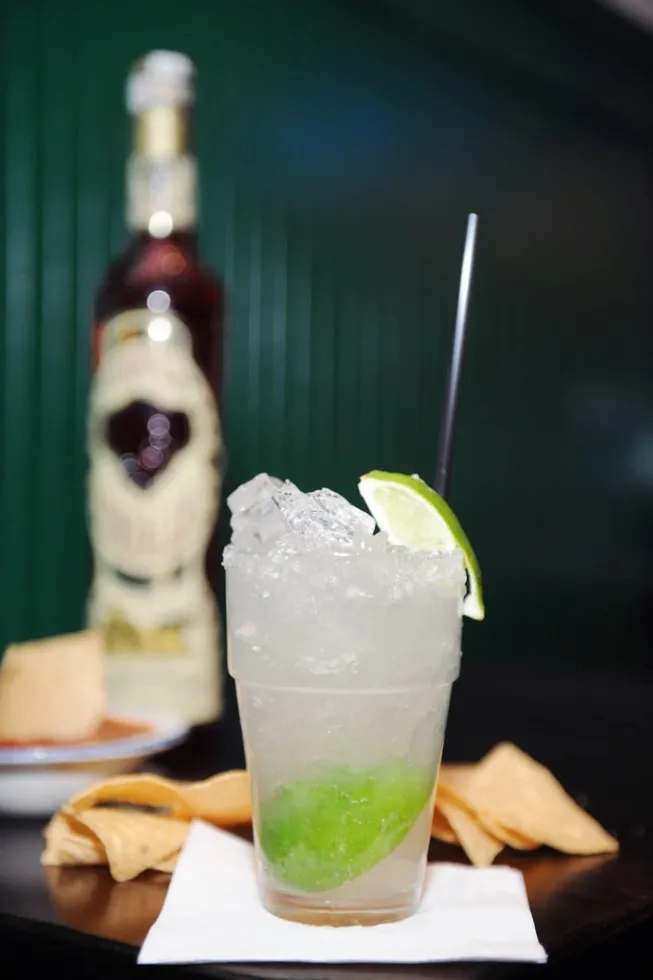 Tequila, lime, salt, ice. Add a dash of triple sec and a sunny Mexican beach to wiggle your toes in and you've got a classic margarita recipe. This frosty drink is most strongly associated with Mexico, but it is not a purely Mexican invention. The numerous legends about its origin all involve Mexican, Texan, and Californian experimenters in bars and vacation homes from south Texas to Acapulco in the 1930s and 1940s. Many tell of Mexican bartenders concocting the drink for American patrons who couldn't stomach a classic tequila embellished with the traditional squeeze of lime and dusting of salt. Today, the margarita is the quintessential tequila cocktail in the United States and a mainstay of beach bars on either side of the border. Though the original recipe calls for the simplest ingredients -- Mexican key limes are preferred for their thin skin and pungent juice -- the modern margarita is flavored with practically any local fruit.
Opinions on the best margaritas are deeply personal. One person's "too salty" is another's "just right." This Mexican-American hybrid has as many variations as restaurants and bars that serve it. Finding the best margarita is a favorite past time of expats and frequent travelers to Mexico. Some will point to gringo-fueled beach resort bars, like the Cabo Wabo (tel. 624/143-1188; www.cabowabo.com) in Cabo San Lucas, old classics like Hussong's Cantina (tel. 646/178-3210) in Ensenada or even its new Las Vegas branch (tel. 702/632-6450; www.hussongslasvegas.com), or an anonymous beachside palapa bar in the Riviera Maya. Others might send you inland to the high-fashion lounges of Mexico City, like the rooftop of the Hotel Condesa DF (tel. 55/5241-2600; www.condesadf.com), or north to Tommy's Mexican Restaurant (tel. 415/387-4747; www.tommystequila.com) in San Francisco, California.
Photo Caption: The Original Hussong's Margarita, Las Vegas.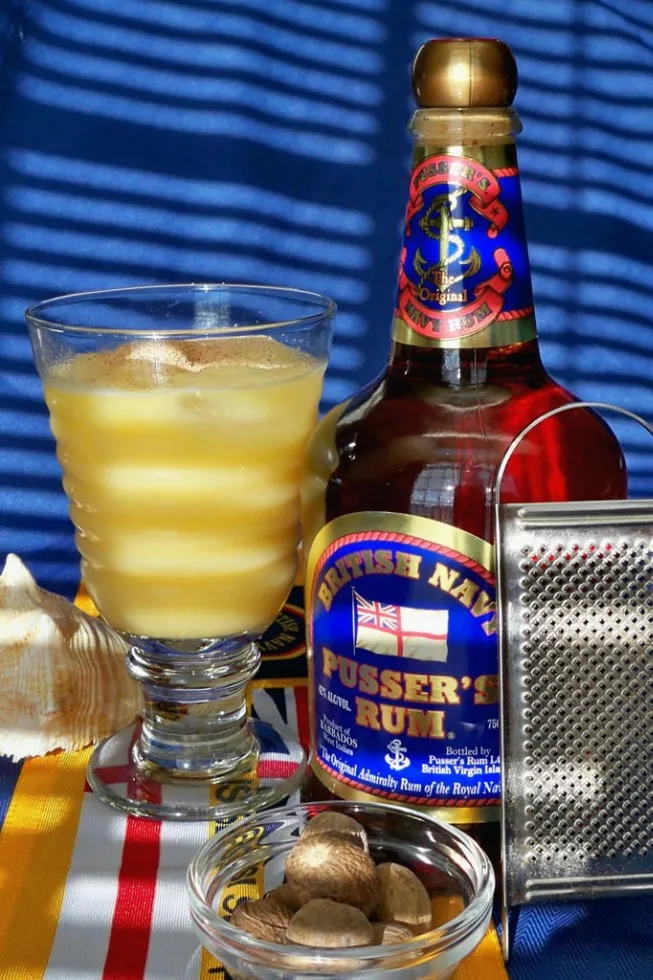 Rum, as we know it today, originated in the Caribbean's sugar plantations of the 17th century. It is the base of an infinite variety of fruity, umbrella-topped cocktails named to evoke sunny Caribbean beaches and a laid-back reggae lifestyle. However, rum is historically a sailor's drink. Pirates famously coveted the spirit and Great Britain's Royal Navy issued a portion of Pusser's Rum everyday to its sailors for more than 300 years. Pusser's Rum was the Navy's own standard recipe until 1970, when daily rations ceased.
Around the same time, Daphne Henderson was mixing Pusser's Rum cocktails at her tiny Soggy Dollar (tel. 284/495-9888; www.soggydollar.com) beach bar on the island of Jost Van Dyke, in the British Virgin Islands. The only way to get to her bar was to sail to White Bay, anchor your boat, and swim ashore. The bartender would hang soggy dollar bills out to dry, hence the bar's name.
Henderson's Painkiller recipe has changed little since then: orange and pineapple juices, coconut cream, fresh grated nutmeg, and Pusser's Rum. Though taxis can now reach the Soggy Dollar bar by road from Great Harbour, motor and sailboats still bob offshore while their sailors nurse Painkillers under the palm trees. It's not a Painkiller unless it's made with Pusser's and you're not in the Caribbean until you swim across clear turquoise waters to a white-sand beach to get your day's allotment of rum.
Photo Caption: Pusser's rum is a main ingredient in the Painkiller, the official cocktail of the British Virgin Islands.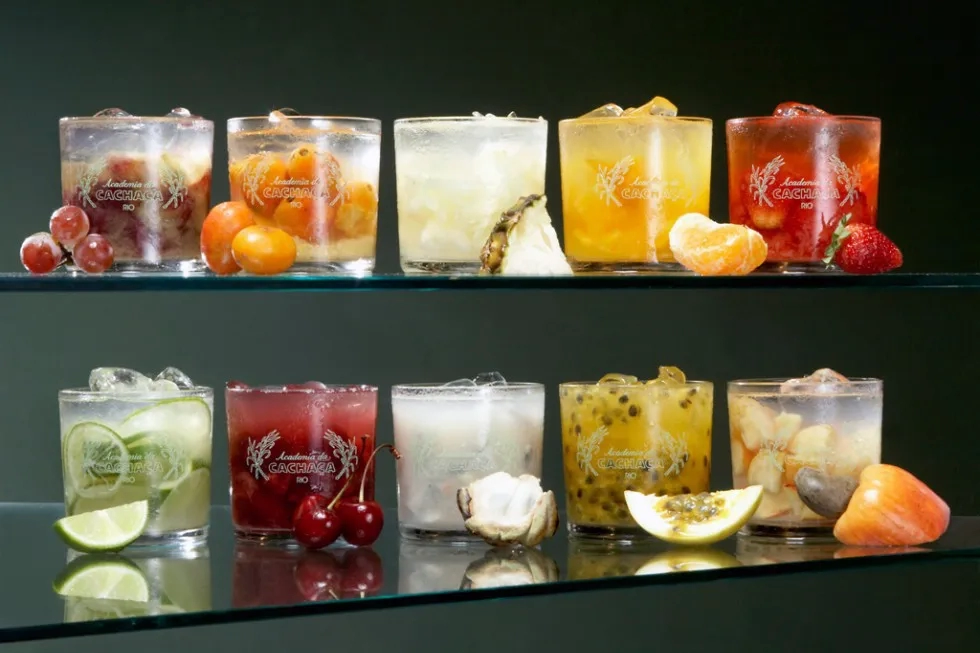 The caipirinha is to Brazil what the daiquiri is to Cuba: a local adaptation of the traditional Caribbean cocktail of rum, sugar, and lime. A caipirinha is simply muddled limes and sugar with cachaça and ice. The lime can be easily substituted with fresh fruit like strawberries or kiwi and if you replace the cachaça with vodka, you have a caipirosca. However, Brazil's most popular local spirit is cachaça, a sugarcane distillate similar to rum, produced only in Brazil for nearly 400 years.
For a classic Brazilian experience, order an ice-cold caipirinha from one of the stands lining Ipanema Beach, in Rio de Janeiro. Sip away while taking in the country's best people-watching, as the bronzed bodies of Brazilian society parade and lounge along the golden sands.
For a lesson in the subtle differences of cachaças from across Brazil, browse the cocktail list at the Academia da Cachaça (tel. 021/2529-2680; www.academiadacachaca.com.br), in neighboring beachfront Leblon. The refined list has more than 80 unique cachaças and cachaça infusions to go with traditional Brazilian meals such as feijoada (pork and black bean stew) and vatapá (shrimp and ground nut stew).
Photo Caption: An assortment of fruit caipirinhas from Academia da Cachaça, Rio de Janeiro.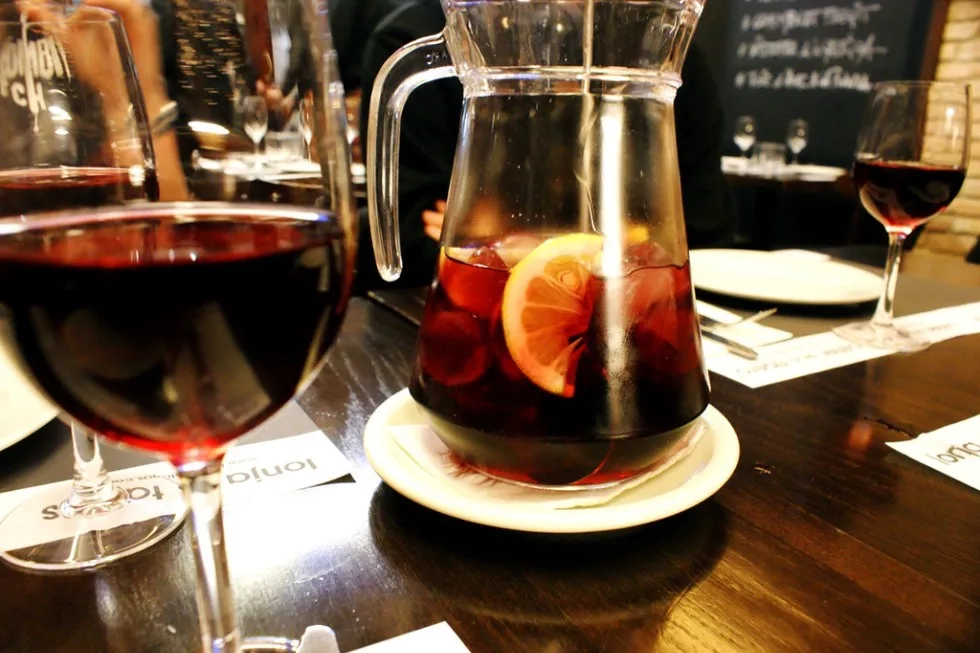 Sangria is a Spanish recipe for cold wine punch with citrus juice and fruit. Europeans have been drinking wine punch for hundreds of years, and "sangria" is a catch-all term for an infinite variety of summertime wine drinks. Though the name translates to "blood" from Spanish and suggests a deep red-colored drink, sangria can also be made with crisp white and rosé wines, which are perfect for summer. Recipes call for a young wine because the wine's flavor improves with the addition of sugar, citrus juice, and sliced fruit. Add club soda for a bit of sparkle or brandy for a little extra kick.
Sangrias can be tailored to match the unique flavor of a specific region because the main ingredients are wine and fruit. No matter where you are in the world, you can create a sangria that evokes a particular wine region. A Northern California sangria might have a Napa Valley Cabernet Sauvignon with strawberries and apples from local farms; a Spanish Sangria could be a Rioja Tinto with cherries and peaches. Combine a bottle of wine with the juice of an orange or lemon, a tablespoon of sugar, and slices of fruit in a large serving pitcher. Let chill overnight in the fridge to infuse the wine with new, fruity flavors and serve cold.
Photo Caption: Pitcher and glasses of Sangria in Barcelona, Spain. Photo by bastiend/Flickr.com.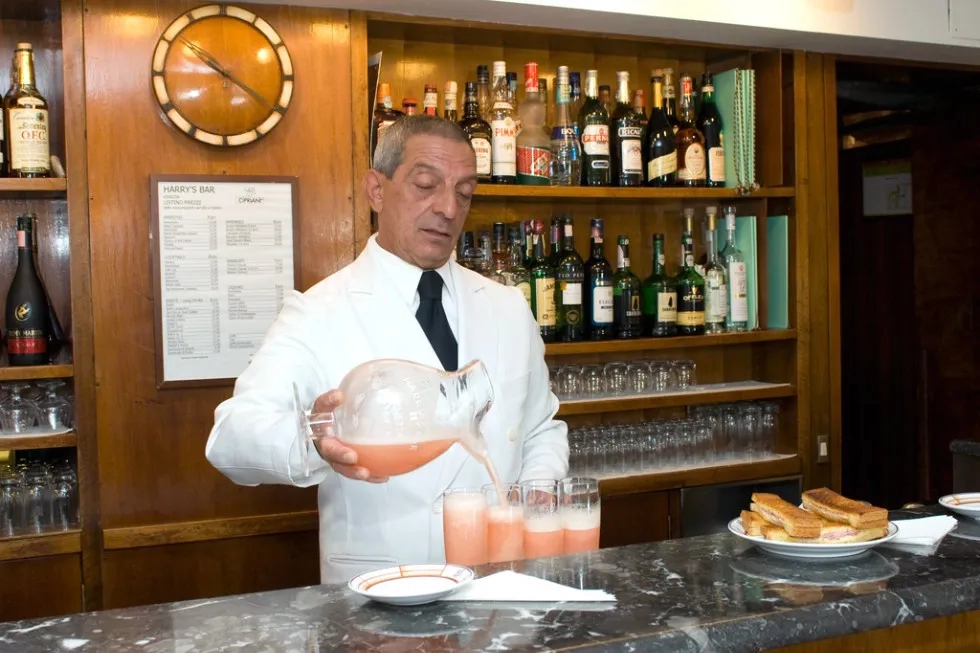 Count Cammillo Negroni walks into a bar in Florence, Italy, in 1919. He orders an Americano cocktail with gin. Henceforth, the Negroni aperitif is equal parts gin, sweet vermouth, bitters, and Campari garnished with an orange slice. This pre-dinner drink is best taken sip by sip at sundown because the swirling deep-red Campari evokes the Florentine sunset. As the sun sinks into the Arno River, it paints the surrounding Tuscan hills soft shades of red, and spills a warm orange glow over the marble Duomo cathedral.
Since the Negroni is purely spirits, mixologist Allen Katz recommends ordering the cocktail on the rocks. The ice acts as an additional ingredient to lighten the combination of spirits and adds a refreshing chill to this "uniquely bitter" cocktail.
Italian drinking culture is focused on wine, but for something a bit lighter than a Negroni and still distinctly Italian, try a bellini. The pastel-pink cocktail gets its name from colors favored by 16th century Venetian painter Giovanni Bellini and is said to have been invented at Harry's Bar (tel. 041-528-5777; www.harrysbarvenezia.com) in Venice between the 1930s and 1940s. The bellini is one part peach puree and two parts Prosecco, an Italian sparkling wine, or champagne served in a chilled glass.
Photo Caption: Harry's Bar in Venice is the birthplace of the Bellini.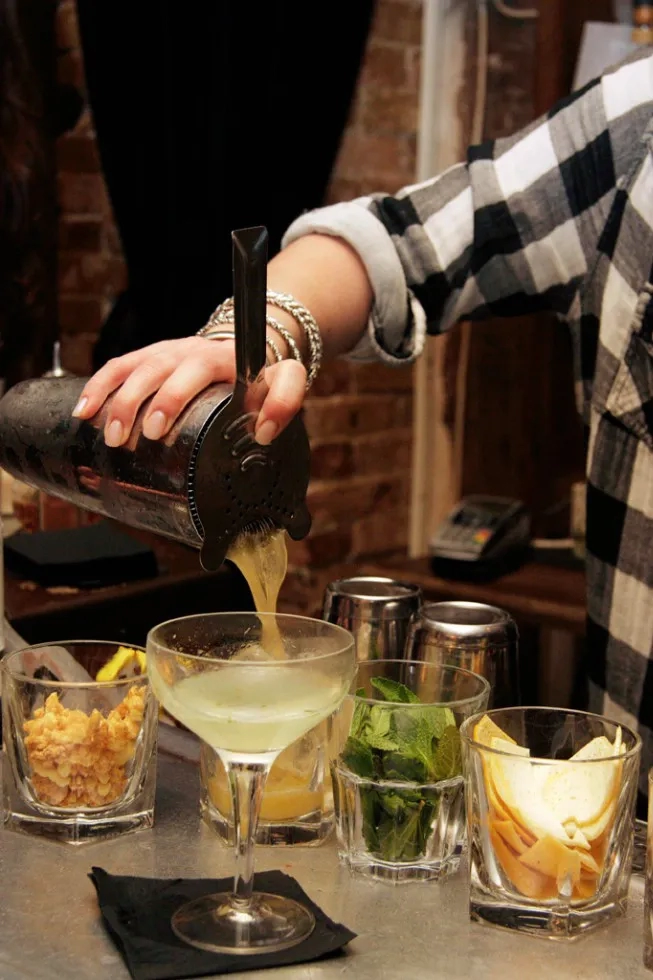 The French 75 is a World War I cocktail unapologetically named for a cannon. Tradition says the drink's combination of gin and champagne packs enough punch to match a French 75mm howitzer. But as mixologist Allen Katz points out, champagne in cocktails almost always suggests a light and bubbly time.
The classic recipe is gin, sugar, and lemon juice shaken with ice with champagne added in the glass. The difference between a French 75 and a French 76 is not just a millimeter: a 76 adds a dash of grenadine and might replace gin with vodka or brandy. The delightful nose-tingling effervescence of the French 75 comes from the champagne's reaction with the sugar, making your bubbly even more so. The result is a refreshing and chilled sparkling cocktail.
During WWI, the French 75 became famous at Harry's New York Bar (tel. 01-42-61-71-14; www.harrys-bar.fr) in Paris, the traditional hangout of American expats and servicemen since 1911. Today, Harry's New York Bar is an obligatory stop on any Parisian cocktail tour. However, to get off the tourist trail, Katz recommends seeking out the French 75 at L'Experimental Cocktail Club (37, rue St.-Sauveur; tel. 33-1-45-08-88-09), a semi-secret lounge in the Second Arrondissement, or the historic Hemingway Bar (tel. 01-43-16-30-30; www.ritzparis.com) at the Ritz.
New Orleans also lays claim to the French 75, thanks to Frenchman Arnaud Cazenave who opened a celebrated restaurant here during WWI. When in New Orleans, there's no better place to order the drink than the historic French 75 Bar at Arnaud's (tel. at 504/523-5433; www.arnauds.com), the original restaurant.
Photo Caption: Bartender at Experimental Cocktail Club in Paris pours a freshly-made French 75 cocktail.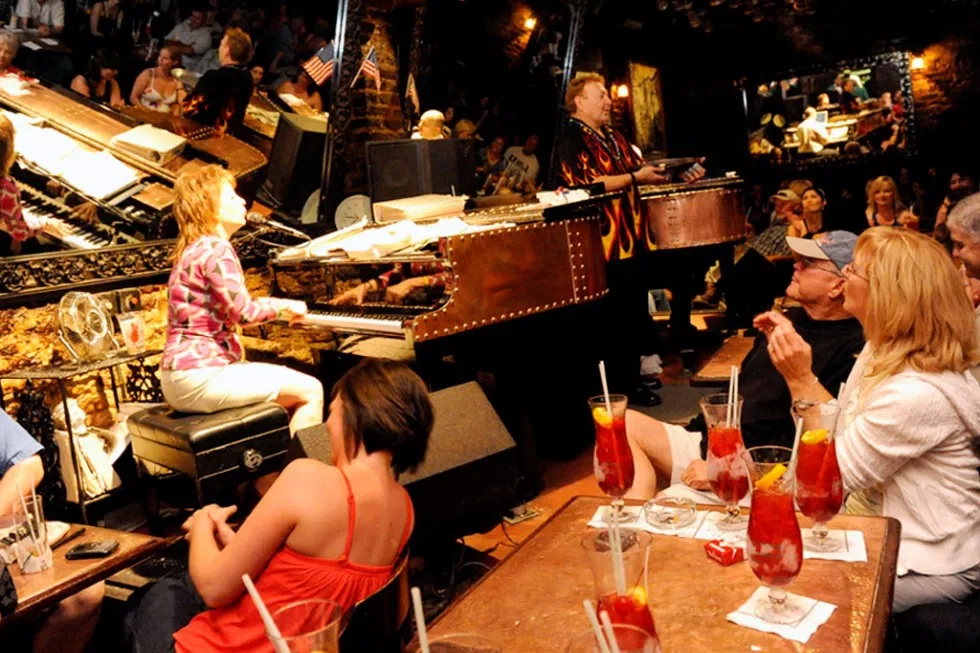 The humid and hot New Orleans summers encourage a slow-paced lifestyle and days spent lounging in the shade. Two relaxing drinks invented in New Orleans represent the full spectrum of city's cocktail-drinking culture: the Sazerac and the hurricane. On the one hand, you've got a "celebrated, distinctive, respected cocktail culture," says mixologist Allen Katz, developed over 300 years of New Orleans gastronomic history. On the other hand is modern-day Bourbon Street churning out fruity, crowd-pleasing cocktails for endless Mardi Gras-style parties.
The Sazerac is a complicated New Orleans drink and one of the oldest American cocktails. Essentially, the Sazerac is rye whiskey with bitters and simple syrup or a sugar cube. This base is strained into a chilled glass coated with absinthe or Pernod and garnished with a lemon twist. The 19th-century original was made with a Sazerac brand cognac, hence the cocktail's name, though the drink no longer includes cognac. Order a Sazerac in Tujague's (tel. 504/525-8676; www.tujagues.com), one of the French Quarter's oldest restaurants and bars.
The hurricane was first served in hurricane lamps by French Quarter bar owner Pat O'Brien. He invented the drink in the 1940s to use up a few extra cases of rum. Nowadays, Bourbon Street bars serve hurricanes in plastic cups to partiers on the street, but Pat O'Brien's (tel. 504/525-4823; www.patobriens.com) uses distinctively curvaceous souvenir glasses that mimic the original. They also sell a trademarked hurricane mix, but the classic recipe is so simple, you can easily create your own at home. This fruity cocktail is light and dark rum with grenadine and juice (such as orange or passion fruit) on ice. The tiny umbrella is optional.
Photo Caption: Pat O'Brien's.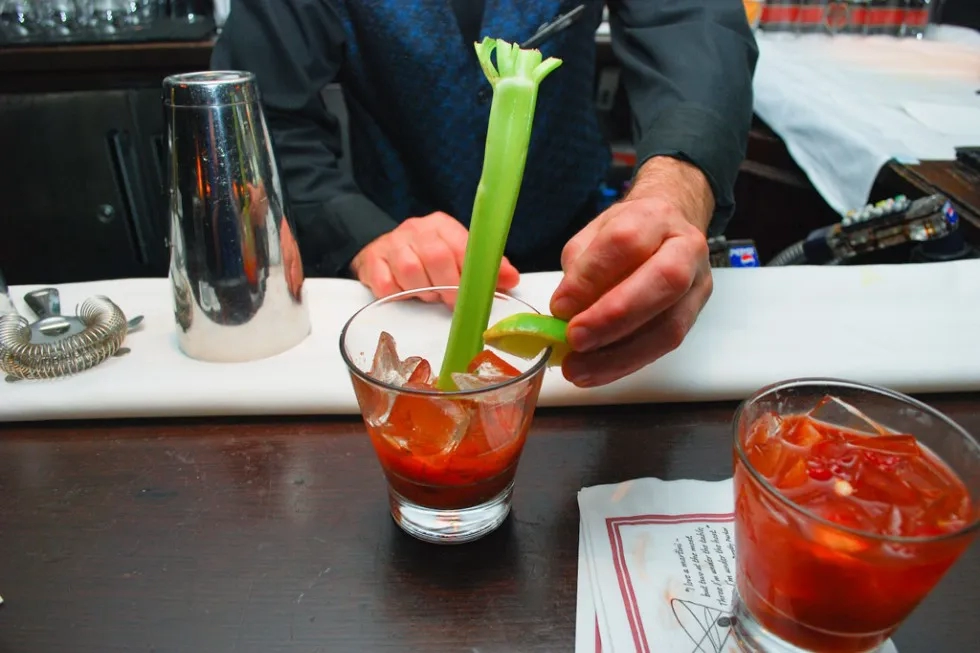 The Bloody Mary is the quintessential brunch drink. Thanks to its spicy nature and savory flavors, this is a summer drink best enjoyed one sip at a time. The base is tomato juice, Worchester and Tabasco sauce, lemon, pepper, and other spices with vodka, but the variations are endless. Like a little more heat? Add cayenne pepper. Prefer a bit of pucker? Add olive brine, as you would to a dirty martini. The Bloody Mary is believed to have been invented and popularized during the 1930s at Harry's New York Bar (tel. 01-42-61-71-14; www.harrys-bar.fr), a 100-year-old expat bar in Paris. From the beginning, this thick concoction was touted as a hangover cure. Surely the vitamin C- rich tomato base can aid a morning time recovery (then again, so can vodka), but it is also refreshing and fortifying on a hot summer day.
Sunday brunch is a tradition in New York City, when locals are crowding restaurant and bar patios and terraces for a leisurely meal. Sometimes, the cocktail is the main attraction, such as at the Clover Club (tel. 718/855-7939; www.cloverclubny.com), the preferred Brooklyn Bloody Mary of mixologist Allen Katz. Café sandwich-board signs dot the sidewalks -- from the Upper West Side, Chelsea, and the West Village in Manhattan to Park Slope and Williamsburg in Brooklyn -- proclaiming the weekend's prix-fixe brunch. The house special Bloody Mary is often included in these specials.
Photo Caption: Christian, master bartender at The Algonquin Hotel, shows how to make some of their drinks. In the center is a Bloody Mary. Photo by flickr4jazz/Flickr.com.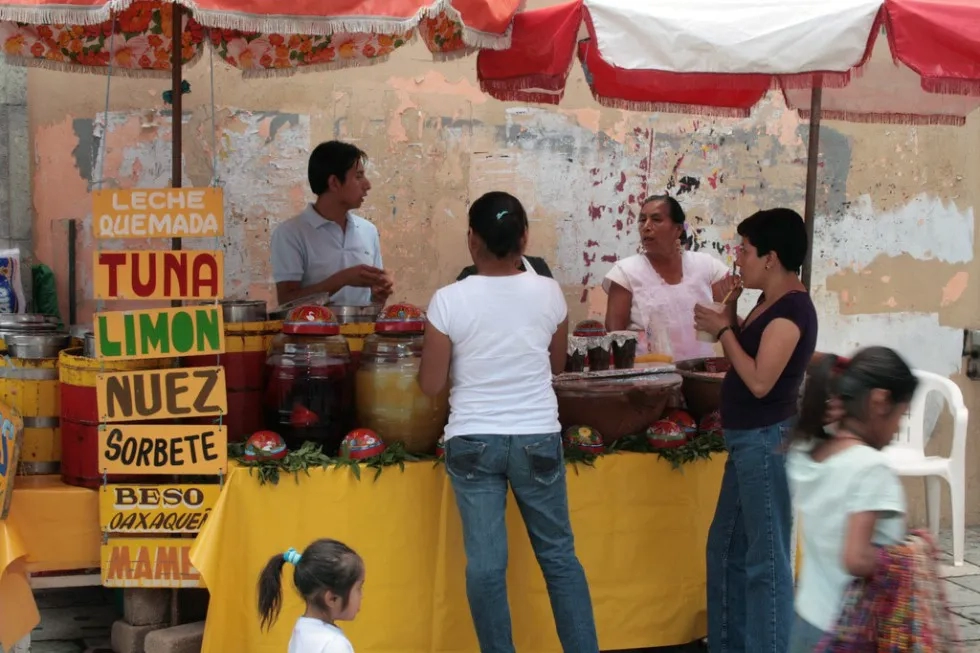 Coca-Cola enthusiasts rave about the superior Mexican Coke recipe, which uses cane sugar rather than corn syrup like in the U.S. However, Mexico's traditional cool-down drink is the appropriately-named agua fresca. The "refreshing water" is simply fruit pulp steeped in cold water, sometimes with added sugar. Aguas frescas are not quite juice but more than just flavored water. All across Mexico, restaurants and street vendors steep lime, pineapple, tuna (prickly pear), tamarind, and plenty of other local fruits in clear barrels filled with chilled water. Perhaps the most common flavors are flor de jamaica and horchata. Hibiscus flower tea (flor de jamaica), with its light, berry-like taste, is a natural diuretic rich in antioxidants. Horchata, icy and sweet rice milk with vanilla and cinnamon, is the New World version of the classic southern Spanish recipe made with tiger nuts.
To make your own agua fresca, simply wash, peel or hull, and chop your favorite fruit. Puree with water in a blender then strain out the pulp. Add more water and a dash of lime juice and chill in a large pitcher. For an even lighter infusion, simply add chopped fruit (or even cucumbers) to water and let chill for two hours. Vodka infusion, a long-standing tradition in Slavic cultures and a perfect base for summer cocktails, is simply sliced fruit, herbs, and spices steeped in vodka for at least three days.
Photo Caption: Aguas frescas stand in Oaxaca. Photo by Y! Musica/Flickr.com.
A refreshing drink is the perfect antidote to a day of sightseeing or the perfect end to a day on the beach.
Ice-cold drinks are refreshing in summer, but ice also helpfully dilutes hard spirits in cocktails. Allen Katz, host of the Cocktail Hour on Martha Stewart Living Radio, reminds us that in the summertime heat, hard spirits hit the body faster. "You don't want to be one and done," Katz says. In summer, take your drinks on the rocks.
Of course, water is the ultimate summertime drink. Drinking plenty of water on a long-haul flight will help prevent jet lag and help your body adjust to your new time zone. Staying hydrated in warm climates is especially crucial to warding off sunstroke. If you get sunburned, drink plenty of water to aid the healing process.
Here are the best summer drinks (alcoholic and nonalcoholic) to enjoy in a few classic warm-weather destinations. Plus, we've included some basic recipes to help you mix some summer cocktails and drinks at home.
Photo Caption: Frozen caipirinhas from the Academia da Cachaça
Opinions on the best margaritas are deeply personal. One person's "too salty" is another's "just right." This Mexican-American hybrid has as many variations as restaurants and bars that serve it. Finding the best margarita is a favorite past time of expats and frequent travelers to Mexico. Some will point to gringo-fueled beach resort bars, like the Cabo Wabo (tel. 624/143-1188; www.cabowabo.com) in Cabo San Lucas, old classics like Hussong's Cantina (tel. 646/178-3210) in Ensenada or even its new Las Vegas branch (tel. 702/632-6450; www.hussongslasvegas.com), or an anonymous beachside palapa bar in the Riviera Maya. Others might send you inland to the high-fashion lounges of Mexico City, like the rooftop of the Hotel Condesa DF (tel. 55/5241-2600; www.condesadf.com), or north to Tommy's Mexican Restaurant (tel. 415/387-4747; www.tommystequila.com) in San Francisco, California.
Photo Caption: The Original Hussong's Margarita, Las Vegas.
Around the same time, Daphne Henderson was mixing Pusser's Rum cocktails at her tiny Soggy Dollar (tel. 284/495-9888; www.soggydollar.com) beach bar on the island of Jost Van Dyke, in the British Virgin Islands. The only way to get to her bar was to sail to White Bay, anchor your boat, and swim ashore. The bartender would hang soggy dollar bills out to dry, hence the bar's name.
Henderson's Painkiller recipe has changed little since then: orange and pineapple juices, coconut cream, fresh grated nutmeg, and Pusser's Rum. Though taxis can now reach the Soggy Dollar bar by road from Great Harbour, motor and sailboats still bob offshore while their sailors nurse Painkillers under the palm trees. It's not a Painkiller unless it's made with Pusser's and you're not in the Caribbean until you swim across clear turquoise waters to a white-sand beach to get your day's allotment of rum.
Photo Caption: Pusser's rum is a main ingredient in the Painkiller, the official cocktail of the British Virgin Islands.
For a classic Brazilian experience, order an ice-cold caipirinha from one of the stands lining Ipanema Beach, in Rio de Janeiro. Sip away while taking in the country's best people-watching, as the bronzed bodies of Brazilian society parade and lounge along the golden sands.
For a lesson in the subtle differences of cachaças from across Brazil, browse the cocktail list at the Academia da Cachaça (tel. 021/2529-2680; www.academiadacachaca.com.br), in neighboring beachfront Leblon. The refined list has more than 80 unique cachaças and cachaça infusions to go with traditional Brazilian meals such as feijoada (pork and black bean stew) and vatapá (shrimp and ground nut stew).
Photo Caption: An assortment of fruit caipirinhas from Academia da Cachaça, Rio de Janeiro.
Sangrias can be tailored to match the unique flavor of a specific region because the main ingredients are wine and fruit. No matter where you are in the world, you can create a sangria that evokes a particular wine region. A Northern California sangria might have a Napa Valley Cabernet Sauvignon with strawberries and apples from local farms; a Spanish Sangria could be a Rioja Tinto with cherries and peaches. Combine a bottle of wine with the juice of an orange or lemon, a tablespoon of sugar, and slices of fruit in a large serving pitcher. Let chill overnight in the fridge to infuse the wine with new, fruity flavors and serve cold.
Photo Caption: Pitcher and glasses of Sangria in Barcelona, Spain. Photo by bastiend/Flickr.com.
Since the Negroni is purely spirits, mixologist Allen Katz recommends ordering the cocktail on the rocks. The ice acts as an additional ingredient to lighten the combination of spirits and adds a refreshing chill to this "uniquely bitter" cocktail.
Italian drinking culture is focused on wine, but for something a bit lighter than a Negroni and still distinctly Italian, try a bellini. The pastel-pink cocktail gets its name from colors favored by 16th century Venetian painter Giovanni Bellini and is said to have been invented at Harry's Bar (tel. 041-528-5777; www.harrysbarvenezia.com) in Venice between the 1930s and 1940s. The bellini is one part peach puree and two parts Prosecco, an Italian sparkling wine, or champagne served in a chilled glass.
Photo Caption: Harry's Bar in Venice is the birthplace of the Bellini.
The classic recipe is gin, sugar, and lemon juice shaken with ice with champagne added in the glass. The difference between a French 75 and a French 76 is not just a millimeter: a 76 adds a dash of grenadine and might replace gin with vodka or brandy. The delightful nose-tingling effervescence of the French 75 comes from the champagne's reaction with the sugar, making your bubbly even more so. The result is a refreshing and chilled sparkling cocktail.
During WWI, the French 75 became famous at Harry's New York Bar (tel. 01-42-61-71-14; www.harrys-bar.fr) in Paris, the traditional hangout of American expats and servicemen since 1911. Today, Harry's New York Bar is an obligatory stop on any Parisian cocktail tour. However, to get off the tourist trail, Katz recommends seeking out the French 75 at L'Experimental Cocktail Club (37, rue St.-Sauveur; tel. 33-1-45-08-88-09), a semi-secret lounge in the Second Arrondissement, or the historic Hemingway Bar (tel. 01-43-16-30-30; www.ritzparis.com) at the Ritz.
New Orleans also lays claim to the French 75, thanks to Frenchman Arnaud Cazenave who opened a celebrated restaurant here during WWI. When in New Orleans, there's no better place to order the drink than the historic French 75 Bar at Arnaud's (tel. at 504/523-5433; www.arnauds.com), the original restaurant.
Photo Caption: Bartender at Experimental Cocktail Club in Paris pours a freshly-made French 75 cocktail.
The Sazerac is a complicated New Orleans drink and one of the oldest American cocktails. Essentially, the Sazerac is rye whiskey with bitters and simple syrup or a sugar cube. This base is strained into a chilled glass coated with absinthe or Pernod and garnished with a lemon twist. The 19th-century original was made with a Sazerac brand cognac, hence the cocktail's name, though the drink no longer includes cognac. Order a Sazerac in Tujague's (tel. 504/525-8676; www.tujagues.com), one of the French Quarter's oldest restaurants and bars.
The hurricane was first served in hurricane lamps by French Quarter bar owner Pat O'Brien. He invented the drink in the 1940s to use up a few extra cases of rum. Nowadays, Bourbon Street bars serve hurricanes in plastic cups to partiers on the street, but Pat O'Brien's (tel. 504/525-4823; www.patobriens.com) uses distinctively curvaceous souvenir glasses that mimic the original. They also sell a trademarked hurricane mix, but the classic recipe is so simple, you can easily create your own at home. This fruity cocktail is light and dark rum with grenadine and juice (such as orange or passion fruit) on ice. The tiny umbrella is optional.
Photo Caption: Pat O'Brien's.
Sunday brunch is a tradition in New York City, when locals are crowding restaurant and bar patios and terraces for a leisurely meal. Sometimes, the cocktail is the main attraction, such as at the Clover Club (tel. 718/855-7939; www.cloverclubny.com), the preferred Brooklyn Bloody Mary of mixologist Allen Katz. Café sandwich-board signs dot the sidewalks -- from the Upper West Side, Chelsea, and the West Village in Manhattan to Park Slope and Williamsburg in Brooklyn -- proclaiming the weekend's prix-fixe brunch. The house special Bloody Mary is often included in these specials.
Photo Caption: Christian, master bartender at The Algonquin Hotel, shows how to make some of their drinks. In the center is a Bloody Mary. Photo by flickr4jazz/Flickr.com.
To make your own agua fresca, simply wash, peel or hull, and chop your favorite fruit. Puree with water in a blender then strain out the pulp. Add more water and a dash of lime juice and chill in a large pitcher. For an even lighter infusion, simply add chopped fruit (or even cucumbers) to water and let chill for two hours. Vodka infusion, a long-standing tradition in Slavic cultures and a perfect base for summer cocktails, is simply sliced fruit, herbs, and spices steeped in vodka for at least three days.
Photo Caption: Aguas frescas stand in Oaxaca. Photo by Y! Musica/Flickr.com.