

Jack Barnes
By Donald Strachan
Britain has punched way above its weight in the history of Western music -- and has the heritage sites to prove it. There are museums dedicated to composers, including London's Handel House, 25 Brook St. (tel. 020/7495-1685; www.handelhouse.org), and unique collections of historical instruments, such as at the Horniman Museum, 100 London Rd., Forest Hill, London (tel. 020/8699-1872; www.horniman.ac.uk).
These islands have also witnessed some of the weirder moments in musical history: in 1994, former chart-topping duo KLF chose the Scottish island of Jura to Burn a Million Quid. (Google it, seriously -- it was no hoax.)
And isn't just about the past. Dubstep and Grime were born in London's clubland. Every city in the country has a venue worthy of a touring indie band, the best of them perhaps King Tut's Wah Wah Hut (www.kingtuts.co.uk), in Glasgow, Scotland. Arena venues like Wembley (www.wembley.co.uk) and Manchester's MEN (www.men-arena.com) attract the biggest names on UK or world tours.
In the slides that follow, we've selected just a few of the most melodious experiences to be had in these musical islands.
Photo Caption: Union Jack guitar case and Beatles tributes along the wall, Abbey Road, London.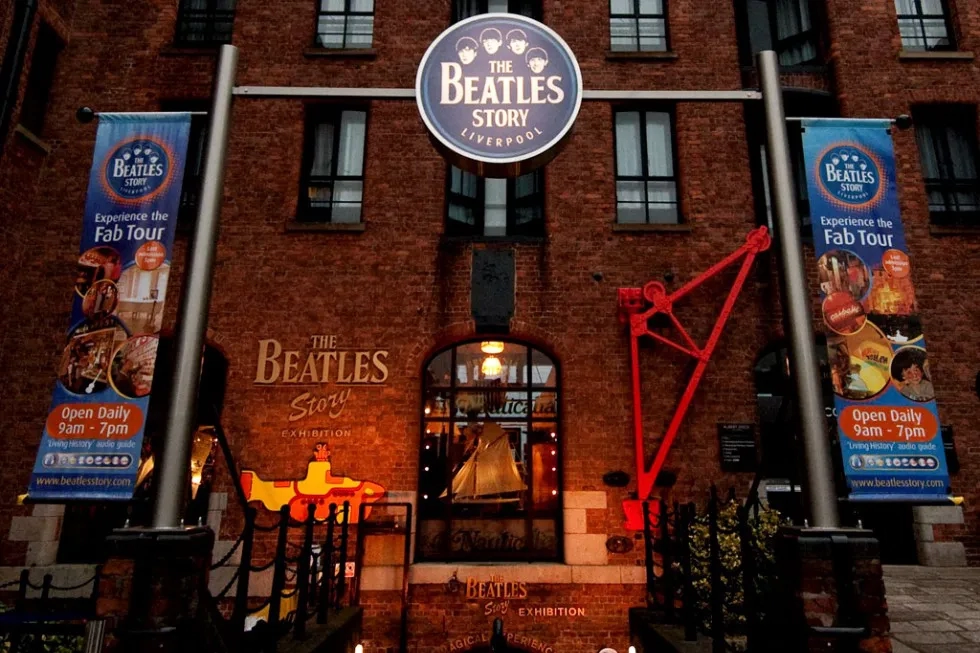 If world pop music ever needs a capital, then the only real candidate lies on the River Mersey in England's northwest -- its residents have had more #1 hits than any other city on Earth. At the Beatles Story, Albert Dock (tel. 0151/709-1963; www.beatlesstory.com) you can follow the lives and music of the Fab Four, who -- and this may be hard for younger readers to believe -- were even bigger than Justin Bieber in their day. Elsewhere on the Beatles trail in the city, tour the childhood homes of Lennon and McCartney (guided tour only; book on tel. 0151/427-7231) before catching a gig at the Cavern Club, 10 Mathew St. (tel. 0151/236-1965; www.cavernclub.org).
Liverpool is also the home of the most famous song in world sport. The "Kop" terraces are named after Spion Kop, a ridge fought over during the Boer War, and the soccer club is owned by the same U.S. group that owns the Boston Red Sox, but the sound of You'll Never Walk Alone, sung by tens of thousands before every game, is 100% Liverpool F.C. You'll need to be quick off the mark to secure tickets -- check www.liverpoolfc.tv.
The Lowdown: For more on the city, point your browser at www.visitliverpool.com. If you can't make it up to Liverpool, London Walks (www.walks.com) runs several weekly guided Beatles walks.
How to Get There: Liverpool Lime St. station has regular connections to rail hubs such as London Euston (130-155 min.) and Manchester Piccadilly (50 min.).
Photo Caption: Beatles Story tour, Albert Dock, Liverpool. Photo by The Mersey Partnership/Visit Liverpool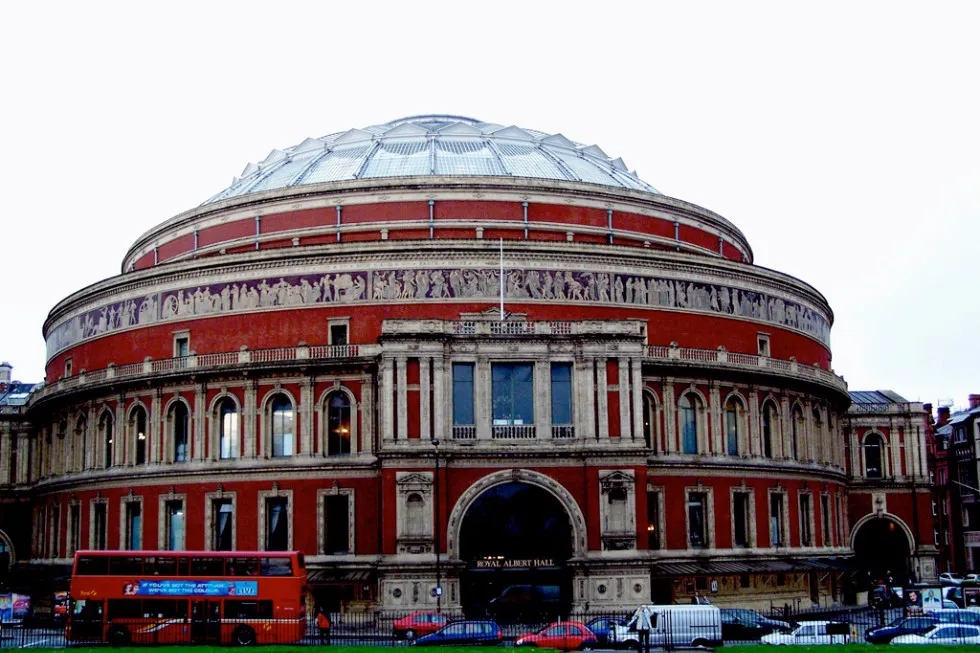 Built by 1871, the Royal Albert Hall's drum-shaped concert hall is the most recognizable building in "Albertopolis" -- the area of Kensington, southwest London, that Queen Victoria's husband Prince Albert dreamed of transforming into a living showcase for the arts and sciences. (He never lived to see his plans realized.) The amphitheatrical auditorium seats 5,500 to hear a program that could range from Metronomy to the Royal Philharmonic Orchestra. Dylan fans will recall that the Royal Albert Hall lent its name to one of his most controversial live albums (which was, in fact, recorded in Manchester), but to most Brits it's best known as the home of the Proms (www.bbc.co.uk/proms), a summer-long festival of classical music.
The Lowdown: Royal Albert Hall, Kensington Gore (tel. 020/7589-8212; www.royalalberthall.com); buy tickets online or by phone. If you can't make an evening performance, 1-hour tours of the front-of-house run hourly most days (£8.50).
How to Get There: Tube to High St. Kensington, Gloucester Road, or South Kensington.
Photo Caption: Royal Albert Hall, London.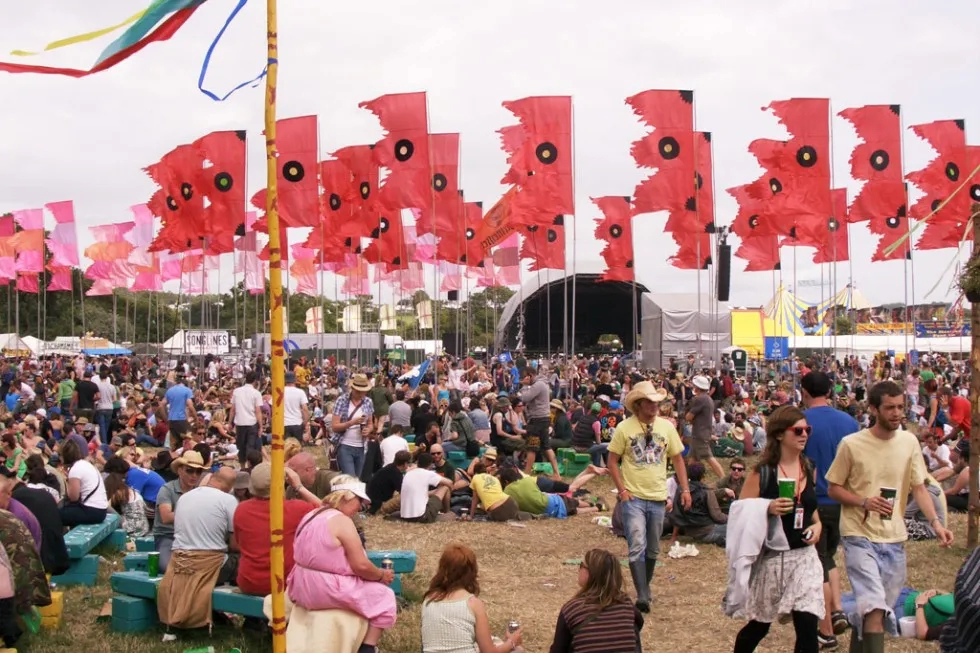 Such are the vagaries of the British climate that you can only be sure it's summer when you smell cut grass, hear cricket being played on the green, and witness crowds of 20-somethings wading through rock-festival mud.
Inaugurated in 1970 with a crowd of just 1,500, Glastonbury (www.glastonburyfestivals.co.uk) has grown into the world's premier music event, attracting almost 150,000 revelers to the rolling terrain of rural Somerset. Although Glasto is traditionally known for showcasing the best upcoming and established indie bands, it is also specializes in fish-out-of-water headliners: Beyoncé and Jay-Z have torn it up in recent summers.
Glastonbury, alas, is taking a year off in 2012. The best substitutes for indie music fans are Reading (www.readingfestival.com) and V (www.vfestival.com). Camp Bestival (for families; www.campbestival.net) and Green Man (for folk music; www.greenman.net) offer slower-paced festival experiences.
The Lowdown: Whatever festival you fancy, be sure to check their website way ahead of time to ascertain ticketing arrangements. The best ones sell out months in advance.
How to Get There: Rent an RV from Wicked Campers (tel. 020/3086-8606; www.wickedcampers.co.uk) and do that festival weekend in style.
Photo Caption: Glastonbury Music Festival. Photo by late night movie/Flickr.com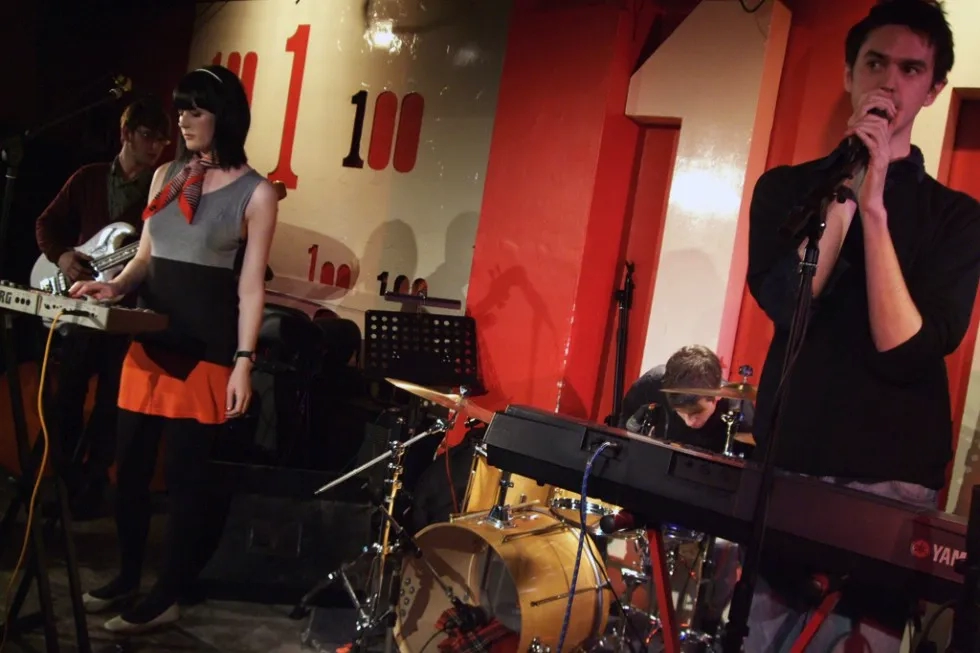 There's no other venue in Britain that holds such significance across so many genres of music as the 100 Club, in London's West End. Opened in 1942, its 350-capacity interior has hosted New Orleans great Louis Armstrong and became a seminal swing-jazz venue. Sixties bands like the Who and the Kinks, and contemporary indie pioneers Oasis, Muse, and Doves, have all hit the stage. It's best remembered, though, for hosting a 1976 punk festival that featured the Sex Pistols, Clash, and Damned, when they were all unsigned hopefuls.
Nights these days cleave to the eclectic, so expect anything from Northern Soul to Stephen Dale Pettit on the roster -- plus your own taste of popular musical history thrown in for free.
The Lowdown: 100 Club, 100 Oxford St. (tel. 020/7636-0933; www.the100club.co.uk). Real music geeks can check out some of London's more obscure, now defunct musical landmarks at www.derelictlondon.com/id71.htm.
How to Get There: Tube to Oxford Circus.
Photo Caption: Pocketbooks performing at 100 Club, London. Photo by marianthipop/Flickr.com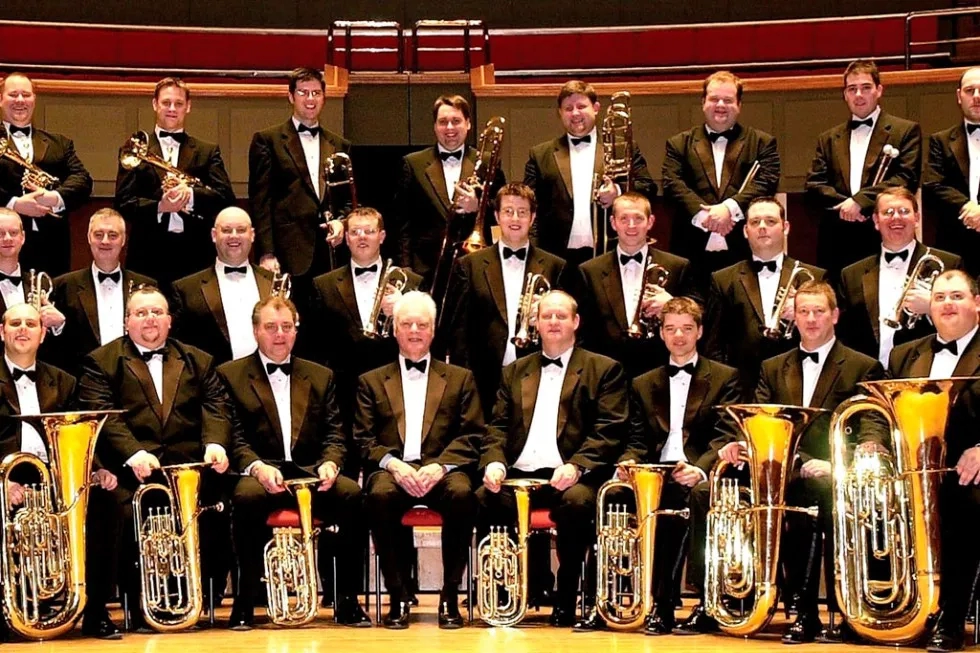 You already know what a brass band is: it's "a musical ensemble comprising a standardized range of brass and percussion instruments," according to Wikipedia. Of course. However, in the industrial English north, the local band was much more than that. Typically linked to a major local employer, it stood at the heart of a small-town community -- and its melancholic sound still seems to conjure up something essential about working life in Victorian England.
The most famous contemporary exponents are the Grimethorpe Colliery Band (www.grimethorpeband.com) and the Fairey Band (www.faireyband.com) from Heaton Chapel, near Manchester. Their reworking of 1980s acid-house tunes on the album Acid Brass attracted fans from slightly beyond the regular brass-band demographic.
The Lowdown: Website www.4barsrest.com is the best source for events and news.
How to Get There: Grimethorpe, the village whose band and story inspired the 1996 movie Brassed Off, is just outside Barnsley, South Yorkshire.
Photo Caption: Members of the Grimethorpe Colliery Band, whose story inspired the film "Brassed Off." Photo by WorthingTheatres/Flickr.com If your musical tastes veer toward the offbeat and the countercultural, this private gallery in London's Shoreditch district might pique your interest. Temporary shows are regularly rotated in and out, so there's no telling what you'll find: Recent exhibitions have covered psychedelic poster artist Nigel Waymouth, the illustrations of Edwyn Collins, and a Syd Barrett (of Pink Floyd fame) retrospective.
The Lowdown: Idea Generation Gallery, 11 Chance St. (tel. 020/7749-6850; gallery.ideageneration.co.uk). If the retro vibe takes hold of you, the vintage clothing stores of Brick Lane are just a 5-minute walk from the gallery door.
How to Get There: Overground train to Shoreditch High St.
Photo Caption: Exhibition at the Idea Generation Gallery, London. Photo by Jade Sibley/Flickr.com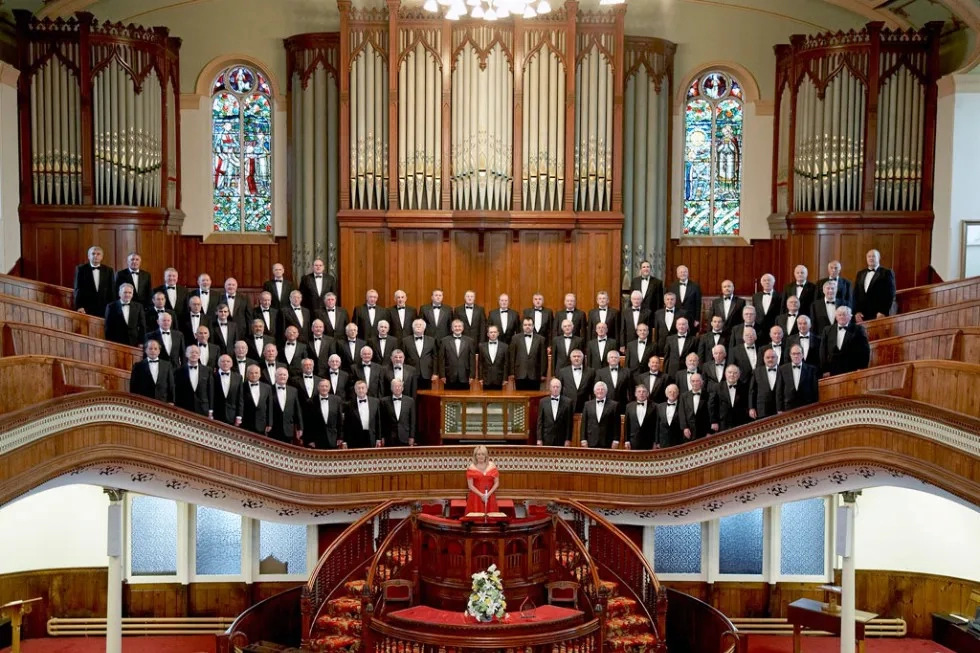 There are few British musical subcultures more intertwined with their surroundings and social history than the Welsh male voice choir. Bred by the camaraderie and drudgery of the 19th-century industrial boom -- coal and iron in the south, slate quarrying in the north -- and nurtured by the same community spirit that kept nonconformist Christianity alive, the choirs remain a part of daily life in towns all over the country.
Many choirs, including Morriston Orpheus (www.morristonorpheus.com), welcome spectators to their rehearsals, which can be the most intimate way to connect with this Welsh tradition. Call ahead to check which days they rehearse.
The Lowdown: Check forthcoming performances and find contact details for Wales's choirs at www.welshassociationmalechoirs.com or www.choirs.org.uk/wales.htm.
How to Get There: Regular trains link London (Paddington station) with South Wales. For North Wales, regular services depart from London (Euston) and Manchester Piccadilly.
Photo Caption: The Morriston Orpheus Choir Tabernacle Chapel, Morriston, South Wales. Photo by Morriston Orpheus Choir.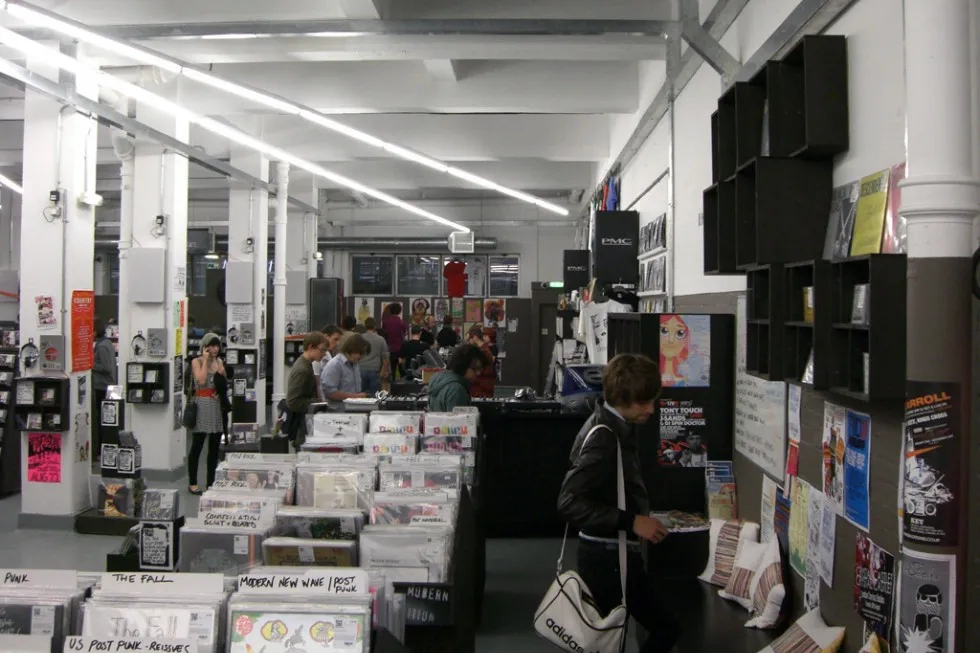 Vinyl has survived the CD and the iPod and the Internet, and to the musical purist -- particularly if guitar-based music is your thing -- there's still nothing that sounds quite like it. The independent store is still the best place to connect with grass-roots British music and niche record labels -- plus, where else are you going to find that limited-edition band T-shirt?
Although not as common as they once were, Britain still has some great record stores, the best of which (unsurprisingly) are found in cities. London's finest are Sister Ray, 34 Berwick St. (tel. 020/7734-3297; www.sisterray.co.uk), and Rough Trade East, 91 Brick Lane (tel. 020/7392-7788; www.roughtrade.com). In Manchester, visit Piccadilly, 53 Oldham St. (tel. 0161/839-8008; www.piccadillyrecords.com), in the fashionable Northern Quarter. Scotland's best indie store is Avalanche, 5 Grassmarket, Edinburgh (tel. 0131/659-7708; www.avalancherecords.co.uk).
The Lowdown: The record store can still be the best place to find out about local live music, but you should also bookmark Ticketmaster (www.ticketmaster.co.uk) and See Tickets (www.seetickets.com). NME magazine's website (www.nme.com) is the best source of independent UK music news and views.
Photo Caption: Inside the record store Rough Trade East on Brick Lane, London. Photo by desktop/Flickr.com
Britain has punched way above its weight in the history of Western music -- and has the heritage sites to prove it. There are museums dedicated to composers, including London's Handel House, 25 Brook St. (tel. 020/7495-1685; www.handelhouse.org), and unique collections of historical instruments, such as at the Horniman Museum, 100 London Rd., Forest Hill, London (tel. 020/8699-1872; www.horniman.ac.uk).
These islands have also witnessed some of the weirder moments in musical history: in 1994, former chart-topping duo KLF chose the Scottish island of Jura to Burn a Million Quid. (Google it, seriously -- it was no hoax.)
And isn't just about the past. Dubstep and Grime were born in London's clubland. Every city in the country has a venue worthy of a touring indie band, the best of them perhaps King Tut's Wah Wah Hut (www.kingtuts.co.uk), in Glasgow, Scotland. Arena venues like Wembley (www.wembley.co.uk) and Manchester's MEN (www.men-arena.com) attract the biggest names on UK or world tours.
In the slides that follow, we've selected just a few of the most melodious experiences to be had in these musical islands.
Photo Caption: Union Jack guitar case and Beatles tributes along the wall, Abbey Road, London.
Liverpool is also the home of the most famous song in world sport. The "Kop" terraces are named after Spion Kop, a ridge fought over during the Boer War, and the soccer club is owned by the same U.S. group that owns the Boston Red Sox, but the sound of You'll Never Walk Alone, sung by tens of thousands before every game, is 100% Liverpool F.C. You'll need to be quick off the mark to secure tickets -- check www.liverpoolfc.tv.
The Lowdown: For more on the city, point your browser at www.visitliverpool.com. If you can't make it up to Liverpool, London Walks (www.walks.com) runs several weekly guided Beatles walks.
How to Get There: Liverpool Lime St. station has regular connections to rail hubs such as London Euston (130-155 min.) and Manchester Piccadilly (50 min.).
Photo Caption: Beatles Story tour, Albert Dock, Liverpool. Photo by The Mersey Partnership/Visit Liverpool
The Lowdown: Royal Albert Hall, Kensington Gore (tel. 020/7589-8212; www.royalalberthall.com); buy tickets online or by phone. If you can't make an evening performance, 1-hour tours of the front-of-house run hourly most days (£8.50).
How to Get There: Tube to High St. Kensington, Gloucester Road, or South Kensington.
Photo Caption: Royal Albert Hall, London.
Inaugurated in 1970 with a crowd of just 1,500, Glastonbury (www.glastonburyfestivals.co.uk) has grown into the world's premier music event, attracting almost 150,000 revelers to the rolling terrain of rural Somerset. Although Glasto is traditionally known for showcasing the best upcoming and established indie bands, it is also specializes in fish-out-of-water headliners: Beyoncé and Jay-Z have torn it up in recent summers.
Glastonbury, alas, is taking a year off in 2012. The best substitutes for indie music fans are Reading (www.readingfestival.com) and V (www.vfestival.com). Camp Bestival (for families; www.campbestival.net) and Green Man (for folk music; www.greenman.net) offer slower-paced festival experiences.
The Lowdown: Whatever festival you fancy, be sure to check their website way ahead of time to ascertain ticketing arrangements. The best ones sell out months in advance.
How to Get There: Rent an RV from Wicked Campers (tel. 020/3086-8606; www.wickedcampers.co.uk) and do that festival weekend in style.
Photo Caption: Glastonbury Music Festival. Photo by late night movie/Flickr.com
Nights these days cleave to the eclectic, so expect anything from Northern Soul to Stephen Dale Pettit on the roster -- plus your own taste of popular musical history thrown in for free.
The Lowdown: 100 Club, 100 Oxford St. (tel. 020/7636-0933; www.the100club.co.uk). Real music geeks can check out some of London's more obscure, now defunct musical landmarks at www.derelictlondon.com/id71.htm.
How to Get There: Tube to Oxford Circus.
Photo Caption: Pocketbooks performing at 100 Club, London. Photo by marianthipop/Flickr.com
The most famous contemporary exponents are the Grimethorpe Colliery Band (www.grimethorpeband.com) and the Fairey Band (www.faireyband.com) from Heaton Chapel, near Manchester. Their reworking of 1980s acid-house tunes on the album Acid Brass attracted fans from slightly beyond the regular brass-band demographic.
The Lowdown: Website www.4barsrest.com is the best source for events and news.
How to Get There: Grimethorpe, the village whose band and story inspired the 1996 movie Brassed Off, is just outside Barnsley, South Yorkshire.
Photo Caption: Members of the Grimethorpe Colliery Band, whose story inspired the film "Brassed Off." Photo by WorthingTheatres/Flickr.com
The Lowdown: Idea Generation Gallery, 11 Chance St. (tel. 020/7749-6850; gallery.ideageneration.co.uk). If the retro vibe takes hold of you, the vintage clothing stores of Brick Lane are just a 5-minute walk from the gallery door.
How to Get There: Overground train to Shoreditch High St.
Photo Caption: Exhibition at the Idea Generation Gallery, London. Photo by Jade Sibley/Flickr.com
Many choirs, including Morriston Orpheus (www.morristonorpheus.com), welcome spectators to their rehearsals, which can be the most intimate way to connect with this Welsh tradition. Call ahead to check which days they rehearse.
The Lowdown: Check forthcoming performances and find contact details for Wales's choirs at www.welshassociationmalechoirs.com or www.choirs.org.uk/wales.htm.
How to Get There: Regular trains link London (Paddington station) with South Wales. For North Wales, regular services depart from London (Euston) and Manchester Piccadilly.
Photo Caption: The Morriston Orpheus Choir Tabernacle Chapel, Morriston, South Wales. Photo by Morriston Orpheus Choir.
Although not as common as they once were, Britain still has some great record stores, the best of which (unsurprisingly) are found in cities. London's finest are Sister Ray, 34 Berwick St. (tel. 020/7734-3297; www.sisterray.co.uk), and Rough Trade East, 91 Brick Lane (tel. 020/7392-7788; www.roughtrade.com). In Manchester, visit Piccadilly, 53 Oldham St. (tel. 0161/839-8008; www.piccadillyrecords.com), in the fashionable Northern Quarter. Scotland's best indie store is Avalanche, 5 Grassmarket, Edinburgh (tel. 0131/659-7708; www.avalancherecords.co.uk).
The Lowdown: The record store can still be the best place to find out about local live music, but you should also bookmark Ticketmaster (www.ticketmaster.co.uk) and See Tickets (www.seetickets.com). NME magazine's website (www.nme.com) is the best source of independent UK music news and views.
Photo Caption: Inside the record store Rough Trade East on Brick Lane, London. Photo by desktop/Flickr.com