

alcaide
By Jeremy Head
Sometimes a city becomes famous simply for its beauty and romantic aura. Seville (Sevilla in Spanish), the capital of Andalusia, is such a place. Despite its sultry summer heat, it remains one of Spain's most charming cities. If you're only going to see a few Spanish cities in your lifetime, make Seville one of them -- but know these five things first.
Photo Caption: Orange trees against a colorful wall in Seville, Spain.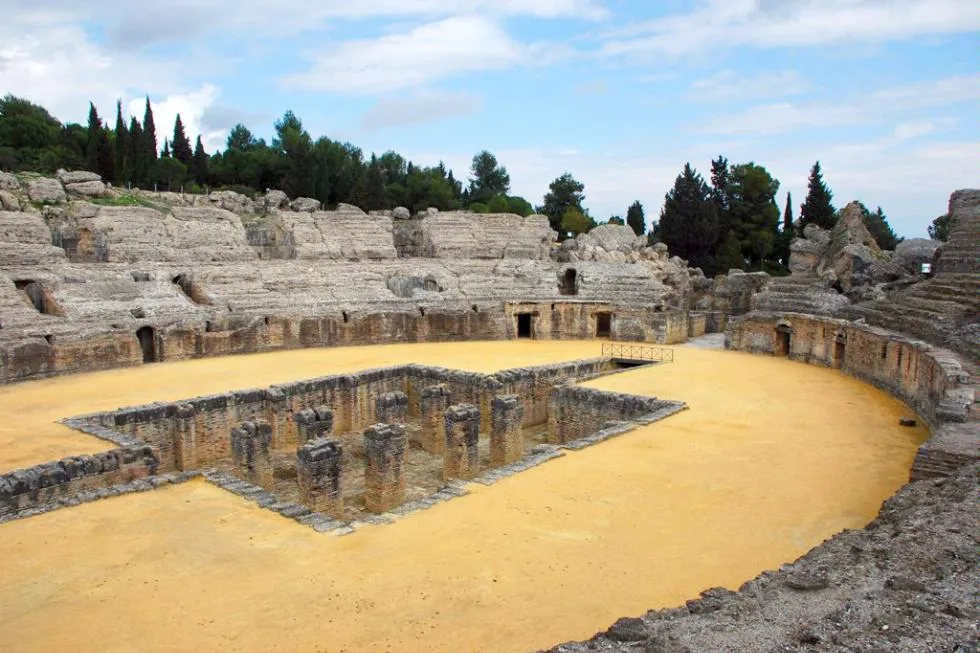 It's also a province. While you'd be mad not to devote several days to exploring this most beguiling and beautiful of cities, if you have more time, explore the towns and countryside nearby, too. The awesome Roman remains at Italica include a vast and surprisingly well preserved amphitheatre, while Carmona is a delightful old walled town with ancient churches and a parador hotel perched on a ravine overlooking the vast plain below. There's also a series of Via Verde cycling and walking trails along disused railway lines, offering the chance to discover wonderful countryside views and unspoilt small towns and villages.
Photo Caption: The ruins of the Roman ampitheater in Italica, Spain.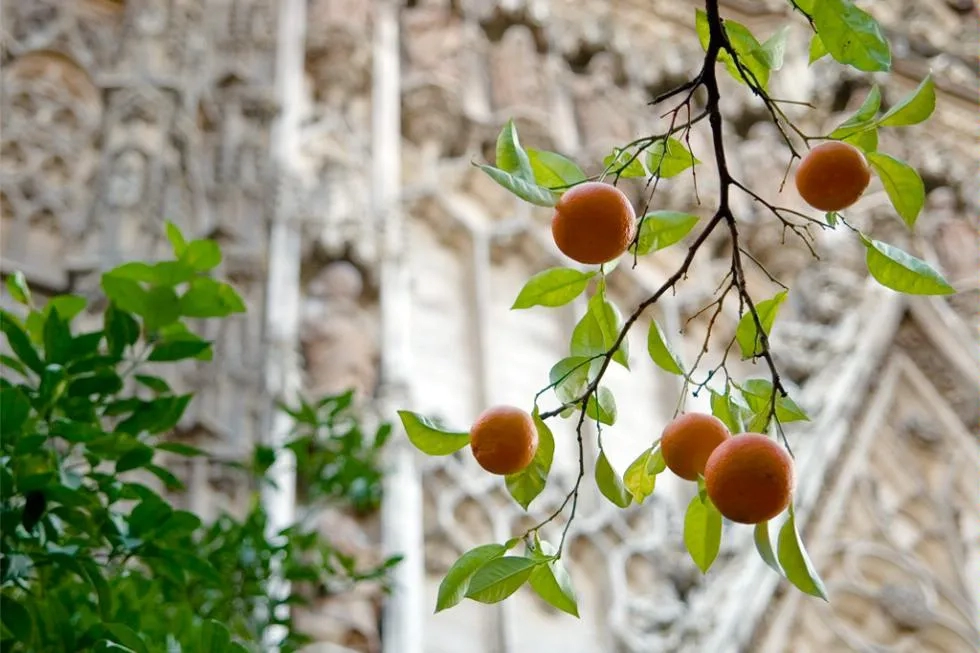 Arrive here in spring and the air is pungent with the scent of orange blossom which perfumes the warm air adding a veneer of wonderful romance to the atmosphere. Come winter those same orange trees are heavy with fruit. But don't even think of plucking them. Seville oranges are renowned for their bitterness -- indeed Brits consume the vast majority of the local bitter oranges in marmalade. But the fruit that ripens on the ancient city trees is more bitter still. Whilst their blossom in spring smells sweet and sultry, these older, unkempt trees produce extremely bitter the fruit. A local company collects the oranges as they fall from the trees and uses them to make essences for shower gels and soap.
Photo Caption: Oranges growing near Seville Cathedral in Seville, Spain.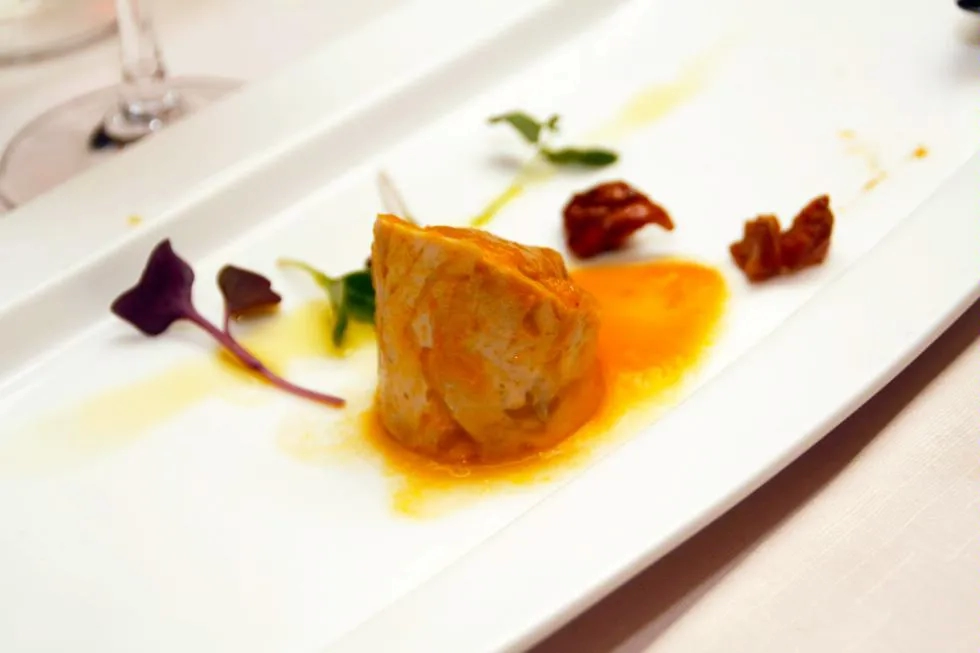 France and Italy usually get the mentions when it comes to fine dining in Europe. And when critics do talk about Spain, the brouhaha surrounding uberchef Ferran Adria tends to mean regions outside his Catalunya get overlooked. But Seville is home to the prestigious Alabardero cookery school (Escuela Superior de Hosteleria de Sevilla) which runs acclaimed restaurants in Seville, locations elsewhere in Spain and Washington, D.C. This ensures a ready supply of creative local chefs ready to set up on their own and create sensational gastronomy. Just a few of examples: Salvador Rojo at his eponymous restaurant (Avenida Manuel Siurot 33; tel. +34954229725); Michelin-starred Julio Fernandez at Abantal (Alcade Jose de la Bandera 7; tel. +34954540000) and José Carabias, Miguel Díaz and Ernesto Malasaña at Gastromium (Ramon Carande 12; tel. +34954625555). You can eat at the Alabardero (Zaragoza, 20; tel. +34954502721), too.
Photo Caption: The capón at the Taberna del Alabardero in Seville, Spain.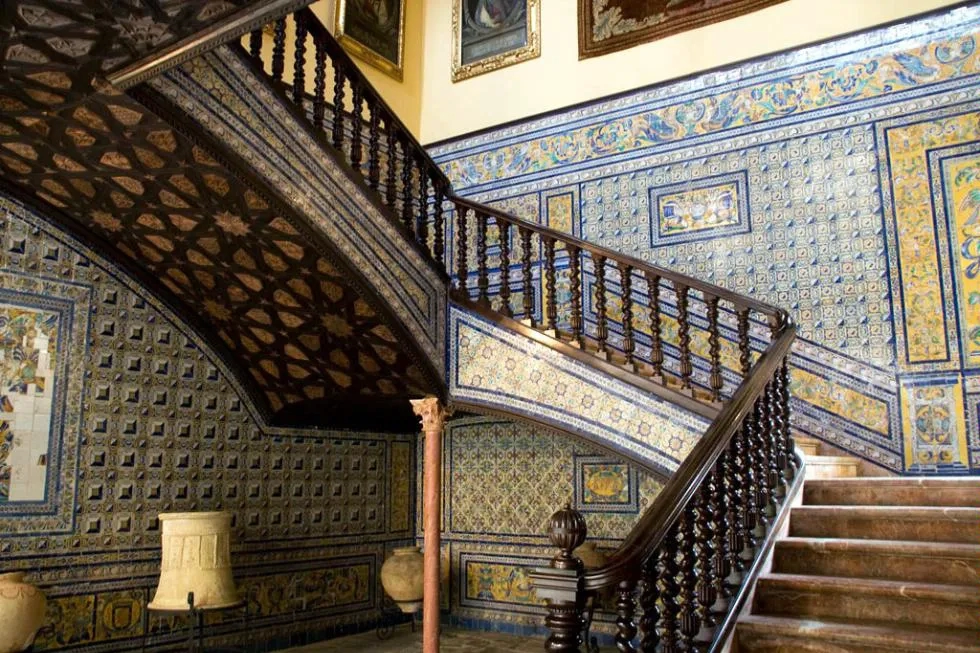 People tend to associate Andalusia with the Moors -- the Muslim invaders from North Africa that gave this region of Spain its name (Al Andalus), and left their indelible mark in the architecture, the language, the food and the agriculture. But before the Moors, came the Romans, naming the city Hispalis. You'll find reminders of the Roman influence all over the place once you start to look for them -- random reused pillars in houses and churches and amazing mosaics in the Casa de la Condesa de Lebrija and the Archeological museum. The most recent addition is remains uncovered during the construction of the city's ultra-modern Metropol Parasol a vast, upturned-sieve of concrete and white painted plywood that dominates one
of the main squares. In the basement and in complete contrast to these curvaceous, white modernistic lines you'll find a new museum (Antiquarium, Plaza de la Encarnación) showcasing the remains of houses, streets and mosaics.
People tend to associate Andalusia with the Moors -- the Muslim invaders from North Africa that gave this region of Spain its name (Al Andalus), and left their indelible mark in the architecture, the language, the food and the agriculture. But before the Moors, came the Romans, naming the city Hispalis. You'll find reminders of the Roman influence all over the place once you start to look for them -- random reused pillars in houses and churches and amazing mosaics in the Casa de la Condesa de Lebrija and the Archeological museum. The most recent addition is remains uncovered during the construction of the city's ultra-modern Metropol Parasol a vast, upturned-sieve of concrete and white painted plywood that dominates one
of the main squares. In the basement and in complete contrast to these curvaceous, white modernistic lines you'll find a new museum (Antiquarium, Plaza de la Encarnación) showcasing the remains of houses, streets and mosaics.
Photo Caption: Casa de la Condesa Lebrija in Seville, Spain.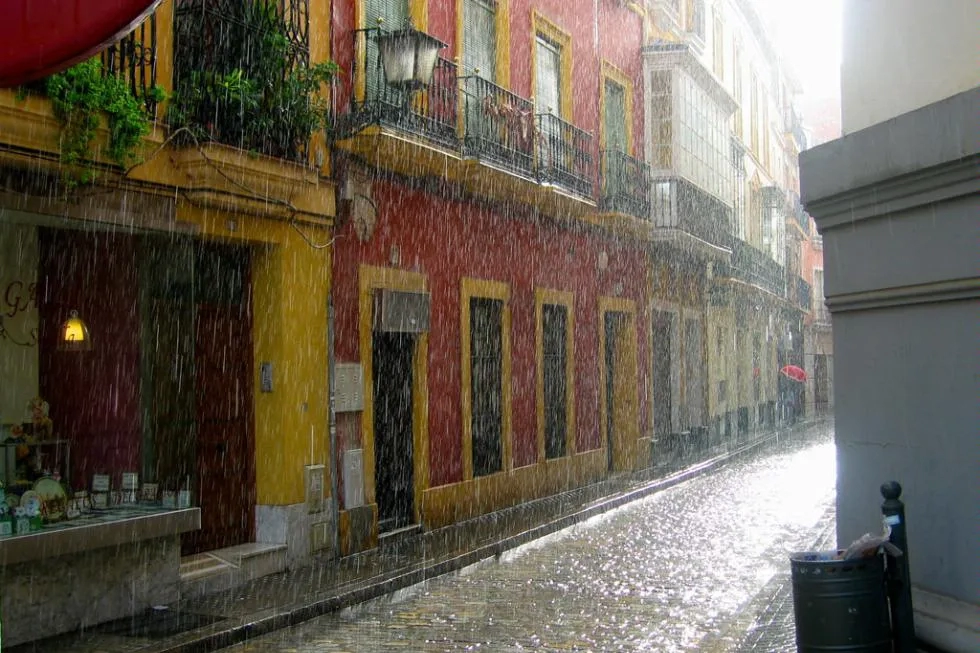
Sometimes a city becomes famous simply for its beauty and romantic aura. Seville (Sevilla in Spanish), the capital of Andalusia, is such a place. Despite its sultry summer heat, it remains one of Spain's most charming cities. If you're only going to see a few Spanish cities in your lifetime, make Seville one of them -- but know these five things first.
Photo Caption: Orange trees against a colorful wall in Seville, Spain.
Photo Caption: The ruins of the Roman ampitheater in Italica, Spain.
Photo Caption: Oranges growing near Seville Cathedral in Seville, Spain.
Photo Caption: The capón at the Taberna del Alabardero in Seville, Spain.
Photo Caption: Casa de la Condesa Lebrija in Seville, Spain.