

Frommers.com Community
By Margaret Childs
Austrians are very proud of their homeland. The government constantly invests in making the cities and countryside more beautiful, expanding parkland, planting flowers along a highway or replacing cement sidewalks with cobblestone. Traveling through Austria, one notices a strong lean to green. Strict hunting laws, organic farming, wind and water energy and no Atomic reactors are all indicators of the Austrian attitude towards nature. While they tame the mountainsides into slopes and build hotels by the beautiful lakesides, preserving nature is central to planning.
Photo Caption: Traditional boatman along the Hallstättersee, in Hallstatt.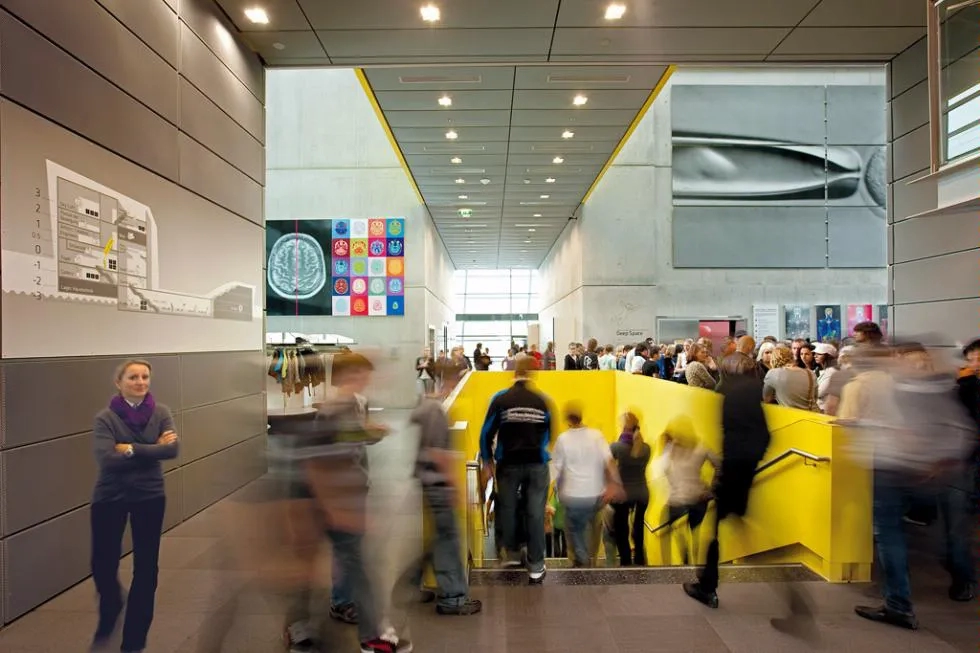 The capital of Upper Austria is under-loved. Linz was heavily industrialized in the postwar period and has a reputation for being boring. But don't be fooled. Not only was Linz the European Capital of Culture in 2009, it is also the home of the Ars Electronica Center. Since 1987 the Prix Ars Electronica has been an interdisciplinary platform for anyone who uses their computer as a universal creative tool. The city has become a gathering place for technology and modern architecture buffs.
Photo Caption: The spacious lobby is a hub connecting the new Ars Electronica Center's labs, ateliers and exhibition spaces.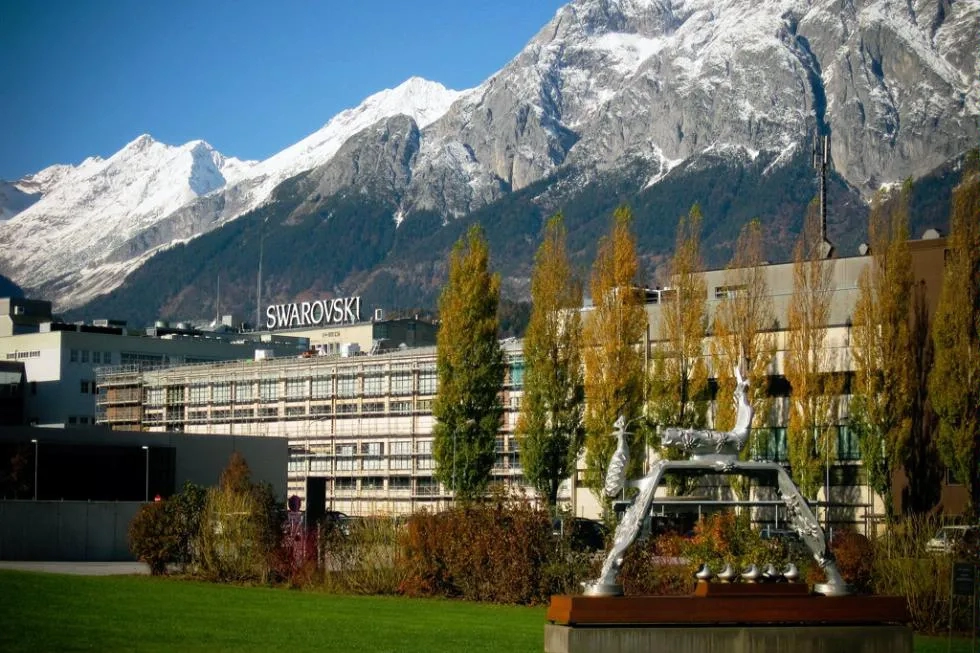 The tiny nation of eight million people is home to a number of auspicious brands and innovations. The crystal jewelry and figurine giant Swarovski has carved its way into the heart of lovers of beautiful things across the world. In 1987, Austrian Dietrich Mateschitz created Red Bull, the Thai-inspired concoction that would grow to be the most popular energy drink worldwide. The succulent wafers Manner Schnitten are an Austrian invention, but perhaps the picture of St. Stephan's Cathedral on the package is a dead giveaway. The rimless sunglasses that weigh next to nothing come from Silhouette, a luxury brand that has set itself apart from other innovative opticians. It is perhaps not so surprising that the idea for Carving skis came from an Austrian, Reinhard Fischer.
Photo Caption: Swarovski factory in Wattens, Innsbruck.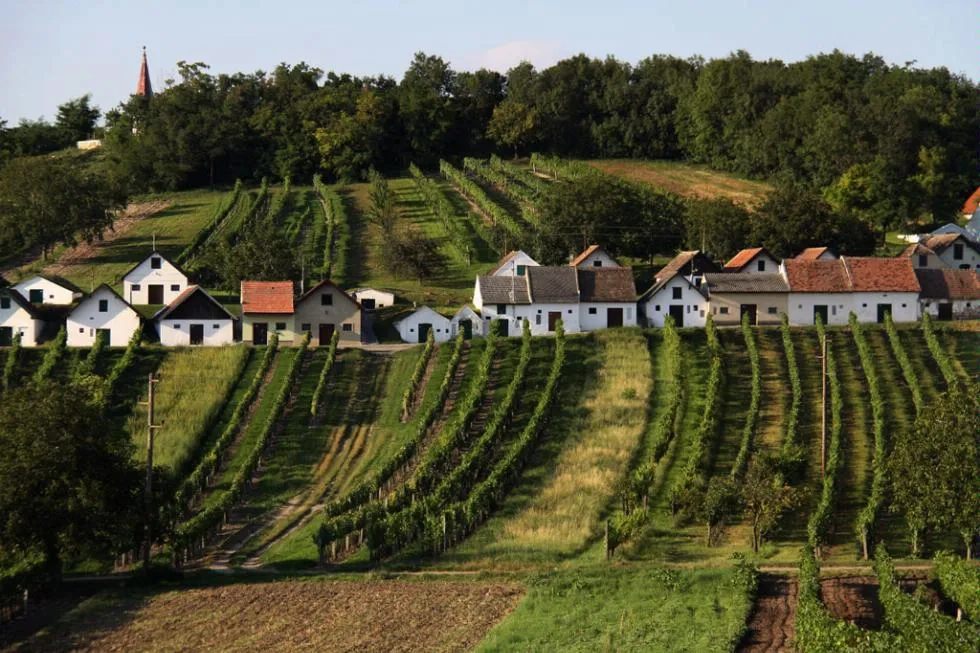 The country has four major wine regions. Beginning in the north along the Danube, Lower Austria is home to the famous Grüner Veltliner and perhaps most revered for the DAC branding for the Veltliner from the Weinviertel region. To the south and east of Vienna, red wines like Blaufränkisch and Zweigelt thrive around Carnuntum and St. Laurent. South of Vienna, on the Hungarian border, besides wine, Burgenland has more sunny days than any other part of Austria. Styria boasts some great white wines, but is mostly famous for apples and pumpkinseed oil. Each region is easily reachable by train, so no need for a designated driver.
Photo Caption: Winery in Galgenberg, Austria.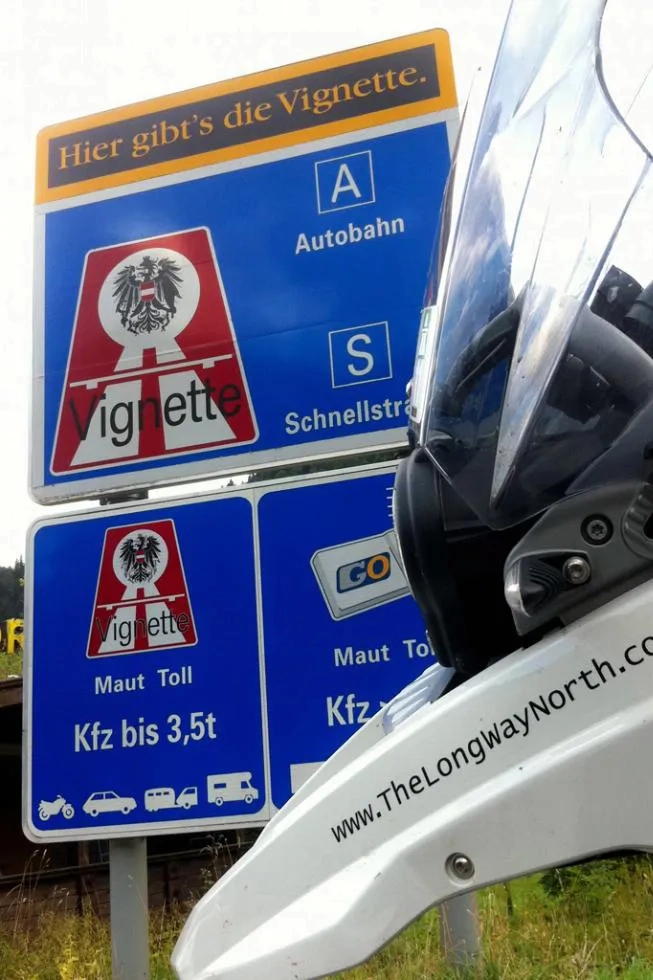 The Vignette is a small sticker that makes a big difference: It covers the toll for using all highways in Austria. Available at most gas stations near the Autobahn or in Tabacco shops (Tabak Trafik), the Vignette for ten days costs ¬7,90 and for 2 months ¬23,40. There are no classic toll collecting booths, but if you get caught without a Vignette the fine is ¬120, so do get one before driving Austria's highways. Most rental companies include the sticker with the car, but it's always good to make sure.
Photo Caption: It's necessary to buy a toll sticker -- the Vignette -- before using Austria's highways.
Austrians are very proud of their homeland. The government constantly invests in making the cities and countryside more beautiful, expanding parkland, planting flowers along a highway or replacing cement sidewalks with cobblestone. Traveling through Austria, one notices a strong lean to green. Strict hunting laws, organic farming, wind and water energy and no Atomic reactors are all indicators of the Austrian attitude towards nature. While they tame the mountainsides into slopes and build hotels by the beautiful lakesides, preserving nature is central to planning.
Photo Caption: Traditional boatman along the Hallstättersee, in Hallstatt.
Photo Caption: The spacious lobby is a hub connecting the new Ars Electronica Center's labs, ateliers and exhibition spaces.
Photo Caption: Swarovski factory in Wattens, Innsbruck.
Photo Caption: Winery in Galgenberg, Austria.
Photo Caption: It's necessary to buy a toll sticker -- the Vignette -- before using Austria's highways.