

derek-and-edith
By Christine Delsol
Over the past decade or so, the Maya Riviera has undergone a metamorphosis from a string of tranquil fishing villages into a teeming tourist mecca rivaling Cancún. While the pace has leveled off, it's a different place every time I return. Here are five things you may not notice amid the transformation.
Photo Caption: Snorkeling at Xel-Ha in Mexico.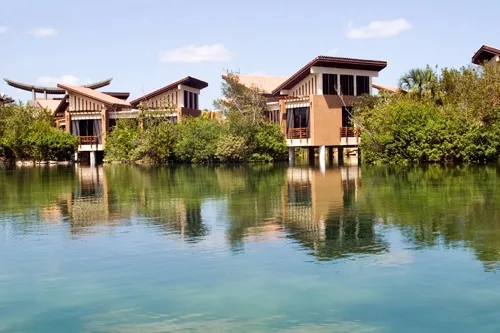 The luxurious, 1,600-acre Mayakobá (www.mayakoba.com), north of Playa del Carmen, was designed to protect native mangroves, jungle, and sand dunes. Its designers studied the underground water flow to create a natural chain of canals, transplanted trees rather than removing them, and planted new mangroves -- the land now hosts 25 more species of birds than before. Hacienda Tres Ríos (www.haciendatresrios.com), also to the north, proves that "eco-conscious all-inclusive" doesn't have to be an oxymoron. The resort, a result of two years of environmental planning, was built on stilts on a bed of permeable rock to ensure free flow of water. It recycles desalinated seawater, uses infrared film between windowpanes to limit the need for air conditioning, provides all-natural toiletries, and maintains a 4,000-plant nursery that includes endangered and protected species.
Close to a dozen other resorts have earned Green Globe certification for sustainable practices. Out of necessity, nearly all the Costa Maya's small properties employ sustainable practices -- most are off the grid. Balamkú Inn on the Beach (www.balamku.com) is an outstanding example, deriving 24-hour power from sun and wind without using a generator, collecting rainwater, recycling wastewater to nourish the wetlands, and using a composting waste system instead of septic tanks.
Photo Caption: The Mayakoba development is surrounded by healthy mangroves and lagoons.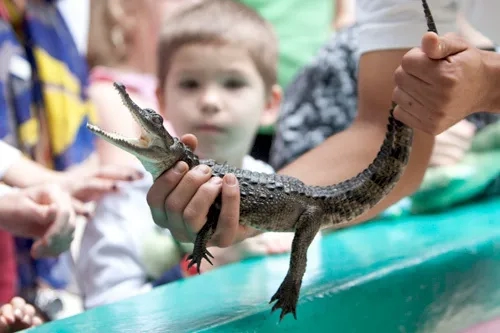 The Caribbean isn't known as an intellectual destination, but when fun in the sun wears thin, culture vultures have recourse up and down the coast. Just north of Puerto Morelos, CrocoCun (www.crococunzoo.com) is an animal sanctuary disguised as a 1950s roadside attraction, and a guided tour with one of its volunteer veterinary students is a course in Yucatecan Native Fauna 101 -- including, naturally, cute (and touchable) baby crocodiles and fearsome adults. Puerto Aventuras is more a gated condo development than a town, but it harbors the region's only marine museum. Museo Sub-Aquatico CEDAM (www.puertoaventuras.com/services.html) displays items recovered from a Cuban ship that sank nearby in the 18th century, Maya offerings from local cenotes (sinkholes), artifacts from nearby ruins, and vintage diving gear.
Xcaret, monarch of the coast's attractions, now houses the enchanting folk art museum -- one of Mexico's best -- that began life in Cancún. It's ensconced in the park's Hacienda Henequenera (https://www.xcaret.com/hacienda-henequenera), set up as if a family lived there. Changing displays include masks, toys, dolls, pottery and other works. On the Costa Maya, the Fuerte San Felipe Bacalar, built in 1733 to ward off pirates and Maya rebels, is now a small but excellent regional history museum focused on pirates. Venture to Chetumal, the state capital in the south, to see the sophisticated Museo de la Cultura Maya (www.educal.gob.mx), the best museum of Maya culture outside of Mexico City. Its exhibits occupy three floors representing the sacred ceiba tree, which symbolized the Maya's world of the gods, the world of humans, and the underworld.
Photo Caption: Children will love seeing the animals at CrocoCun, outside Puerto Morelos.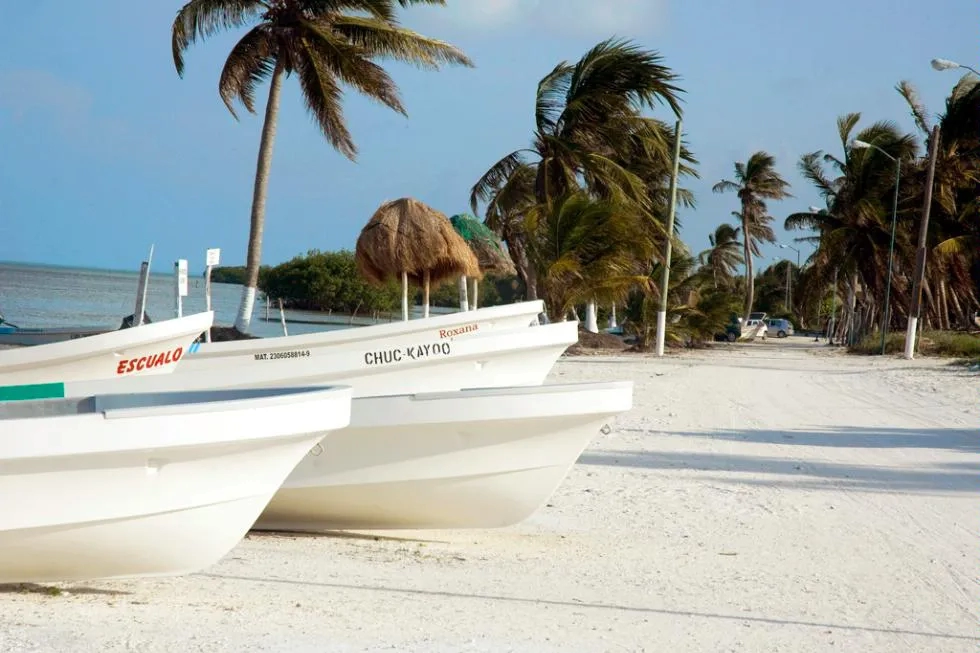 The Maya Riviera's most popular beaches are approaching Cancún-magnitude crowding, and like Cancún's beaches, they have to be shored up with sandbags in a serious hurricane. When high-rise concrete towers start inducing claustrophobia, seek out these secret swaths of sand. Only a small hotel, dive shop and RV park interrupt Paamul's wide, curving beach, where you can walk north or south toward solitude (wear water shoes for scaling rocks). Xpu-ha is surrounded by private homes, condos, and a few all-inclusive resorts, but the incomparable Esencia resort, another hotel, and a few homes shield the long, broad, and simply gorgeous beach. Bahía Soliman's truly white, powdery soft sand, adjacent to wild lagoons, is buffered from open sea by the mouth of the bay, resulting in shallow water perfect for snorkeling (careful not to touch the coral).
A little exploration will land you at one of the few remaining blessedly empty spots on Tulum's gorgeous stretch of beach near the ruins on the Tulum road. In contrast to the Riviera Maya, the Costa Maya is still a trove of solitary beaches; for a real retreat from the world, head for the Sian Ka'an Biosphere Reserve (from the south end) and lay your towel at Tampalam. Puerto Angel, south of Mahahual, and Sapphire Beach in Placer, to the north, are also worthy destinations. And tiny Xcalak's beach is the true end of the Mexican Caribbean world.
Photo Caption: Boats on the beach at Xcalak in Mexico.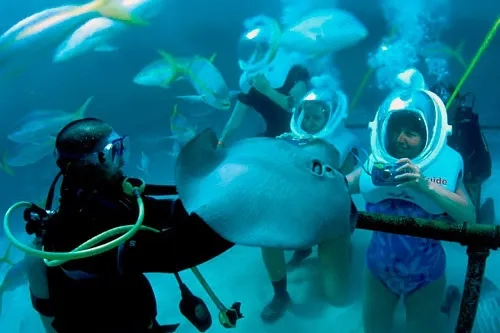 The Maya Riviera's eco-parks don't just provide adventure and amusement; they also preserve acreage that otherwise would have been used for resort development and funnel money into local communities. The vast Sian Ka'an Biosphere Reserve (www.cesiak.org) is the granddaddy here. The hub of visitor activities is the Centro Ecológico Sian Ka'an a few miles inside the Tulum road entrance; the Community Tours Sian Ka'an cooperative (www.siankaantours.org) runs tours out of Muyil, south of Tulum. Xcaret (www.xcaret.com), the coast's biggest and most popular park, combines archaeology, culture, nature, and amusements, all wrapped up in an ecological theme.
Its new spinoff, XPLOR, is an adventure park with a zip line, a four-wheel-drive track, and an underground river ride. For smaller bites of nature and adventure, Hidden Worlds (www.hiddenworlds.com), Río Secreto (www.riosecretotours.com), and Aktun Chen (www.aktunchen.com) -- the latter two run by local ejidos, or cooperatives -- are built around cenotes where you can snorkel, take cave tours, go cavern diving, or launch yourself on a zipline. The centerpiece of another park, Xel-Ha (www.xelha.com.mx), is a lovely jungle lagoon where you can swim, float, and snorkel to the sea.
Photo Caption: Rent "snuba" gear in Xel-Ha.
Over the past decade or so, the Maya Riviera has undergone a metamorphosis from a string of tranquil fishing villages into a teeming tourist mecca rivaling Cancún. While the pace has leveled off, it's a different place every time I return. Here are five things you may not notice amid the transformation.
Photo Caption: Snorkeling at Xel-Ha in Mexico.
Close to a dozen other resorts have earned Green Globe certification for sustainable practices. Out of necessity, nearly all the Costa Maya's small properties employ sustainable practices -- most are off the grid. Balamkú Inn on the Beach (www.balamku.com) is an outstanding example, deriving 24-hour power from sun and wind without using a generator, collecting rainwater, recycling wastewater to nourish the wetlands, and using a composting waste system instead of septic tanks.
Photo Caption: The Mayakoba development is surrounded by healthy mangroves and lagoons.
Xcaret, monarch of the coast's attractions, now houses the enchanting folk art museum -- one of Mexico's best -- that began life in Cancún. It's ensconced in the park's Hacienda Henequenera (https://www.xcaret.com/hacienda-henequenera), set up as if a family lived there. Changing displays include masks, toys, dolls, pottery and other works. On the Costa Maya, the Fuerte San Felipe Bacalar, built in 1733 to ward off pirates and Maya rebels, is now a small but excellent regional history museum focused on pirates. Venture to Chetumal, the state capital in the south, to see the sophisticated Museo de la Cultura Maya (www.educal.gob.mx), the best museum of Maya culture outside of Mexico City. Its exhibits occupy three floors representing the sacred ceiba tree, which symbolized the Maya's world of the gods, the world of humans, and the underworld.
Photo Caption: Children will love seeing the animals at CrocoCun, outside Puerto Morelos.
A little exploration will land you at one of the few remaining blessedly empty spots on Tulum's gorgeous stretch of beach near the ruins on the Tulum road. In contrast to the Riviera Maya, the Costa Maya is still a trove of solitary beaches; for a real retreat from the world, head for the Sian Ka'an Biosphere Reserve (from the south end) and lay your towel at Tampalam. Puerto Angel, south of Mahahual, and Sapphire Beach in Placer, to the north, are also worthy destinations. And tiny Xcalak's beach is the true end of the Mexican Caribbean world.
Photo Caption: Boats on the beach at Xcalak in Mexico.
Its new spinoff, XPLOR, is an adventure park with a zip line, a four-wheel-drive track, and an underground river ride. For smaller bites of nature and adventure, Hidden Worlds (www.hiddenworlds.com), Río Secreto (www.riosecretotours.com), and Aktun Chen (www.aktunchen.com) -- the latter two run by local ejidos, or cooperatives -- are built around cenotes where you can snorkel, take cave tours, go cavern diving, or launch yourself on a zipline. The centerpiece of another park, Xel-Ha (www.xelha.com.mx), is a lovely jungle lagoon where you can swim, float, and snorkel to the sea.
Photo Caption: Rent "snuba" gear in Xel-Ha.