

Ian Skinnari
By Ian Skinnari
Chances are you've heard of Martin Luther. He founded Lutheranism and shaped the modern German language through his translation of the Bible -- as well as influencing art, politics, and even society as a whole. As the 500th anniversary of the Reformation approaches, his life and deeds are being celebrated throughout Germany and the world during the Luther Decade (www.visit-luther.com), and visitors from around the globe are flocking to see the numerous sites associated with him. The German states where he lived and preached have even collectively dubbed themselves Luther Country.
If you're planning a trip through Saxony-Anhalt and Thuringia, chances are you're looking to explore the life of Martin Luther. And when you're intently following in his footsteps through Luther Country, it's easy to lose sight of all the fascinating non-Luther sites that surround you on your journey. The entire region is rich with history, culture, food, music, art, and more, however. These six stops will bring it to life.
Photo Caption: Wittenberg, looking towards the steeple of the University Church (where Martin Luther nailed the 95 theses).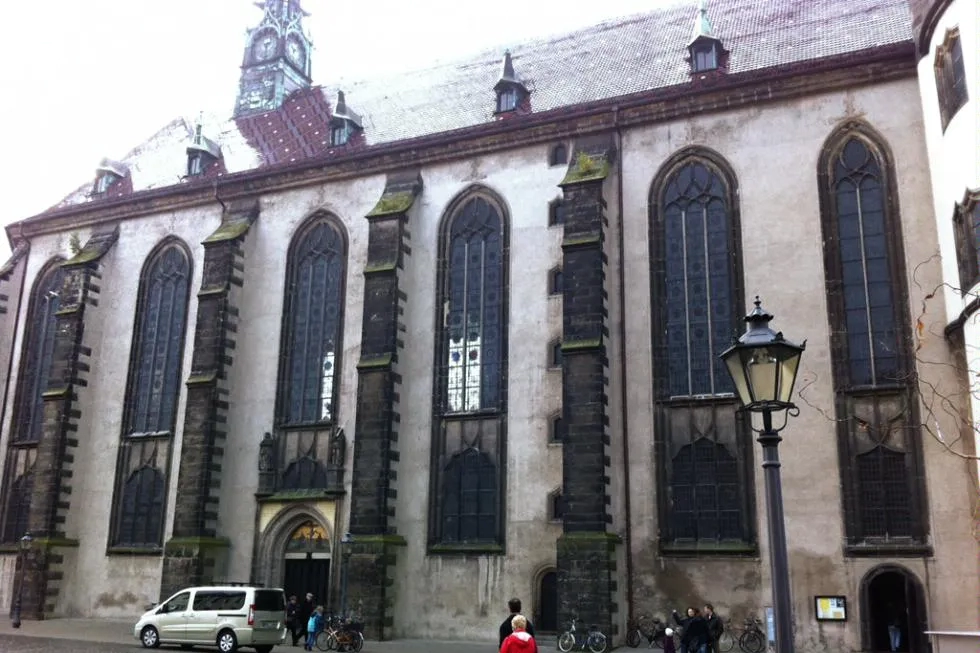 Why you're here: Wittenberg is home of the church. It is here, while Martin Luther was a professor at Wittenberg University, that he nailed his 95 theses to the door of the Castle Church. While the original wooden door itself is long gone, lost to a fire and replaced with a massive iron door, it's still profoundly moving to stand in front of it, at the spot where the seemingly simple actions of one man became such a pivotal moment in the course of history. Inside the church you'll find Martin Luther's grave. You'll also find the Luther House Reformation museum in Wittenberg.
Don't miss: The House of History, Wittenberg's wonderful GDR museum. Its various rooms are set up just as they would have been at particular points in the history of communist East Germany. Toys, appliances, furniture, clothing, electronics, and even a mock nightclub provide a glimpse behind the Iron Curtain in the decades from the end of World War II to the fall of the Wall. Wittenberg is also the home of the Melanchthon House museum, located in a beautiful Renaissance townhouse (set to reopen in mid 2012 with a new annex). Philip Melanchthon was a colleague of Luther and another key figure in the Reformation -- don't feel bad if you haven't heard of him; like many of these sites, he too is often overlooked.
Photo Caption: Exterior University Church, Wittenberg. The door behind the van is where Martin Luther nailed his theses; the iron door replaced the original wooden door.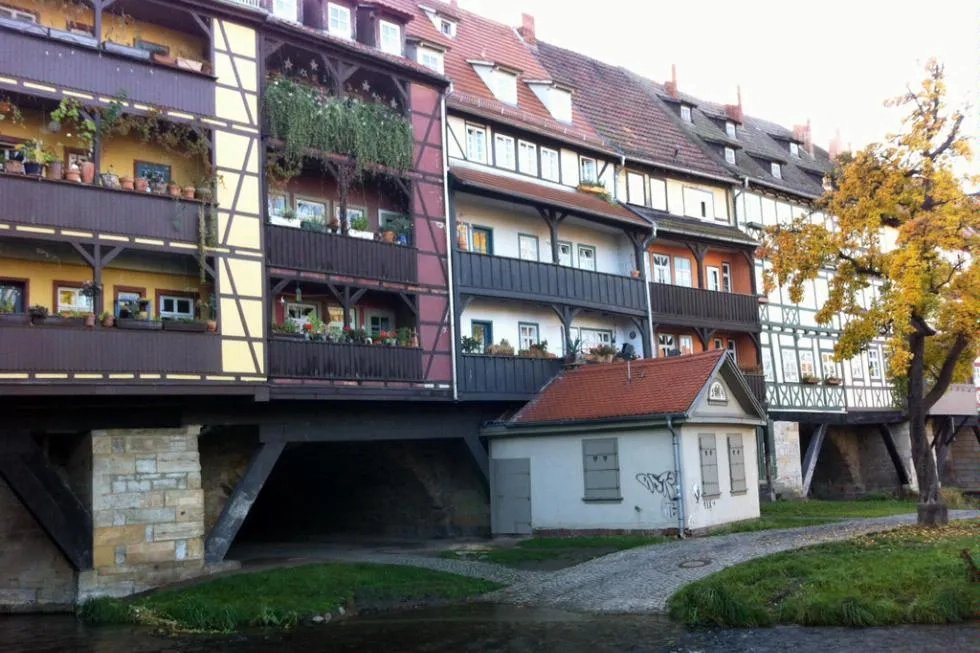 Why you're here: In Erfurt, you'll find the monastery of St. Augustine, where Luther served as a monk, and the church where he was ordained as a priest, St Mary Cathedral.
Don't Miss: The beautiful stone Merchant's Bridge (Krämerbrücke), constructed in 1325 at the site of an even older wooden bridge. Shops line the first level, selling arts and crafts, antiques, and souvenirs, and unlike similar bridges elsewhere in Europe, residents still live above them. You'll also want to stroll around the fantastic medieval core, and visit Erfurt's Old Synagogue, which features an exhibit consisting of treasures unearthed in 1998 (silver coins and intricate jewelry, including an elaborate 14th century marriage ring).
Photo Caption: Merchant's Bridge in Erfurt.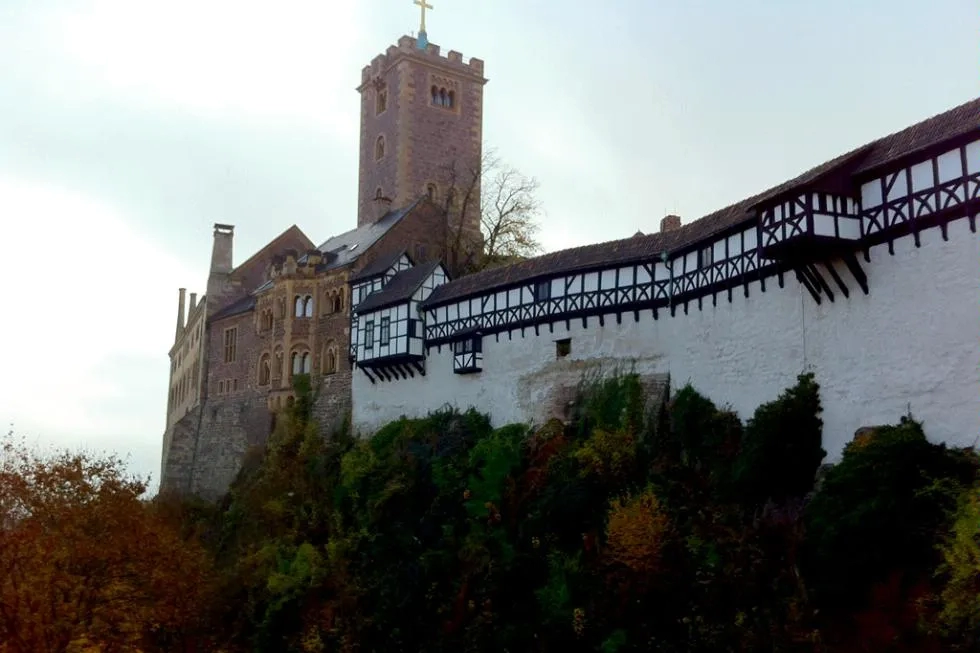 Why you're here: When Luther was excommunicated, he found refuge in Wartburg Castle. Inside the castle you'll find the room where Luther, in the guise of Squire George, translated the New Testament. Pilgrims have been flocking to this room for hundreds of years.
Don't miss: The rest of the castle. Wartburg is breathtaking, inside and out. Enjoy the amazing views, the spectacular Elizabeth Room (with walls and ceilings covered in mother-of-pearl mosaics), the fascinating museum, and the wonderful Singer's Hall (inspiration for Wagner's opera "Tannhäuser and the Singers' Contest at Wartburg").
Photo Caption: Wartburg Castle, Eisenach.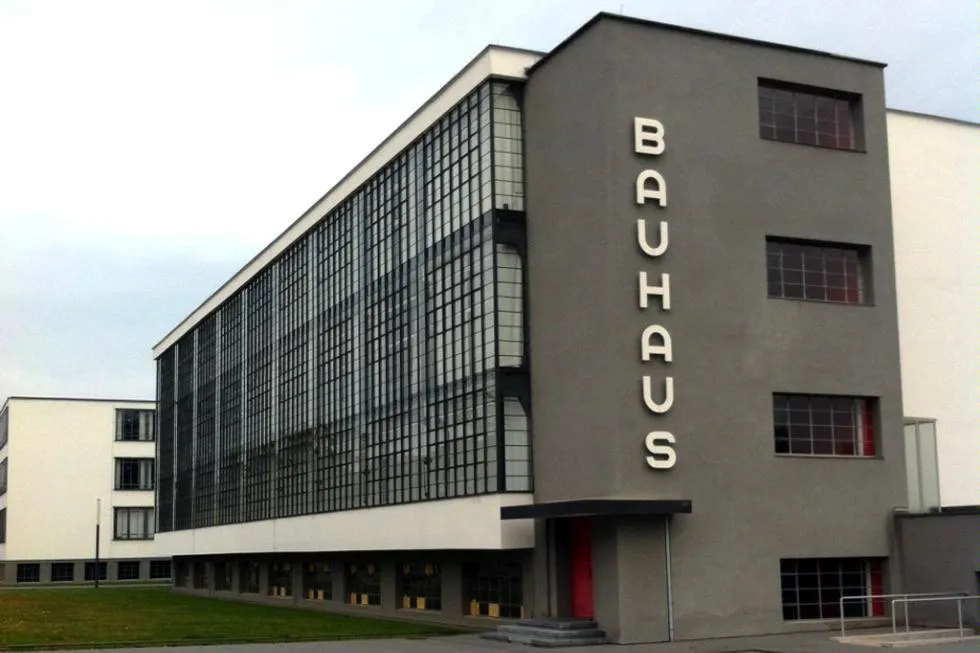 Why you're here: Luther was a frequent visitor to Weimar (a city that embraced the Reformation early on, and where he preached at St. Peter and Paul's church) and Dessau (where he offered Communion to the people on the Thursday before Easter in 1534).
Don't miss: The entire city of Weimar, a cultural gem, is a must-see. Allow yourself enough time to wander around, soaking it all in. These two cities are also great stops for architecture buffs and fans of Walter Gropius: Weimar is home to the Bauhaus museum, and Dessau is the home of the Masters' Houses and the Bauhaus School (which are included on the UNESCO World Heritage List).
Photo Caption: Bauhaus in Dessau.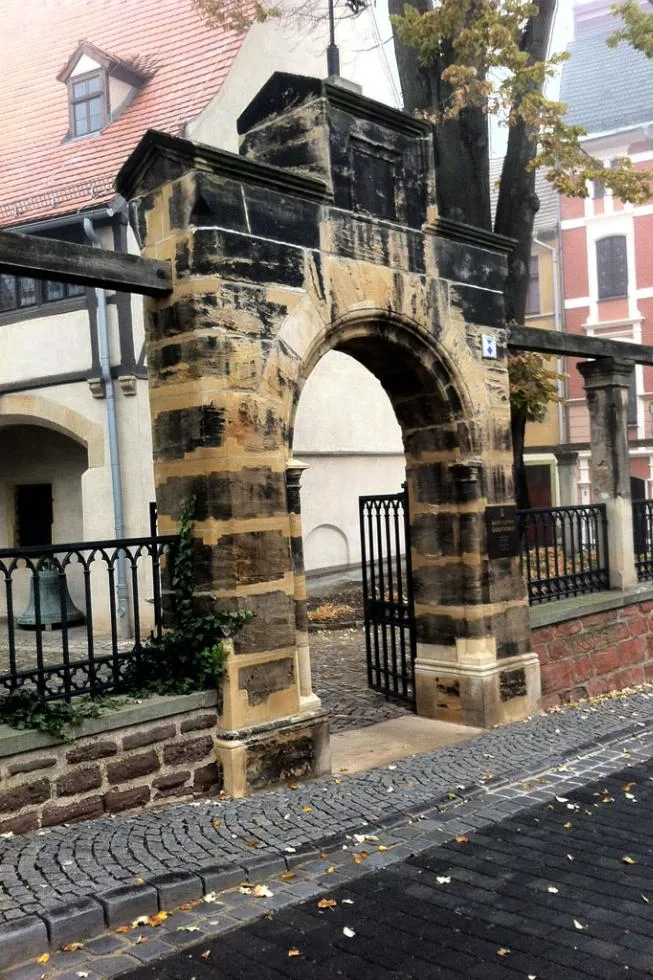 Why you're here: This is the home of the Luther Birth House and the Luther Death House. If you want to get a sense of the man behind the legend, the Luther Birth House is a key stop on your Luther itinerary. You'll also find the church where Martin Luther was baptized, St Peter's and Paul's.
Don't miss: Eisleben's fascinating mining heritage (Martin Luther's father was involved in the mining trade here). From guided tours exploring how the region's mining history shaped the landscape to the mining and smelting exhibits at the Mansfeld Museum to a descent into the Wettelrode visitor mine.
Photo Caption: Entrance the courtyard of the Luther Birth House, Luther Death House, and school for the poor.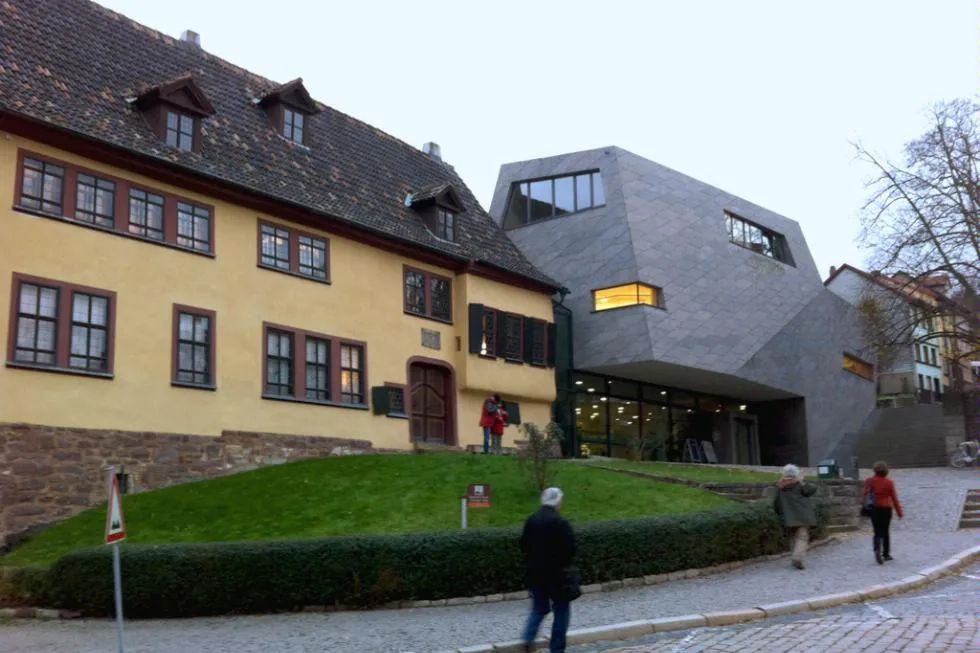
Chances are you've heard of Martin Luther. He founded Lutheranism and shaped the modern German language through his translation of the Bible -- as well as influencing art, politics, and even society as a whole. As the 500th anniversary of the Reformation approaches, his life and deeds are being celebrated throughout Germany and the world during the Luther Decade (www.visit-luther.com), and visitors from around the globe are flocking to see the numerous sites associated with him. The German states where he lived and preached have even collectively dubbed themselves Luther Country.
If you're planning a trip through Saxony-Anhalt and Thuringia, chances are you're looking to explore the life of Martin Luther. And when you're intently following in his footsteps through Luther Country, it's easy to lose sight of all the fascinating non-Luther sites that surround you on your journey. The entire region is rich with history, culture, food, music, art, and more, however. These six stops will bring it to life.
Photo Caption: Wittenberg, looking towards the steeple of the University Church (where Martin Luther nailed the 95 theses).
Don't miss: The House of History, Wittenberg's wonderful GDR museum. Its various rooms are set up just as they would have been at particular points in the history of communist East Germany. Toys, appliances, furniture, clothing, electronics, and even a mock nightclub provide a glimpse behind the Iron Curtain in the decades from the end of World War II to the fall of the Wall. Wittenberg is also the home of the Melanchthon House museum, located in a beautiful Renaissance townhouse (set to reopen in mid 2012 with a new annex). Philip Melanchthon was a colleague of Luther and another key figure in the Reformation -- don't feel bad if you haven't heard of him; like many of these sites, he too is often overlooked.
Photo Caption: Exterior University Church, Wittenberg. The door behind the van is where Martin Luther nailed his theses; the iron door replaced the original wooden door.
Don't Miss: The beautiful stone Merchant's Bridge (Krämerbrücke), constructed in 1325 at the site of an even older wooden bridge. Shops line the first level, selling arts and crafts, antiques, and souvenirs, and unlike similar bridges elsewhere in Europe, residents still live above them. You'll also want to stroll around the fantastic medieval core, and visit Erfurt's Old Synagogue, which features an exhibit consisting of treasures unearthed in 1998 (silver coins and intricate jewelry, including an elaborate 14th century marriage ring).
Photo Caption: Merchant's Bridge in Erfurt.
Don't miss: The rest of the castle. Wartburg is breathtaking, inside and out. Enjoy the amazing views, the spectacular Elizabeth Room (with walls and ceilings covered in mother-of-pearl mosaics), the fascinating museum, and the wonderful Singer's Hall (inspiration for Wagner's opera "Tannhäuser and the Singers' Contest at Wartburg").
Photo Caption: Wartburg Castle, Eisenach.
Don't miss: The entire city of Weimar, a cultural gem, is a must-see. Allow yourself enough time to wander around, soaking it all in. These two cities are also great stops for architecture buffs and fans of Walter Gropius: Weimar is home to the Bauhaus museum, and Dessau is the home of the Masters' Houses and the Bauhaus School (which are included on the UNESCO World Heritage List).
Photo Caption: Bauhaus in Dessau.
Don't miss: Eisleben's fascinating mining heritage (Martin Luther's father was involved in the mining trade here). From guided tours exploring how the region's mining history shaped the landscape to the mining and smelting exhibits at the Mansfeld Museum to a descent into the Wettelrode visitor mine.
Photo Caption: Entrance the courtyard of the Luther Birth House, Luther Death House, and school for the poor.