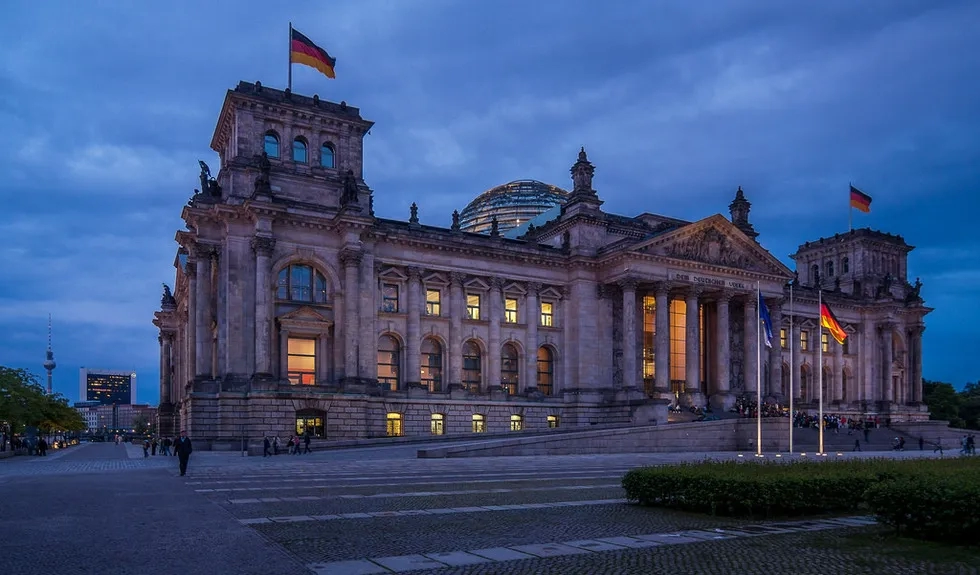

Unknown photographer, Reproduction by Lear 21/Wikimedia Commons
On November 9th, 1989, the Cold War came to a screeching halt with the fall of the Berlin Wall. As the Easter bloc rapidly collapsed, the event signaled a major political shift for the world. It's now 25 years from that world-shaking event, but Berlin is still chock-full of landmarks and symbols of that era just waiting to be rediscovered. Following Germany’s post-WWII history from partition through its reunification, here are 7 ideas for things to see around Berlin, both East and West.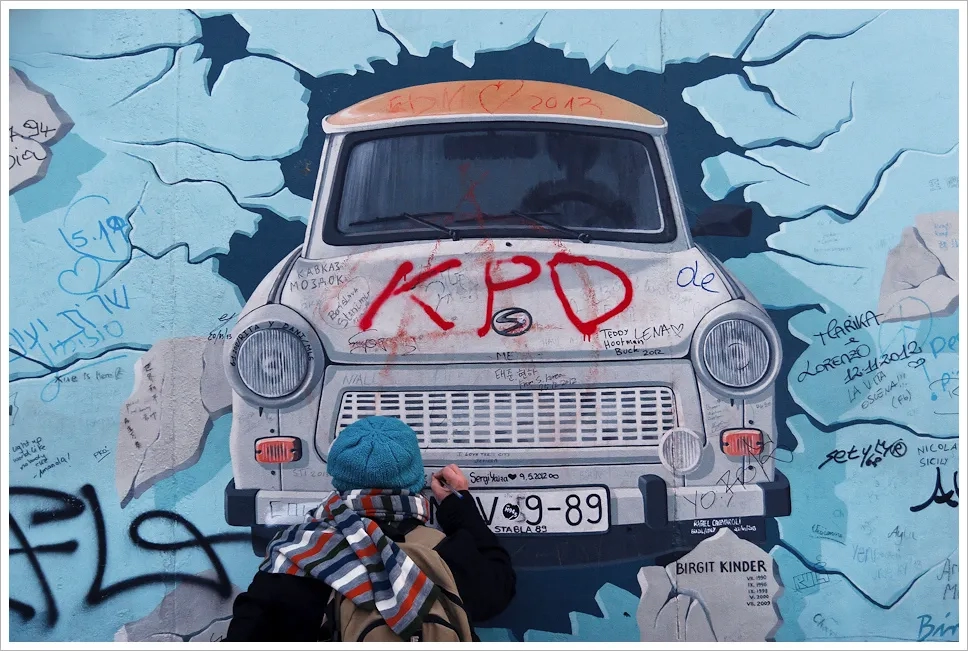 Make a beeline for the longest and best-preserved stretch of the Berlin Wall, near Ostbahnhof station. This open-air gallery displays over 100 politically charged works (painted by artists from 21 countries), which lent the concrete a new raison d’êtrein 1990. Recently given a fresh lick of paint, the murals now serve as a memorial to German freedom. One of the most controversial pieces is Dimitrij Vrubel’s Bruderkuss (Brotherly Kiss), showing former Soviet leader Leonid Brezhnev and East German leader Erich Honecker kissing.
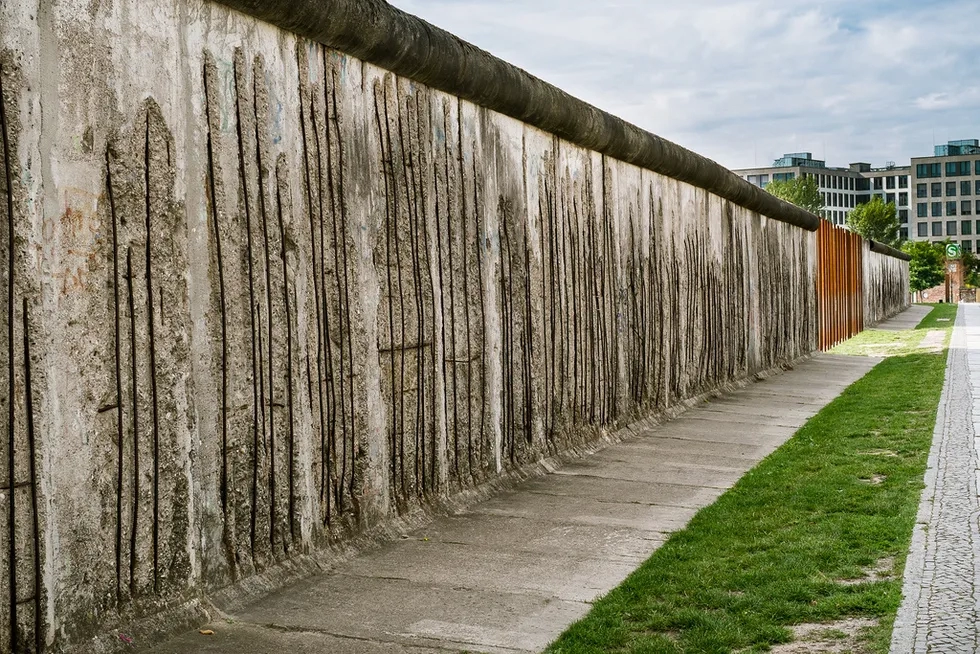 Bernauer Strasse is one of the few places where you can view the Berlin Wall as it really was: crude and unadorned. Commemorating victims of Communist tyranny, this memorial is the only location where you can still see the “death strip,” a narrow corridor between the two walls that was booby-trapped and patrolled by guards. It’s an ugly sight. Right opposite, the Documentation Center takes an in-depth look at the construction of the Wall with text, photos, and film excerpts. Next door, peek inside the oval-shaped Kapelle der Versöhnung (Chapel of Reconciliation), built from rammed earth and wooden staves, which opened in 2000 to replace a church torn down when the Wall was erected.
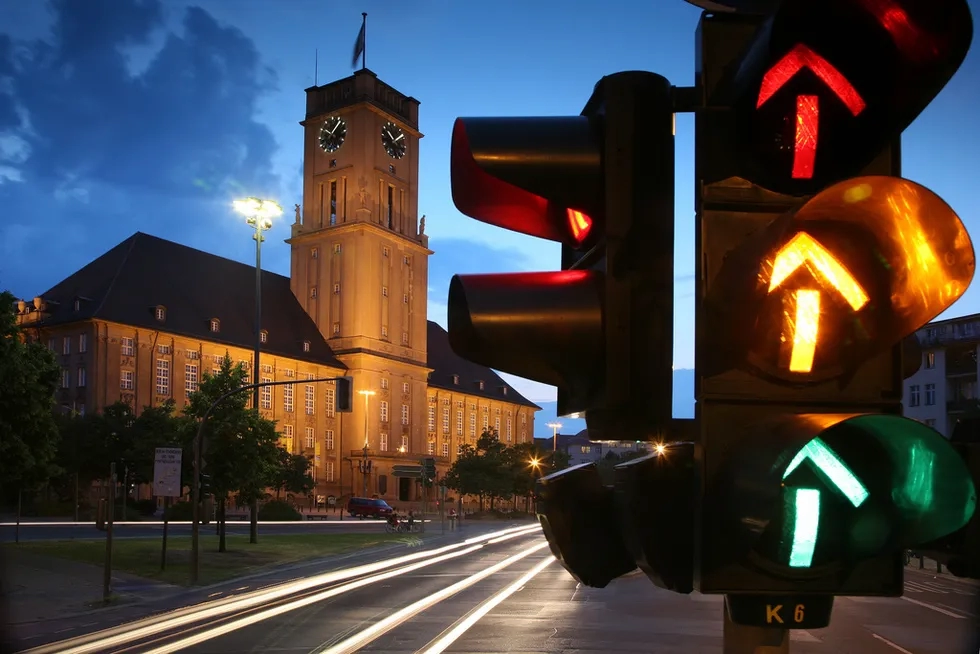 The nondescript facade of Tempelhof-Schöneberg's city hall, dating back to 1914, belies its exceptional history. On June 26, 1963, US president John F. Kennedy gave a speech to express U.S. support for a democratic West Germany: “All free men, wherever they may live, are citizens of Berlin, and, therefore, as a free man, I take pride in the words ‘Ich bin ein Berliner’.” A bronze plaque pays homage to the former president, who was assassinated in 1964, shortly after the construction of the Wall. Visit the clock tower sheltering the Freiheitsglocke (Liberty Bell), which the people of the United States donated to Berlin in 1950; come at midday to hear it chime.
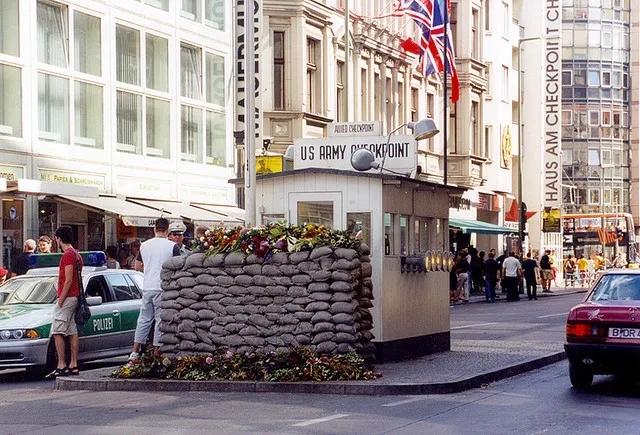 From 1961 until the fall of the Wall in 1989, Checkpoint Charlie was the Friedrichstrasse border crossing between East and West Berlin. A replica hut and a soldier's post now mark the former U.S. army checkpoint and there's an open-air exhibition, which gives insight on the Wall and its impact. The adjacent (and well-touristed) Mauermuseum tells Berliners' personal stories of separation and reunification.
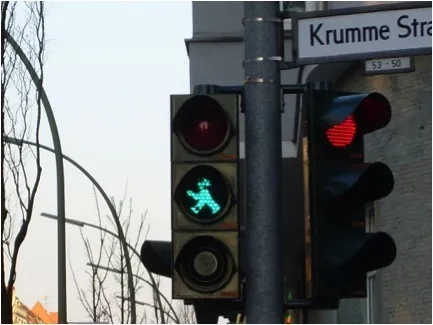 When you cross the street, keep an eye out for the Ampelmännchen, the hurrying male figure that serves as a “walk” sign in the traffic lights. A lasting symbol from the GDR days, the Ampelmann has now achieved cult status. Threatened with extinction when the Wall crumbled, the little man has survived at most pedestrian crossings. There are stores full of Ampelmann-themed souvenirs in many of the key tourist areas—and even an Ampelmann restaurant in Monbijou-park.
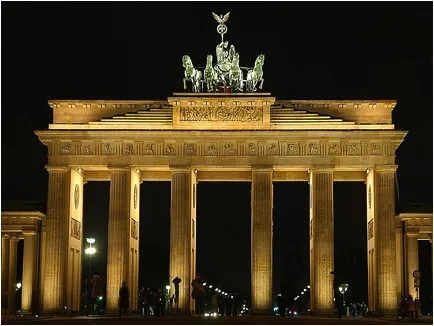 In 1987, Ronald Reagan stood at this spot and cried: “Mr Gorbachev, open this gate! Mr Gorbachev, tear down this wall!” He did (but history forgets that it took two years to get around to doing it). Just a few paces from the Reichstag, the sight of the Brandenburg Gate, with its rooftop goddess of victory charging forth on her chariot, will stop you in your tracks. Conquering French Emperor Napoleon took a fancy to the feisty goddess in 1804 and whisked her off to the Louvre in Paris; rather fittingly, she now stands triumphant above Pariser Platz (Paris Square). Return here at dusk to see the neoclassical landmark at its most photogenic.