

Perhaps the most annoying of all airline fees is the extra charge for a carry-on bag, which several U.S. airlines, including United, can charge.
But there's good news from the European Parliament, which voted to ban carriers from levying carry-on fees for everyone who flies there. Even U.S. airlines would be prohibited from charging for hand baggage when they fly within the European Union.
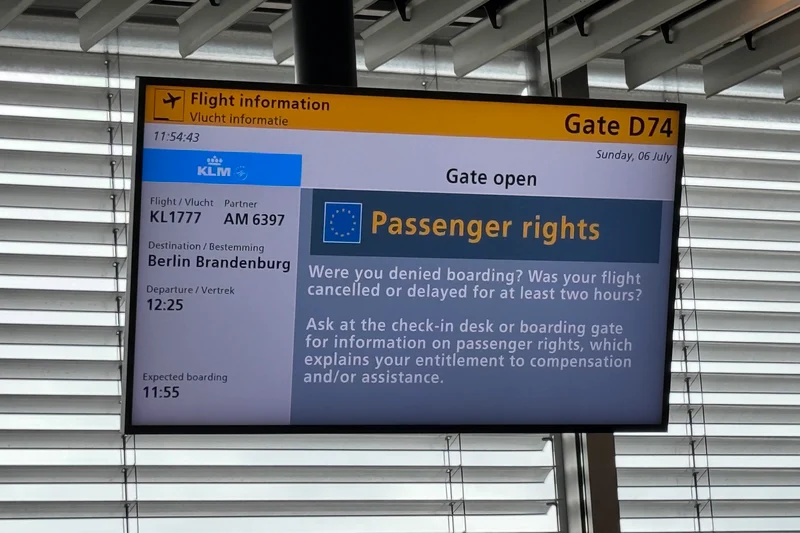
It's more clear proof that the EU, like many other places worldwide, recognizes and values the rights of airline passengers.
Unfortunately, that's not always the case here in the United States.
Unlike other countries, the United States remains without a legal "Passenger Bill of Rights" that require airlines follow uniform mandatory protections for consumers when there are disruptions. Despite the fact many of us have been writing and testifying about it for decades, with a precious few exceptions, in the USA, you're largely beholden to the whims of the carriers themselves.
In America, we largely let airlines police their own passenger protections, and we all know how well that has worked—or rather has not worked, in meltdown after meltdown after meltdown that left people stranded and paying out of pocket.
Americans will find they have more rights in other countries.
What airline protections apply abroad?
Click the name of each place to be taken to its passenger protection authority.
• European Union: The EU's passenger protections are universally viewed as the template for other nations, and they've been successful since 2004. The rules cover all 27 EU nations and their territories, as well as Iceland, Norway, and Switzerland. The rules are clearly spelled out.
Worth noting: Two decades ago, executives at European airlines screamed loudly that such rules would bankrupt them. Guess what? A 2023 study found the EU regulations actually reduced delays and made airlines more efficient—and therefore more profitable.
The EU’s rules cover flight delays, cancellations, bumping, and baggage, like many other places do. But it also covers missed connections, downgraded flights (first class to economy), and disability complaints.
• United Kingdom: After Brexit, the U.K. adopted rules similar to the EU's, including "care and support" such as refreshments, meals, and hotels for cancellations and delays.
• Canada: Canada followed suit with protections in 2019. But its rules are unusual in that smaller airlines have lower levels for compensation, rebooking, and refunds than larger airlines (i.e., Air Canada).
• Brazil: Detailed regulations spell out exactly what passengers in Brazil are entitled to, including "material assistance" such as meals, communication access, and overnight stays.
• Turkey: Rules in Turkey are very specific about delay compensation, based not just on length of delays but also trip distance in kilometers.
• Israel: Like Turkey, Israel also dictates monetary compensation based on flight distance and length of delays.
• India: Flight diversions to other destinations are specifically covered by India's passenger protections.
If you experience an airline problem anywhere in the world, you can always visit passenger advocate group AirHelp to see if your destination provides mandatory rights.
The International Air Transport Association (IATA), which represents most of the world's airlines, offers general guidelines on how passengers should be treated. The International Civil Aviation Organization (ICAO), an agency of the United Nations, supports this effort.
Passenger rights for domestic flights in the USA
Domestically, the U.S. rules are largely written not by a protective government but by and for the airlines themselves, via their Contracts of Carriage (CoCs).The DOT requires U.S. airlines to post copies of their CoCs (also called Conditions of Carriage or Tariffs) on their websites.
These can be lengthy (100 pages or more) and hard to decipher. They're studded with legalese and intentionally vague promises. (Ask any lawyer about the weak validity of a corporation saying it "may" offer compensation.)
The DOT claims these airline contracts are binding. But in truth, they're written in sand. The airlines can continually rewrite their own one-sided contracts if they want.
But there are ways to apply pressure. In 2022, Buttigieg introduced the DOT's Airline Customer Service Dashboard. It includes side-by-side comparisons of reports from the 10 largest domestic airlines:
—Flight cancellations & delays
—Family seating policies
—Accommodations (meals, hotels, etc.) for "controllable" delays
—Commitments for active-duty military personnel & their families
The good news is some airlines have improved their policies after being shamed on the dashboard.
The bad news is it’s just a dashboard.
But in addition, since 1999 the Montreal Convention, which has been ratified by 172 nations (including the U.S.), codifies certain consumer damages internationally, including mishandled baggage, and accident compensation for injuries and deaths.
AirHelp also has links to key protections, both in the U.S. and overseas.
The rights that Americans do have may change
In 2024, ex-Secretary of Transportation Pete Buttigieg introduced a suite of new protections. One key provision—automatic cash refunds for cancellations, lengthy delays, and "significant" flight changes—is now the law of the land.
But as I said here last December, there's deep concern that the Trump administration will unravel those air traveler protections.
In fact, one logical new DOT rule requiring airlines to disclose all fees up front prior to booking offended airlines so much that six of them sued the Department to ensure they won't have to disclose transparent pricing. The case is still pending, and it's unclear if the administration will take their side instead of your side.
What U.S. passengers can do about delays and cancellations
• Keep good records! Always note airlines, flight numbers, dates, employee names, etc. Vague complaints are almost never resolved.
• If an airline declares a delay or cancellation, take note of the reasons given, because CoC protections vary if the cause is "airline controllable" or not.
• Google the carrier's CoC and cite it when requesting meals, transportation, etc.
William J. McGee is the Senior Fellow for Aviation & Travel at American Economic Liberties Project. An FAA-licensed aircraft dispatcher, he spent seven years in airline flight operations management and was Editor-in-Chief of Consumer Reports Travel Letter. He is the author of Attention All Passengers and teaches at Vaughn College of Aeronautics. There is more at www.economicliberties.us/william-mcgee/.