

Every autumn, Italy’s great summer escapes shed their high-season gloss and settle into something richly authentic. Beach clubs close, boats disappear from crowded harbors, and medieval towns begin to breathe again. In their place come olive harvests, golden forests, and long lunches built around ingredients at their seasonal peak.
With cooler days and smaller crowds, October and November reveal a quieter, more intimate side of Italy. Here are four summer hot spots worth saving for your next coolcation instead.
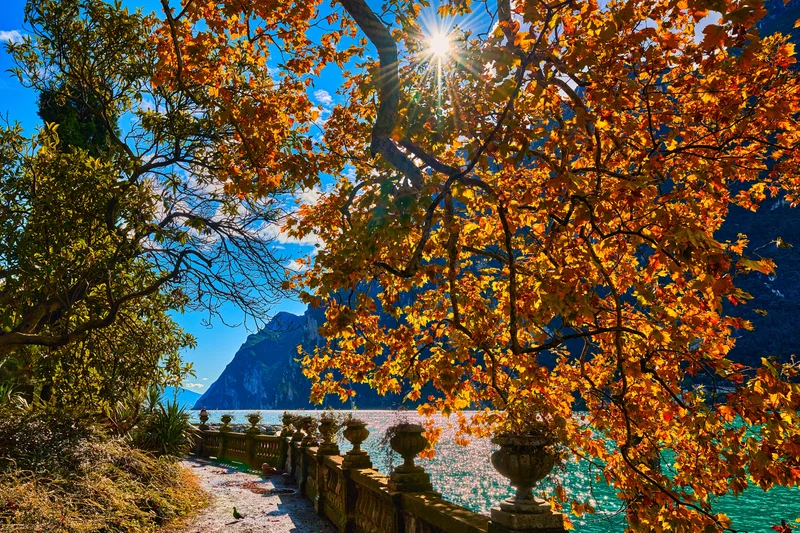
Lake Garda
Why go in autumn? For the olive harvest and hikes on forested mountains
Lake Garda can look almost unnaturally still in autumn, a sheet of pewter-blue water suspended between mountains. By October, attention shifts to the slopes, where olives are picked and pressed and the silvery groves become places of work rather than just part of the scenery.
Walk among the groves at Le Prandine, an estate created to revive historic olive trees around Torri del Benaco. Evoking notes of fresh grass, herbs, and green almond, the oils from Le Prandine are made from the variety long associated with this stretch of Garda, with production capped at 2,500 liters a year.
Farther south in Cavaion Veronese, Fratelli Turri offers another view of the harvest. The working mill here has been pressing olives since 1951, running at full tilt from mid-October to mid-December.
For sweeping views over the postcard harbor, climb the 14th-century Castello Scaligero in Torri del Benaco. The castle's museum tells the story of life on the shore through olive presses, fishing boats, rock engravings, and a citrus greenhouse dating to 1760.
Nearby Monte Luppia holds another layer of Garda’s past. Limestone slabs hidden among the woods are etched with weapons, horsemen, boats, and other figures, part of a wider rock-art landscape around eastern Garda, where carvings date from the Bronze Age into more recent history. The easiest way to see them is along the Sentiero dei Graffiti, or Graffiti Trail, a woodland route beginning near Via Castei and opening onto views of Punta San Vigilio and the lake.
Where to stay
Perched high above the lakeside town of Torri del Benaco, Cape of Senses spills across a hillside of olive trees and Mediterranean vegetation, with almost every vantage point drawing the eye toward the lake and mountains beyond. The adults-only retreat places an emphasis on space, quiet, and wellness that feels especially suited to autumn, when Garda slows down.
The hotel offers shuttle service, Vespas, or an electric Fiat 500 for exploring, while the 2,000 square-meter (22,000 square feet) spa, opening onto an expanse of gardens and olive groves, makes staying put equally tempting.
On a cold, clear November night, soaking in a rooftop hot tub beneath a sky suddenly bright with stars may be the most compelling argument of all for coming here after summer has ended.
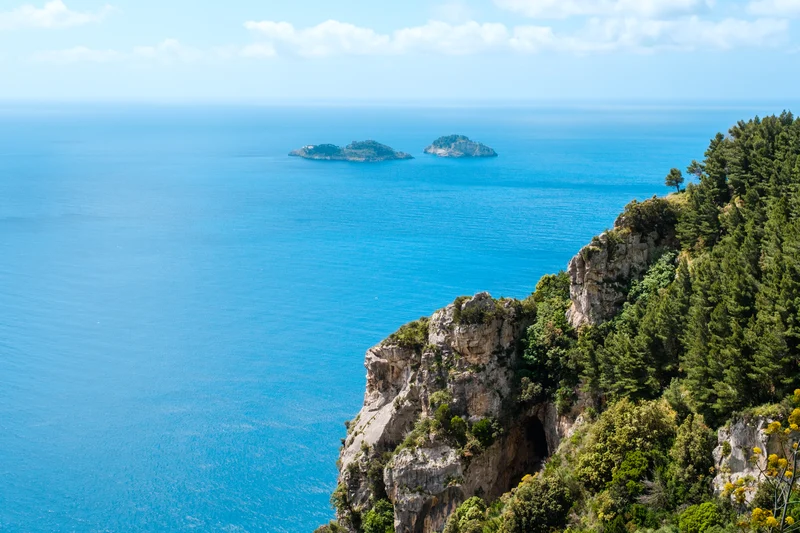
Amalfi Coast
Why go in autumn? For chestnut season and harvest bounty from farms and wineries
After the heat softens and the day-tripping passenger traffic thins out, the steep topography that shapes life on the Amalfi Coast becomes something to explore rather than endure.
A half-hour drive from the village of Amalfi uncovers the region’s hidden agricultural side in Tramonti, a collection of 13 mountain hamlets scattered among vineyards, chestnut woods, and agricultural terraces in the Lattari Mountains.
At family-run winery Tenuta San Francesco, centuries-old Tintore vines climb traditional pergolas, with some grapes left to ripen until early November. Pair the wines produced here with a generous feast built around local cheeses, handmade dishes, and seasonal produce from the surrounding mountains.
Tramonti is also where ACARBIO, the association working to protect the Amalfi Coast’s agricultural biodiversity, has helped revive the Re Fiascone tomato, a 19th-century heirloom variety once in danger of extinction but now appearing on the menus of local pizzerias. Book a dedicated ACARBIO tomato experience through the Anantara Convento di Amalfi hotel, and you’ll walk the terraces where the Re Fiascone is grown and taste it in multiple forms, from bruschetta to marmalade.
Meanwhile, October brings chestnut season to Scala, a mountain village high above the coast. For two autumn weekends every year, the historic center fills with music, neighborhood competitions, and the smells of roasting chestnuts, local sweets, and traditional dishes—a taste of mountain life on the Amalfi Coast that summer visitors never see.
Where to stay
Few hotels embody Amalfi’s improbable geography like Anantara Convento di Amalfi Grand Hotel, a 13th-century monastery carved into the cliff high above town. Today, the cloister, church, and centuries-old passageways still thread through the property, with flashes of the Gulf of Salerno appearing between stone arches.
The property’s history is wonderfully eccentric. Before elevators, guests were reportedly carried up the cliff in chairs mounted on poles. Poet Henry Wadsworth Longfellow stayed here in the 19th century and later lent his name to the panoramic walkway along the cliff.
Whatever you do, don’t miss your chance to get tipsy with a monk. Fra Marcus, a Franciscan friar, leads an on-site amaro tasting that turns monastic history into one of the most unique evenings on the coast. The experience explores the herbal liqueurs once prized by religious communities for their medicinal and digestive properties, before moving through four Italian amari, including the hotel’s own Amaro dei Cappuccini, infused with wild fennel, olive leaves, basil, juniper, and myrtle.
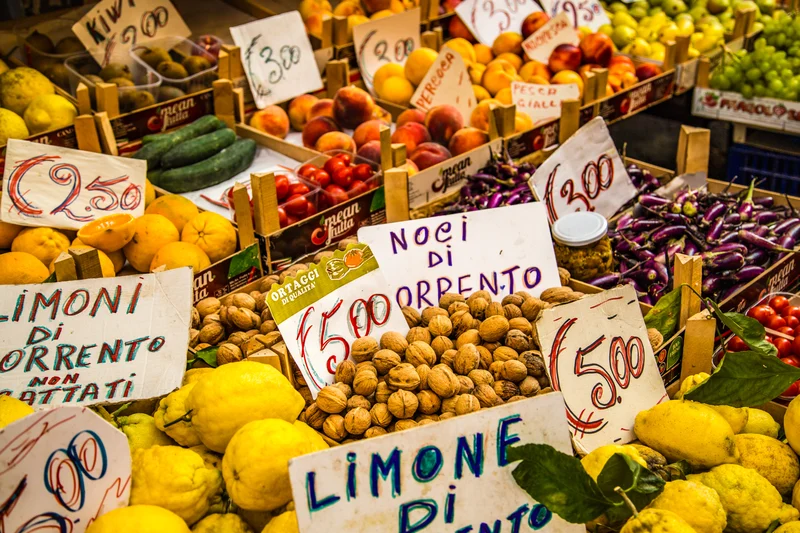
Sorrento
Why go in autumn? For fresh walnuts and the year’s first wine
October is when the Sorrento peninsula’s farms and food traditions take center stage. During the brief window of the Sorrento walnut harvest, growers practice bacchiatura: Long chestnut poles are used to strike the branches of towering walnut trees, sending the ripe nuts tumbling to the ground before they are husked and laid out to dry.
Their thin shells and delicate kernels have made them one of the peninsula’s signature crops. Fresh and dried walnuts can be bought directly from local growers or at Piano di Sorrento’s farmers market on the second Sunday of each month. A dark, bittersweet digestif called nocillo is made by steeping green Sorrento walnuts in alcohol.
For something more active, head to Punta Campanella, the wild tip of the peninsula about 30 minutes from town. Mediterranean sailors once stopped here to make offerings to Athena, goddess of wisdom and navigation, before attempting the passage around the cape. Temple remains and an inscription carved into the rock dating to the 2nd century B.C. still survive, adding a layer of history to one of the peninsula’s most dramatic coastal walks.
November brings another unique ritual: St. Martin’s Day on Nov. 11, when Italians traditionally open the first wine released from that year’s grape harvest. Vino novello, made to be drunk immediately rather than aged, is best enjoyed with roasted chestnuts and other autumn dishes. To learn more about Sorrento’s wine culture, Cantine De Angelis offers cellar and vineyard tastings of wines grown in the region.
Where to stay
Opened in 2024, Ara Maris is Sorrento’s lone adults-only hotel. Its central location puts the historic core within walking distance, while the rooftop Lumi Sky Lounge looks across the Gulf of Naples and Mount Vesuvius. The bar is an especially good perch for watching the sun drop behind the coast.
In autumn, the hotel arranges experiences that push guests farther into the peninsula, from olive harvesting and wine tastings to road trips through nearby villages, lemon-grove walks, and hands-on mozzarella- and pizza-making.
At the onsite restaurant, Cora, acclaimed executive chef Luigi Lionetti showcases the riches of the autumn harvest: egg tortello with porcini, smoked Provola from the Lattari Mountains, and red shrimp from the Gulf of Naples share the spotlight with lamb with roasted pumpkin, Swiss chard, and black truffle.
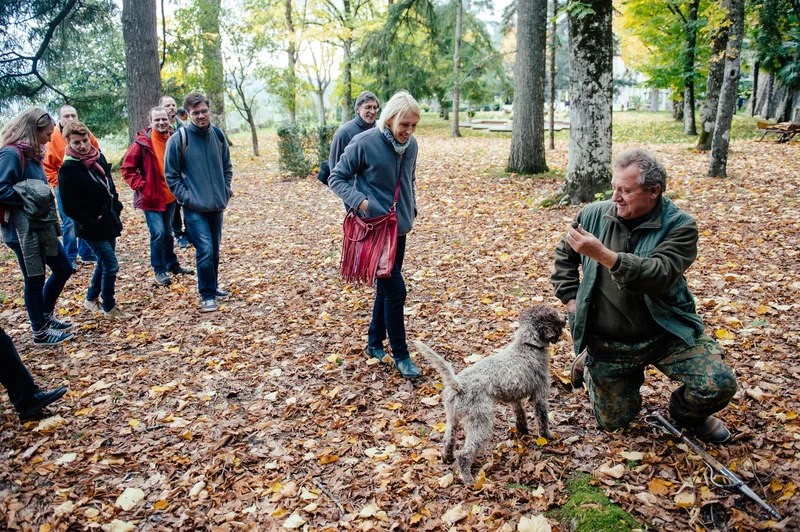
Tuscany
Why go in autumn? For truffle hunting and fall produce
From October into December, white-truffle season turns the woods around San Miniato, a medieval hill town roughly halfway between Florence and Pisa, into hunting grounds for tartufai and their dogs. The ritual is part instinct, part inheritance: A dog noses through damp leaves while the hunter watches for a change in the animal’s behavior, then uses a small spade to uncover a fungus capable of perfuming an entire room.
In November, San Miniato devotes three weekends to its white-truffle fair. Local lore adds a suitably extravagant footnote: In 1954, the world’s largest white truffle was found nearby. Weighing in at 2.52 kilograms (about 5.5 pounds), the tasty behemoth was given as a gift to U.S. president Dwight Eisenhower.
To sample more of fall’s culinary bounty, drive toward Colle di Val d’Elsa, sometimes called the “Bohemia of Italy” for its long association with glass and crystal production. Stay for dinner at Barbagianni, where Tuscany-born executive chef Alessandro Rossi leads the kitchen.
Rossi, who has earned Michelin stars twice at previous restaurants, balances the region’s inland and coastal traditions, with much of the produce (vegetables, aromatic plants, and even edible flowers) coming from the restaurant’s biodynamic garden. One dessert appears as an extraordinary salad of more than 40 herbs—the kind of dish that exactly captures the beauty of Tuscany during the autumn harvest.
Where to stay
Fresh from a 3-year refurbishment completed in autumn 2026, the Hotel Savoy in Florence has unveiled redesigned rooms, suites, and public spaces that draw on Florentine craftsmanship, bespoke Italian design, and the city’s artistic heritage. Set directly on Piazza della Repubblica, the hotel is within easy walking distance of the Duomo, Uffizi, and Ponte Vecchio.
To capitalize on Tuscan truffle season, hotel guests and outside visitors alike can join an expert hunter in the Tuscan countryside, then return for a truffle Negroni at the bar and a truffle-focused dinner at the hotel’s restaurant Irene. Here, the prized ingredient appears generously shaved over dishes like pan-fried eggs and even vanilla ice cream.

Frommer's Italy 2027
Frommer’s books aren’t by A.I., or by travel writers who simply pop in briefly to a destination and then consider the job done. We use seasoned, locally-based journalists like Elizabeth Heath, Donald Strachan, and Michelle Schoenung, plus long-time Italy experts Stephen Brewer and Stephen Keeling to...
Get the bookFrommer's Italy 2027
Frommer’s books aren’t by A.I., or by travel writers who simply pop in briefly to a destination and then consider the job done. We use seasoned, locally-based journalists like Elizabeth Heath, Donald Strachan, and Michelle Schoenung, plus long-time Italy experts Stephen Brewer and Stephen Keeling to...