

On a whirl though Philadelphia’s historic city center, our family’s unusual outing attracted a steady stream of craned necks from curious passersby, accompanied by camera clicks and questions for our driver.
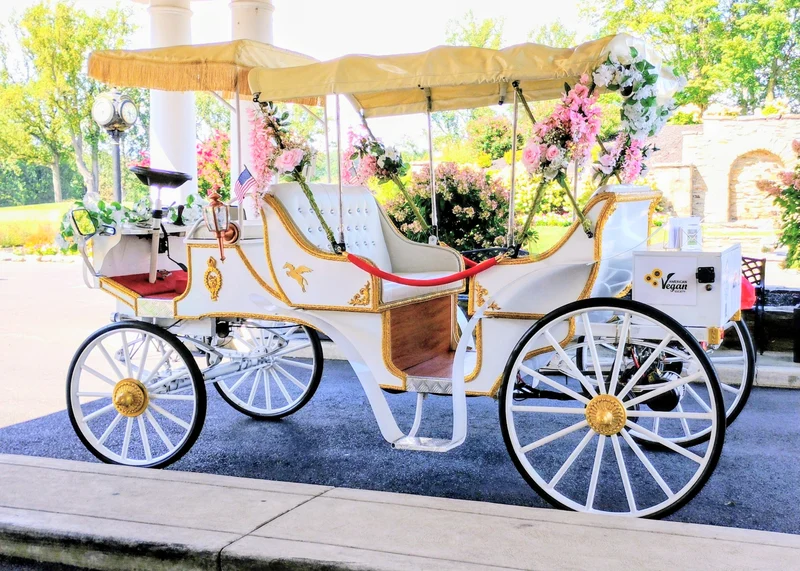
We were aboard a specially permitted test run of "Caroline," a Cinderella-worthy electric carriage, on a ride that both fulfilled my young daughter's princess fantasies and made her the envy of all of first grade.
Carriage tours along Philadelphia’s well-worn cobblestone streets were a sightseeing mainstay for decades. But following years of grassroots advocacy decrying the treatment of carriage horses, the last of Philadelphia's carriage horse stables closed in 2023.
That's the same year Caroline—a white, open-air carriage with gold trim, canopied top, and cushioned seating for six—started granting passengers a carriage ride alternative that swaps horsepower for battery power. It’s the first offering of its kind in any major U.S. city.
But not the last, if Janet White, founder of the Philadelphia-based animal-welfare advocacy group Carriage Horse Freedom, has a say in the matter. White hopes to roll out more of these vehicles, offering "all of the charm, none of the harm," as she puts it.
Like many animal rights activists, White is adamant that the horse-carriage industry is outdated and incompatible with modern cities. If given the choice, she says, today’s travelers—with their increasing concerns around issues like animal welfare and sustainability—will easily pick the novelty of electric carriages, which have already been introduced internationally, from Brussels to Mumbai.
“We’re really on the cusp of a major change—a cultural paradigm shift,” White argues. “It’s not just a vehicle being replaced; it’s a whole new way of thinking about things.”
Ethical and safety concerns around horse-drawn carriages
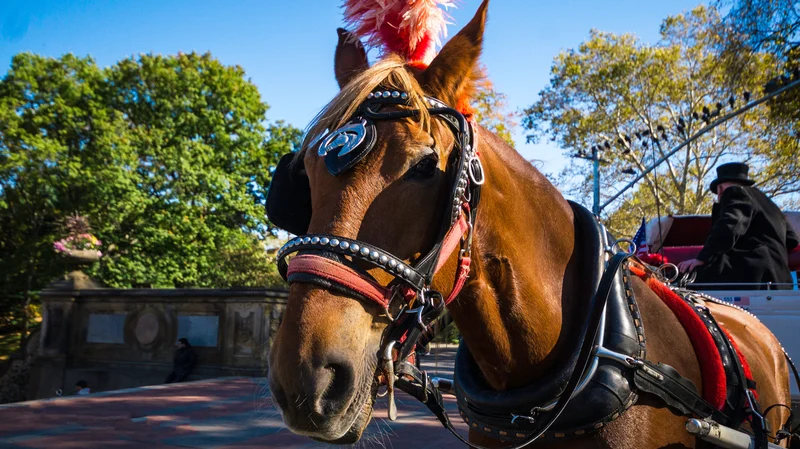
Ethical and safety concerns tied to horse-carriage operations in urban settings have drawn renewed attention following a spate of incidents in New York City. Scenes of animal deaths and runaway horses have led to intensifying calls—including from groups like the Central Park Conservancy—to ban the practice there.
A growing list of cities have already made that move, including U.S. destinations like Chicago, Salt Lake City, Key West, Florida, and, most recently, San Antonio.
Other places, such as Savannah, Georgia, have introduced legislation to tighten regulations of the industry.
“What we're seeing in New York City happens in cities all over the country and the world, wherever horse carriages are operated,” White says.
She describes horse-and-carriage accidents as inevitable when animals are placed in urban environments that are unnatural to them.
PETA and other animal advocates contend that horses are ill-suited to carrying oversized loads and to navigating urban settings marked by vehicular traffic, exhaust fumes, and extreme heat or cold.
There’s also the matter of public safety. PETA says that horses, known for their skittish and sensitive nature, can become “spooked” from noises like honking horns, sirens, and construction, causing the animals to panic and bolt. That can lead to dangerous accidents in crowded cities.
By comparison, “E-carriages are safe, quiet, and environmentally friendly, and they spare exhausted horses from immense pain and suffering,” PETA spokesperson Catie Cryar says.
As tour operators and travelers are increasingly turning away from vacation experiences that are perceived to exploit animals, the move toward horseless carriage tours is well underway in several global destinations.
In addition to the aforementioned options in Belgium and India, you can find such tours advertised in Cartegena, Colombia; Guadalajara, Mexico; and elsewhere.
Beyond the issues of animal welfare and public safety, electric carriage operators like White say the vehicles are being embraced for their cost-effectiveness as compared to the upkeep of horses and the need to comply with animal labor constraints relating to hours logged and distances covered.
Horse carriage operators say e-carriages are no substitute
The Carriage Operators of North America (CONA), a nonprofit organization serving the commercial carriage industry in the U.S. and Canada, disputes the claims of animal abuse.
CONA president Ben Speight says that while there might be some rare “bad actors,” the industry is overwhelmingly composed of horse lovers who properly care for their animals.
And while e-carriage advocates say the vehicles provide a solution that removes horses from the picture while preserving jobs and allowing the industry to evolve, Speight says that argument overlooks a major “disconnect” for carriage operators.
“Pivoting to something else is very difficult,” he says, since most operators in CONA “would not be in tourism would it not be for the animals.”
Plus, Speight contends that electric buggies simply can't replicate the nostalgia that horse-drawn carriages offer, an experience he equates to visiting a living history museum. “We all want to see what yesteryear was like,” he says, “even if it's just a snippet.”
Put simply, he believes the horse is irreplaceable. “If you take that component apart from the carriage, it's just another pedicab ride or another golf cart ride.”
Obstacles to an e-carriage transition
The transition faces other obstacles, too, including regulatory hurdles to overcome in order for novel EVs like these to operate legally.
In Philadelphia, White faces ongoing issues getting Caroline permitted to be street-legal due to the limitations of existing motor vehicle categories. That relegates the carriage’s current operations to custom tours on private property or to city parades and specially permitted events.
Additionally, White says there’s not enough supply to meet demand. She’s hired an engineer and is working on the U.S.-based construction of a Caroline II for late 2026 (the original was made by a Chinese manufacturer), with hopes of expanding operations to make and distribute street-legal versions of e-carriages to U.S. companies that want to use them.
Currently, very few manufacturers produce electric horse carriages. Speight characterizes many of them as “jalopies” of questionable quality.
There are also concerns about the fate of horses that might be displaced from the industry. White says she has a list of equine sanctuaries that are willing to take retired carriage horses, and would ultimately like to establish a sanctuary specifically for that purpose.
Despite the challenges, White believes the transformation to electric carriages in major cities like Philadelphia is inevitable.
“The industry can carry on,” White says, “but it's got to evolve, and that's what we want to be a part of.”
To book an electric carriage tour in Philadelphia, visit Carriage Horse Freedom’s website. Private custom tours, for one to six passengers, start at $150 per hour.