

In August 2025, a Scottish tourist was on a group tour near the Basilica at Pompeii Archaeological Park outside Naples, Italy, when he noticed a few loose stones under his feet.
Thinking that the random stones would be a nice gift for his son's rock collection, the man scooped them up and dropped them in his bag.
It wasn't until he was at the Villa dei Misteri station platform, waiting for the train back to Naples, that he discovered he'd broken the law.
Someone saw him take the stones and reported his description to Italy's paramilitary carabinieri. Officers caught up with the tourist before he could board his train.
"He said he had no idea it was forbidden to remove artifacts from Pompeii," one of the officers said, according to The Times of London. "He was trying to get out of trouble, but it did not work."
Penalties for doing what this tourist did can include up to 6 years in an Italian prison plus a fine of up to €1,500 (about US$1,700).
"It is pretty easy to understand you cannot do that because if everyone wandered off with a piece of Pompeii there would be nothing left," the officer said.
And then the officer added one more interesting warning.
"We may have saved him from the curse,” the officer said.
Taking pieces of Pompeii isn't just tacky, destructive, and illegal. Many people who have gotten away with the crime have claimed that pocketing stone souvenirs resulted in a wave of terrible bad luck when they returned home.
In 2020, an archaeological officer at Pompeii described receiving some 200 packages of rubble over the past decade as tourists tried to reverse paranormal damage they swear was caused by taking the stones.
"Some letters tell us of sad events that occurred after stealing the artifacts in Pompeii such as broken legs and ankles. Others have heard of this ‘curse’ so they prefer to return these artifacts as a precaution, before something bad can happen to them," the officer said.
And Pompeii isn't the only tourist destination where freelance souveniring can result in prison time, fines, or, as legend would have it, a supernatural hex.
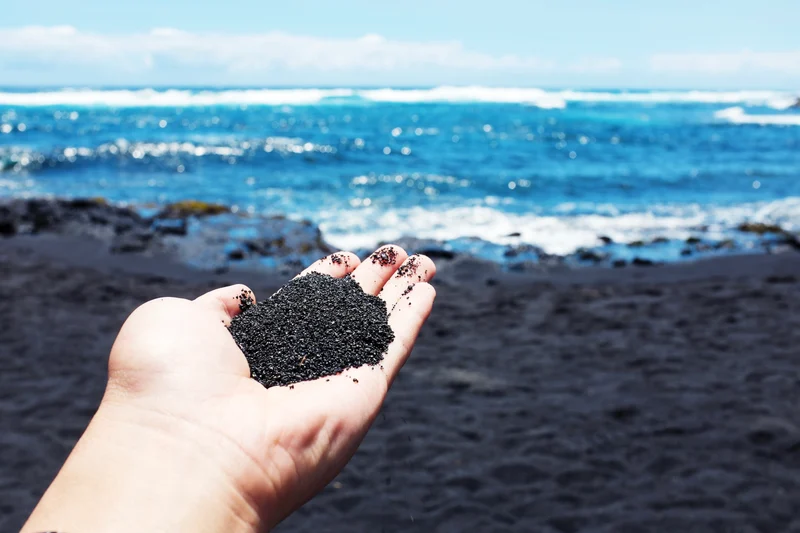
Hawaii
In Hawaii, an archipelago created by volcanic eruptions, it's widely believed that the land, including the black sand beaches caused by eroded lava, is governed by Pele, the Hawaiian goddess of fire and volcanoes, and that removing any of her creation angers her.
And since Pele is a goddess who deals in creation and destruction, she's said to exact her revenge on rock-takers by inflicting misfortune upon them once they return home.
Hawaiians call it Pele's Curse.
In 2018, Rachel Hodara, archaeologist and cultural resources program manager at Maui's Haleakalā National Park, confirmed both the widespread belief in Pele's Curse and the fact that tourists routinely send pocketed items back to the islands in the hopes that bad luck will be nullified.
"[Pele’s Curse] is definitely a thing, and we get about 100 packages a month,” Hodara told Maui Magazine.
In a 2017 Facebook post, park rangers at Haleakalā described their protocol for handling rock returns. "Due to concerns over introducing foreign bacteria and diseases, which can harm endangered native species, the National Park Service freezes the returned rocks for one month, before placing them in the gardens in front of our Summit District visitor centers. We can’t return rocks to the crater because doing so confuses the geological story—we don’t know what part of the volcano the rocks came from."
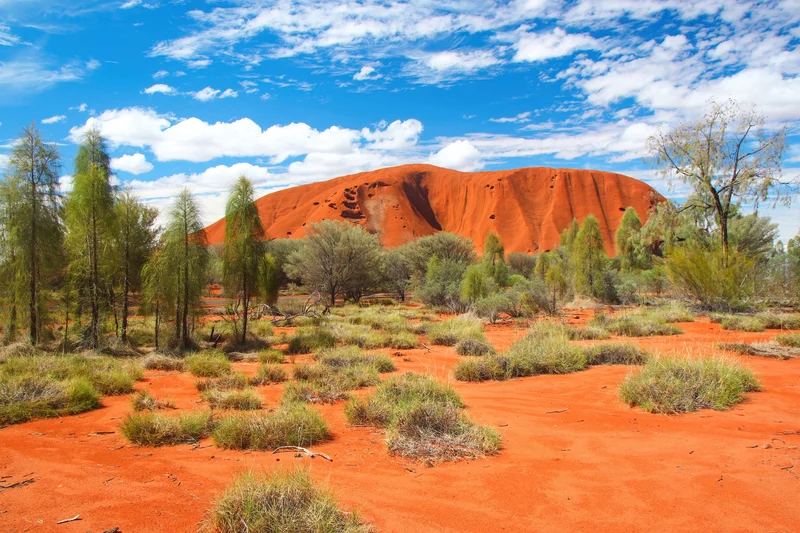
Uluru in the Northern Territory of Australia
The office at Uluru-Kata Tjuta National Park, in the red heart of Australia, receives about one package a day containing rocks and sand from penitent sticky-fingered tourists.
Most of the letters accompanying the packages contain an apology, so the returns have acquired the nickname of "sorry rocks."
While the Anangu people, who are respected as the traditional owners of the land, don't endorse the idea of a curse being attached to pilfered pebbles, that doesn't stop some rocklifters from claiming their actions resulted in bad luck back home.
Almost everyone can agree that removing natural material is disrespectful to the ongoing preservation of the site and to the people who honor it as a sanctified place.
At Uluru, sorry rocks are often used to repair erosion and flood runoff.
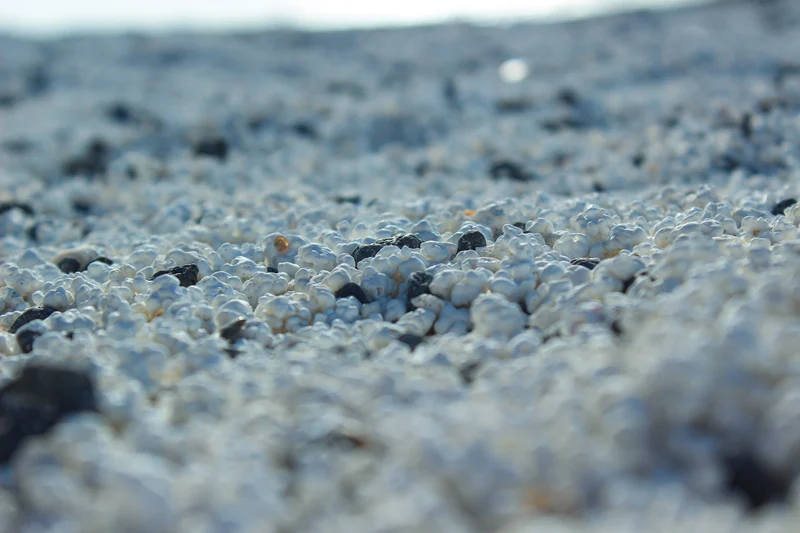
The Canary Islands and other beaches
Some 22 pounds of the bulbous "popcorn" sand of Fuerteventura are heisted by tourists each year. The sand is actually composed of bits of coral worn smooth by the elements in Spain's Canary Islands.
In Lanzarote, a nearby island with gorgeous but more typical beaches, it's thought that as much as a ton of pristine sand is pilfered by visitors each year.
That's why the Canary Islands employs luggage inspectors at the airport. If they catch you with beach material, you could get slammed with fines of up to €3,000 (US$3,200).
The Canary Islands are hardly the only place that threatens a big financial punishment for anyone who dares to keep part of the beach.
In South Carolina, picking up a sand dollar from the beach could result in fines of $500 or more.
In Australia's Whitsunday Islands, you could be slapped with an on-the-spot fine of AU$10,000 (about US$6,435) for swiping sand.
Who needs a curse when financial penalties are that steep? Keep the beach out of your suitcase.
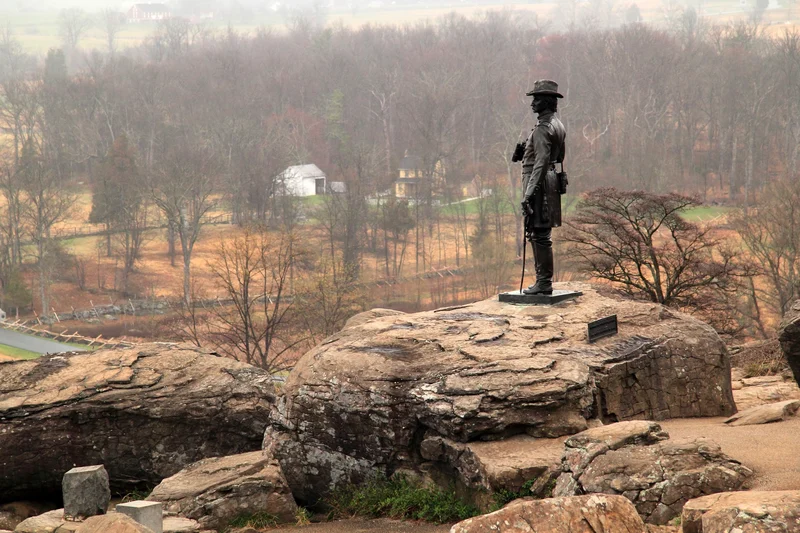
Gettysburg National Park in Pennsylvania
"We didn’t know how the removal of the stones would affect our lives, and we didn’t know they were cursed,” wrote one person as he returned rocks to the Civil War battlefield of Gettysburg.
“It wasn’t long after that that our lives fell apart. My wife took my son and walked out on me. I lost my house and [the] majority of what I owned and ended up in jail for nine years. My now ex-wife has fared no better. She has been plagued with health problems and other issues.”
Whether or not a Gettysburg curse exists, there's a gruesome reason why it's frowned upon to grab anything off the ground there.
Some 51,000 people died in the Battle of Gettysburg in 1863. Because the war was ongoing and body recovery services were limited, many corpses were simply left where they fell—for months or even years. For a long time, picking anything from the soil of Gettysburg risked defiling someone's final resting place.
The appalling state of decay on the battlefield and in the town was the principal reason Abraham Lincoln traveled to Gettysburg 4 months later to deliver the Gettysburg Address at a newly consecrated national cemetery. Even as he spoke, the unclaimed bodies of Confederate soldiers were still strewn around the area.
Today, the battlefield is a national park, where it's illegal to take anything anyway.
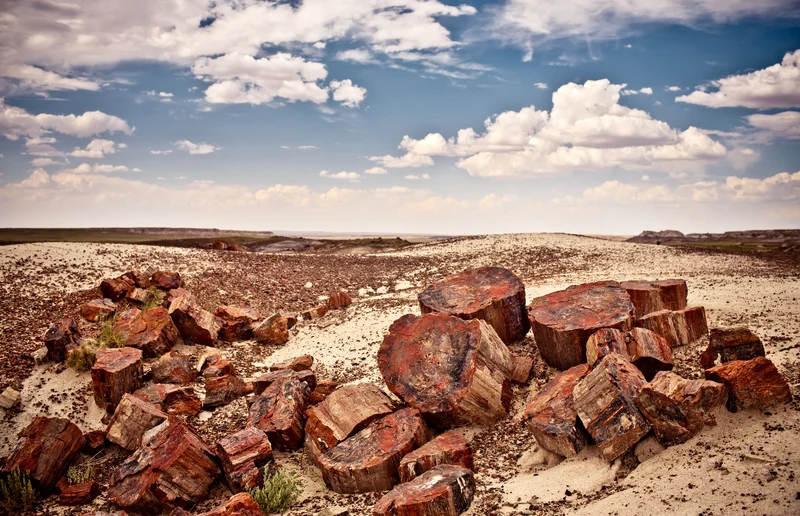
Petrified Forest National Park in Arizona
At the remote Petrified Forest in Arizona, you're free to drive your car through enormous fields of logs and chunks of wood that were turned to stone by the eons. It takes no effort at all to reach down and take a piece for yourself.
And that's probably why, starting in the 1930s, custodians of the park have cultivated a rumor of a curse that befalls tourists greedy enough to filch a fossil for themselves.
In a project he called "Bad Luck, Hot Rocks," an art professor and artist documented notes from rueful vacationers who swear that woe befell them after they looted some of the forest's petrified wood.
You may think that any talk of a curse is superstitious codswallop—but these unhappy hoarders might beg to differ.
Here are snippets of what the park calls "conscience letters" that accompanied returned materials:
"Please take these pieces back before we have any more bad luck"
"They weigh like a ton of bricks on my conscience. Sorry"
"Now I send you the stones and I hope that my unlucky story finishes and tell the people taking away the stones to do not it [sic]."